Jared A. Ball is harsh but correct here in this very strong, well-written, well-thought out article. He has said out loud what many in Africana Studies have only said privately. And I think all of us have to be more careful in the future about providing uncritical support, and public platforms, to people who just say some of the right things about our history while omitting things whites don’t like, or just do some of the things we want while ignoring other things. I know many people feel that the larger direction of providing operational unity is more important, but I think we all have to individually decide what the cost of that would be. We can’t teach just half our history. As I said in my critique of Manning Marable: We don’t owe him anything; instead, we owe Africana Studies.
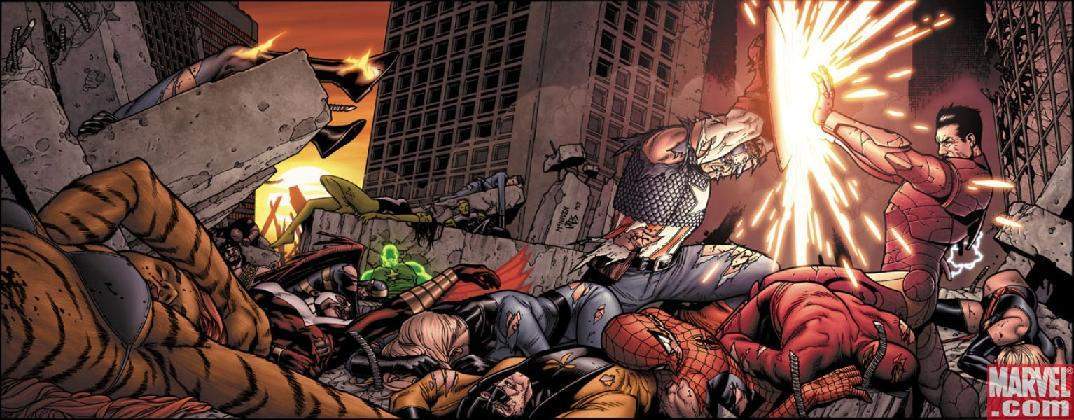
Steve Rogers leads the new team of Avengers in their continued efforts to safeguard humanity. After another international incident involving the Avengers results in collateral damage, political pressure mounts to install a system of accountability and a governing body to determine when to enlist the services of the team. The new status quo fractures the Avengers while they try to protect the world from a new and nefarious villain.
WOW!!!! MAY 6th!!!!!!! Just 364 days left!!!!!!! 😉
Take that, “Dawn of Justice!” LOL! As they used to say in the comics, “Make Mine Marvel!” (Although, make no mistake: I will be there for the “Man of Steel” sequel as well 🙂 )
ADDENDUM: And then there’s THIS in 2018 and 2019! AAUUGGHHH!!!!!!!! 🙂
JUNE 3rd UPDATE: Enjoyed reading this, since it crossed over between Marvel and “Doctor Who.”
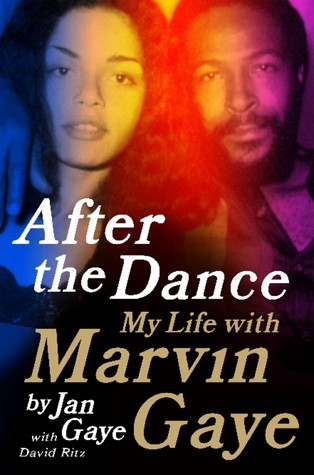
In ancient African religious systems, Ibeji (an Orisha, from the Yoruba and the Ifa) is known as the deity of twins, while Ma’at (from Egypt) was the goddess of, among other things, balance. This book, a memoir of a talented, troubled attractive young woman who falls in love with an equally troubled man whose voice and lyric reverberated around the world, tells a story that screams for their intercession. If these gods did act, they chose to abruptly end the dualities that circled around them like cocaine and marijuana: when Marvin Gay Sr. murdered his son in 1984 with the gun the son had purchased, it almost seemed like either an evil or heavenly release of all of the tension, anger and depression that had wafted around the singer.
Whether it fashions itself thusly or not, and whether the authors admit it or not, “After The Dance: My Life with Marvin Gaye” is a supplement to Ritz’s 1985 stellar biography, “Divided Soul: “The Life of Marvin Gaye.” The emotional divisions introduced by Ritz 30 years ago are laid bare by Marvin’s ex-wife, Janis. Serenity vs. paranoia. Love vs. fear. And ultimately, conflict into love and clarity into a warped sense of being. Discord, turmoil and competition were necessities for Marvin Gaye, a man who competed with his own domineering father for his mother’s love, competed with other Black recording artists for chart dominance and public adoration, competed with other men to win Janis back when he lost her, and even tried to seriously compete with Muhammad Ali in a charity boxing exhibition. He was a man who, according to Janis, believed that “perhaps misery and conflict make for great music. Perhaps without misery and conflict my well would run dry.” And, like the first Aquarian, what was the water he was bringing? “To get people to see below the surface of reality.”
The entire book is awash in 1970s post-Civil Rights Movement euphoria. Music, television and performance made gods of men and women, flawed human beings who were openly worshipped and adored. Marvin Gaye was the first Motown artist to break free of the company’s strict formula; to demand artistic freedom. He became his own Black Power Man, with his own studio, his own musical ideas and with his own family separate from Motown—the one he created with a young teenage girl he saw while in the studio. He sang a song to her, this surface ingénue, who was, and perhaps would always be, his premier acolyte. They were almost instantly conjoined by sensuality, by spirituality, by pain and the promise of enjoying, and finding home in, the new freedoms available.
In this book, the Gayes are twins of pain, cycling through, and back to, their dysfunction. Their marriage, Gaye’s second, eventually ended in the early 1980s (“The struggle to stop struggling was finally over”). Artistically, Marvin Gaye was on a comeback. Unfortunately, he did not have the chance to exorcise his personal devil—the one that had his name on it, written by his own hand—even though he knew he had to give it up. His father’s sick need to win their competition dominated, and a talent stilled, existing forever in a musical loop, a skullcap covering his head like a crown.
Marvin Gaye represented African (-American) people’s joy and pain like few artists in the 20th century. Janis Gaye’s story emphasizes all of the edges of the disjointed souls these drama junkies occupied and shared with each other, grasping for an elusive peace while naturally plotting ever-accessible turmoil. It is the story of a couple who needed love, and found it, but failed to create a life that belonged only to themselves, because ultimately, even when it was just the two of them, there were just too many sides to satisfy.




 Drums in the Global Village