I’m really glad I read that phone-book comic omnibus SpiderVerse/SpiderGeddon, one of the longest but best Spidey stories ever.
I’m really glad I read that phone-book comic omnibus SpiderVerse/SpiderGeddon, one of the longest but best Spidey stories ever.

If the last five episodes are as incredible as these first five, this one season of this one streaming show will have made up for:
This is an amazing time to love this franchise! Today is a good day to live 🙂
[UPDATE AFTER SEEING FINALE ON 4/20/23: The finale might have been the weakest. With the amount of time spent, the showrunners are determined to set up Star Trek: Legacy–something that technically doesn’t exist (yet)! I can’t believe the Trek people allowed the showrunners so much setup for nothing. There was less setup for a new movie the Trek folks have already announced! The story as a whole is almost the GOAT, but perhaps time will push this to an A+.]
*****
A Related Aside: Between this and what’s going on with Star Wars streaming shows, it’s beginning to be understood that good writing fixes everything–even bad movie sequels and prequels. The Star Wars streaming showrunners are creating world-building that’s so well done [LINK ADDED 4/20/23] it’s actually showing the greatness of the content of the prequels and sequels. An example of re-evaluating and changing your long-held view of something based on something else new that puts the old in a new context, a la the maxim, “If you change the way you look at things, what you look at changes.”
Zendaya, “Euphoria”
I’m so sorry I wasn’t able to be there tonight, but I just wanted to say thank you to @goldenglobes for this incredible honor. To my fellow nominees, it is a privilege to be named beside you, I admire you all deeply. Thank you to my Euphoria family, without you, none of this is possible. Lastly, thank you from the bottom of my heart to everyone who has allowed Rue into theirs. I think everyone knows how much she means to me, but the fact that she can mean something to someone else is a gift. I’m honestly at a loss for words as I type this, all I can say is thank you thank you thank you. Goodnight♥️
The magic word is….uneven
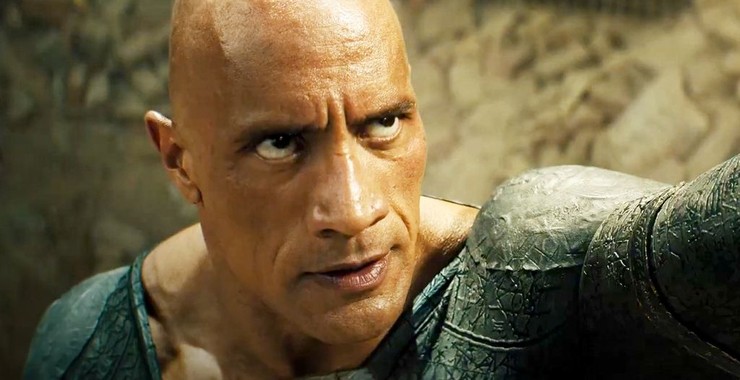
It’s unfortunate that the tension between 1990s superhero-film cheesiness and 2022 superhero-film coolness makes this effort implode. A post-COP27 viewing allowed more sensitivity to how Egyptians oppress themselves with the West’s help. Too bad the film quickly traded in that theme for a third-act battle with a Hellboy knockoff and some fake AMC Walkers. God bless his soul, Pierce Brosnan, 30 years distant from the start of his ’90s James Bond, elevated Black Adam when he could (with fine assists from Aldis Hodge) but couldn’t save it. It’s not hard to see why few wanted a piece of this Rock.

Fighting The Power, for-real-for-real this time
Reginald Hudlin’s writing style remains blatant and strident by half. But as a former full-set Icon/Static/Hardware Milestone Comics collector (sadly, lost them in a move 😦 ), I must admit I much prefer his style to the comparatively accommodationist Milestone founder Dwayne McDuffie!
Six issues in and you win, Mr. Hudlin: the 19th-century enslaved Arnus as a Nat Turner (!) character and present-day free Augustus with a fine-ass sista amazon at his side and an assassin to hunt is much more appealing. And he had the assassin, an alien hired by the U.S. government to kill other aliens, kill a certain white infant recently adopted in 1939 by a white Kansas farm couple!
I doubt this version of Icon will be Clarence Thomas’ favorite! LMAO!!!! I’m in for the entire hardcover run! Thanks to DC/Milestone for bringing back my non-Wakandan superhero comic favorites!
Dr. Jared Ball is in rare and raw form here!

The nuclear family blows up
A memorial interrupted by a war film. Whether this is an epic will depend on how it fades into (Marvel) film history. If it’s not, it’s not because of a lack of trying by writer-director Ryan Coogler and co-writer Joe Robert Cole. Marvel’s ability to acknowledge fans and critics simultaneously is quite extraordinary and remarkable. #BlackPantherWakandaForever
MAY 18, 2024 UPDATE:

The deadliest of the species
So a Brazillian media outlet interviewed me via email about a certain Marvel character and a certain film. Here’s what I wrote:
*****
Todd Steven Burroughs, 54, writer, comicbook geek, public historian and adjunct Africana Studies professor at Seton Hall and Wayne State universities. He is the author of Marvel’s Black Panther: A Comic Book Biography, From Stan Lee to Ta-Nehisi Coates.
1) In your opinion, what is the importance of continuing the legacy of Black Panther in cinema, as it was one of the rare positive representations in Hollywood of a Black king, seen here at the head of an African nation among the most powerful countries in the world?
I struggle over “importance” being the right word. The comicbook geek and the Africana scholar forever warring inside me go back and forth on it. This is a white corporate product starring characters originally created by white Americans with some later help from African-Americans, and now it’s a film produced by a white conglomerate, one written and directed by African-Americans starring both African-Americans and the children of continental Africans. This is not an authentic, organic African cultural product–which shows our powerlessness to do one ourselves. Remember: America was comfortable having a Black president serve two terms but there is still no Black American that can greenlight a Hollywood film. The great writer Haki Madhubuti has called the first film “dangerous.” And if you are committed to African liberation, how can you not call it that? The first Black Panther is an exciting and powerful movie, one that made me tear up with joy, but it’s also a film whose climax shows a white male CIA agent shooting down African revolutionaries. I have known about T’Challa since I began reading Marvel Comics as a pre-teen, but I have only loved him since I first read, while in grad school in the late 1990s, a groundbreaking, satirical Black Panther comic series written by Christopher Priest, its first Black writer. Reginald Hudlin, its second Black writer, did his best to make T’Challa a decolonized character fighting European imperialism. But what about real, decolonized African heroes and Black/African films? Black Panther only shows that the billion-dollar Disney/Marvel Cinematic Universe can make popular any kind of story starring anyone, that it can make anybody in the world into a popular superhero, but it is not an advance for Black, African and African Diasporic filmmaking. I’m excited as any fantasy-loving Marvel Zombie about this sequel–I got my ticket for the November 10 Thursday afternoon sneak preview weeks ago–but the African reality always is in the back of my mind. At the same time, I quietly agonize, I do acknowledge what this franchise means: African children–and some adults–around the world get to see themselves as the most powerful people on Earth. I think that’s where any importance really lies. So it’s complicated for me, internally and externally, intellectually and emotionally.
2) How much do you think the success of the original film is due to the ferocity and brilliance with which Chadwick Boseman embraced the role of King? Can a sequel be as successful without him? He was the heart of the movie, in a way, right?
I have in my living room a mounted, framed poster of Chadwick Boseman on the cover of Rolling Stone magazine, so I don’t want my next sentence misinterpreted. I don’t think it’s an insult to say that Boseman’s channeling of Nelson Mandela–even using similar speech patterns–made him the most boring character in the film! LOL! In my view, the success of Black Panther was the dramatic balance between T’Challa (Boseman), the amazing Dora Milaje and other female characters (Gurira, Nyong’o, Wright, Bassett) and Killmonger (Jordan). This may sound strange, but as I mourned Boseman I did not worry about the sequel at all because I knew director/screenwriter Ryan Coogler and Marvel mastermind Kevin Feige could and would compensate and recalibrate well. That first teaser trailer–one that caused tears to flow on YouTube, including my own–showed they were still in command of this world they made–Wakandan characters in particular and the MCU as a whole. The film is already on track to make $1 billion worldwide, so all is well.
3) Since we have now some distance from the first film, do you see any positive impact of Black Panther on the way Hollywood mainstream films portray Black people these days?
Well, here’s what I wrote one year in. I don’t think it’s changed Hollywood at all, with one obvious exception: it’s clear that without Marvel’s Black Panther, there would not exist The Woman King. (Look at the chronology of the greenlighting of that film here.) And I definitely don’t think The Woman King‘s familiar-feeling vibes, non-sophisticated story and Hollywood filmmaking style, along with a wide release date right in front of Black Panther: Wakanda Forever, is in any way coincidental. As I wrote, The Woman King is Black Panther 1.5. 🙂
I will be very interested in how indigenous people in the Americas will react to seeing Meso-American people and culture as a major part of the MCU worldwide juggernaut. I think turning Namor, The Sub-Mariner and his people indigenous is a stroke of genius! I’ve loved the Sub-Mariner since seeing him as a pre-teen in very dramatic animated stories on second-run syndicated television in the 1970s (which is the link; here’s info on the original 1966 limited-animation show I saw in ’70s reruns).
And, an important note: the fact that Wakanda Forever‘s bi-cultural, big-screen clash of the titans is coming at the close of a year that saw the Disney+ streaming emergence of an Egyptian superhero and Desi people getting a deservedly critically-acclaimed drama starring teenage superhero Ms. Marvel, is neither accidental nor incidental. Again, Disney/Marvel is leaving no money on the table. 🙂
It’s clear that if the great writer Ta-Nehisi Coates is right in that the first Panther was Black people’s Star Wars, Wakanda Forever is positioning to be the trying-to-be-bigger, trying-to-be-even-better sequel, a Black Empire Strikes Back.
But here’s what I’m most fascinated with as 2023 approaches: will Angela Bassett, an Academy Award nominee, be nominated and win a Best Supporting Actress Oscar for her anchoring Wakanda Forever and Oscar winner Viola Davis be nominated for and win Best Actress for her film, too? Can Black American women sweep the female Oscar contests for portraying African royalty? As they say in the comics that inspired all this Panthermania, to be continued!
 Drums in the Global Village