This was a post-screening conversation of the great, #Marxist #Marxist-oriented #CivilRightsMovement documentary #AtTheRiverIStand. The setting was the Nordic Labour Film Festival #NordicLabourFilmFestival in Norway.
Forgotten Black-Power-TV icon Roosevelt Franklin, teaching his fellow inner-city Muppets on PBS’ “Sesame Street,” circa early 1970s
February 1, 2024
FOR IMMEDIATE RELEASE
CONTACT: Todd Steven Burroughs (toddpanther@gmail.com/@ToddStevenBurr1)
NEW, FREE ONLINE NOVEL ON MEDIUM.COM TELLS THE STORY OF HOW AMERICA’S FIRST BLACK MUPPET, A SYMBOL OF THE BLACK POWER MOVEMENT, WAS EVICTED FROM “SESAME STREET”
“The more I read about Roosevelt, the more I realize that a puppet actually went through the Black Power experience,” said Burroughs, who, at 56, was part of the first generation of American toddlers to watch the then-brand-new “Sesame Street” on PBS. So it was clear to him that Roosevelt’s “life” had to be explored in-depth.
“Originally I was going to write an article, but that had been done to death already,” said Burroughs, a freelance writer and public historian. “I was going to make it a little different by doing one of those long magazine pieces that would have allowed Roosevelt his first-person segment—a mini-platform to tell his own story—and that idea expanded into this attempt at fan fiction.”
Roosevelt Franklin was created by Matt Robinson, the show’s first “Gordon” (pictured, along with Loretta Long, still the show’s “Susan” in 2024). Decades before “Elmo’s World,” he was the first character to get his own “Sesame Street” segment named after him, “Roosevelt Franklin Elementary School,” a series of skits that had Franklin work as a student teacher at a vibrant, noisy, inner-city school.
A mainstay from 1970, the year after Sesame Street began, to 1975, he was even one of the show’s first toys.
So what happened?
“Roosevelt was a victim, ultimately, of middle-class Black respectability politics,” said Burroughs. “Once I saw his arc and how it intersected, and even mirrored, the Black Power Movement and the problems and paradoxes of racial integration and cultural nationalism, I knew I had to do something a little different, to tell the story I began to see in my own mind—basically write the last Black Power memoir about someone who, pun intended, wasn’t going to be The Man’s puppet.”
Published in full and for free on Medium.com,At The Dark End of Sesame Street fills in significant gaps in Roosevelt’s story, giving him friends and mentors—some of whom are very well-known in New York’s Black communities in the early 1970s—and, by doing that, tells fun and interesting tales about television, music, and finding a sense of purpose. Along the way, it exposes the internal tensions that are inevitable when a young Black man tries to balance the demands of white liberalism and Black radicalism during the Black Power era.
“The weirdest part for me was writing a story that mentioned both pioneering New York Congresswoman Shirley Chisolm and Big Bird,” said Burroughs, a lifetime student of New York’s Black public affairs television programming and Black radio history. “TV has always created strange bedfellows, and this novel is no different.”
############
Roosevelt and the class,keeping the beat
DISCLAIMER:A PEOPLE’S NOVEL: At The Dark End of Sesame Street: The Autobiography of Roosevelt Franklin (OR Coup Tube: The Prose Ballad of Roosevelt Franklin) is a nonprofit work of fanfiction written and posted for free online consumption, and hopefully enjoyment, under Fair Use. Roosevelt Franklin is a fantasy puppet character created by a real Black man, Matt Robinson, for use by the Children’s Television Workshop (CTW), now known as the Sesame Workshop. Sesame Street is a creation of the Children’s Television Workshop for the Public Broadcasting Service and HBO and is trademarked by Sesame Workshop. The Muppets were created by Jim Henson and the CTW. All Sesame Street Muppet characters are trademarked and copyrighted by the Sesame Workshop. All images, names and likenesses of Sesame Street characters, puppets and PBS actors used in this promotional material and in the novel are done under Fair Use. No copyright nor trademark infringement is intended.
As usual, I’ve gotta come here to fix my many goofs! The “her” I’m talking about @ 00:27:00 is Melissa Haizlip, director of the Mr. Soul film and the niece of the Soul! host/producer.
(I’m about to finish this film for the second time as I type this, so I think I can say a few intelligent words.)
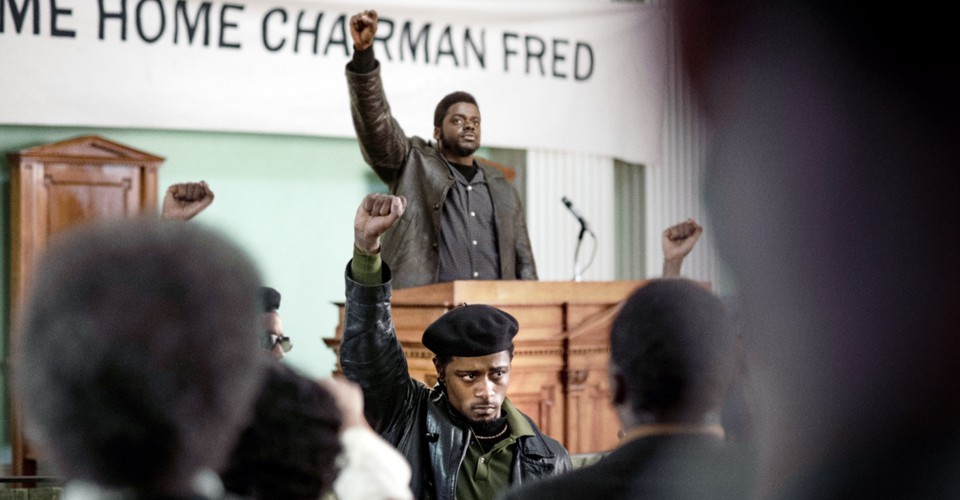
This masterpiece is fascinating because of the tension within the film itself. If expanded to the six hours it should have been, what could have been an amazing Season 3 of the Black Panther Party HBO series of my dreams is instead a compressed, truncated story that pushes against the false-equivalencies the format has set up. How can you do a Black Panther film and not talk in-depth about the Ten Point Platform and Program? Or show the naked brutality that led to the naked brutality on all three sides? (The third side is the violence within the Party.) The Judas and the Black Messiah cast is Oscar-bound: LaKeith Stanfield does not miss one Shakespearian note, complexity showing in every brow and movement. Dominique Fishback steals every scene from Daniel Kaluuya, top to bottom, beginning to end, her poetry and prose indistinguishable. The writers and the director are happily trapped in the web of intrigue and anguish caused by Panther informant William O’Neal, but that emphasis comes at the expense of knowing him–and the quasi-sympathetic white FBI agent!–better than Hampton because the filmgoers enter in the middle of the latter’s movie. Having the Panther leader recite his greatest speech-hits does not compensate for this in the way the filmmakers think, but it’s all they decide to do. What do the Panthers believe in again? How’d they come about? What’s their goal? Sad that the political-personal merging, the key to so many American film classics of almost a century, was not good enough here for some (commercial) reason. This spectacular has made this writer want to burn Mario Van Peebles Panther and toss Spike Lee’s almost-30-years-old Malcolm X into the closet of film history, but The Spook Who’s Sat By The Door’s and Reds‘ clearly-explained political analysis, the focal point of its dramatic core, continues to beckon in the Panther’s afterglow while this reviewer is left wondering what might have been and what still could be.
…..my friend Annette Alston, who just finished scanning 700 pages of Mumia Abu-Jamal’s FBI files (1968-1974, during his Panther days) for me–using her iPhone! (Do we REALLY have any legitimate excuses now for not preserving, holding onto and using our historical documents?!? 🙂 )




 Drums in the Global Village