46-Word Review of “Guardians of the Galaxy, Vol. 2”

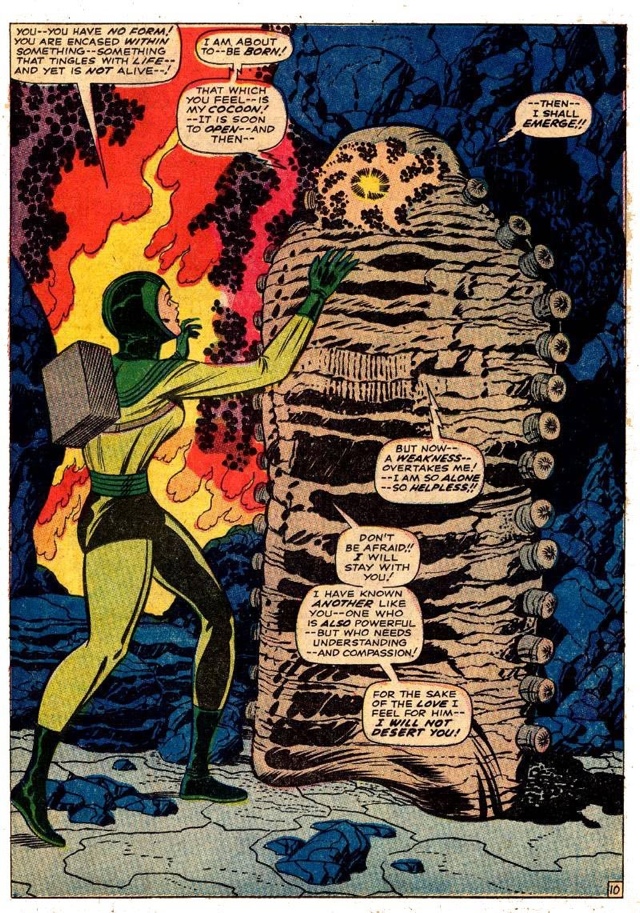
A little uneven at times (trying to balance its goofiness with serious dramatic content), but still thoroughly entertaining. (Did I briefly see Zenn-La, the birth planet of one of my favorite characters of all time?) The plane skids a little, but it does land cleanly.

[SPOILERS AHEAD]


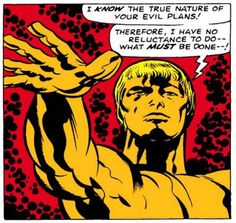
It was GREAT to see the race of Watchers! And Adam Warlock’s coming soon?!? YAY!!!!!!!!!!!


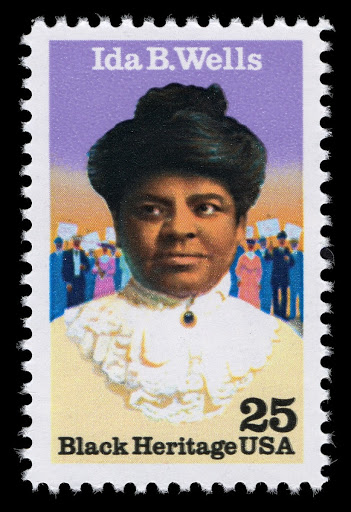
My New “People’s Biography” On Ida B. Wells-Barnett……

…..is here.


“The Encyclopedia Of Newark Jazz,” Barbara J. Kukla’s New Book

I just got this today from the author, a former colleague of mine:


The Encyclopedia of Newark Jazz, set for release in late May, is Barbara Kukla’s sixth book about the people of Newark and its rich history. Her previous books include Swing City: Newark Nightlife, 1925-50, and America’s Music: Jazz in Newark.

Kukla’s latest work includes more than 300 capsule biographies of Newark jazz musicians and singers, most with photos. There are more than 400 photographs in all, many of which are historic, and a wealth of flyers, including one for an appearance by John Coltrane at a city club in 1950.

Newark’s own, Sarah Vaughan, one of the world’s most legendary jazz singers, is featured on the cover with James Moody, whose career is celebrated each November at the New Jersey Performing Arts Center, and the blues and jazz singer Miss Rhapsody (1902-84) to whom the book is dedicated.

“Most jazz books tend to be repetitive, so I try to dig up new stuff about artists like Sarah, Moody, Wayne Shorter and Woody Shaw,” Kukla says. “This time I interviewed Sarah’s sister and Moody’s widow; former Newark Mayor Ken Gibson, who played in a band with Wayne Shorter in his youth, and Clem Moorman, who still performs professionally at age 101. He’s the father of singer Melba Moore .

Kukla worked at The Star-Ledger for 38 years, most of that time as editor of the popular “Newark This Week” section. For information about the book or to schedule a talk, contact the author at bjkukla@aol.com or (973) 325-370. The book is $29.99 per copy.

-30-


What I’m Trying To Do, Who I’m Trying To Be

It’s real simple. (I’m real simple. 🙂 ) See the man to the far right?


My Article On The Harriet Tubman Underground Railroad Visitors Center…….

…….is here.

My Day At The Movies: “I Am Not Your Negro” And “Chapter And Verse”

james-baldwin-negro

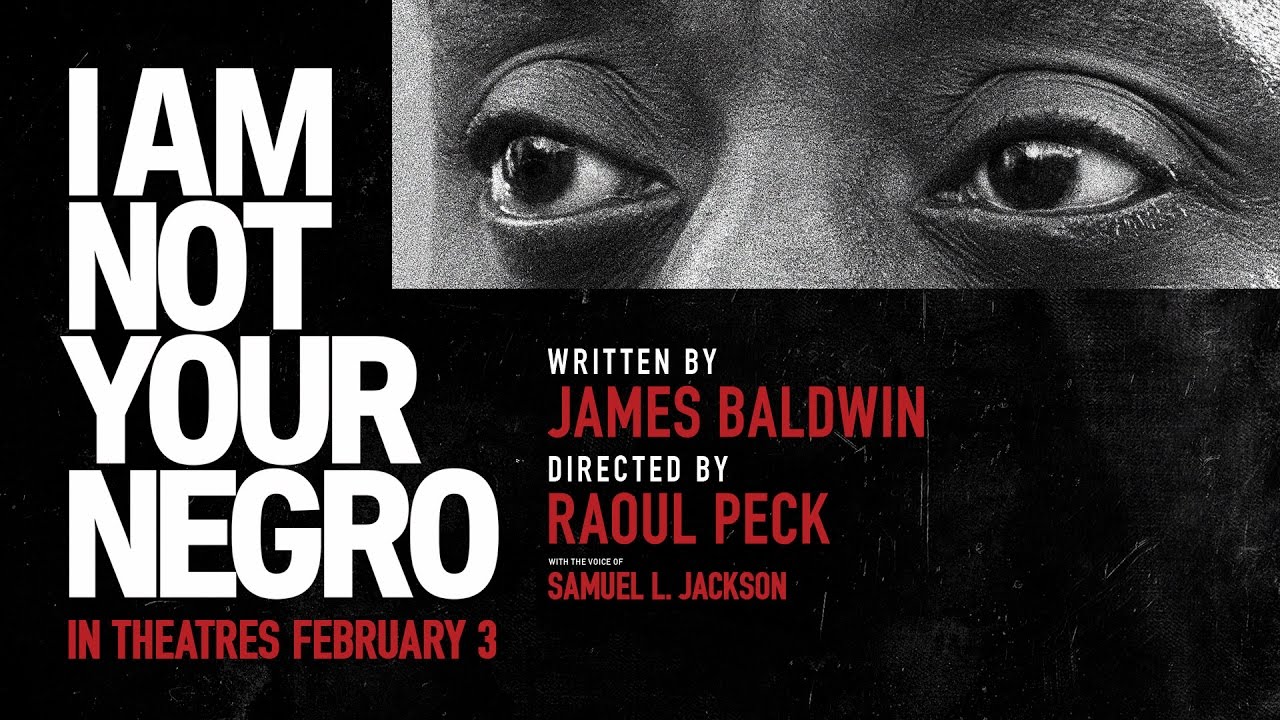
I celebrated my birthday six days early by going to the movies. Raoul Peck’s “I Am Not Your Negro” and Jamal Joseph’s “Chapter and Verse” were on the Black indie bill.

Peck is my kind of Black artist. All I really know about him is that he made “Sometimes in April,” “Lumumba” and now this. For me, that’s enough.  The Haitian filmmaker used the access he got from James Baldwin’s estate well: he was able to use the outline of one of the writer’s unfinished works, “Remember This House.” Using that piece was an interesting choice, because it meant that the film was not about Baldwin, but about that outline’s subjects: Medgar, Martin and Malcolm. Peck takes that outline and Baldwin’s many recorded interviews and speeches as a base and, with the help of narrator Samuel L. Jackson, seamlessly expands into the essayist’s seemingly entire body of work. America and its mythologies are explained in ways that, yes, cliché though it sounds, are still relevant today. (His and Peck’s quick, time-travel dismissal [sort of] of the Obama years was amazingly well-done; in 40 years, Baldwin scoffs, mocking Bobby Kennedy, “if you’re good, you can be president.” And the Obamas flashed on the screen, symbolic of the instant they occupied, before the film returns to the struggle.) Peck, in full control of his “missing” Baldwin (audio)book, shuttles back-and-forth in time so smoothly that, for an instant, the viewer is confused which period she inhabits; a black-and-white Trayvon Martin fits well into the historic flow. For a writer who used the words “frightening” and “terrified” so much, Baldwin was actually quite fearless. He could say that whites acted like monsters, like he does here, and somehow can get away with that. I miss that level of courage in Black people today. Peck, who succeeds in salvaging and presenting that heroism, pushing it into the Trump Era, has the kind of intellectual clarity that Baldwin would appreciate.

hc-jamal-joseph-harford-library-20160607

I guess Joseph would wince and give me the side-eye if I said “Chapter and Verse” was (just) “Boyz ‘n’ the Hood” for the millennial generation, starring a new-jack Socrates Fortlow. But that’s what it is, and there is nothing wrong with that. Joseph wants the entire Black community to be his audience, so he has something for everyone: for youngsters who crave ‘Hood violence, check; older people who will identify with Loretta Devine, who anchors this film, check; images of historic Black leaders in the background (are they sad angels, witnessing the 21st century Black dysfunction?) for the “conscious” filmgoer who knows he’s watching a film about Harlem done by a Black Panther, check. It’s the sum of its parts, no more and no less. And that’s far from a crime. It’s ambitious only in its theme that the survival of the many takes real planning and real sacrifice by the few.


My Reaction to Ta-Nehisi Coates’ “My President Was Black” In January/February 2017 Issue Of The Atlantic

coates

Ta-Nehisi Coates does an outstanding job here as a post-Black Nationalist foil to President Obama, explaining the latter’s lifelong attempt to become Captain America.  He really does a good job undressing the first Black President as a Black man who, because he grew up in Hawaii and Indonesia and completely loved and trusted his white family, he had the attitude/worldview that allowed White America to, in turn, completely trust him with the keys. (Coates correctly points out that Obama was in younger days an activist, not a protester; that says a lot when you think about it.) In many ways, I think that this is Coates’ breakthrough article, because now he can stop being an embedded journalist to Black Star Power. So enough of this I’m-trying-to-figure-all-this-stuff-out-without-offending-you-good-white-intellectuals role he has played to his loving white audience. Clearly, he has enough power, savings and fame by now. 🙂 Under President Trump’s naked, White Nationalist oppression, I hope Coates, a very talented writer who has played the game well, will now directly say what he really feels about white Americans, and White America, to a white readership who, interestingly enough, now trusts him enough that they will be ready to hear him. (I hope the lesson that will not be learned from all this is that white trust is essential for Black success and power, but that ship has probably already sale-d.) Coates will hopefully now tell truths undiluted by “dreams” (his or anyone else’s), or “Dreamers,” his annoyingly euphemistic name for whites in “Between The World and Me,” his award-winning update of James Baldwin’s “The Fire Next Time.”  Well, that next time came about three weeks ago. It’s woke-ness for everybody. Time to share the pain. Time to stop dancing what my friend, the writer Ericka Blount Danois, calls “the soft shoe.” Or, as Baldwin himself says in “Blues For Mr. Charlie,” his play inspired by the lynching of Emmett Till:

Richard: You still determined to break your neck.

Juanita: Well, it’s a neck-breaking time. I wouldn’t like to appear to be above the battle.


My Five Screen Portrayals of Nelson Mandela, From Best To Worst

bet-madiba

I had tried to avoid seeing BET’s “Madiba,” because I was afraid of it being really, really bad. I caught parts of it last night and was pleasantly surprised. Laurence Fishburne will die giving some great performance somewhere.

(Dear BET: I’m sure I’m in the minority here, but the little I saw last night made up for six hours of “New Edition” 🙂 Yes, I will relectantly admit it was a supergroup, but still….. SIX? LOL! I turned it off after the group sang “Can You Stand The Rain.”)

Anyway, the little I saw of “Madiba” last night was the Mandela that I had read about.

It made me think about how many times I’ve seen Madiba portrayed on screens big and little over the last 30.

Here are my five Mandela portrayals, from best to worst, with small commentary:

  1. Idris Elba in “Mandela: Long Walk To Freedom:” No shade on Larry, but I wish he had been in this BET one! His movie did not really deal with the socio-political aspects of his story, but he did a LOT with what he had.
  2. Sidney Poitier in “Mandela and DeKlerk:” A cable TV film that should be seen more. (So, shhh…check it out :))
  3. Danny Glover in “Mandela:” Another forgotten cable TV film. (Shh…. :)) I remember falling in love with Alfre Woodard and Winnie Mandela at the same time because of this production. It’s important to point that this film was made during the Reagan administration, when The Powers That Be publicly considered Mandela a terrorist and many of the anti-apartheid protesters thought he would die in prison, sparking a South Africa race war.
  4. Morgan Freeman in “Invictus:” In a way, this should be higher, because Freeman’s portrayal of Mandela the reconciliation president matches the actor’s on- and off-screen assimilationist persona.
  5. The worst of the Nelson Mandela depictions was not hard to figure out. Beyond a shadow of the doubt, it would have to go to Terrence Howard (!) in “Winnie Mandela,” an extremely flawed film based on an extremely flawed book. (However, Jennifer Hudson’s extraordinary performance as the title character almost salvages the flick.) I struggled not to laugh out loud watching Howard, who, to be fair, was giving it his best.