My Root Article On Black Leader/Luminary Hate History……..

Farrakahan

MuhammadSpeaks2

…..is here.

Tweets I Did Live For The Closing of the Institute of the Black World 21st Century’s International Reparations Conference Tonight (Saturday)

Reparations3

Please start from the bottom.

Beckles: 76 billion pounds in today’s money! #reparationsnow

Beckles: 20 million pounds of free labor—Africans paid for half of their own freedom in the U.K! #reparationsnow

Beckles: The Brits decided that there should be a transition from slavery to freedom #reparationsnow

Beckles: All of us have ancestors in Haiti, because so many went there to be free #reparationsnow

Beckles: Haiti declared that any enslaved Africans that would get there would be free #reparationsnow

Beckles: We must begin with Haiti #reparationsnow

Beckles: We must bring closure to European barbarity #reparationsnow

Beckles: New world of Pan-Africanism, African globalism and ancestral best #reparationsnow

Beckles: Time for him to go back to Spain #reparationsnow

Beckles: “The time has come to put Christopher Columbus back on the Santa Maria” #reparationsnow

Beckles: This world need to be cleansed from the demonic system of white supremacy #reparationsnow

Beckles: Calling for a new 21st century moral and economic order #reparationsnow

Beckles: Celebrate the work of “Ron and Don” #reparationsnow

Beckles: Where next will they take us? Reparations is saying: this is the end of the line #reparationsnow

Beckles: Family was thrown around to Panama and finally to the U.K. #reparationsnow

Beckles:  Watched his own parent laborers be under the thumb of the white man #reparationsnow    

Beckles:  They can shift our identities and locations, but at the end, we are Africans  #reparationsnow

Beckles:  At what stage do we sacrifice the self for the collective?  #reparationsnow

Beckles: “What we have sought to do is turn the world the right way up” #reparationsnow

Rojas: Beckles is a “true African warrior” #reparationsnow

Rojas: Introduces Sir Hiliary Beckles, who helped lead CARICOM to this point #reparationsnow

Dr. Hiliary Brown of CARICOM:  This is not about money, this is about raising consciousness #reparationsnow

Rojas: Congratulated Al-Jazeera for covering the IBW Summit #reparationsnow

Queen Mother Dr. Delois N. Blakely, quoting Queen Mother Moore, “Chillin’ go get your reparations!” #reparationsnow

Queen Mother Dr. Delois N. Blakely is about to be introduced, but Reparations Choir is first! #reparations now

Don Rojas, IBW21’s Communications Director, is introducing participants at the closing rally #reparationsnow

Listening to the reparations conference live on 99.5 WBAI-FM #reparationsnow

Tweets I Did Live For The Opening of the Institute of the Black World 21st Century’s International Reparations Conference Tonight (Thursday)

reparations
Please start at the bottom. I joined late, but I did get the keynote.
 

Herb Boyd on WBAI: It’s Paul Robeson’s birthday. #reparationsnow

Dr. Ron Daniels: Thanked 99.5 WBAI-FM for covering live #reparationsnow

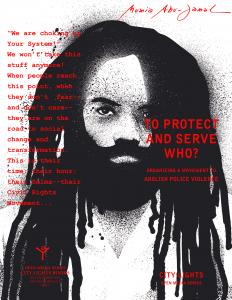
 Imam Talib Abdur-Rashid: We must continue to monitor the condition of our two warriors, to prevent any murder by medical neglect. #freeMumia #BringMumiaHome #FreeHRapBrown #freepoliticialprisoners  #reparationsnow

 Imam Talib Abdur-Rashid: Before benediction, wanted to remember the plight of two political prisoners, Mumia Abu-Jamal  and Jamil Abdullah Al-Amin, (H. Rap Brown) #freeMumia #BringMumiaHome #Free JamilAl-Amin #Free HRap Brown #freepoliticialprisoners  #reparationsnow

 Dr. Ron Daniels: Tomorrow we honor U.S. Rep. John Conyers Jr. We started in the Capital of Black America, and we will end in the People’s Republic of Brooklyn! #reparationsnow

 Dr. Adelaide Sanford: “We have declared that we shall be repaid for all that we have given and lost.” #reparationsnow

 Dr. Adelaide Sanford: Among the things Europeans stole from us was the “minds of our children.” Putting slaveholders before us as America’s Founding Fathers. #reparationsnow

 Dr. Adelaide Sanford: Of all Africans, it is African-Americans who have the least to show for the slave trade. #reparationsnow

Nkechi Taifa: Asks N’COBRA’s lifetime members to stand up: Dr. Leonard Jeffries, Dr. Ron Daniels and many others. #N’COBRA #reparationsnow

 Nkechi Taifa: N’COBRA made reparations a real issue for Black Americans through working with U.S. Rep. John Conyers and city councils across America. #N’COBRA #reparationsnow

 Nkechi Taifa: N’COBRA sought to make reparations “a household term.” It was “unthinkable” to think of reparations before N’COBRA! #N’COBRA #reparationsnow

  Nkechi Taifa is speaking right now in tribute of the National Coalition of Blacks for Reparations in America, a pioneer of the Black American reparations movement #N’COBRA #reparationsnow

 Roger Wareham of December 12th Movement: “They stole  us. They sold us. They owe us! Reparations now!” #reparationsnow

 U.N. Ambassador Rhonda King: “The time is now. The place is here. The building blocks are in hand.” #reparationsnow

 U.N. Ambassador Rhonda King of St Vincent and the Grenadines: CARICOM has arrived “at the crossroads of new opportunities.” #reparationsnow

 U.N. Ambassador Rhonda King of St Vincent and the Grenadines: “No great cause has never been done by doubtful men and women.” #reparationsnow

 Jesse Jackson: “Reparations is right and fair, and I won’t give up until I get my share.” #reparationsnow

 Jesse Jackson: “If I’m not angry, I’m stupid! If I’m adjusted, I’m useless!” #reparationsnow

 Jesse Jackson: “America is in our debt. Owed repair of damage done.” #reparationsnow

 Jesse Jackson: “To limit our history to 1954 up is a sin.” Where is discussion of 5,000 public lynchings? #reparationsnow

 Jesse Jackson: Slavery is bad, but the thing worst than slavery is to adjust to it and rationalize it. #reparationsnow

 Jesse Jackson:  The NAACP was founded to make lynching illegal! #reparationsnow

 Jesse Jackson: My father had to sit behind Nazi POWs and couldn’t use the restrooms they used. #reparationsnow

 Jesse Jackson: “Don’t be confused about people being elevated to fly in someone else’s system.” #reparationsnow

 Jesse Jackson: “The lineage of slavery is unbroken. And putting the Black man in charge of the white man’s plane does not change the fare or the plane.” #reparationsnow

 Jesse Jackson: Most lynchings occurred after church on Sundays! #reparationsnow

 Jesse Jackson: It was “open season” on Black people from 1870 to 1950. Almost 5,000 Blacks were lynched! #reparationsnow

 Jesse Jackson: “When the laws changed from slavery to freedom, but the infrastructure did not change.” #reparationsnow

 Jesse Jackson: Japanese Americans and Native Americans got “some measure” of reparations! #reparationsnow

 Jesse Jackson: “America is the last [stop] of the slave train.” And “we left the slavemaster in charge of implementing abolition.” #reparationsnow

 Jesse Jackson: The more educated you are, the more brainwashed you are to the issue of reparations. #reparationsnow

 Jesse Jackson: “We are the creditors [of the nation], not the debtors. But since we’re brain-dead on the subject, it’s difficult to break through.” #reparationsnow

 Jesse Jackson: “To not believe in reparations is to believe in ethnic cleansing as valid.”  #reparationsnow

 Jesse Jackson: Blacks and whites are unified in not wanting to talk about it: “There is a fear of discussing reparations.” #reparationsnow

 Jesse Jackson: Thanks to Ron Daniels; don’t take him for granted! #reparationsnow

 Jesse Jackson is starting his keynote address at the opening of the Reparations Conference. #reparationsnow

 Listen to Bernard White and Herb Boyd give live commentary right now on the opening ceremony on 99.5 WBAI-FM.  #reparationsconference

 Dr. Leonard Jeffries: “We are the chosen of the Universe, and we need to make our demands.” #reparationsnow

 Reverend Jeremiah Wright: Reparations for “the greatest crime ever against humanity.” At opening of Reparations Conference right now #reparations now

Excerpts From The Rolling Stone/UVA Report

RS

So what’s the bottom line?

A writer, a fulltime freelancer, decided to believe a woman who had a blockbuster narrative that she could turn into a major feature that would net her $9,000 to $30,000. The writer thinks she’s being careful and thinks she’s being stonewalled by the university when the facts don’t add up. An editor trusts his writer. A fact-checker trusts his editor. A publisher trusts his managing editor. End of summary. Sad.

Rolling Stone’s repudiation of the main narrative in “A Rape on Campus” is a story of journalistic failure that was avoidable. The failure encompassed reporting, editing, editorial supervision and fact-checking. The magazine set aside or rationalized as unnecessary essential practices of reporting that, if pursued, would likely have led the magazine’s editors to reconsider publishing Jackie’s narrative so prominently, if at all. The published story glossed over the gaps in the magazine’s reporting by using pseudonyms and by failing to state where important information had come from.

In late March, after a four-month investigation, the Charlottesville, Va., police department said that it had “exhausted all investigative leads” and had concluded, “There is no substantive basis to support the account alleged in the Rolling Stone article.”3

The story’s blowup comes as another shock to journalism’s credibility amid head-swiveling change in the media industry. The particulars of Rolling Stone’s failure make clear the need for a revitalized consensus in newsrooms old and new about what best journalistic practices entail, at an operating-manual-level of detail.

As at other once-robust print magazines and newspapers, Rolling Stone’s editorial staff has shrunk in recent years as print advertising revenue has fallen and shifted online. The magazine’s full-time editorial ranks, not including art or photo staff, have contracted by about 25 percent since 2008. Yet Rolling Stone continues to invest in professional fact-checkers and to fund time-consuming investigations like Erdely’s. The magazine’s records and interviews with participants show that the failure of “A Rape on Campus” was not due to a lack of resources. The problem was methodology, compounded by an environment where several journalists with decades of collective experience failed to surface and debate problems about their reporting or to heed the questions they did receive from a fact-checking colleague.

Erdely and her editors had hoped their investigation would sound an alarm about campus sexual assault and would challenge Virginia and other universities to do better. Instead, the magazine’s failure may have spread the idea that many women invent rape allegations. (Social scientists analyzing crime records report that the rate of false rape allegations is 2 to 8 percent.) At the University of Virginia, “It’s going to be more difficult now to engage some people … because they have a preconceived notion that women lie about sexual assault,” said Alex Pinkleton, a UVA student and rape survivor who was one of Erdely’s sources.

There has been other collateral damage. “It’s completely tarnished our reputation,” said Stephen Scipione, the chapter president of Phi Kappa Psi, the fraternity Jackie named as the site of her alleged assault. “It’s completely destroyed a semester of our lives, specifically mine. It’s put us in the worst position possible in our community here, in front of our peers and in the classroom.”

The university has also suffered. Rolling Stone’s account linked UVA’s fraternity culture to a horrendous crime and portrayed the administration as neglectful. Some UVA administrators whose actions in and around Jackie’s case were described in the story were depicted unflatteringly and, they say, falsely. Allen W. Groves, the University dean of students, and Nicole Eramo, an assistant dean of students, separately wrote to the authors of this report that the story’s account of their actions was inaccurate.4

In retrospect, Dana, the managing editor, who has worked at Rolling Stone since 1996, said the story’s breakdown reflected both an “individual failure” and “procedural failure, an institutional failure. … Every single person at every level of this thing had opportunities to pull the strings a little harder, to question things a little more deeply, and that was not done.”

Yet the editors and Erdely have concluded that their main fault was to be too accommodating of Jackie because she described herself as the survivor of a terrible sexual assault. Social scientists, psychologists and trauma specialists who support rape survivors have impressed upon journalists the need to respect the autonomy of victims, to avoid re-traumatizing them and to understand that rape survivors are as reliable in their testimony as other crime victims. These insights clearly influenced Erdely, Woods and Dana. “Ultimately, we were too deferential to our rape victim; we honored too many of her requests in our reporting,” Woods said. “We should have been much tougher, and in not doing that, we maybe did her a disservice.”

Erdely added: “If this story was going to be about Jackie, I can’t think of many things that we would have been able to do differently. … Maybe the discussion should not have been so much about how to accommodate her but should have been about whether she would be in this story at all.” Erdely’s reporting led her to other, adjudicated cases of rape at the university that could have illustrated her narrative, although none was as shocking and dramatic as Jackie’s.

Yet the explanation that Rolling Stone failed because it deferred to a victim cannot adequately account for what went wrong. Erdely’s reporting records and interviews with participants make clear that the magazine did not pursue important reporting paths even when Jackie had made no request that they refrain. The editors made judgments about attribution, fact-checking and verification that greatly increased their risks of error but had little or nothing to do with protecting Jackie’s position.

It would be unfortunate if Rolling Stone’s failure were to deter journalists from taking on high-risk investigations of rape in which powerful individuals or institutions may wish to avoid scrutiny but where the facts may be underdeveloped. There is clearly a need for a more considered understanding and debate among journalists and others about the best practices for reporting on rape survivors, as well as on sexual assault allegations that have not been adjudicated. This report will suggest ways forward. It will also seek to clarify, however, why Rolling Stone’s failure with “A Rape on Campus” need not have happened, even accounting for the magazine’s sensitivity to Jackie’s position. That is mainly a story about reporting and editing.

***********************

There is a tension in magazine and narrative editing between crafting a readable story – a story that flows – and providing clear attribution of quotations and facts. It can be clunky and disruptive to write “she said” over and over. There should be room in magazine journalism for diverse narrative voicing – if the underlying reporting is solid. But the most egregious failures of transparency in “A Rape on Campus” cannot be chalked up to writing style. They obfuscated important problems with the story’s reporting.

— Rolling Stone’s editors did not make clear to readers that Erdely and her editors did not know “Drew’s” true name, had not talked to him and had been unable to verify that he existed. That was fundamental to readers’ understanding. In one draft of the story, Erdely did include a disclosure. She wrote that Jackie “refuses to divulge [Drew’s] full name to RS,” because she is “gripped by fears she can barely articulate.” Woods cut that passage as he was editing. He “debated adding it back in” but “ultimately chose not to.”

— Woods allowed the “shit show” quote from “Randall” into the story without making it clear that Erdely had not gotten it from him but from Jackie. “I made that call,” Woods said. Not only did this mislead readers about the quote’s origins, it also compounded the false impression that Rolling Stone knew who “Randall” was and had sought his and the other friends’ side of the story.

The editors invested Rolling Stone’s reputation in a single source. “Sabrina’s a writer I’ve worked with for so long, have so much faith in, that I really trusted her judgment in finding Jackie credible,” Woods said. “I asked her a lot about that, and she always said she found her completely credible.”

Woods and Erdely knew Jackie had spoken about her assault with other activists on campus, with at least one suitemate and to UVA. They could not imagine that Jackie would invent such a story. Woods said he and Erdely “both came to the decision that this person was telling the truth.” They saw her as a “whistle blower” who was fighting indifference and inertia at the university.

The problem of confirmation bias – the tendency of people to be trapped by pre-existing assumptions and to select facts that support their own views while overlooking contradictory ones – is a well-established finding of social science. It seems to have been a factor here. Erdely believed the university was obstructing justice. She felt she had been blocked. Like many other universities, UVA had a flawed record of managing sexual assault cases. Jackie’s experience seemed to confirm this larger pattern. Her story seemed well established on campus, repeated and accepted.

“If I had been informed ahead of time of one problem or discrepancy with her overall story, we would have acted upon that very aggressively,” Dana said. “There were plenty of other stories we could have told in this piece.” If anyone had raised doubts about how verifiable Jackie’s narrative was, her case could have been summarized “in a paragraph deep in the story.”

No such doubts came to his attention, he said. As to the apparent gaps in reporting, attribution and verification that had accumulated in the story’s drafts, Dana said, “I had a faith that as it went through the fact-checking that all this was going to be straightened out.” There is a tension in magazine and narrative editing between crafting a readable story – a story that flows – and providing clear attribution of quotations and facts. It can be clunky and disruptive to write “she said” over and over. There should be room in magazine journalism for diverse narrative voicing – if the underlying reporting is solid. But the most egregious failures of transparency in “A Rape on Campus” cannot be chalked up to writing style. They obfuscated important problems with the story’s reporting.

— Rolling Stone’s editors did not make clear to readers that Erdely and her editors did not know “Drew’s” true name, had not talked to him and had been unable to verify that he existed. That was fundamental to readers’ understanding. In one draft of the story, Erdely did include a disclosure. She wrote that Jackie “refuses to divulge [Drew’s] full name to RS,” because she is “gripped by fears she can barely articulate.” Woods cut that passage as he was editing. He “debated adding it back in” but “ultimately chose not to.”

— Woods allowed the “shit show” quote from “Randall” into the story without making it clear that Erdely had not gotten it from him but from Jackie. “I made that call,” Woods said. Not only did this mislead readers about the quote’s origins, it also compounded the false impression that Rolling Stone knew who “Randall” was and had sought his and the other friends’ side of the story.

The editors invested Rolling Stone’s reputation in a single source. “Sabrina’s a writer I’ve worked with for so long, have so much faith in, that I really trusted her judgment in finding Jackie credible,” Woods said. “I asked her a lot about that, and she always said she found her completely credible.”

Woods and Erdely knew Jackie had spoken about her assault with other activists on campus, with at least one suitemate and to UVA. They could not imagine that Jackie would invent such a story. Woods said he and Erdely “both came to the decision that this person was telling the truth.” They saw her as a “whistle blower” who was fighting indifference and inertia at the university.

The problem of confirmation bias – the tendency of people to be trapped by pre-existing assumptions and to select facts that support their own views while overlooking contradictory ones – is a well-established finding of social science. It seems to have been a factor here. Erdely believed the university was obstructing justice. She felt she had been blocked. Like many other universities, UVA had a flawed record of managing sexual assault cases. Jackie’s experience seemed to confirm this larger pattern. Her story seemed well established on campus, repeated and accepted.

“If I had been informed ahead of time of one problem or discrepancy with her overall story, we would have acted upon that very aggressively,” Dana said. “There were plenty of other stories we could have told in this piece.” If anyone had raised doubts about how verifiable Jackie’s narrative was, her case could have been summarized “in a paragraph deep in the story.”

No such doubts came to his attention, he said. As to the apparent gaps in reporting, attribution and verification that had accumulated in the story’s drafts, Dana said, “I had a faith that as it went through the fact-checking that all this was going to be straightened out.”

Read more: http://www.rollingstone.com/culture/features/a-rape-on-campus-what-went-wrong-20150405#ixzz3WU2DxtQ1
Follow us: @rollingstone on Twitter | RollingStone on Facebook