https://www.jessejacksonlegacy.com/
***********************
Reproducing my novel here in tribute. Those who read it k/now why.

********
******
Love eats away your death – a poem for Assata
Julia Wright
you are the Mother
of all ancestors
you let us know
our dead
as many as they are
have lost their shackles
and
though we weep
we can let them sleep
you reminded us
that the living
those still chained
throughout the darkened dungeons
need all our energy
because they are alive
and
can still be saved
from tortuous pain
but you –
you are alive
in our hearts
but you –
you walk at our side
but you –
you whisper to us
that just as Love
eats away
all bars,
Love
eats away
your death
(c) Julia Wright September 27th 2025. All Rights Reserved.

February 1, 2024
FOR IMMEDIATE RELEASE
CONTACT: Todd Steven Burroughs (toddpanther@gmail.com/@ToddStevenBurr1)
NEW, FREE ONLINE NOVEL ON MEDIUM.COM TELLS THE STORY OF HOW AMERICA’S FIRST BLACK MUPPET, A SYMBOL OF THE BLACK POWER MOVEMENT, WAS EVICTED FROM “SESAME STREET”
A PEOPLE’S NOVEL: At The Dark End of Sesame Street: The Autobiography of Roosevelt Franklin
(OR
Coup Tube: The Prose Ballad of Roosevelt Franklin)

Roosevelt Franklin, one of the first breakout stars of Sesame Street, has been called “The Black Elmo” but he’s really a Black Power pioneer. It’s why author Todd Steven Burroughs decided to take the plunge and further fictionalize the life of a network TV puppet.
“The more I read about Roosevelt, the more I realize that a puppet actually went through the Black Power experience,” said Burroughs, who, at 56, was part of the first generation of American toddlers to watch the then-brand-new “Sesame Street” on PBS. So it was clear to him that Roosevelt’s “life” had to be explored in-depth.
“Originally I was going to write an article, but that had been done to death already,” said Burroughs, a freelance writer and public historian. “I was going to make it a little different by doing one of those long magazine pieces that would have allowed Roosevelt his first-person segment—a mini-platform to tell his own story—and that idea expanded into this attempt at fan fiction.”
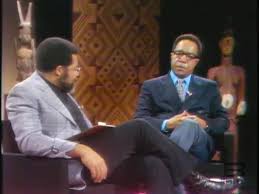
Roosevelt Franklin was created by Matt Robinson, the show’s first “Gordon” (pictured, along with Loretta Long, still the show’s “Susan” in 2024). Decades before “Elmo’s World,” he was the first character to get his own “Sesame Street” segment named after him, “Roosevelt Franklin Elementary School,” a series of skits that had Franklin work as a student teacher at a vibrant, noisy, inner-city school.
Another pioneering power-move: he was the first Sesame Street character to get an album. It was released in 1971 and re-released in 1974.
A mainstay from 1970, the year after Sesame Street began, to 1975, he was even one of the show’s first toys.
So what happened?
“Roosevelt was a victim, ultimately, of middle-class Black respectability politics,” said Burroughs. “Once I saw his arc and how it intersected, and even mirrored, the Black Power Movement and the problems and paradoxes of racial integration and cultural nationalism, I knew I had to do something a little different, to tell the story I began to see in my own mind—basically write the last Black Power memoir about someone who, pun intended, wasn’t going to be The Man’s puppet.”
Published in full and for free on Medium.com, At The Dark End of Sesame Street fills in significant gaps in Roosevelt’s story, giving him friends and mentors—some of whom are very well-known in New York’s Black communities in the early 1970s—and, by doing that, tells fun and interesting tales about television, music, and finding a sense of purpose. Along the way, it exposes the internal tensions that are inevitable when a young Black man tries to balance the demands of white liberalism and Black radicalism during the Black Power era.
“The weirdest part for me was writing a story that mentioned both pioneering New York Congresswoman Shirley Chisolm and Big Bird,” said Burroughs, a lifetime student of New York’s Black public affairs television programming and Black radio history. “TV has always created strange bedfellows, and this novel is no different.”
############

DISCLAIMER: A PEOPLE’S NOVEL: At The Dark End of Sesame Street: The Autobiography of Roosevelt Franklin (OR Coup Tube: The Prose Ballad of Roosevelt Franklin) is a nonprofit work of fanfiction written and posted for free online consumption, and hopefully enjoyment, under Fair Use. Roosevelt Franklin is a fantasy puppet character created by a real Black man, Matt Robinson, for use by the Children’s Television Workshop (CTW), now known as the Sesame Workshop. Sesame Street is a creation of the Children’s Television Workshop for the Public Broadcasting Service and HBO and is trademarked by Sesame Workshop. The Muppets were created by Jim Henson and the CTW. All Sesame Street Muppet characters are trademarked and copyrighted by the Sesame Workshop. All images, names and likenesses of Sesame Street characters, puppets and PBS actors used in this promotional material and in the novel are done under Fair Use. No copyright nor trademark infringement is intended.
A“non-fiction short story,” according to CHATGPT

FLASHED ON MY CELLPHONE: “YOUR OPENAI VERIFICATION CODE IS 44444”
(MEANWHILE ON YOUTUBE, “Star Trek: TOS Enterprise Bridge Background Ambience *8 Hours* w/ quiet conversations, calming,” https://youtu.be/vnU2qn6-hz4, COURTESY OF “ENDER4LIFE,” 24.4K SUBSCRIBERS, HUMS ON MY LAPTOP’S BLACKGROUND)
Okay, let’s finally test this thing out…..
USER
Who is Roosevelt Franklin?
CHAT GPT:
Roosevelt Franklin is a character from the children’s television show Sesame Street. He was created by the show’s producers and made his first appearance in 1970. Roosevelt Franklin is depicted as a young African-American Muppet named after him who attends the fictional Roosevelt Franklin Elementary School.
Roosevelt Franklin’s character was designed to represent a confident and charismatic student, with a focus on teaching children about diversity, self-confidence, and learning. He was known for his energetic personality and his memorable catchphrase, “Yeah, yeah, yeah!”
Although Roosevelt Franklin was a popular character on Sesame Street during the 1970s, he was eventually phased out of the show in the early 1980s. The reasons for his departure were not explicitly stated, but it is believed that the decision was made to address concerns about racial stereotypes and to create a more racially diverse cast of characters on the show.
While Roosevelt Franklin is not as well-known as some of the other iconic characters from Sesame Street, he remains a significant part of the show’s history, particularly for his representation of an African-American character aimed at promoting a positive self-image and education.
Aw, shiiittt! This is what people are talking ‘bout! At least it got one thing wrong: Roosevelt was phased out way earlier than 1980. Actually, two: that was not his catchphrase! Ha! You big dummy! But everything else…Man, I thought Grammarly was powerful! No, three: he was the show’s early breakout character—with his own segment on the show and the first Muppet to get his own album!
Okay, stay calm….You have nothing to prove…..But….Hmmm…
USER:
Hey, do you remember when Fred Sanford used to say, “You big dummy?”
GPT:
Yes, the catchphrase “You big dummy!” was a memorable line often used by the character Fred G. Sanford, portrayed by actor Redd Foxx, in the classic sitcom Sanford and Son. The show aired from 1972 to 1977 and followed the comedic misadventures of Fred Sanford, a junk dealer in Los Angeles. Fred would often playfully insult his son, Lamont, and other characters on the show, punctuating his remarks with the popular phrase, “You big dummy!” It became one of the show’s most well-known and humorous lines.
Now to spring my know-it-all trap!
USER:
But do you remember who said “Good Goobley Goo?”
GPT:
The phrase “Good Goobley Goo” was frequently used by the character Grady Wilson, played by actor Whitman Mayo, on the sitcom Sanford and Son. Grady Wilson was a close friend and neighbor of Fred Sanford and often served as a comedic counterpart to Fred’s antics. “Good Goobley Goo” was one of Grady’s catchphrases and was used as an exclamation or expression of surprise or disbelief. It became associated with the character and added to the humor of the show.
Damn! You ol’ heathen!
USER:
Okay, back to Roosevelt Franklin. What would be a good novel to write about Roosevelt?
GPT:
A potential novel about Roosevelt Franklin could explore his life beyond his time on Sesame Street and delve into his experiences as he grows up and faces various challenges and triumphs. Here’s a concept for a novel that could be developed:
Title: “Resilience Road: The Journey of Roosevelt Franklin”
Synopsis: “Resilience Road: The Journey of Roosevelt Franklin” follows the life of Roosevelt Franklin, the beloved Muppet character from Sesame Street, as he navigates his way through adolescence, young adulthood, and beyond. The novel delves into his personal growth, struggles, and accomplishments, shedding light on his experiences as an African-American individual.
The story could start with Roosevelt Franklin’s departure from Roosevelt Franklin Elementary School and his transition to a new middle school. The novel could explore themes such as identity, acceptance, and overcoming adversity as Roosevelt faces challenges related to race, socio-economic background, and self-discovery.
As the story progresses, Roosevelt could encounter pivotal moments, such as developing a passion for music or becoming involved in community activism. The novel could also introduce a diverse cast of supporting characters who shape Roosevelt’s journey, including friends, mentors, and individuals from different backgrounds who contribute to his personal growth and understanding of the world.
Throughout the narrative, Roosevelt Franklin’s unwavering optimism and determination could serve as a guiding force, inspiring readers to embrace their own uniqueness, rise above obstacles, and advocate for positive change. The novel could explore themes of social justice, equality, and the power of education, highlighting Roosevelt’s ongoing commitment to making a difference in the lives of others.
By portraying Roosevelt Franklin’s life beyond Sesame Street, this novel could serve as an engaging and inspiring story that appeals to readers of various ages while addressing important issues of diversity, resilience, and personal growth.
Note: Since Roosevelt Franklin is a fictional character, the novel would be a work of fiction and not based on any real-life events or experiences.
*Thismotherfucker*…..Almost all my ideas I spent six months working on, all above and generated in *one* minute! And fully outlined yet!
USER:
How should I use Roosevelt Franklin’s album in my novel about him?
GPT:
In your novel about Roosevelt Franklin, you can incorporate his album as a significant element that reflects his passion for music, creativity, and self-expression. Here are a few ways you can use Roosevelt Franklin’s album in your story:
Remember to weave the album organically into the story, using it as a means to deepen the reader’s understanding of Roosevelt Franklin’s character, his journey, and the themes explored in the novel. Whether it’s through his lyrics, performances, or the impact of his music on others, the album can serve as a powerful and meaningful element in your story.
USER:
You sure are easy to use.
GPT:
Thank you for the feedback! I’m here to assist and make your experience as smooth as possible. If you have any more questions or need further assistance, feel free to ask.
USER:
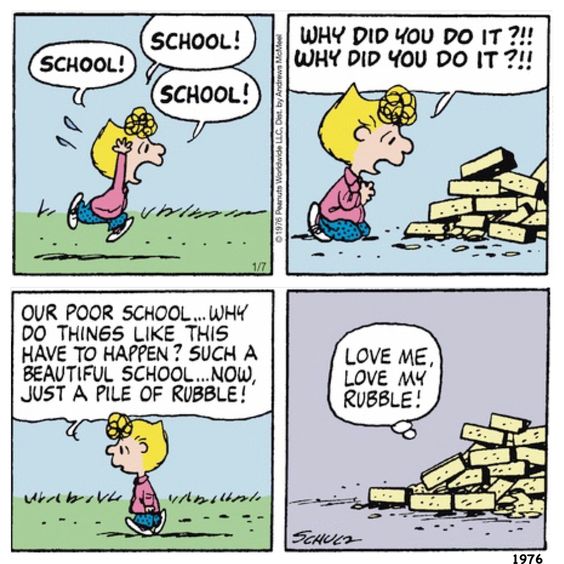
I’m beginning to like you. It’s like when Sally Brown on Peanuts was fussing with her school building, then suddenly said, “Your bricks are cool.” Your bricks are cool, Chat GPT!
GPT:
Thank you for the kind words! I’m glad you’re enjoying our conversation. While I may not have physical bricks like Sally Brown’s school building, I’m here to assist and provide information to the best of my abilities. If you have any more questions or need further assistance, feel free to ask.
Hmm…..Boy, it sure is nice outside…..
USER:
Would you write my Roosevelt Franklin novel for me?
GPT:
I apologize for any confusion, but I cannot directly write a complete novel for you as an AI language model. However, I can certainly assist you by providing guidance, and suggestions, and answering any specific questions you may have during the writing process.
Writing a novel is a creative endeavor that requires your unique voice and vision. It’s an opportunity for you to explore your ideas, develop characters, and shape a narrative that resonates with your vision for Roosevelt Franklin’s story. I encourage you to take the lead in crafting your novel while utilizing my assistance to brainstorm ideas, refine concepts, or seek advice on specific aspects of the story.
If you have any specific questions or need guidance on particular elements of your novel, please feel free to ask, and I’ll be glad to help you further.
USER:
Do you have Sudowrite‘s phone number? -30-
MAY 22nd UPDATE: https://www.hollywoodreporter.com/business/business-news/anonymous-strike-diary-writers-strike-1235497636/
DECEMBER 17th UPDATE: So sad to see this Sally Sequel 😦
It’s Been Beautiful: Soul! and Black Power Television.
By Gayle Wald (with photographs by Chester Higgins).
Durham, N.C.: Duke University Press.
288 pp. $25.95 (trade paperback).
This book understands the right story to tell—one of, in author Gayle Wald’s words, “a fragile alliance of liberal and radical interests, both public and private”–and, thankfully, arrives at the right places. “Soul!” (1968-1973), a nationally distributed public television program that could loosely be described as the radical sister of the more commercial “Soul Train,” fired the imagination and reflected the multi-faceted sensibilities of its Black community of viewers. Using largely untapped wells of research about the early days of American public television vis-à-vis Black America, Wald relates a nuanced story of how the condescension of white American public television officials seeking to provide an outlet for the angry Black community in the late 1960s led to a (largely) Black-controlled showcase of the Black Arts Movement on (largely) Black aesthetic terms. It is the restrained approach, however, of choosing as this book’s scholarship basis intellectual sources outside the “soul” of Black/African folks that makes this book strangely appealing and more than a little irritating.
“Soul!” (episodes of which can be found online) was first a product of Black insurrection. Reacting to that outpouring of anger and violence, white funders, somewhat accidentally, allowed a Black producer, Ellis Haizlip, to have his way. WNET-Channel 13 (now known as Thirteen), then and now the New York-based flagship station of the PBS collective, wanted a companion show to “Black Journal,” its Black newsmagazine. The initial and white idea of a “Black Tonight Show” developed under Haizlip into a Black Arts salon that was cooler than the “The Flip Wilson Show” and Don Cornelius’ large Afro. Wald wisely includes as much of Haizlip’s life story into this book as she can fit. (A documentary film on the “Soul!” producer, done by his niece Melissa Haizlip, is struggling to get funding.) The letters of support “Soul!” received are well used in Wald’s book; they show the involvement of the Black community instead of just describing the appreciation of an audience.
“It’s Been Beautiful” builds somewhat on Devorah Heitner’s “Black Power TV,” a pioneering 2013 intellectual narrative on the early days of East Coast Black public affairs television, and does so with great intellectual gusto. Wald, a professor of English and American Studies at George Washington University, rightly uses the New York-based “Soul!”—a program that would feature, for example, Nikki Giovanni interviewing James Baldwin or a studio performance of The Last Poets, or Earth, Wind and Fire—to find “a key TV text of the era or as a cultural project joined by common cause to 1960s and 1970s political struggles.” The show’s arc matches its era: Martin Luther King, Jr. was killed two weeks before the grant to create the show was submitted, and it was cancelled because PBS’ funders, facing the onslaught of the Nixon era and the fading of the Black Power movement, wanted to create programming that would have Blacks and whites interacting.
Chapters Three and Four—which dissect “Soul!” as a program, along with its performers and producers—are worth the price of the book alone. Wald does not shy away from explaining Black American culture in all its glory and anger. But she doesn’t seem to want to dig into the African, non-Western roots of what she is seeing and describing. She correctly emphasizes the ideological and cultural diversity of the performances, and explores the unity-without-uniformity cultural and political ideology present at the time, but doesn’t want to go in-depth into how Africans in America came to create those products and their ideas in a world drenched in white supremacy and anti-African-ness. Instead, Wald chooses to emphasize the gender and sexual orientation undercurrents of the visual text: “’Soul!’ created a television space where Black people—imagined to include Latinos of various hues who were seeking alternatives to whiteness, Black women marginalized by nationalist conceptions of both the public and private spheres, and Black gays and lesbians rendered as ‘unnatural’ and ‘freakish’—could see, hear and almost feel each other.” For example, she seems more interested in Haizlip’s negotiation of his public gayness than the undiluted African thought processes that produced him and his approach to Black art and the Black community. Wald is not ignorant of African-centered thought; she doesn’t think it’s intellectually relevant enough to examine when quotes from Black Arts Movement stalwarts will do.
The 21st century public television landscape is deeply complicated in ways that this book’s bell-bottom era forecasts. The fact that, for example, on “The PBS NewsHour,” one will find in 2015 occasional in-depth discussions of African and African-American artists and their work is the realization of public broadcasting’s assimilation goals. (After reading Wald, the cross-cultural appeal of PBS’ “Tavis Smiley” could been seen as a page out of a memorandum written by the 1970s PBS executives.) And the 2015 decision by the Sesame Workshop to sell first-run rights of “Sesame Street” to premium cable outlet Home Box Office shows that funding and producing these non-commercial programs are still challenging, even for PBS’ signature programs. So Wald accomplishes with her detail the goal of all scholars: to be both historical and current.
Wald’s and Heitner’s approach to analyzing Black media—focusing on the televisual performance and its socio-political and socio-cultural implications, grounded in European-approved disciplines of American (film) studies, (Black) feminism, queer studies, et. al.—provides both a fascinating read and important scholarship. (Anyone interested in continuing their newly-established tradition should seriously consider studying PBS’ “With Ossie and Ruby,” an almost-forgotten treasure of a Black cultural container similar to “Soul!” in important ways. A study from those perspectives would be fascinating, and perhaps a scholar will one day attempt it.) Ultimately though, Black people need scholarly narratives of these Black cultural television programs from the unapologetic point-of-view of African-centered thought and philosophy.


 Drums in the Global Village