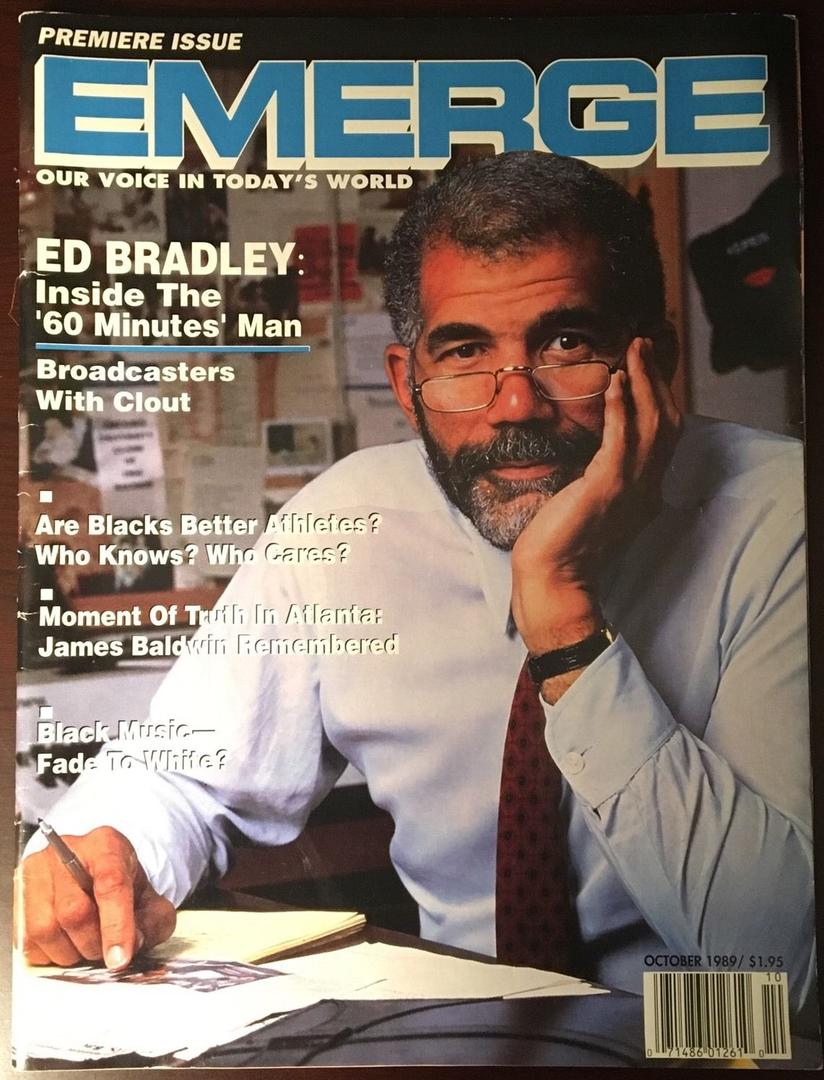
It was originally published in the premiere issue of this magazine.
See the date, right above the bar code?!? Wow! I was 21 then, just hired at a daily newspaper, a ghetto Jimmy Olsen. Post-reading, I was doomed thereafter to roam the post-modern American wilderness looking for this kind of adventure and glossy chronicling opportunity, wishing to become either scribe, ready at any moment to greedily take either role, either side of the Ziegiest mirror. As I got older (note that I’m not writing “more mature”), that role/goal became my criteria to be involved with pretty much anything. Is this where my lifelong obsession with the lives of Black writers started? Hmmm…..
I’ve been laughing all week at how this article–a remembered and reconstructed momentary snapshot of place, person and circumstance, filled with 20th-century American post-rebel historic residue–has defined pretty much my entire life, while for its author, it was just an interesting part of a journalism career that loooong ago ended (he’s now a family therapist and adjunct professor at Antioch University, where he retired from as a pretty popular, multifaceted guy). He traveled light years from the experience, and I didn’t! Maybe I should call him so he can talk me down from the ledge? 🙂
Too long times ago. Two long times ago.
Be careful reading this. The truth moment, reprinted in the latest issue of The James Baldwin Review, is below.
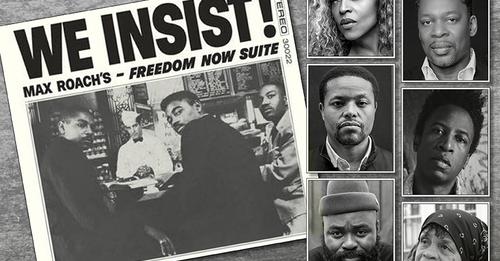
Ras Baraka (reading his father’s poem “Digging Max”):
(At Seventy Five, All The Way Live!) Max is the highest The outest the Largest, the greatest The fastest, the hippest, The all the way past which There cannot be
When we say MAX, that’s what We mean, hip always Clean. That’s our word For Artist, Djali, Nzuri Ngoma, Senor Congero, Leader, Mwalimu, Scientist of Sound, Sonic Designer, Trappist Definer, Composer, Revolutionary Democrat, Bird’s Black Injun Engine, Brownie’s Other Half, Abbey’s Djeli-ya-Graph Who bakes the Western industrial singing machine Into temperatures of syncopated beyondness
Out Sharp Mean
Papa Joe’s Successor Philly Joe’s Confessor AT’s mentor, Roy Haynes’ Inventor, Steve McCall’s Trainer, Ask Buhainia. Jimmy Cobb, Elvin or Klook Or even Sunny Murray, when he aint in a hurry. Milford is down and Roy Brooks Is one of his cooks. Tony Williams, Jack DeJohnette, Andrew Cyrille can tell you or youngish Pheeroan Beaver and Blackwell and my man, Dennis Charles. They’ll run it down, ask them the next time they in town.
Ask any or all of the rhythm’n. Shadow cd tell you, so could Shelly Manne, Chico Hamilton. Rashid knows, Billy Hart. Eddie Crawford From Newark has split, but he and Eddie Gladden could speak on it. Mtume, if he will. Big Black can speak. Let Tito Puente run it down, He and Max were tight since they were babies in this town.
Frankie Dunlop cd tell you and he speak a long time. Pretty Purdy is hip. Max hit with Duke at Eighteen He played with Benny Carter when he first made the scene. Dig the heavy learning that went with that. Newk knows, And McCoy. CT would agree. Hey, ask me or Archie or Michael Carvin Percy Heath, Jackie Mc are all hip to the Max Attack.
Barry Harris can tell you. You in touch with Monk or Bird? Ask Bud if you see him, You know he know, even after the cops Beat him Un Poco Loco. I mean you can ask Pharaoh or David Or Dizzy, when he come out of hiding, its a trick Diz just outta sight. I heard Con Alma and Diz and Max In Paris, just the other night.
But ask anybody conscious, who Max Roach be. Miles certainly knew And Coltrane too. All the cats who know the science of Drum, know where our Last dispensation come from. That’s why we call him, MAX, the ultimate, The Furthest Star. The eternal internal, the visible invisible, the message From afar.
All Hail, MAX, from On to Dignataria to Serious and even beyond! He is the mighty SCARAB, Roach the SCARAB, immortal as our music, world without end. Great artist Universal Teacher, and for any Digger One of our deepest friends! Hey MAX! MAX! MAX!
Me (after an hour): Oh, that’s Cassandra Wilson!
Saul Williams:The music carries memory
Me: Yaas……
Sonia Sanchez:Keep that beat
Williams: We run on different fuels
Sanchez (reading one of many haikus for Max): your sounds exploding in the universe return to earth in prayer
Sanchez: I teach my students how to write haiku because it is one long prayer
As usual, I’ve gotta come here to fix my many goofs! The “her” I’m talking about @ 00:27:00 is Melissa Haizlip, director of the Mr. Soul film and the niece of the Soul! host/producer.
My passionate first few minutes here are a manifestation of my core belief that writers should take sides but not necessarily be on sides. Big difference.
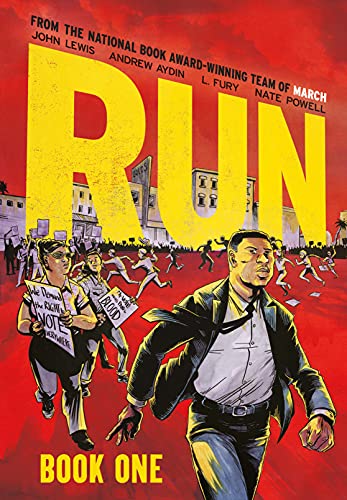
John Lewis and Andrew Aydin. Art by L. Fury and Nate Powell.
New York: Abrams Comic Arts, in conjunction with Good Trouble Productions, 154 pp., $24.99.
The change of artist did nothing to hinder the entrance into John Lewis’ world: one of bloodshed, and courage and almost constant activity and sound. Kudos to co-writer Andrew Aydin and artist L. Fury, who took the baton well from Nate Powell. The award-winning March (examined by this reviewer here) is followed up with a new triology, completed in text just before the congressman’s death last year. In this first installment, Lewis slowly realizes that the attributes that propelled him to Movement leadership–Christian witness, closeness to the Reverend Dr. Martin Luther King (derisively called “Da Lawd” by some youth activists) and a belief in integrated work–has got him ousted from his beloved Student Nonviolent Coordinating Committee. It’s a time of X marking new spots, of Watts and draft cards afire, of Black Power shouted, of Stokely Carmichael ascendant, of Black self-determination on Black terms, and Lewis is exhausted. To Be Continued in Book Two. After all these decades, it is sad to see Lewis still refer to Black nationalism as Black “separatism”–as if such nationalism was still some abberation–but at least he explained in detail here why some thought it justified. Wedded to American thoughts and ideals, the hero decides not to put on a new face but to find a new place and space.
This film–a very timely look, particularly with what’s going on now, at this very moment–is quite a detailed look at the real Martin Luther King and the real Federal Bureau of Investigation. With the sheets pulled off everybody, this film is almost an intellectual nudist camp, allowing the viewer to absorb an-often sordid story that, as Ronald Reagan (!) warns at the beginning, isn’t pretty. Yep, King’s extramarital sextape is real, and the FBI did try its best within its own twisted bounds of evil legality to destroy him. Along the way, the viewer sees King’s trajectory through the eyes of the Federal Bureau of Investigation–the radical King, the one only the Left or Black nationalists talk about. The filmmakers punk out at the end, though, choosing not to sift through the detailof theassassination itself and not explaining the larger and smaller intelligence agencies, or philosophies thereof, at work. (The Black context of King’s death is here, in what seems to be a 1969 episode of Black Journal, when the national black public-affairs television show and the wound were both still fresh.) The oral-history-format (just voices, no speaking-heads until the very end) and extensive use of file footage, from newsreels to television shows, is combined with the fine-tooth-comb research of David Garrow and others. This is the proper documentary to watch as America’s scabs are bleeding.



 Drums in the Global Village