#WABJ Mourns The Loss of Longtime #BlackPress Journalist James Wright

The Washington Association of Black Journalists (WABJ) is deeply saddened by the passing of longtime journalist James L. Wright Jr., a three-decade writer for Black newspapers such as The AFRO-American and The Washington Informer as well as mainstream newspapers such as The Washington Post until his death at the age of 62.

Wright died of natural causes in his Seat Pleasant home, according to The Informer, the newspaper in which he was most associated.

The proud Texan became a pillar in the Washington, D.C. community. Wright covered business, politics and pivotal moments that shaped our city.  DC Mayor Muriel Bower said, “I knew him from my earliest days in government as a strong, fair, and honest writer who cared deeply about his city. Most of all, he loved Washingtonians and telling the stories of the least, the lost, and the left out. His connection to his readers was unparalleled.”

Many of DC’s political leaders on social media remember the dignity Wright put into his work, and the impactful stories he told. Congresswoman Eleanor Holmes Norton wrote on Facebook, “James interviewed me many times over the years as he covered the District with uncommon depth, fairness, and genuine respect for his fellow DC residents.”  Councilmember Janeese Lewis George wrote on X, “He was an extraordinary journalist who truly cared about centering DC history and local stories.”  Councilmember Kenyan McDuffie wrote, “James L. Wright Jr.’s voice was a trusted mirror and a steady bridge across the city. His journalism meant a great deal to our city and its residents, informing daily life, building trust, and sharing the stories that uplifted the very best of our city.”

Wright’s impactful work reached global audiences as he sat down with foreign leaders, including Moammar Gaddafi of Libya and Thabo Mbeki of South Africa. His work expanded across the United States, and all over the world including Afghanistan, Ghana, South Africa, Libya, Zimbabwe, Italy, and the United Kingdom.

At WABJ’s 2025 Special Honors & Scholarship Gala, WABJ President Phil Lewis shouted out Wright for his efforts in lending a helping hand with the gala. Phil Lewis said, “James Wright was a fierce advocate for journalists.  He loved this city and his work. He will be deeply missed.”

Wright joined Alpha Phi Alpha Fraternity, Incorporated, Eta Gamma Chapter at Prairie View A&M University in 1984.  He became a life member of  Alpha Phi Alpha, and served through the Mu Lambda Chapter.  He formerly served as vice president of the Seat Pleasant City Council, and was the church historian at Asbury United Methodist Church in Washington, D.C.

###

Founded in 1975, the Washington Association of Black Journalists is an organization for African-American journalists, journalism professors, public relations professionals and student journalists in the Washington, D.C., metro area. WABJ provides members with ongoing professional education opportunities and advocates for greater diversification of the profession.

https://www.phillytrib.com/obituaries/james-wright-washington-informer-writer-dies-at-62/article_62855e77-730a-4687-8bf9-c6c3ea1a648b.html

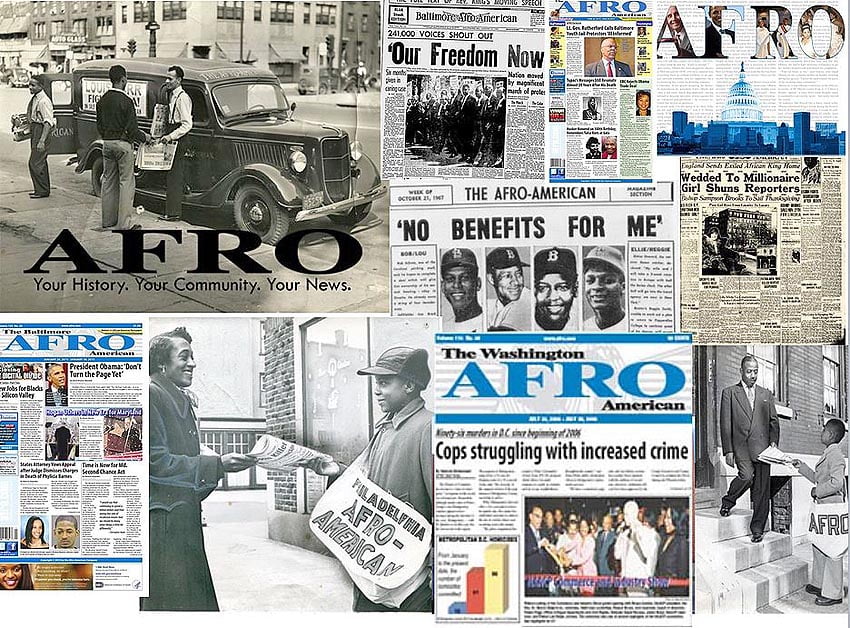
An Important Website For/About The 20th Century World Black Press

https://revolutionarypapers.org/

#TodayinBlackHistory #BlackHistory #NewarkHistory #BlackPressHistory #NewspaperHistory #apartheid #SouthAfrica #SouthAfricaHistory #antiapartheid #antiapartheidhistory #NewJerseyHistory #PeoplesOrganizationforProgress #AfroAmericanNewspaper #NewJerseyAFRO Today Is….

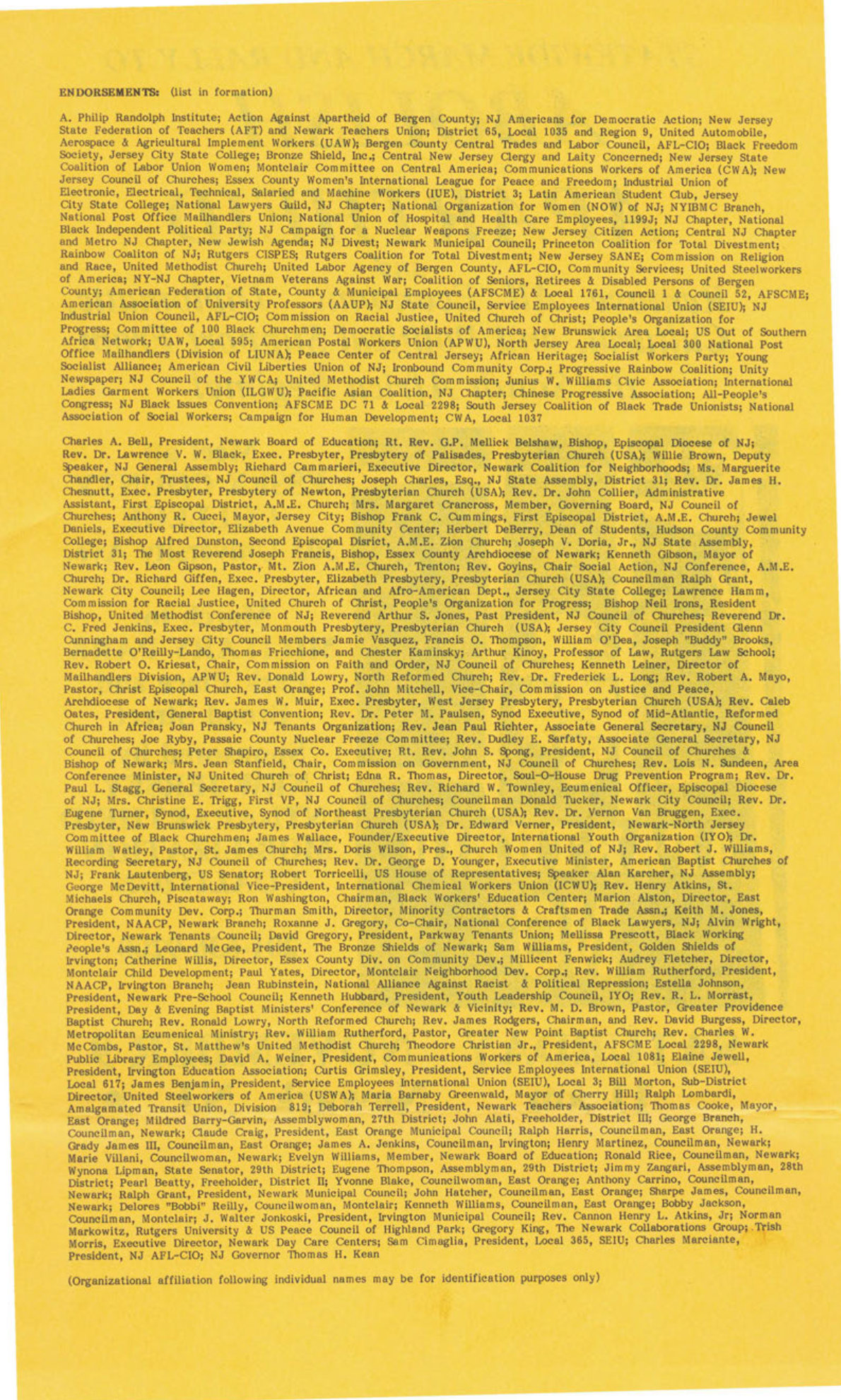
….the 40th anniversary of the event that spurred my first published article ever, done for the 4,000-circulation weekly. It was about a massive anti-apartheid march in Newark, N.J.

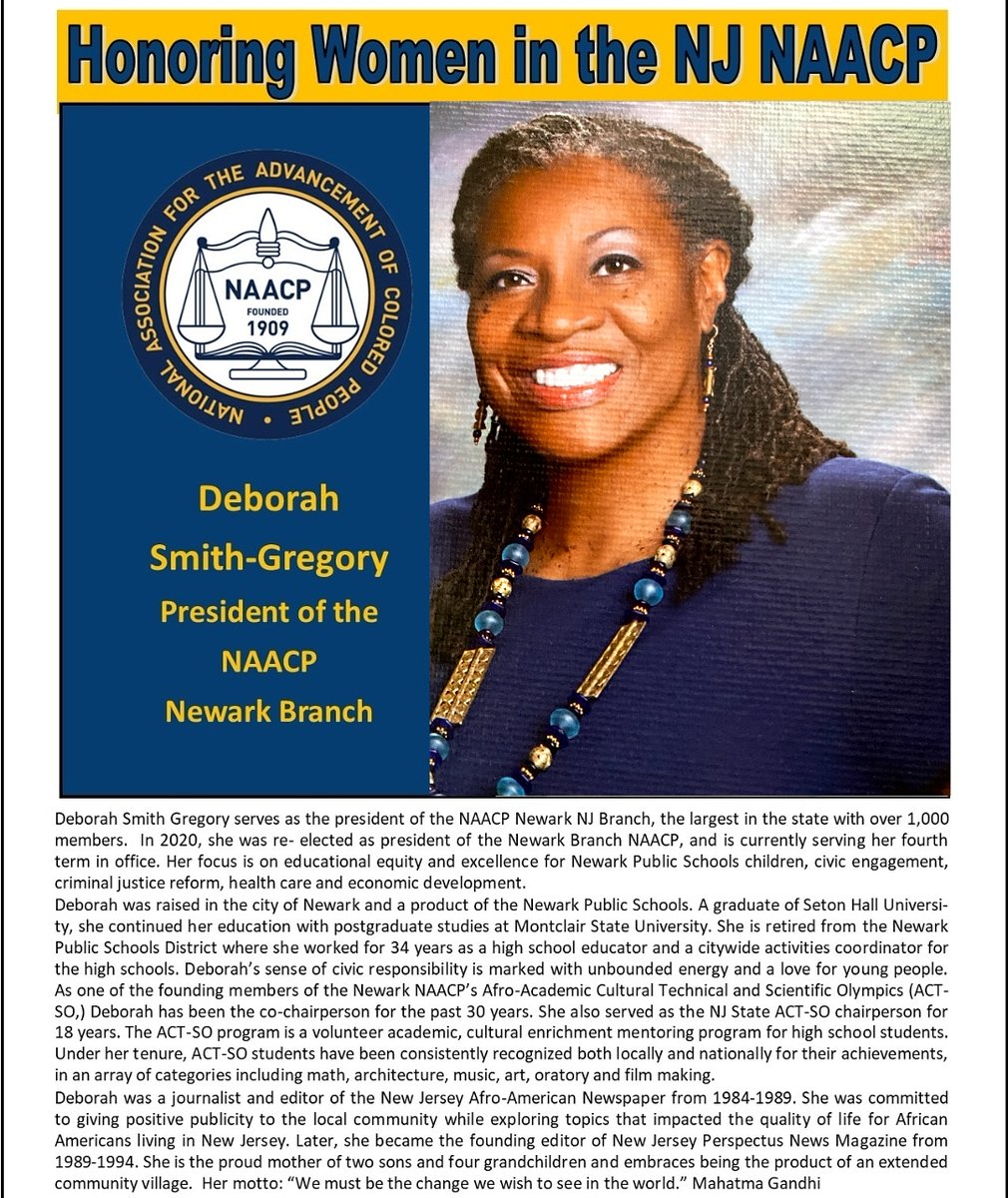
I was folded into The New Jersey Afro-American by Deborah P. Smith-Gregory, the article’s key and lead author.

Deborah worked for local Afro legends Harry B. Webber and editor-in-chief Bob Queen. She would succeed him in 1987, becoming the paper’s first woman editor.

From here:

Robert C. Queen (1912-1996) was born in Newark and served most of his life as a reporter and newspaper editor. Queen’s career started in 1938 when he was a reporter for the New Jersey Guardian. Later he was a writer and city editor for The New Jersey Herald. In the 1950s, he was managing editor of The Philadelphia Independent. Subsequently, he worked for the Philadelphia offices of The Pittsburgh Courier. In 1963, he returned to Philadelphia to become managing editor of the Philadelphia edition of The Afro-American. His final stop required him to return to Newark as editor of The New Jersey Afro-American. For the better part of a half century, Bob Queen covered Newark’s political and entertainment scenes, telling stories of interest to African-Americans that tended to be overlooked, misunderstood or forgotten by mainstream journalists. Former city councilman Calvin West recently recalled how, when he and Irvine Turner, Newark’s first black councilman, were in office, Queen made it a point to report the African-American viewpoint. The son of a lawyer, Bob Queen had little formal training in journalism, yet he was one of his era’s best reporters. A contemporary reporter described him as a mover and shaker in the Newark community and beyond. During his lengthy career, Queen interviewed Roy White, one of the famous Scottsboro Boys. He also wrote of nightlife in Trenton, where he played piano in his youth at local watering holes. Like other leaders, Queen gave of his time and talents to many organizations, including the Philadelphia Citizens’ Committee, Sigma Delta Chi Journalistic Society, and the Philadelphia Child Development Program. His honors included an award for journalism from Temple University, the W.E.B. Dubois Award from the Newark Branch of the NAACP and the New Jersey Association of Black Journalists’ award. Queen also received an honorary doctorate from Essex County College, was inducted into the Black Press Hall of Fame and was cited by the Garden State Association of Black Journalists. He was well thought of by contemporaries such as Sally Carroll of the Newark NAACP. As his wife, Edna, commented, ‘Once you knew him, you had a friend for life.’ Old-schooled and gentlemanly, Queen was indeed a friend to his many colleagues and associates.

#BlackLiberationMedia: “#SaturdayNightLive Banned This Cartoon!” (Part IV of a Series On #BLM, Cartoons and Propaganda)

#BlackLiberationMedia: “Cartoons and Capitalism ft. Dr. Todd Steven Burroughs” (Coda/Part III of III)

#TriceEdneyNewsWire: “Photographer Roy Lewis Honored by #NationalAssociationofBlackJournalists #NABJ at Chicago Confab” By Hamil R. Harris

Every Black community has somebody like Roy Lewis. When I lived in the D.C. area and was at a Black political event, the way I knew I was at the main one of the day was spotting Roy, clicking away.

*****

Having taken thousands of photos of people receiving awards and making news, Roy Lewis waited his turn to be honored by the National Association of Black Journalists. PHOTO: Roland Martin/#Roland Martin Unfiltered
Roy Lewis, relaxing later with his NABJ Legacy Award.

Roy Lewis (center) receives the Legacy Award from NABJ representatives Frank Holland of CNBC and Abby Phillip of CNN. PHOTO: Roland Martin/#Roland Martin Unfiltered


September 2, 2024

Photographer Roy Lewis Honored by NABJ at Chicago Confab

By Hamil R. Harris

(TriceEdneyWire.com) – Roy Lewis has photographed iconic images across Black America for decades and his love for the lens was captured by Jet magazine in 1964 when it published his photograph of pianist Thelonious Monk.
Born in 1937, on a plantation below Natchez, Mississippi, Lewis’s resourcefulness is part of his gift. He first fell in love with vocational photography in high school. He later practiced that love on a professional level at the Johnson Publishing Company on South Michigan Avenue in Chicago. He earned the money for a 35-mm camera after he was drafted into the U.S. Army.
This summer, Lewis, 87, was back on South Michigan Avenue in Chicago, but not at the John H. Johnson headquarters. He was there to receive “special honors,” at the convention of the National Association of Black Journalists.“I worked for Mr. Johnson from 1956 to 1968 and then to be honored on this Avenue…” Lewis said. “It’s not about the pictures; it’s about the feeling of being honored by your peers and being back in Chicago, where I did some of my top work.”
Lewis was bestowed with the Legacy Award during NABJ’s annual convention in August. The Legacy Award recognizes a Black print, broadcast, digital, or photojournalist of “extraordinary accomplishment who has broken barriers and blazed trails.”
Legacy Award honorees are those who have “contributed to the understanding or advancement of people and issues in the African Diaspora,” according to NABJ.
The NABJ wrote, “Lewis is a renowned photographer and activist whose photography career started in 1964 when Jet magazine published his photograph of musician Thelonious Monk. His work has been celebrated nationwide, including in his ‘Everywhere with Roy Lewis Exhibition,’ beginning in 2008 at the Essence Music Festival.”
Lewis, who left Chicago in 1973 and moved to Washington D.C., was nominated for the award by Sam Ford, a founding member of the NABJ who worked for more than 51 years as an award-winning broadcaster for three decades on air at WJLA-TV, Washington, D.C.’s ABC affiliate.
“Roy has been part of the Washington press corps for as far as I can remember,” Ford said. “Roy started taking pictures when he was 17 years old. He will be 87 this year…That is more than 70 years connected with the news media except when he was in the army.”
Lewis also worked in his hometown paper in Natchez and went back to work for Ebony and Jet after the army. He has a large collection of pictures from his days at Ebony and Jet from the 1960s and he is still a photographer for The Washington Informer newspaper, the Trice Edney News Wire and the NNPA News Service, which serves 200 Black newspapers and their websites. “I thought he needed recognition. When a person is going for 87 years you don’t want to wait too long,” Ford said.
According to Lewis’ HistoryMakers biography, he was drafted in 1960, and he developed his photography talent in the army. He purchased his first camera for just $25. In 1968, Lewis left Johnson Publishing and joined the staff at Northeastern University, filming student activities. In 1970, Lewis videotaped an exclusive interview with the late Honorable Elijah Muhammad. Lewis’s work was featured in the film A Nation of Common Sense. In 1974, Lewis traveled to Zaire to film the Muhammad Ali-George Foreman fight. This historic video would later be featured in the documentary on that classic clash, When We Were Kings. In 1975, Lewis worked on River Road on the Mississippi, a pictorial book that focused on African-American people and life along the Mississippi River.
Dr. Ben Chavis, NNPA president/CEO, said in an interview, “The National Newspaper Publishers Association salutes Roy Lewis as a phenomenal photojournalist and for his long-standing contribution to freedom, justice, and equality. Roy Lewis is an icon of the Black Press.”
Likewise, Hazel Trice Edney, editor-in-chief of the Trice Edney News Wire, said, “Roy Lewis’s name is synonymous with excellence in Black Press photography.” Under her leadership as president of the Capital Press Club in 2014, Lewis was also an award recipient during the CPC’s 70th anniversary celebration. She said, “Roy is deserving, not just because of great and historic photography, but because of his commitment to the cause.” 
Trice Edney Communications | 6817 Georgia Avenue | Washington, DC 20012 US I Unsubscribe | Update Profile | Constant Contact Data Notice

Ida Bell Wells-Barnett Symposium @ Columbia University

Book Mini-Review: The Glossy Raised Fist

Writing history, making history, repeating for generations, then becoming history

Our Kind of Historian: The Work and Activism of Lerone Bennett, Jr.

E. James West.

Amherst and Boston: University of Massachusetts Press, 328 pp., $27.95.

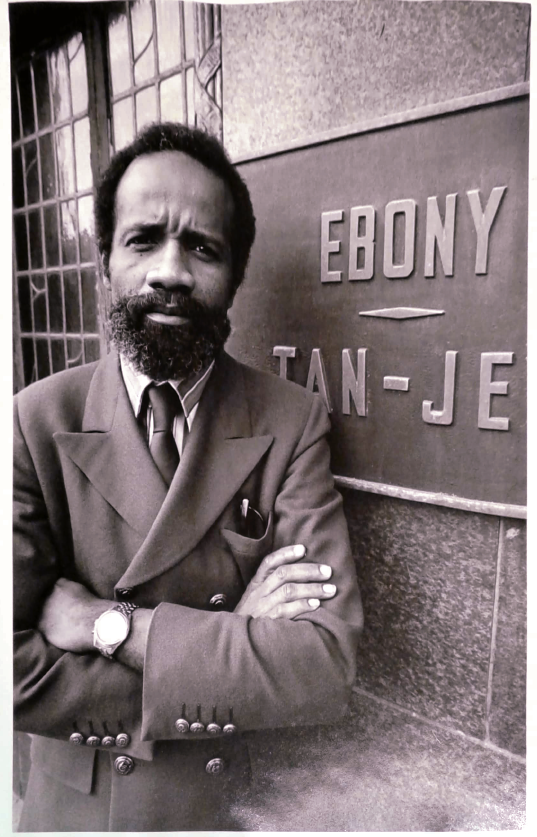
West uses his mastery of the histories of Black Chicago and Ebony/Jet well here, significantly building on and adding to his previous work on the topic. An author explains an author in a wonderful intellectual history that sticks to very exciting facts: Lerone Bennett rises in a rising time, gaining knowledge and experience and pointing them toward what he would call in print the Black Revolution. He transforms himself from journalist to historian, from moderate, Kappa Morehouse Man to Pan-Africanist revolutionary. Absolutely necessary for those who want to understand 20th-century Black press history and, perhaps more importantly, how one “Black-famous” author’s Black history texts–all the outgrowth of one national Black magazine, a 20th-century legend once on every Black American coffee table–were significant weapons in the Black struggle before African-Americans had full access to local and national broadcasting and now international streaming.

New Book On Lerone Bennett Jr. Out Now!

A 20th-century one-of-a-kind, forged and operating during a historical era

I put my request in tonight, and I can’t wait!!!!