Tag Archives: 20th century American history
“Across the River from #NYC: The Untold Story of #Newark ’s Forgotten Glory” | World View Documentary
#CBS Special – “The Fantastic #Funnies” [with #LoniAnderson] – #WBBMTV (1980) #NewspaperComicStrips #ComicStrips
Ah, to read #comicstrips on the #newspaper page…. 🙂
And one of the first animated series I remember, one from a newspaper #newspapercomicstrip #comicstrip… 🙂
In the mid-70s, the various #Archie network Saturday morning cartoons from the late ’60s-early ’70s were combined to a weekday, second-run syndicated “wheel” called #TheArchies. One of those cartoons, #ArchiesTVFunnies, starred the #Archie gang #Archiegang as network TV operators/executives presenting animated versions of newspaper comic strips:
AUGUST 3rd UPDATE:

SEPTEMBER 7th UPDATE:
Every Writer Has At Least One Book Or Article That *Forced* Him/Her/They Into The Pain And Madness. I Recently Found A Key One That Made Me Myself.
It was originally published in the premiere issue of this magazine.
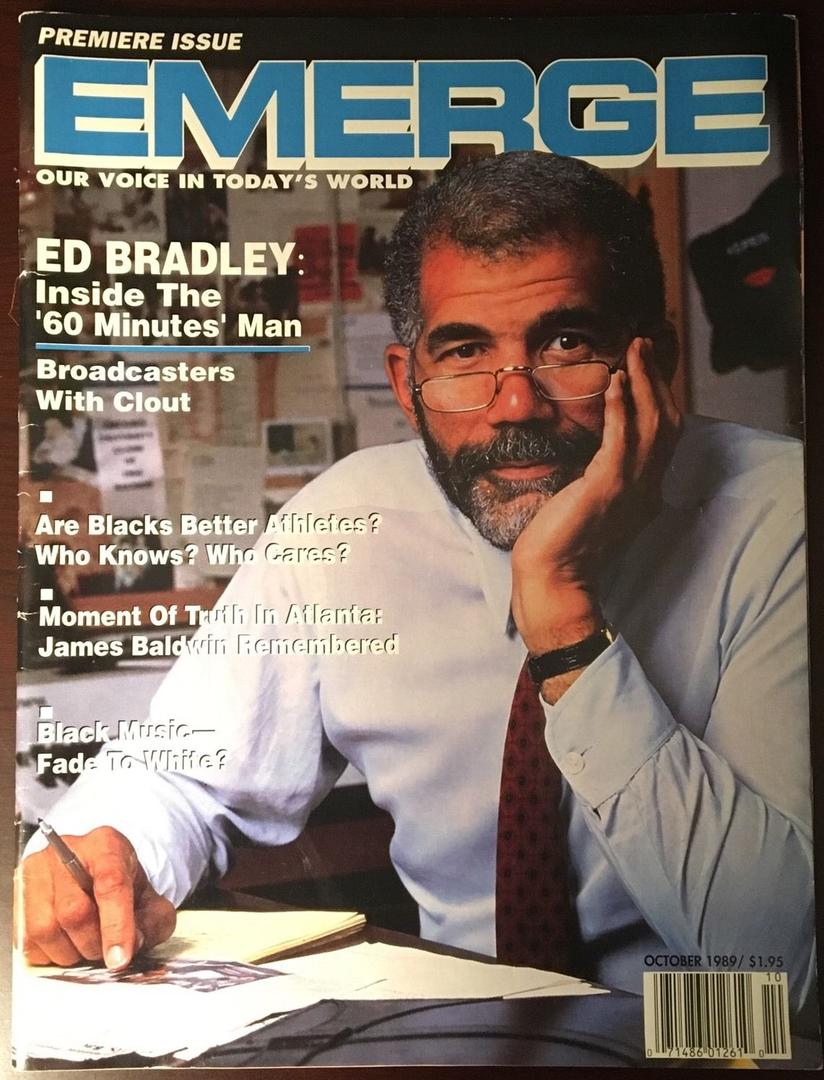
See the date, right above the bar code?!? Wow! I was 21 then, just hired at a daily newspaper, a ghetto Jimmy Olsen. Post-reading, I was doomed thereafter to roam the post-modern American wilderness looking for this kind of adventure and glossy chronicling opportunity, wishing to become either scribe, ready at any moment to greedily take either role, either side of the Ziegiest mirror. As I got older (note that I’m not writing “more mature”), that role/goal became my criteria to be involved with pretty much anything. Is this where my lifelong obsession with the lives of Black writers started? Hmmm…..
I’ve been laughing all week at how this article–a remembered and reconstructed momentary snapshot of place, person and circumstance, filled with 20th-century American post-rebel historic residue–has defined pretty much my entire life, while for its author, it was just an interesting part of a journalism career that loooong ago ended (he’s now a family therapist and adjunct professor at Antioch University, where he retired from as a pretty popular, multifaceted guy). He traveled light years from the experience, and I didn’t! Maybe I should call him so he can talk me down from the ledge? 🙂
Too long times ago. Two long times ago.
Be careful reading this. The truth moment, reprinted in the latest issue of The James Baldwin Review, is below.
#JaredBall And I Discuss The Life And Legacy Of Lerone Bennett Jr. w/ Bennett Biographer E. James West
Hands-down, one of my favorite BPM discussions.
Book Mini-Review: The Glossy Raised Fist

Our Kind of Historian: The Work and Activism of Lerone Bennett, Jr.
Amherst and Boston: University of Massachusetts Press, 328 pp., $27.95.
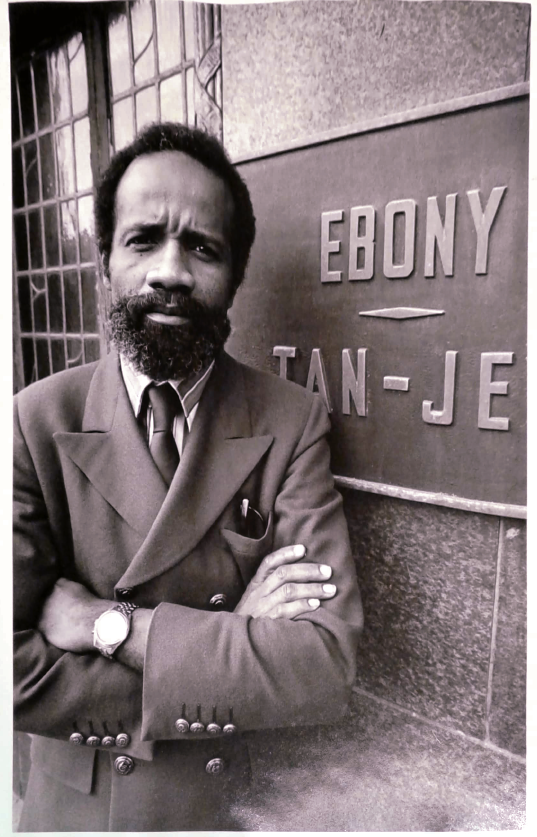
West uses his mastery of the histories of Black Chicago and Ebony/Jet well here, significantly building on and adding to his previous work on the topic. An author explains an author in a wonderful intellectual history that sticks to very exciting facts: Lerone Bennett rises in a rising time, gaining knowledge and experience and pointing them toward what he would call in print the Black Revolution. He transforms himself from journalist to historian, from moderate, Kappa Morehouse Man to Pan-Africanist revolutionary. Absolutely necessary for those who want to understand 20th-century Black press history and, perhaps more importantly, how one “Black-famous” author’s Black history texts–all the outgrowth of one national Black magazine, a 20th-century legend once on every Black American coffee table–were significant weapons in the Black struggle before African-Americans had full access to local and national broadcasting and now international streaming.
New Book On Lerone Bennett Jr. Out Now!
I put my request in tonight, and I can’t wait!!!!


 Drums in the Global Village