My Response To Dara Horn of #TheAtlanticmag

This is an edited version of what I left in her email prompt on her website:
“Hello, first of all, I want to say that I admire the passion of/in your writing. Yes, take no prisoners (pun unintended). I think you wrote something for The Smithsonian about Anne Frank that I really enjoyed.
“Since we no longer have an old Village Voice Letters Page to emphatically argue these points:
“I appreciated your article. I’m unapologetically on the other side of this issue. Because of that (most of my tears are for those Palestinian babies), I would have appreciated it a lot more if it had carried this paragraph or something like it, using your argument and tone:
*****
‘Many people–including some of my fellow, deluded Jewish Americans–incorrectly believe that Israel is an apartheid state. Therefore, openly supporting such a state, in their (the activists’) view, means that they (the victims in the article) are fair game, whether in Harvard Yard or at a music festival in Israel. I think this ‘thinking’ is morally, politically and spiritually bankrupt and I would have believed so if there was a substantial Afrikanner-American population in the United States being abused during the apartheid years. (There was not.) No one has the right to make an American citizen, privileged or not, feel unsafe in the United States because of their views of, and open love for, their ancestral homeland.’
*****
“We’ll agree to disagree on this one. But thanks again for that work on Anne Frank.
–TSB”
“X-Men ’97” Official Trailer
I remember so clearly when this was “sneak-peek”ed in the fall 1992. It feels like a lifetime ago: I had just started grad school. It was on #FoxKids, home of #BatmanTheAnimatedSeries. I hadn’t read a X-Men comic since 1985 so I didn’t know half the team’s members. I quickly learned and for much of the ’90s dopamine instantly flooded my insides whenever I heard the words, “Previously, on ‘X-Men’….” So, #MarvelEntertainment #MarvelEnterprises, please air these *in order* this time? An advance THANKS!
MARCH 25th UPDATE: WOW, WOW, WOW! What a debut!
Finally! Fantastic Four Cast!
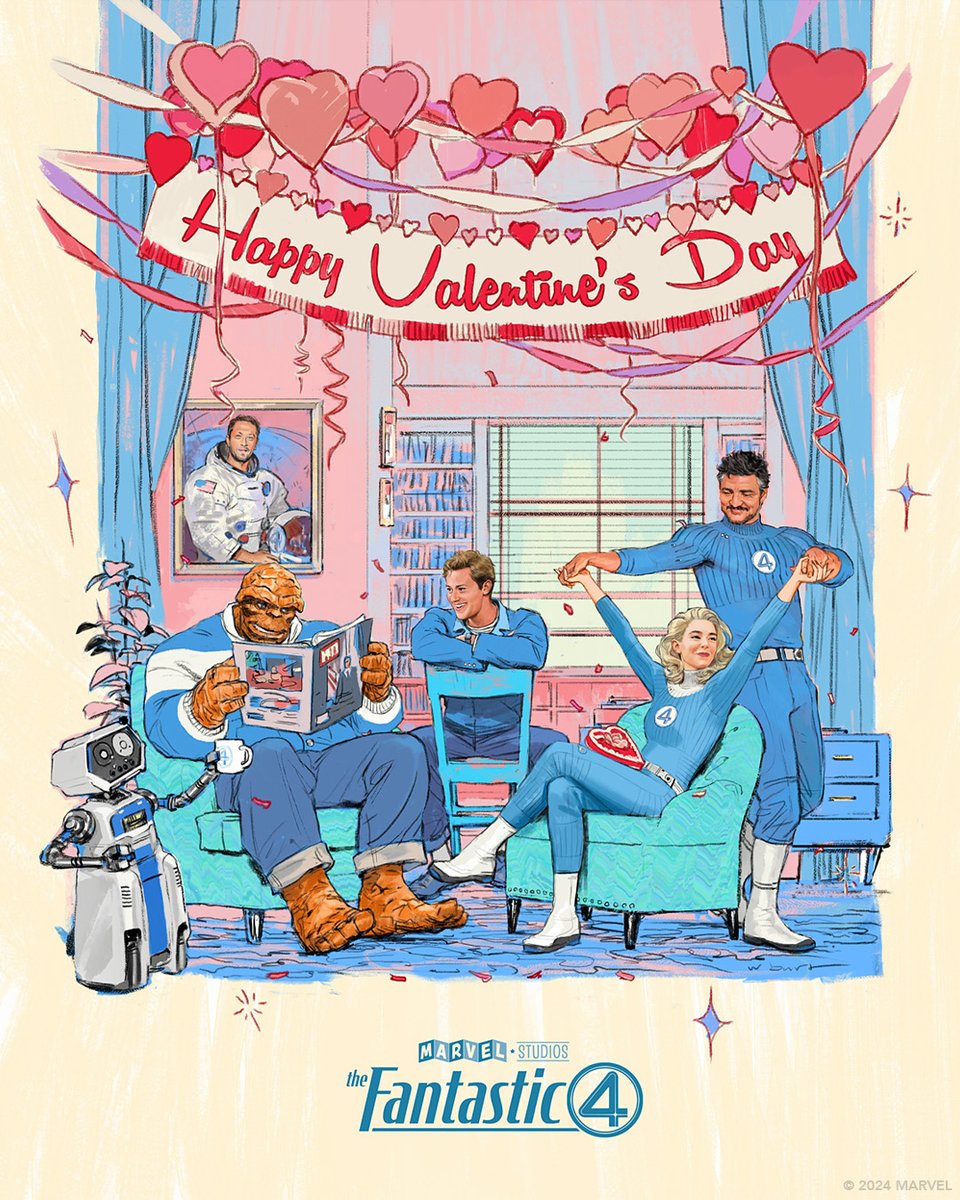
Best Valentine’s Day EVER 🙂
From AI:
Generative AI is experimental. Learn more
Marvel Studios announced the cast for The Fantastic Four on Valentine’s Day, 2024, with a Valentine’s Day-themed art on Instagram:
Pedro Pascal: Plays Reed Richards/Mr. Fantastic
Vanessa Kirby: Plays Sue Storm
Ebon Moss-Bachrach: Plays Ben Grimm
Joseph Quinn: Plays Johnny Storm
FEBRUARY 22 UPDATE: This FF-oriented image was used for this article on Marvel’s attempt to fix itself.

JULY 1, 2025 UPDATE:
JULY 5th UPDATE:
JULY 6th UPDATE:
JULY 9th UPDATE:
JULY 11th UPDATE:
JULY 18th:
JULY 25th:
AUGUST 1st:
Happy Valentine’s Day 2024!
Back to a time when, as Dr. Jared Ball said to me on Black Power Media last year, “we thought we were happier. ” 🙂
Happy African Heritage Month!
🙂
PRESS RELEASE: He Was A Black Power Icon On “Sesame Street.” Then He Was Evicted. A New, Free Online Novel On Medium.com Tells The Full Story Of America’s First Black Muppet.
February 1, 2024
FOR IMMEDIATE RELEASE
CONTACT: Todd Steven Burroughs (toddpanther@gmail.com/@ToddStevenBurr1)
NEW, FREE ONLINE NOVEL ON MEDIUM.COM TELLS THE STORY OF HOW AMERICA’S FIRST BLACK MUPPET, A SYMBOL OF THE BLACK POWER MOVEMENT, WAS EVICTED FROM “SESAME STREET”
A PEOPLE’S NOVEL: At The Dark End of Sesame Street: The Autobiography of Roosevelt Franklin
(OR
Coup Tube: The Prose Ballad of Roosevelt Franklin)

Roosevelt Franklin, one of the first breakout stars of Sesame Street, has been called “The Black Elmo” but he’s really a Black Power pioneer. It’s why author Todd Steven Burroughs decided to take the plunge and further fictionalize the life of a network TV puppet.
“The more I read about Roosevelt, the more I realize that a puppet actually went through the Black Power experience,” said Burroughs, who, at 56, was part of the first generation of American toddlers to watch the then-brand-new “Sesame Street” on PBS. So it was clear to him that Roosevelt’s “life” had to be explored in-depth.
“Originally I was going to write an article, but that had been done to death already,” said Burroughs, a freelance writer and public historian. “I was going to make it a little different by doing one of those long magazine pieces that would have allowed Roosevelt his first-person segment—a mini-platform to tell his own story—and that idea expanded into this attempt at fan fiction.”
Roosevelt Franklin was created by Matt Robinson, the show’s first “Gordon” (pictured, along with Loretta Long, still the show’s “Susan” in 2024). Decades before “Elmo’s World,” he was the first character to get his own “Sesame Street” segment named after him, “Roosevelt Franklin Elementary School,” a series of skits that had Franklin work as a student teacher at a vibrant, noisy, inner-city school.
Another pioneering power-move: he was the first Sesame Street character to get an album. It was released in 1971 and re-released in 1974.
A mainstay from 1970, the year after Sesame Street began, to 1975, he was even one of the show’s first toys.
So what happened?
“Roosevelt was a victim, ultimately, of middle-class Black respectability politics,” said Burroughs. “Once I saw his arc and how it intersected, and even mirrored, the Black Power Movement and the problems and paradoxes of racial integration and cultural nationalism, I knew I had to do something a little different, to tell the story I began to see in my own mind—basically write the last Black Power memoir about someone who, pun intended, wasn’t going to be The Man’s puppet.”
Published in full and for free on Medium.com, At The Dark End of Sesame Street fills in significant gaps in Roosevelt’s story, giving him friends and mentors—some of whom are very well-known in New York’s Black communities in the early 1970s—and, by doing that, tells fun and interesting tales about television, music, and finding a sense of purpose. Along the way, it exposes the internal tensions that are inevitable when a young Black man tries to balance the demands of white liberalism and Black radicalism during the Black Power era.
“The weirdest part for me was writing a story that mentioned both pioneering New York Congresswoman Shirley Chisolm and Big Bird,” said Burroughs, a lifetime student of New York’s Black public affairs television programming and Black radio history. “TV has always created strange bedfellows, and this novel is no different.”
############

DISCLAIMER: A PEOPLE’S NOVEL: At The Dark End of Sesame Street: The Autobiography of Roosevelt Franklin (OR Coup Tube: The Prose Ballad of Roosevelt Franklin) is a nonprofit work of fanfiction written and posted for free online consumption, and hopefully enjoyment, under Fair Use. Roosevelt Franklin is a fantasy puppet character created by a real Black man, Matt Robinson, for use by the Children’s Television Workshop (CTW), now known as the Sesame Workshop. Sesame Street is a creation of the Children’s Television Workshop for the Public Broadcasting Service and HBO and is trademarked by Sesame Workshop. The Muppets were created by Jim Henson and the CTW. All Sesame Street Muppet characters are trademarked and copyrighted by the Sesame Workshop. All images, names and likenesses of Sesame Street characters, puppets and PBS actors used in this promotional material and in the novel are done under Fair Use. No copyright nor trademark infringement is intended.
Upcoming: Mumia Vs. Oprah?

All Of Our “Back In The Days” :) (Or: R.I.P., Or Last-Rites I.C.U., 20th-Century Post-World-War II Print Magazine Culture)
Since we all have this kind of song in us, here’s mine! The funny part is that I never experienced this “full monty” directly or fully as a wannabe magazine writer. (Thanks, Victoria Valentine, for letting me write for The Crisis! Thanks, Marcus Reeves, for connecting me with The Source‘s Akiba Solomon, who connected me with E. Assata Wright! And thanks to Richard Prince, who connected me with Lyne Pitts at The Root!) But knowing it existed, even if out of my grasp for one reason or another, made me happy:
Man, the good ol’ days…a magazine feature article at least 10,000 words long (and was at least .50 a word!) that took at least two drafts and six months to do….sitting for days with an editor who was more talented than you but believed in the cause so he/she sat with you and co-wrote, without even thinking of credit, a much-better third/fourth draft (known in magazine world as “editing”)….a serious illustration on the left, opposite the opening text….listed in the Table of Contents and, if you were a star, a cover line (and if you were a superstar, an added byline)…..on every newsstand in the country…knowing you were the public envy of some other writer somewhere….Knowing for somebody, somewhere what you wrote was their favorite article and he/she/they would keep that issue for 20 years, too emotionally attached to it to throw it away……*sniff* 🙂


Maxed Out @ #NJPAC
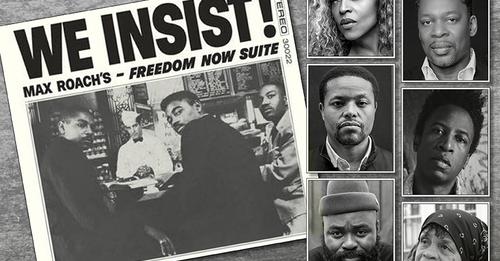
Ras Baraka (reading his father’s poem “Digging Max”):
(At Seventy Five, All The Way Live!)
Max is the highest
The outest the
Largest, the greatest
The fastest, the hippest,
The all the way past which
There cannot be
When we say MAX, that’s what
We mean, hip always
Clean. That’s our word
For Artist, Djali, Nzuri Ngoma,
Senor Congero, Leader,
Mwalimu,
Scientist of Sound, Sonic
Designer,
Trappist Definer, Composer,
Revolutionary
Democrat, Bird’s Black Injun
Engine, Brownie’s Other Half,
Abbey’s Djeli-ya-Graph
Who bakes the Western industrial
singing machine
Into temperatures of syncopated
beyondness
Out Sharp Mean
Papa Joe’s Successor
Philly Joe’s Confessor
AT’s mentor, Roy Haynes’
Inventor, Steve McCall’s
Trainer, Ask Buhainia. Jimmy Cobb,
Elvin or Klook
Or even Sunny Murray, when he aint
in a hurry.
Milford is down and Roy Brooks
Is one of his cooks. Tony Williams,
Jack DeJohnette,
Andrew Cyrille can tell you or
youngish Pheeroan
Beaver and Blackwell and my man,
Dennis Charles.
They’ll run it down, ask them the next
time they in town.
Ask any or all of the rhythm’n.
Shadow cd tell you, so could
Shelly Manne, Chico Hamilton.
Rashid knows, Billy Hart. Eddie
Crawford
From Newark has split, but he and
Eddie Gladden could speak on it.
Mtume, if he will. Big Black can
speak. Let Tito Puente run it down,
He and Max were tight since they
were babies in this town.
Frankie Dunlop cd tell you and he
speak a long time.
Pretty Purdy is hip. Max hit with
Duke at Eighteen
He played with Benny Carter when he
first made the scene. Dig the heavy learning that went with
that. Newk knows,
And McCoy. CT would agree. Hey,
ask me or Archie or Michael Carvin
Percy Heath, Jackie Mc are all hip to
the Max Attack.
Barry Harris can tell you. You in
touch with Monk or Bird?
Ask Bud if you see him, You know he
know, even after the cops
Beat him Un Poco Loco. I mean you
can ask Pharaoh or David
Or Dizzy, when he come out of hiding,
its a trick Diz just outta sight.
I heard Con Alma and Diz and Max
In Paris, just the other night.
But ask anybody conscious, who Max
Roach be. Miles certainly knew
And Coltrane too. All the cats who
know the science of Drum, know
where our
Last dispensation come from. That’s
why we call him, MAX, the ultimate,
The Furthest Star. The eternal
internal, the visible invisible, the
message
From afar.
All Hail, MAX, from On to Dignataria
to Serious and even beyond!
He is the mighty SCARAB, Roach the SCARAB, immortal as
our music, world without end.
Great artist Universal Teacher, and
for any Digger
One of our deepest friends! Hey MAX!
MAX! MAX!
Me (after an hour): Oh, that’s Cassandra Wilson!
Saul Williams: The music carries memory
Me: Yaas……
Sonia Sanchez: Keep that beat
Williams: We run on different fuels
Sanchez (reading one of many haikus for Max): your sounds exploding
in the universe return
to earth in prayer
Sanchez: I teach my students how to write haiku because it is one long prayer

 Drums in the Global Village