Category Archives: newspaper
He-Man, Meet Sun-Man
I remember when Sun-Man was created. I’m glad it has survived.
Asante Sana, Askia Muhammad
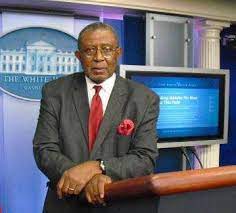
I was so happy to try to give him his journalistic flowers while he was here.
FEBRUARY 27th UPDATE: The Final Call’s tribute can be found here and here.
MARCH 5th UPDATE:

APRIL 2nd UPDATE: Coverage of the above event can be found here and here.
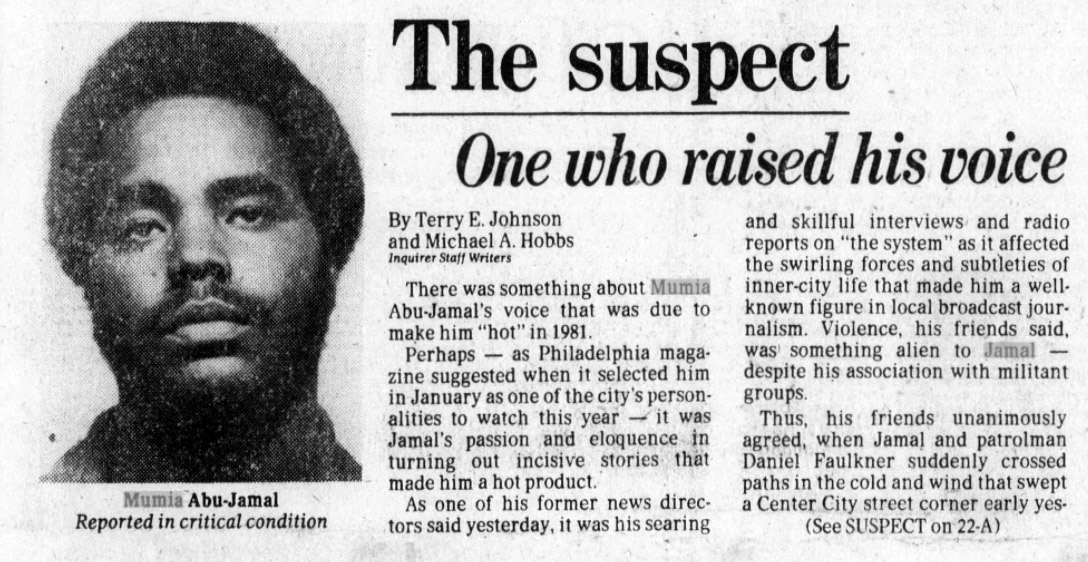
40 Years Ago This Morning

The New Yorker Book Review: The 1619 Project and the Demands of Public History


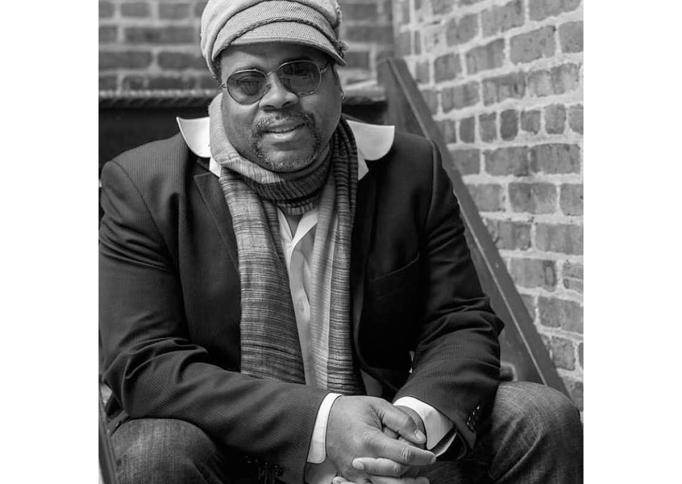
Asante Sana, Greg Tate
My Latest Book Review, On “Black Lives Matter” Mainstream Journalism,…..

TV Review: Muhammad Ali, PBS’ and Ken Burns’ White Rock Star
The show, the after-party, the hotel: metaphorically busting up American hotel rooms in his youth, before he “grew up”
Muhammad Ali always made this reviewer laugh out loud, but this may be the first time that open cackle is the result of a very serious Ali documentary. Ken Burns, in filmmaking combo Blackface and cross-dress, takes the role of Black church grandmother with the big hat, waiting for her grandson Cassius to give up that Panther mess and return to their neighborhood AME.
To Burns, Sarah Burns and David McMahon, Muhammad Ali is a Buddy Holly figure who got to live and grow old. He’s an Elvis-type who didn’t die suddenly on his toilet, a living, breathing hula hoop and frisbee, the dark fifth Beatle. Making a Third World activist who was a borderline revolutionary–someone who even Burns said was encouraging Afghan guerillas to overthrow the Soviet Union in his later years–into Jack Armstrong, The All-American Boy took some skillful, involved work. The trio accomplishes this by using every rock-star convention, trope and cliche–the innocence, the power, the excess, the decline, the fall. There’s Ken Burns’ and Co.’s forced narration–aptly provided by Keith David–and then there’s Ali’s actual narration, so the socio-political-cultural tension is always there: Burns keeps trying to win the bout, the most prominent examples being that the Nation of Islam is treated like some sort of annoying cult-fad that Burns patiently waits to burn out, and Ali’s calls for Black/African/non-white solidarity just a phase of his–a step toward human consciousness (which only comes through illness and the subsequent white, matured sympathetic gaze, according to this tale), not the call for self-determining power.
Proving once again that PBS can put a pale frame on anything, this future award-winner can start with this writer’s mental tropies for chronological detail, where to put the episode cliffhanger, effective use of Digable Planets 🙂 and the proper poignancy, particularly at the close. If this presentation is the “white” Ali and The Trials of Muhammad Ali and When We Were Kings are respectively the political and Pan-African Ali, that means the only Ali story left to tell is one about his relationship to religion. At his best, Burns at least comes close to that–chronicling how the sinner who, now humbled, learned to ask for forgiveness. Ali had a lot to atone for–he was cruel to his opponents, the doc repeatedly says; the Black interviewees keep reminding the viewer that he took public umbrage to those Blacks who proudly represented America during the time of a worldwide Movement. That story is not emphasized here enough (although Burns would vehemently disagree), and the rationale for that lack of emphasis is that, for the purpose of this narrative, this Ali first peaks and, later, begins his denouncement at the Olympics, symbolically draped in Burns’ Love, Americana Style.
CONGRATS TO……..

…..Wayne Dawkins, who has just been named the Coordinator of the Department of Multimedia Journalism in the Morgan State University School of Global Journalism & Communication!
I’ve known Dawkins for more than half my life. He was a servant leader before the person who thought that term up graduated college! LMAO!!!!
Seriously, the former award-winning reporter and current AFRO columnist is an author many times over–independent and top university press. He had been a Full Professor at Hampton, but now is essential at Morgan.
Oh, and his hobby was worth not only a journal article but has been archived at Columbia University, where he won a prestigious award. And I mentioned he’s now the official historian of the National Association of Black Journalists, right?
Okay, enough of this! I don’t have the time to document past and current Wayne’s adventures! Neither does he! LOL!
Some Brief Words About That Nikole Hannah-Jones/Ta-Nehisi Coates Announcement
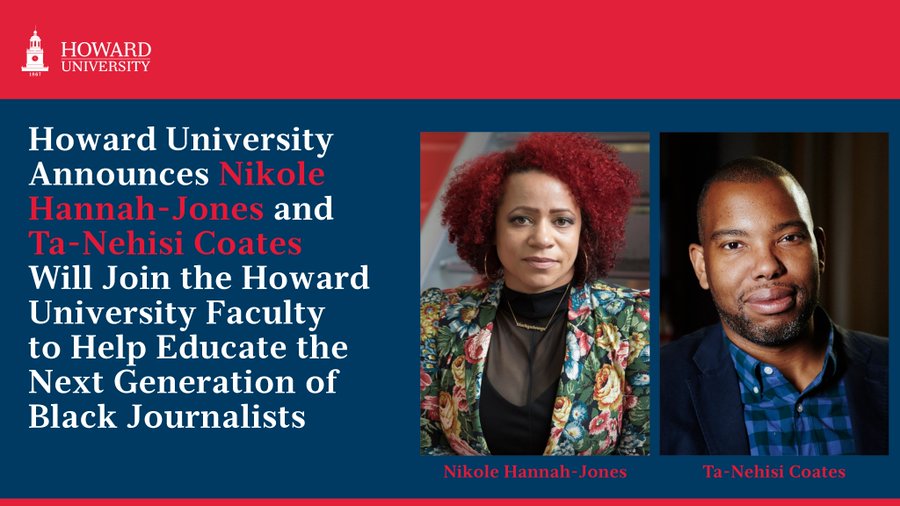
This is significant because this move will now establish a national, 21st-century Black liberal journalism tradition. I just wanted to point out that this will not erase what award-winning journalism professor Allissa Richardson has written: that post-modern Black activism–symbolically represented now by Darnella Frazier--finds mainstream journalism irrelevant.

With the Black liberal J-wing on the way to being established, this allows a Black Left to do what it is doing now–to build itself as an alternative. In the olden days, the best Black newspapers held all views. Here’s a book on that.

And with Haiti in the news, here’s an example of the present and future:
And the below is an on-the-ground Haiti discussion from this morning’s ReMix!
 Drums in the Global Village