
Oooooo……..
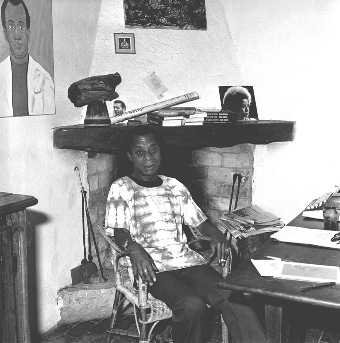
PARIS—Let’s just make this point up front that kept being made all weekend: James Baldwin was not an expatriate, and he didn’t escape anything. Maxine Gordon, Dexter’s wife, told a story about the couple meeting Baldwin at a Harlem party (her first time), and the writer calling out to the jazz master: “Hey, Dex, I was reading in the paper that we were expatriates. I thought we just lived in Paris.”
Baldwin said repeatedly that he made France his (writing) home—first from 1948 to the early stages of the Civil Rights Movement in late 1950s, then from 1970 to his death in 1987 at the age of 63—because he was afraid that, as a Black man, he was going to either kill or be killed in America. During his first exile, he believed he would be murdered by Northern white racists; the second, by the Federal Bureau of Investigation or the Central Intelligence Agency. With two very different generations of Black male writers and artists—elders Ralph Waldo Ellison, Albert Murray and Romare Bearden on one end, and his younger, fiercer critics LeRoi Jones/Amiri Baraka and Ishmael Reed on the other—all determined to either bloody, or proudly survive being bloodied in, America, Baldwin, stuck in the middle of opposing generations and ideologies, received brickbats for becoming a long-term Trans-Atlantic commuter.
The writer’s relationship with France, Paris specifically, was the topic of no less than three panels at the James Baldwin International Conference, held last week at The American University of Paris. About 240 scholars, activists and writers from across the world came to a cautious nation –in a state of emergency until next month, implemented after last November’s terrorist attack—to honor their hero by gathering in his name and examining every facet of his life and work they could squeeze into the three days.
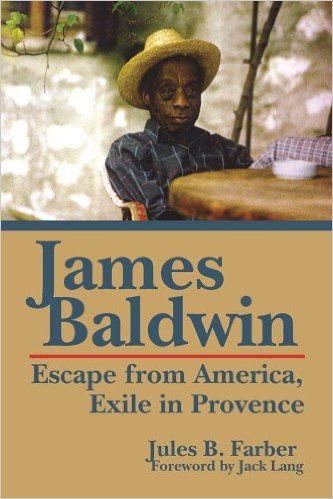
Before the conference opened, I read galleys of Jules B. Farber’s “James Baldwin: Escape From America, Exile in Provence” (Pelican), a new full-length book on Baldwin’s base of operations in the southeastern corner of France. Scheduled to be published next month, it revealed a very complicated negotiation on Baldwin’s part with the European version of white supremacy.
Provence, specifically the commune of Saint-Paul de Vence, allowed him to recover from the deep depression he felt from losing Malcolm and Martin—“Far from the Harlem tenements,” writes Farber, “this was paradise for Baldwin, who, with childlike glee, wandered barefooted in the groves, picking fruit and nuts”—but he would have to work hard at creating that permanent respite. The story of how with only sporadic rent payments and a stack of IOUs, he slowly charmed Ms. Jeanne Faure, his white racist landlady, to virtually give him the Saint-Paul house he would live and work in for 17 years, is worthy of a one-act play. It’s an extraordinary example of a former “boy preacher”’s ability to make a convert—provided the renter was the commune’s sole Black and, much more importantly, internationally famous.
That fame reverberated in ways that buoyed the spirits of the lonely writer. Baldwin transformed his house, and, therefore, his adopted community, into a must-stop, a welcome table, for traveling celebrities who sought refuge from congested Paris. It’s important to note that virtually all historical accounts show Jimmy as great company, whether entertaining American luminary friends at his home, or heavy drinking among locals in a bar in politically and socially conservative Saint-Paul. His survival instinct was always sharp, and he always made sure to surpass the needed mark.
That house, the subject of a long legal fight since Baldwin’s death and the site of at least two recent journalistic pilgrimages, is in a state of disrepair and may be destroyed. The novelist and essayist who died in that house is considered one of Paris’s many, many, national treasures, but as international travelers quickly learn, currency is constantly in flux, and the value of exotic trinkets relative.
When Baldwin wrote in his last book, “The Evidence of Things Not Seen,” that the Western World was “located somewhere between the Statue of Liberty and a pillar of salt,” he meant France, too. Lest we forget, the statue was an 1886 gift to America by France and created by Frédéric Auguste Bartholdi, a French sculptor, to celebrate, from the perspective of the formerly enslaved, their Jim Crowed, Reconstructed freedom offered by America.
“At the center of the European horror,” Baldwin continued, “is their religion: a religion by which it is intended one to be coerced, and in which no one believes, the proof being the Black/White conditions, or options, the horror into which the cowardly delusion of White supremacy seems to have transformed Africa, and the utterly intolerable nightmare of the American Dream.”
And France, as one of the members of the European axis of evil, did transform L’Afrique: it conquered lands now known as Senegal, Guinea, Niger, Chad…..the list can go on well into the next article. It was defeated by Africans who declared a free Black country called Haiti, but the price of that freedom ticket was to pay the French reparations! It’s such a beautiful country. But although it’s not hard to figure out why, it is hard sometimes to remember why when its splendor soaks into the soul. All throughout time, beauty seduces to hide away ugly truths for as long as it can, and France has beaucoup d’expertise.
(As the Baldwin conference closed, The Washington Post reported that French President Francois Hollande announced the nation would create a memorial and museum devoted to the country’s role in the slave trade. The Franco-Algerians, France’s long-suffering and abused immigrants, are still waiting for any such equivalent public acknowledgement and study of, say, the Algerian Massacre of 1962. And Gordon, explaining how the French love to spotlight American racism but remain in denial about their own, held up an issue of Liberation, a French tabloid that made that day’s cover story about Ferguson.)
Panel presenter Dorrie Wilson explained how in 2016, it’s not just the Franco-Algerians who are, as Baldwin famously called them, France’s niggers. Citizenship in Paris today, she explained, is determined by France’s arbitrary power, which creates a permanently unstable relationship for its residents who have settled into their new nation, including those recently arrived, and unwanted, Afghan, Syrian and other migrants. They are all eternal strangers in the village, she explained. And last November’s terrorism attack, she held, has made things worse, the xenophobia increased.

These ridiculous contradictory European (read: white) impulses are why “Meeting The Man: James Baldwin in Paris,” a 1971 documentary screened at one of the Baldwin/Paris conference panels, produced laughter and irritation from the assembled scholars. In the film, the novelist throws the European filmmaker’s plans for a combo travelogue-literature chat into the rubbish bin. He instead of being filmed associating with Franco-Algerians and standing in front of the Bastille, the prison that was torn down—stormed, actually—during the French revolution. Baldwin literally stood tall in front of it, mentioned that there were political prisoners in America and proclaimed: “I could be Bobby Seale. I could be Angela Davis. I could be Medgar Evers…I’m not interested in giving you ‘James Baldwin’s Paris.’”
Baldwin demands his own platform right then and there, and gets it. He exposed the double-standard of the Bastille being a symbol of liberation because the prisoners were white, when, if the imprisoned were Black, they’d be considered savages by Europe. He may have loved his enemies, but he proved he knew them well when he told the ignorant, exasperated European filmmaker that, “You [the white Western world], for me, is my prison. You are my warden.” That’s not the theatrics of a man ridiculed for decades as “Martin Luther Queen”: that’s a meaningful symbolic gesture in, and at the heart of, France. His stance is the equal of any such public act of Frederick Douglass or Ida B. Wells-Barnett in America.
As a “writer in a revolutionary situation,” as Baldwin describes himself later in the flick, he had to know, ever stuck in the middle—between Europe and America, and promising both rage and reconciliation (“I’m a Black man in the middle of this century”)—when and where to claim his historic space. He chose well, and it’s one of the reasons that what the conference organizers and participants referred to as “Baldwin Studies” is just beginning.
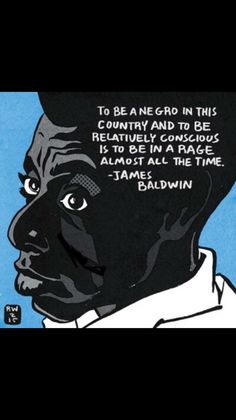
Joshua C. Adams is a freelance journalist and educator whose written work appears in The Huffington Post, among other places. This was his presentation at the James Baldwin International Conference, held at The American University of Paris. His presentation was part of a Friday, May 27, 2016 panel entitled “James Baldwin, Black Lives Matter, Bearing Witness.”
“The plea is a very simple one: look at it”
In today’s United States, fatal interactions between the police and Black unarmed suspects put names on hashtags, tombs, and t-shirts. Trayvon Martin, Rekia Boyd, Eric Garner, Sandra Bland, Freddie Gray, Renisha McBride, Michael Brown, Tamir Rice, Laquan McDonald and a list of others.
Each of these high profile case of follows a scripted series of actions and reactions: local reporters report on a white or non-Black cop killing an unarmed Black man, woman, or child, the news spreads national, causing an uproar. The country displays its divisions on whether or not the cop was justified, what the victim should have done, and whether or not the victim was responsible for their death. We watch cable news networks like CNN, waiting for the verdict to be read. The non-indictment is read, some hearts sink, others rejoice. Protests spring up. In rare cases, a riot occurs. After some time, another killing happens, and the cycle restarts.
But within this cycle, a movement called #BlackLivesMatter emerged, moving from the web to the streets, and permeated America’s national political discourse.
The unofficial beginning of the era of #BlackLivesMatter was after the highly publicized and politicized death of Trayvon Martin and the trial of vigilante George Zimmerman. In response to Zimmerman not guilty verdict, the term was created by three Black, woman, queer activists Alicia Garza, Patrisse Cullors, Opal Tometi. Garza says that “Black Lives Matter is an ideological and political intervention in a world where Black lives are systematically and intentionally targeted for demise. It is an affirmation of Black folks’ contributions to this society, our humanity, and our resilience in the face of deadly oppression.” (BLM Herstory)
The #BlackLivesMatter movement has been a key force in keeping police brutality and racial disparities in the criminal justice system in the mainstream media. BLM does have a formal network of about 30 chapters across America, but is mostly the rallying cry for activists around the country demanding that racial injustice be relinquished from the American nightmare. It’s supporters come in all races, sexualities, genders, classes, etc. but I would be remiss to leave unnoted that the overwhelming majority of the organizing efforts (rallies, boycotts, sit-ins, die-ins, political disruption, voter registration, food drives, etc.) is organized by Black women, and often, Black queer women.
While the study of James Baldwin’s work has not left academia, his wisdom is being used to articulate the concerns and demands of BLM, America’s most visible contemporary social justice movement. For example, Baldwin commented on the aforementioned cycle of actions and reactions involving state violence on the Black community, particularly the swift valorizing of the police and the pleas for non-violence aimed at the Black community when violence committed against them. In his seminal novel The Fire Next Time, Baldwin says that “In the United States, violence and heroism are synonymous except for when it comes to Blacks”. In “The Negro and the American Promise,” a 1963 Boston public television production, Baldwin bluntly emphasizes this point in a conversation with Dr. Kenneth Clark that Americans are “produced by a civilization which has always glorified violence — unless the Negro had the gun…The country is only concerned about non-violence if it seems that I’m going to get violent. It’s not worried about non-violence if it’s some Alabama sheriff.”
To Baldwin, this impulse to valorize law enforcement and scold protestors is greatly rooted the individual and cultural fear of Black people. This fear has penetrated the hearts of mainstream America, from rookie cops in Harlem (who Baldwin says is “the most terrified people in the world”) to housewives in California. Psychologists have studied and BLM supporters have cited that implicit bias greatly affects whether or not policeman use deadly force on a suspect. This is called shooters bias, the subconscious notion that Black people pose a greater threat than whites, so they are more likely to be shot in police encounters (since in police are more likely to view them as a threat).
Fear makes state violence justifiable, because it makes it a matter of defense, which allows us to preserve the states morality and claim to authority. Fear causes mainstream America to impulsively justify why unarmed Black men, women, or children are threats. This fear devalues Black life, justifies Black death, and has been seen in virtually all of the high profile cases we are privy to, and undoubtedly the ones to which we are not.
Officer Darren Wilson described Mike Brown as an aggravated, aggressive, hostile Hulk-Like demon who made grunting sounds as he ran through a barrage of bullets before dying. Cleveland police chased Black couple Timothy Russell and Malissa Williams, and upon the couple’s car crashing, officers shot into their car 137 times. The last came from Officer Michael Brelo, who stood on the hood of the car, and fired into the windshield fifteen rounds. In his testimony, Brelo said “I’ve never been so afraid in my life. I thought my partner and I would be shot and that we were going to be killed.” Judge John P. O’Donnell ruled that Brelo’s actions were a “constitutionally reasonable effort to end an objectively reasonable perception that he and the others present were threatened by Russell and Williams with imminent serious bodily harm.” Amadou Diallo was shot 41 shots after pulling out his wallet. George Zimmerman was acquitted on the basis of Stand Your Ground self-defense. Off-duty cop Dante Servin accidentally murdered Rekia Boyd with an unregistered firearm because he felt threatened when her friend Antonio Cross raised a cell phone (Servin later said he avoided being “police death statistic” and called the unarmed Antonio Cross “a would-be cop killer“). Officer Stacey Koon, one of the cops tried in the Rodney King beating, compared King to a “monster” and “the Tasmanian devil”. Officer Mathew Griffin, who shot and killed Kendrec McDade in Pasadena, said McDade scared “the crap out of me”. Three detectives fired 50 rounds into Sean Bell’s car because one yelled “gun”.
The common thread in these conflicts was fear. Pay no mind to some of the incredible details many of the officers offered about their fatal encounter. Pay no mind to what should be common knowledge that the majority of Black people avoid any and all contact with the police, and yet during these conflicts, the unarmed victims not only didn’t avoid these situation, but escalated them at disorienting speed with illogical, irrational, erratic behavior. Due to the American myths we internalize about the role of the police, and the Black body as a weapon, all the court of public opinion, and, more importantly, the actual court needs to justify the image of Black death is someone saying the magic words: I was scared.
bell hooks talks about Killing Rage, but in America, we have a killing fear. With rage, despair, and exhaustion, BlackLivesMatter yells “stop killing us!”; a desperate, urgent, contemporary rephrasing of the idea that “it is galling indeed to have stood so long, hat in hand, waiting for Americans to grow up enough to realize that you do not threaten them.” (TFNT)
But through the continued tragedies, #BlackLiveMatters movement is present and visible within the American public conscious. BLM gained further prominence in U.S. and international media with the protests in Ferguson, stemming from another non-guilty verdict for Darren Wilson killing Mike Brown. But aside from furthering the conversation about racial justice, the protests in Ferguson also augmented the discussion on the militarization of the police. As people protested, we saw police show up in SWAT gears, assault weapons, and tanks. Theses displays of the police as an occupying force in the community forged connections between the #BlackLivesMatter movements to end police brutality with international struggles, such as the #FreePalestine movement. BLM groups took trips to Palestine to share stories, trade strategies, and discuss how state occupation occurs across oceans, across racial and national lines.
James Baldwin’s travels opened his consciousness to the international struggle and how the world’s oppressed people are connected through the spectres of globalized white supremacy, anti-blackness, and the continuing, fluid, Western imperial project. In several of his works where he recounts his experiences in France (one of which was going to jail), Baldwin noticed that the people in the streets and in the jails were mostly Algerian. In America, a disproportionate number of those in jails also shared his pigmentation.
While BLM was mainly a reaction to the ongoing issue of cops killing black suspects with impunity, the group has also drawn attention to the mass incarceration crisis in America (many within the movement cite Michelle Alexander in her groundbreaking study “The New Jim Crow”). The U.S. is home to the largest prison population in the world. The 2.2 million Americans live behind bars. America has 1.8 million more people in jail than India, even though it has India has about 940 million more people.
The BLM community is channeling anger, fear, and distrust of law enforcement and the criminal justice system into civil disobedience. An array of BLM protests happen across the country throughout the year. Baldwin suggested these types of efforts convey the urgency within the sociopolitical climate. He says that “the original plans for the march on Washington had been far from polite: the original plan had been to lie down on airports runaways, to block the streets and the offices, to immobilize the city completely, and to remain as long as we had to, to force the government to recognize the urgency and the justice of our demands” (NNITS 141). Words like these are why Baldwin has been described as prescient and timeless, as scenes of this type of disruption has occurred in cities like Chicago, Los Angeles, Oakland, St. Paul, New York, and more. BLM supporters have disrupted events for the Presidential campaigns of Bernie Sanders, Hillary Clinton, and Donald Trump.
But these tactics have drawn ire from many. Antithetical movements like #AllLivesMatter and #BlueLivesMatter have emerged in response to BLM efforts. I surmise that Baldwin’s reaction to both, particularly #AllLivesMatter, would be as blunt and biting as any of his social critiques, and it would be explained through the lens of white fear and guilt.
It is a profound desire by the white American “to not to be judged by those who are not white” (TFNT 129). #AllLivesMatter derails legitimate concerns of Black citizens and their allies with the guise of inclusiveness. However, it is not an olive branch to form solidarity, it’s an compulsion by liberal and conservative mainstream America to feel included, to centralized in social justice narratives, or to dismiss BLM as exacerbating racial division.
Of course all lives matter, and it’s somewhat perplexing that it needs to be stated. BLM does not state that only Black life matters or that it is worth more than any other life. It asks us to acknowledge our divergent experiences and histories; that anti-black racism is unique in the U.S. But both Baldwin and BLM see Black liberation as intertwined with all liberation movements of all oppressed people. BLM asks that we “lift up Black lives as an opportunity to connect struggles across race, class, gender, nationality, sexuality and disability” (BLM Herstory). They go on to say “when Black people are free, we all are free”. Baldwin says: “It is not a matter of my liberation, it is yours.” (Baldwin’s Nigger).
#AllLivesMatter highlights the general American gutlessness towards social justice issues by optioning for sentiment over action. But when you post #BlackLivesMatter, you have declared solidarity with a group of young, Black, and often poor activists in a society that is too often anti-Black, anti-poor, and demonizes dissent. You’re holding up a mirror to a country eager to soothe its racial guilt with post-raciality.
Neither Baldwin, nor my interpretation of Baldwin’s ideas is meant to cast the mainstream America or the general white public as anti-Black or apathetic to Black struggle, but rather to show that compulsions, which spring from the inner self, become public attitudes. This is augmented by they fact that whites are they majority and the centripetal force of American sociopolitical power. Regardless of intentions, their feelings tend to control the narrative (and to a certain extent their feelings can even become the narrative).
In the August 1965, Baldwin penned an essay called “The White Man’s Guilt” in the special issue of EBONY magazine titled “The White Problem”. He writes: “The American situation is very peculiar, and it may be without precedent in the world. No curtain under heaven is heavier than that curtain of guilt and lies behind which white America lies…The American curtain is color. Color. White men have used this word, this concept to justify unspeakable crimes, not only in the past, but in the present. One can measure very neatly the white American’s distance from his conscience by observing the distance between White America and Black America. One has only to ask oneself who established this distance, who is this distance designed to protect, and from what is this distance designed to protect?”
Looking deeper through his work, Baldwin rarely comments on racists or extremists. Most of Baldwin’s criticism is aimed towards well-meaning, quotidian, and generally good and moral Americans. He feels that America’s racial problem stems from the majority’s failure to interrogate its history; to acknowledge that what happened did happen, what happened affects what is happening now, and what is happening now is in fact happening in the bloody detail in which Black America describes it.
To Baldwin, the failure of the white American is his or her subconscious tendency to project his or her individual self on to issues involving institutional racism. One of the brains main functions is to uphold a positive self-image, so instead recognizing the systemic reasons that could produce both a Michael Brown and a Darren Wilson, they take the murder as an indictment of themselves on an individual level. To solve this cognitive dissonance, many of them conclude that people “making this about race” are either mistaken or are “the real racists” (reverse racism a concept Baldwin disavowed with vehement, describing it as a “cowardly formulation”. In “No Name In The Street”, he writes: This formulation, in terms of power – and power is the arena in which racism is acted out- means absolutely nothing. The powerless can never be racists, for they can never make the world pay for what they feel or fear.”) With so many projections, they combine into a collective projection, which in term becomes one of the major attitude towards an issues involving race or racism. Baldwin’s critique of mainstream America was out of love, and his dream for a truly, fully integrated society. He felt that in order show love “we shall force our brothers to see themselves as they are, to cease fleeing from reality and begin to change it.” (TFNT 21)
On one side, #AllLivesMatter seeks to paint #BlackLivesMatter as political and divisive, while characterizing itself as apolitical and inclusive. But this demand for inclusion becomes erasure of Black life and contributions by “homogenizing very different experiences” (BLM Herstory). BLM founders say that “Progressive movements in the United States have made some unfortunate errors when they push for unity at the expense of really understanding the concrete differences in context, experience and oppression. In other words, some want unity without struggle.”
On the other hand (the side that does is not seeking solidarity with BLM), many see BLM as a mixture of manufactured outrage, inherently anti-police and anti-white. The phrase comes to the tongue of those who see the killings as justified, the murdered as “no angels”, tell protestors to “get a job”, and cast rioters as nonsensical thugs destroying property. Touching on riots, these are ahistorical reading of why riots happen. The riots are the culmination of political rage; tipping points, but they are the results of the long, trustless relationship between police and African-American neighborhoods. In his 1969 conversation with Dick Gregory in London, Baldwin describes riots like these as logical: “what happens says if I can’t live in this city, you can’t live in this city either”. Baldwin and the BLM tells us that the easy question to ask is “why would these people tear up the city?” but the much harder one to both pose and answer “what type of society produces a riot?”
#AllLivesMatter is not a movement, but rather a sentiment we can motion towards in order to both absolve ourselves of being part of the problem, but include ourselves in being part of the solution. I surmise that if Baldwin were alive, he would say that if all lives mattered, we wouldn’t have such huge disparities in housing, health care, education, employment rates, and the criminal justice system. If all lives mattered, society wouldn’t focus on renovating the ghetto, but overhaul the social, economic, and political forces that produce a ghetto. If all lives mattered, All Lives Matter would have been an original movement, not a reaction to silence #BlackLivesMatter. If all lives mattered, little Black boys would not be shot for holding toy guns while white men who point real ones make it to their day in court unscathed.
Bringing the public matters down to the personal was one Baldwin’s greatest gifts. He could bring mainstream political debates down of to the private truths. Black playwright August Wilson once said that Baldwin had “uncommon common sense”. But though he articulated prescient, some say prophetic, ideas, Baldwin eloquence was buffered by his ability to call it like it is. It isn’t that he asked us to acknowledge the elephant in the room, Baldwin forced us to confront the fact that the elephant is in the room because we brought it there.
And that, in my estimation, is what #BlackLivesMatter is trying to get at. The movement is pushing these issues to the public in order to make them personal. It is a call for the country to face a history it so desperately wants to forget; to solve the massive racial cognitive dissonance with justice instead of fear or resentment. This new form of political resistance was not created by those who presume things got worse, but by those who assert that current times are more of the same. BlackLivesMatter is demanding America to, in Baldwin’s words, “discover that the burden is reality and arrive where reality is”. Not be facetious, but what we call “political activists” could just as well be called “historians”. They know American history, so they cannot be fooled by it. And since they can’t be fooled by it, it’s easier for them to see that it can be, has to be, and will be changed.
…….is here.


 Drums in the Global Village