The Male Principle and The Female Principle, grit and fierceness inner and outward.
Coming out of the 1960s into the 1970s, both pioneers filled with revolutionary consciousness, both using work to create new space for words to propel The Race forward.
But both understood the power of planting yourself within a role, and then being left to the never-ending, back-breaking, un-privledged, un-advantaged labor of pulling out your own weeds.
Okay, right, remember the Racer X storyline from Speed Racer? Now, remember UPN‘s much-maligned Homeboys From Outer Space? (You don’t! Good for you! LOL!) So put them together and you have…..well, if there was any doubt this is a past-films-cameo/supporting scene superhero franchise….. If you love these characters (as I have learned to do for about four films now, since The Rock was the group’s enemy), just go and have a good time!
a) Lin-Manuel Miranda reminds me how Ta-Nehisi Coates described Barack Obama: an activist, not a protester. (Nice move he made with NPR’s Maria Hinojosa to get some intellectual/activist cred! :)) This is the most thoroughly gentle–even if ever-present!–film portrayal of systemic white supremacy I’ve seen on film. Miranda, who loves 20th-century white popular culture at least as much as I do 🙂 , does NOT want to upset Whitey, EVER. 🙂 Having said that, I enjoyed seeing the undocumented struggle included in this. It shows how, like Coates, he is VERY careful. b) This story is highly cultural–very BROWN, the way Hamilton is (ironically!) very WHITE. (I can see Miranda on that Heights vacation, reading that Ron Chernow bio and going: “Yes! I can now go completely in a new and opposite direction, like an artist should! Past instead of present, white instead of Black/Brown, historical narrative instead of love letter, naked, individual ambition instead of family/community survival, birth of a nation instead of death of a neighborhood!”) As a concept, Hamilton makes a LOT of sense to me now. You can clearly see the themes in both New York-centric, immigrant-centric musicals that attract Miranda–the power of personal drive and dreams with/versus sacrificial commitment to family and community, etc. c) Whether it is culturally stereotypical I will leave for Brown people to discuss. To this outsider, it looks like he’s trying to hit EVERY cultural mark. d) Because Hamilton was first for me, this seemed like a workshop to test out the style he would perfect with the slaveholders. 🙂
JUNE 12th UPDATE: So now that I’ve laid my issues on the table, I will admit he’s a FREAKIN’ GENIUS!!! Have you seen the teaser (below) for his directorial debut?!? And the Oscar goes to…. 😉 The year 2021 is only halfway through, and he’s already its savior!! LOL!!!
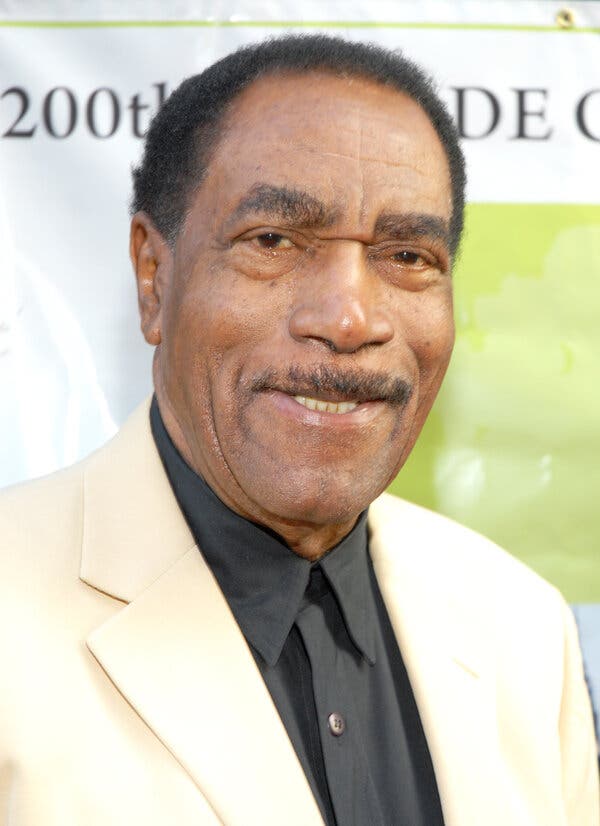
….for so many things: “The McCreary Report,” “Black News” and your being in charge of WLIB-AM news in the early 1960s. That was when you hired some guy named Gil Noble.
It takes all eight hours to get the point of Season 3 of National Geographic’s “Genius,” profiling The Queen of Soul
At one point, Glenn Thurman shows Aretha Franklin The Trust Fall and it takes a little bit of internal work for Aretha to make it. But make it she does. Watching eight hours of Genius‘s third season requires a lot of trust in showrunner Suzan-Lori Parks, because the viewer has to wade through aaaa lottttt of Lifetime-type, music-biopic tropes to get to the core of Franklin’s story: She is a woman who is sometimes-comfortably trapped in concentric gender and music circles, pushing out only when they threaten her windpipe. Each burst-through creates its own cycles of searches. Aretha’s stoic speaking voice is the outer shell that hides deep insecurities but also hidden strengths. The seemingly endless flashbacks show where and why the holding patterns stick; her grown-ness comes in her 40s, as an unavoidable right-of-passage beckons. Parks has said she read all the books and articles, so while the hours went by this viewer had to trust that she was going in a direction worthy of so much (relatively) limited discussion of politics and society that seemingly dominated the show’s firsttwo seasons. What the playwright has shown is how complicated the sexist male circles are to surmount–how it takes time and patience to wedge through, to prove oneself, to burst free into a full identity who can do anything–even sing opera on 15 minutes notice.
A very fine article I found reminded me of the type of serious longform writing and print-era that, once I discovered it, shaped and fascinated me as a young newspaper reporter. The Village Voice and its crew, of which Stanley Crouch was a part, were in this great, fascinating NYC-centric, newsstand literary universe.
I was definitely not a fan of the content, philosophy or personal style of Crouch (who had left The Voice when I began to read it), but I was a fan of the idea of him. This act of remembering–published in one of the remaining traditional 20-centuryish places left for this kind of writing–brought back memories of a time long gone: of picking up The Voice at Newark Penn Station while on the way to or back from Harlem on an early 1990s Friday, all the while wondering what was possible for me and writing.
Later in the 1990s, embedded in graduate school, I was even more obsessed with The Writers’ Life. For example, I actually bought a transcript and video of the below because I wanted to absorb this discussion. (Not surprisingly, these writers–who were actually post-World-War-II-nouns, who wrote in the mid-20th century for a living–didn’t see that nonfiction and fiction were going to move en masse to the academy.) I succeeded: this 23-year-old talk has been almost completely memorized over the years and, as a result, it serves as part of my internal writing clinic when/as I write.