
…..is here.
…..is here.

Leave it to Michael Eric Dyson to write this. (I remember he did something similar almost 20 years ago in his book “Race Rules.” )
It’s an interesting list. It would be a bit more interesting if it included people I met over the years, like Jared Ball and Rosa Clemente. They are no strangers to public intellectual work, but, alas, they don’t color within the lines.
But then again, looking at the older generation:
I just remember that Manning Marable and Earl Ofari Hutchinson were among those who started this “post-Civil Rights Movement Black public intellectual” thing 40 years ago on the Op-Ed pages of Black newspapers that only a few give a crap about now. Time is not the only thing that keeps on slipping into the future.
First Batgirl, Yvonne Craig, and now this! Who remains alive from my telly days as a wee lad? 😦
(The above is not his best performance (it’s not even a regular episode, but a special film presentation sponored by the U.S. government for American schoolchildren. I am using it because it was in the public domain.)
OCTOBER 20th UPDATE: Indirectly speaking of Superman on TV, I liked this “Supergirl” article, because it explained why American broadcast network television has gone superhero-crazy.
ANY excuse to post ANYTHING about EWF will ALWAYS be taken! So I was happy to see this article about this song! 🙂 Black Beatles forever!
Now, if someone could just write about EWF’s theme song (below), one of its most underrated songs (since the group considers “That’s The Way of The World” its “national anthem“).
SEPTEMBER 2016 UPDATE: This was GREAT! Thanks, Richard Prince, for showing me this!

Writing on the Wall: Selected Prison Writings of Mumia Abu-Jamal. Edited by Johanna Fernandez. Foreword by Cornel West.
San Francisco: City Lights.
370 pp., $17.95 (paperback).
If the fight earlier this year for the right of imprisoned writer Mumia Abu-Jamal to get correct care for his diabetes had failed, this book, his eighth, would have been possibly the last he would get to approve under his name. The diabetes complication was not just a shock to his system. There is an insane sense of normality that has now developed around the idea of Abu-Jamal’s work—the assumptions that he is writing, and will be writing frequently, that his commentaries will get emailed around the world, that his recorded voice will be on YouTube. Frankly, Abu-Jamal’s rat-a-tat journalistic contribution would be almost taken for granted if he hadn’t almost died. The ubiquitousness of the author and product shows how much he has succeeded in creating a foothold in Black radical thought in the last 20 years.
And that Panther-inspired bootprint continues here. Following in the steps of Noelle Hanrahan’s 2000 Abu-Jamal column collection “All Things Censored,” Fernandez, an assistant professor of history and Black and Puerto Rican Studies at Baruch College/City University of New York, creates a second unofficial “Mumia Reader” of 107 columns and speeches that span from the former Black Panther Party member’s 1981 arrest for the killing of a white Philadelphia police officer to 2014. The editor takes significant time to explain the how, when, what and why of Abu-Jamal’s essays. She shows that the intellectual scope and depth of Abu-Jamal’s writings precede Hanrahan’s mid-1990s recordings—the ones that, along with a 1995 death warrant and a ready-to-go international anti-death penalty movement, jump-started the “Free Mumia” movement and pushed it straight to the international Leftist stage.
The “new” gems discovered here are, ironically, among his oldest. “Christmas In a Cage,” his rarely read 1981 account of his own arrest and treatment by the police (“Where are the witnesses to the [police] beating that left me with a four-inch scar on my forehead? A swollen jaw? Chipped teeth?”) is worth the price of the book alone.
The editor situates the first few columns in a way that explains him, not just his opinions. Upfront, his love for the MOVE Organization and its founder, John Africa, is clearly articulated, using the 1982 trial and conviction statements he made as an understandably angry young man. (“John Africa is not a slave to this foul, messed up system—he is not bought and sold.”) An example of what he told the court after it decided it wanted his death: “On December 9, 1981, the police attempted to execute me in the street; this trial is just a result of their failure to do so.”
And as the wall writing progresses with a combination of memories, obits and news riffs that, policy-wise, string Reagan to Obama, the reader feels the air from the older Abu-Jamal’s steady, intellectual darts thrown at, for example, the post-911 legalization of COINTEL-PRO under George W. Bush, the devastation that followed Katrina, et. al. Abu-Jamal’s commentaries, taken together, target the contradictions of the established order, pointing to its corrupt nature versus the natural power of people-fueled resistance. (“The objective of all politics is power,” he writes in a 2000 column about the police killing of Amadou Diallo, a Black man shot in his building’s vestibule in New York City. “No major political party in America can even begin to promise Black folks in America the power to stand on their own doorstep[s], or ride their own car[s], or walk the streets of the urban center, without the very real threat of being ‘accidently’ blasted into eternity.”) The book, therefore, is a half-lifetime of well-researched, historically radical Black print rage, from waxing nostalgia about his brief political brush with Huey Newton in and the Black Panther Party circa 1970 to predicting in advance the acquittal of George Zimmerman of the 2012 shooting of Trayvon Martin.
It is now assured that, whatever his future health in prison, Abu-Jamal’s body of work will outlast his actual one. The writer, as Cornel West discusses in the preface, belongs in “that cultural continuum of struggle that shaped urban Black people between 1950 and 1980.” It remains to be seen in a 2015 world of social media if the masses of “Black Lives Matter” Tweeters will develop the skill, discipline and commitment of their now- elder statesman Abu-Jamal, who wrote in the margins of the society decades before it became cool.

Someone asked me that recently. It’s a question no one has ever asked me in the almost-25 years I’ve been studying the history and development of Black American mass media (e.g., Black radio, Black newspapers, etc.).
Here was my answer ((c) 2015 by Todd Steven Burroughs, all rights reserved. ;)):
—————————————-
1) Availability. You must be one of the people. They must be able to reach out to you and see that you are living with them, facing the same problems, etc.
2) Integrity. The audience must see/hear/read (that) you stand up for the interests of Black people unapologetically. You must be for Black people first and last.
3) Ubiquitousness and Longevity. The audience must see you as a permanent part of their lives, like a public utility. And you must be consistently THERE for years, if not decades.
—————————————-
That’s really about it!
AUGUST 2015 UPDATE: And THANKS to Ebony for printing a truncated version of this in the display box of its August 2015 issue!
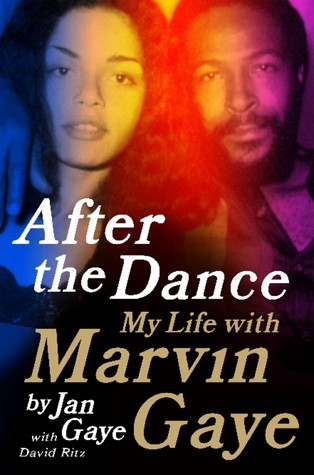
After The Dance: My Life with Marvin Gaye.
Jan Gaye with David Ritz.
New York: Amistad/HarperCollins.
282 pp., $25.99 (hardcover).
In ancient African religious systems, Ibeji (an Orisha, from the Yoruba and the Ifa) is known as the deity of twins, while Ma’at (from Egypt) was the goddess of, among other things, balance. This book, a memoir of a talented, troubled attractive young woman who falls in love with an equally troubled man whose voice and lyric reverberated around the world, tells a story that screams for their intercession. If these gods did act, they chose to abruptly end the dualities that circled around them like cocaine and marijuana: when Marvin Gay Sr. murdered his son in 1984 with the gun the son had purchased, it almost seemed like either an evil or heavenly release of all of the tension, anger and depression that had wafted around the singer.
Whether it fashions itself thusly or not, and whether the authors admit it or not, “After The Dance: My Life with Marvin Gaye” is a supplement to Ritz’s 1985 stellar biography, “Divided Soul: “The Life of Marvin Gaye.” The emotional divisions introduced by Ritz 30 years ago are laid bare by Marvin’s ex-wife, Janis. Serenity vs. paranoia. Love vs. fear. And ultimately, conflict into love and clarity into a warped sense of being. Discord, turmoil and competition were necessities for Marvin Gaye, a man who competed with his own domineering father for his mother’s love, competed with other Black recording artists for chart dominance and public adoration, competed with other men to win Janis back when he lost her, and even tried to seriously compete with Muhammad Ali in a charity boxing exhibition. He was a man who, according to Janis, believed that “perhaps misery and conflict make for great music. Perhaps without misery and conflict my well would run dry.” And, like the first Aquarian, what was the water he was bringing? “To get people to see below the surface of reality.”
The entire book is awash in 1970s post-Civil Rights Movement euphoria. Music, television and performance made gods of men and women, flawed human beings who were openly worshipped and adored. Marvin Gaye was the first Motown artist to break free of the company’s strict formula; to demand artistic freedom. He became his own Black Power Man, with his own studio, his own musical ideas and with his own family separate from Motown—the one he created with a young teenage girl he saw while in the studio. He sang a song to her, this surface ingénue, who was, and perhaps would always be, his premier acolyte. They were almost instantly conjoined by sensuality, by spirituality, by pain and the promise of enjoying, and finding home in, the new freedoms available.
In this book, the Gayes are twins of pain, cycling through, and back to, their dysfunction. Their marriage, Gaye’s second, eventually ended in the early 1980s (“The struggle to stop struggling was finally over”). Artistically, Marvin Gaye was on a comeback. Unfortunately, he did not have the chance to exorcise his personal devil—the one that had his name on it, written by his own hand—even though he knew he had to give it up. His father’s sick need to win their competition dominated, and a talent stilled, existing forever in a musical loop, a skullcap covering his head like a crown.
Marvin Gaye represented African (-American) people’s joy and pain like few artists in the 20th century. Janis Gaye’s story emphasizes all of the edges of the disjointed souls these drama junkies occupied and shared with each other, grasping for an elusive peace while naturally plotting ever-accessible turmoil. It is the story of a couple who needed love, and found it, but failed to create a life that belonged only to themselves, because ultimately, even when it was just the two of them, there were just too many sides to satisfy.

Enjoyed watching Eddie Conway’s interviews and comment on “Democracy Now!” this morning!

Please start from the bottom.
Beckles: 76 billion pounds in today’s money! #reparationsnow
Beckles: 20 million pounds of free labor—Africans paid for half of their own freedom in the U.K! #reparationsnow
Beckles: The Brits decided that there should be a transition from slavery to freedom #reparationsnow
Beckles: All of us have ancestors in Haiti, because so many went there to be free #reparationsnow
Beckles: Haiti declared that any enslaved Africans that would get there would be free #reparationsnow
Beckles: We must begin with Haiti #reparationsnow
Beckles: We must bring closure to European barbarity #reparationsnow
Beckles: New world of Pan-Africanism, African globalism and ancestral best #reparationsnow
Beckles: Time for him to go back to Spain #reparationsnow
Beckles: “The time has come to put Christopher Columbus back on the Santa Maria” #reparationsnow
Beckles: This world need to be cleansed from the demonic system of white supremacy #reparationsnow
Beckles: Calling for a new 21st century moral and economic order #reparationsnow
Beckles: Celebrate the work of “Ron and Don” #reparationsnow
Beckles: Where next will they take us? Reparations is saying: this is the end of the line #reparationsnow
Beckles: Family was thrown around to Panama and finally to the U.K. #reparationsnow
Beckles: Watched his own parent laborers be under the thumb of the white man #reparationsnow
Beckles: They can shift our identities and locations, but at the end, we are Africans #reparationsnow
Beckles: At what stage do we sacrifice the self for the collective? #reparationsnow
Beckles: “What we have sought to do is turn the world the right way up” #reparationsnow
Rojas: Beckles is a “true African warrior” #reparationsnow
Rojas: Introduces Sir Hiliary Beckles, who helped lead CARICOM to this point #reparationsnow
Dr. Hiliary Brown of CARICOM: This is not about money, this is about raising consciousness #reparationsnow
Rojas: Congratulated Al-Jazeera for covering the IBW Summit #reparationsnow
Queen Mother Dr. Delois N. Blakely, quoting Queen Mother Moore, “Chillin’ go get your reparations!” #reparationsnow
Queen Mother Dr. Delois N. Blakely is about to be introduced, but Reparations Choir is first! #reparations now
Don Rojas, IBW21’s Communications Director, is introducing participants at the closing rally #reparationsnow
Listening to the reparations conference live on 99.5 WBAI-FM #reparationsnow

Herb Boyd on WBAI: It’s Paul Robeson’s birthday. #reparationsnow
Dr. Ron Daniels: Thanked 99.5 WBAI-FM for covering live #reparationsnow
Imam Talib Abdur-Rashid: We must continue to monitor the condition of our two warriors, to prevent any murder by medical neglect. #freeMumia #BringMumiaHome #FreeHRapBrown #freepoliticialprisoners #reparationsnow
Imam Talib Abdur-Rashid: Before benediction, wanted to remember the plight of two political prisoners, Mumia Abu-Jamal and Jamil Abdullah Al-Amin, (H. Rap Brown) #freeMumia #BringMumiaHome #Free JamilAl-Amin #Free HRap Brown #freepoliticialprisoners #reparationsnow
Dr. Ron Daniels: Tomorrow we honor U.S. Rep. John Conyers Jr. We started in the Capital of Black America, and we will end in the People’s Republic of Brooklyn! #reparationsnow
Dr. Adelaide Sanford: “We have declared that we shall be repaid for all that we have given and lost.” #reparationsnow
Dr. Adelaide Sanford: Among the things Europeans stole from us was the “minds of our children.” Putting slaveholders before us as America’s Founding Fathers. #reparationsnow
Dr. Adelaide Sanford: Of all Africans, it is African-Americans who have the least to show for the slave trade. #reparationsnow
Nkechi Taifa: Asks N’COBRA’s lifetime members to stand up: Dr. Leonard Jeffries, Dr. Ron Daniels and many others. #N’COBRA #reparationsnow
Nkechi Taifa: N’COBRA made reparations a real issue for Black Americans through working with U.S. Rep. John Conyers and city councils across America. #N’COBRA #reparationsnow
Nkechi Taifa: N’COBRA sought to make reparations “a household term.” It was “unthinkable” to think of reparations before N’COBRA! #N’COBRA #reparationsnow
Nkechi Taifa is speaking right now in tribute of the National Coalition of Blacks for Reparations in America, a pioneer of the Black American reparations movement #N’COBRA #reparationsnow
Roger Wareham of December 12th Movement: “They stole us. They sold us. They owe us! Reparations now!” #reparationsnow
U.N. Ambassador Rhonda King: “The time is now. The place is here. The building blocks are in hand.” #reparationsnow
U.N. Ambassador Rhonda King of St Vincent and the Grenadines: CARICOM has arrived “at the crossroads of new opportunities.” #reparationsnow
U.N. Ambassador Rhonda King of St Vincent and the Grenadines: “No great cause has never been done by doubtful men and women.” #reparationsnow
Jesse Jackson: “Reparations is right and fair, and I won’t give up until I get my share.” #reparationsnow
Jesse Jackson: “If I’m not angry, I’m stupid! If I’m adjusted, I’m useless!” #reparationsnow
Jesse Jackson: “America is in our debt. Owed repair of damage done.” #reparationsnow
Jesse Jackson: “To limit our history to 1954 up is a sin.” Where is discussion of 5,000 public lynchings? #reparationsnow
Jesse Jackson: Slavery is bad, but the thing worst than slavery is to adjust to it and rationalize it. #reparationsnow
Jesse Jackson: The NAACP was founded to make lynching illegal! #reparationsnow
Jesse Jackson: My father had to sit behind Nazi POWs and couldn’t use the restrooms they used. #reparationsnow
Jesse Jackson: “Don’t be confused about people being elevated to fly in someone else’s system.” #reparationsnow
Jesse Jackson: “The lineage of slavery is unbroken. And putting the Black man in charge of the white man’s plane does not change the fare or the plane.” #reparationsnow
Jesse Jackson: Most lynchings occurred after church on Sundays! #reparationsnow
Jesse Jackson: It was “open season” on Black people from 1870 to 1950. Almost 5,000 Blacks were lynched! #reparationsnow
Jesse Jackson: “When the laws changed from slavery to freedom, but the infrastructure did not change.” #reparationsnow
Jesse Jackson: Japanese Americans and Native Americans got “some measure” of reparations! #reparationsnow
Jesse Jackson: “America is the last [stop] of the slave train.” And “we left the slavemaster in charge of implementing abolition.” #reparationsnow
Jesse Jackson: The more educated you are, the more brainwashed you are to the issue of reparations. #reparationsnow
Jesse Jackson: “We are the creditors [of the nation], not the debtors. But since we’re brain-dead on the subject, it’s difficult to break through.” #reparationsnow
Jesse Jackson: “To not believe in reparations is to believe in ethnic cleansing as valid.” #reparationsnow
Jesse Jackson: Blacks and whites are unified in not wanting to talk about it: “There is a fear of discussing reparations.” #reparationsnow
Jesse Jackson: Thanks to Ron Daniels; don’t take him for granted! #reparationsnow
Jesse Jackson is starting his keynote address at the opening of the Reparations Conference. #reparationsnow
Listen to Bernard White and Herb Boyd give live commentary right now on the opening ceremony on 99.5 WBAI-FM. #reparationsconference
Dr. Leonard Jeffries: “We are the chosen of the Universe, and we need to make our demands.” #reparationsnow
Reverend Jeremiah Wright: Reparations for “the greatest crime ever against humanity.” At opening of Reparations Conference right now #reparations now

