

APRIL 4th UPDATE: Sadness replaced by anger, once I found out about this not-unrelated piece of news!
APRIL 4th UPDATE: Sadness replaced by anger, once I found out about this not-unrelated piece of news!


The whole interview.
NAME: Katea Denise Stitt
TITLE: Interim Program Director, WPFW Pacifica Radio in Washington, D.C.
How did you find out about this letter? What was your reaction to it?
My good friend and Jazz historian, William Brower, forwarded the letter to me.
How does it feel to know that Malcolm X knew your father (“they all know me well,” he said in the letter), and that he was one of his favorite artists?
My immediate, visceral reaction was the smile, a huge smile, followed by a bit of melancholy in wishing I could have had discussion about Malcolm X with my father. I was thrilled to read it, not only because he speaks so warmly of my father, but his thoughts on the significant role of music, and that of the musician, were immensely moving. And, of course, the intimacy of a hand-written letter!
Did your father ever tell you that he knew “Detroit Red” and/or Malcolm X? Was it unusual or usual for him to talk about who he knew? And if he did, what did he say about Red/X? Did he tell you about his reaction to Malcolm X’s assassination, 50 years ago this month?
He never told me about knowing Malcolm X, although he did mention The Nation, and Elijah Muhammad, in terms of proper diet, living, etc. He would reference the book “How to Eat to Live” when discussing health with us. He often talked about his friends and contemporaries. Folks like Miles Davis, Dizzy Gillespie, of course, Dexter, Sonny Rollins, Don Patterson, Nancy Wilson, Amina Myers, Milt Jackson, Stan Getz – they were all great friends. Some would come to the house when they were playing town, or sometimes he’d take us to see them perform. While he never spoke of Malcolm’s assassination, my father was progressive and kept abreast of political happenings, especially as it pertained to African Americans, so I’d assume that he was saddened and deeply troubled.
What did you tell your children about this letter, their grandfather and Detroit Red/Malcolm X?
Well, I have a 13 year old daughter, Johanna, and we talk about her grandfather all the time. She is pretty open and receptive, thankfully. I asked her to read it, and share her thoughts with me. She had questions about the other musicians referenced, and who Malcolm was, etc. At the end of our discussion, her words were, “That’s really cool, Mom!”
Did you bid for the letter?
No. I was not aware it was being auctioned. That said, I would hope that whomever possesses it would gift or loan it to a museum where the public could see the actual document.
What is your opinion of what Malcolm X said about music (and your father) in the letter? “Music, Brother, is ours—it is us—and like us it is always here—surrounding us—like the infinite particles that make up Life, it cannot be seen— but can only be felt—Like Life!!! No, it is not created—but like the never-dying Soul—eternally permeates the atmosphere with its Presence—ever-waiting for its Master—the Lordly Musician—the Wielder of Souls—to come and give it a Temple—mould it into a Song. Music without the Musician is like Life without Allah…both being in need of the house—a home—The Temple — the Complete Song and its Creator Sonny & Milt Jackson played together up in Flint, Mich.”
Again, it was so profound, and so deeply personal. It felt a bit like eavesdropping to read it. Music is Life to me, a very sacred experience – I feel this way about all good music, regardless of genre. I completely empathized with this sentiment. To have him refer to my father, and Jazz, no less, in that way is mindblowing to me!!
This month marks the 50th anniversary of the assassination of Malcolm X and this fall marks the 50th anniversary of the publication of the Autobiography. You’re an interim program director at a Pacifica station that plays jazz, so this kind of thing must be very important to you. From your view as a manager of an on-air art forum, what should we remember about Malcolm X AND the artistic vision exemplified by your father, that he praised so well?
Malcolm X is one of my heroes, particularly after his pilgrimage to Mecca, but really, all of Malcolm. To show how you can change your life, and how your transformation to help and uplift others – a constant lesson and challenge for humanity. Through the letter, we get a different glimpse of Malcolm as a cultural icon and thinker, in addition to a political one. His comparison of the Creators of The Music to Life and Allah really speaks volumes as to what Jazz, Great Black Music, if you will, means to us as a people, as a society – national and globally. Simply put, Jazz is sustenance for the soul – beautiful! All of the creators of Jazz, and all music of a higher vibration, empower us to expand our minds, and access a higher spiritual experience or sensibility. This is indeed what we try to do with Music at WPFW. By the way, on February 20th, WPFW will present Malcolm and the Music, based, in part on this letter. I hope folks will listen and certainly offer feedback.
Did you know about this Ahmadiyya movement Malcolm is talking about? If so, what do you know about it? Was your father part of it? Did you know any jazz artists that were a part of it? What did he think of it, and what did/do you think of it? (And is Malcolm referring to something specific to your father when he talks about a “temple” and a “complete song?”)
Unfortunately, I only know the little I’ve read about it, and I don’t know if my father or other musicians were a part of it. I don’t think his words there are specific to my father, but speaking more to The Musician as a key to Life and Liberation – or as he says “…the Wielder of Souls.”
Now, feel free to add or say anything you want below–to answer something I didn’t ask! Someone you want me to try to fit in the article.
It was just wonderful to experience a part of Malcolm X that is not heralded enough in my opinion – his deep love for, and commitment to all humanity. HIs understanding of an interconnectedness, not on this plain, but as a spiritual experience, through music. Certainly, it gave me a new and wonderful perspective on how deep and far-reaching my father’s contributions to music were, and still are.

Selected Letters of Langston Hughes.
Edited by Arnold Rampersad and David Roessel with Christa Fratantoro.
New York: Knopf.
423 pp., $35 (hardcover).
If he were alive today, Langston Hughes would have tried to write this book review as quickly as possible. He had bills to pay (and loans from friends to pay back), so he leapt into the plays, novels and short stories he had to write. Meanwhile, an ever-mounting pile of correspondence awaited him to sort and answer—which he did, often into the late night and early morning.
Luckily for Hughes aficionados, that lifetime’s worth of letters were regularly shipped, from 1940 until his 1967 death at the age of 65, to Yale University’s James Weldon Johnson Memorial Collection of American Negro Arts and Letters. (The idea for the collection was Carl Van Vechten’s, the man history identifies as the white champion of the Harlem Renaissance.) It’s from that massive Hughes output—thousands of letters that date back to 1921, letters that eventually filled 671 boxes—that the reader can see the artist at work.
And it’s almost mostly just his work schedule—with a smattering of self-opining and sometimes-frank opinions of his fellow artists thrown in—that’s absorbed from this comprehensive survey. Hughes’s definitive biographer Arnold Rampersad and literature scholar David Roessel, with help from independent scholar Christa Fratantoro, chose the letters that give as much insight as the often-intangible Hughes chooses to reveal. His most frequent communications, according to this assemblage, were to his literary agent, Maxim Lieber, his publisher Blanche Knopf (the matron of the publishing house that is celebrating its centennial with this book and a re-issue of Hughes’ first-and-still-classic 1926 poetry collection The Weary Blues), his friend and quasi-patron Noel Sullivan, and his best pal and writing partner, Arna Bontemps.
In this book, which mightily struggles to be more than a work ledger, Hughes is almost constantly at work, writing anything from quickie children’s books to newspaper columns to his two autobiographies, 1940’s The Big Sea: An Autobiography and 1956’s I Wonder as I Wander: An Autobiographical Journey. Sadly for the general reader but semi-happily for Hughes, the master poet had a near-obsession with writing a successful stage musical, which would have given him the financial security that eluded him his entire struggling-against-being-a-vagabond life. His attempts to fight being fleeced by racist white producers and playwrights are as tedious as they are outrageous.
Hughes kept everything that interested him. He followed Black newspapers and magazines with great care, and kept track what those periodicals were saying about Black artists, especially him. Periodicals were Hughes’ lifeblood: he sold many short stories, poems and essays to Black magazines such as The Crisis and Phylon and white magazines such as Esquire. Irony abounds in Negro life: Hughes’ Chicago Defender Op-Ed column hit book and stage musical paydirt for with his creation of the character Jesse B. Semple (“Simple”), but The Defender, now having access to cheaper, white columnists, wanted to cut the little he made from it.
With the exception of the musical producers and, not insignificantly, the McCarthy witch-hunters who tried to destroy him in the 1950s, these collective letters display a man’s need to be loved and needed by everyone. He is always attempting anthologies (especially for African writers) and is ceaselessly encouraging his fellow scribes, especially younger ones that he proudly claims as his discoveries, like Margaret Walker (Alexander) and, later, a young Alice Walker (“She is really ‘cute as a button’ and real bright…Mine is her first important publication [and her first story in print], so I can claim her discovery, too, I reckon,” he writes to Bontemps in 1966). For the most part, he holds back his anger and his hurt, and tries to put a positive spin on almost everyone, even the younger, angrier writers—James Baldwin and LeRoi Jones—who criticize him in his later years. The personal outlook matches the professional persona well, since Hughes had to depend on the largesse and kindness of many, many friends and associates in order to survive. The letters are his day-to-day-reality-as-performance, but his romantic life, his sexuality, his personal needs are permanently off-stage, not for even semi-public consumption.
Rampersad’s high biographical standard continues to hold. The annotations alone—of people, places end events that populate Hughes’ almost-countless adventures and misadventures around the world and around New York City—make it worth the time it takes to go through his life, one thought and one year at a time. The introductions to the chronological sections show the trio of writers at their concise, detailed best.
This book can be read on its own, but it is the perfect companion to either of Hughes’ autobiographies, Rampersad’s two-volume biographical magnum opus, or even just a collection of the artist’s poetry. It’s not too obvious to say it is a fantastic addition to the bookcases filled with Hughes’ writing and Hughes scholarship. It is a must for those who want a peek behind the curtain of a Black artist, but don’t need to see too much.
*******
APRIL 11th UPDATE: An earlier version of this review was printed inside here.
……is here.



And thanks, Richard Prince, for mentioning the review in “Journal-isms!”
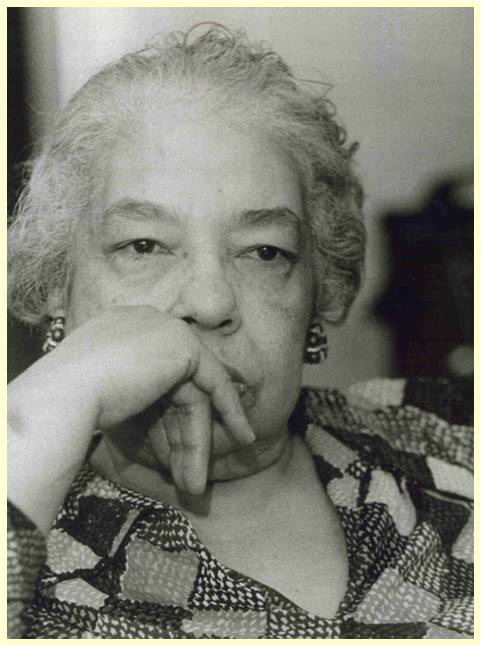
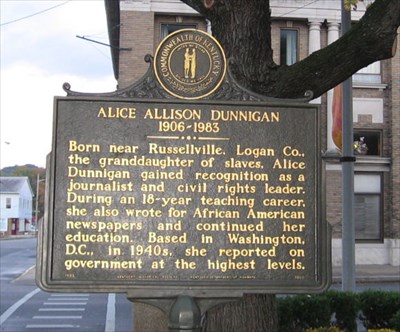
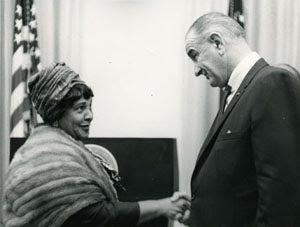
P.S. Appreciated this, from Ethel Payne’s biographer.
Okay! Ready!
Today’s WORD on Journalism
Afflicting the comfortable since 1995
Friday, January 23, 2015
• See TedsWORD: http://tedsword.blogspot.com/ • Click here and the WORD on Facebook: https://www.facebook.com/TedsWord
Critical Thinkers
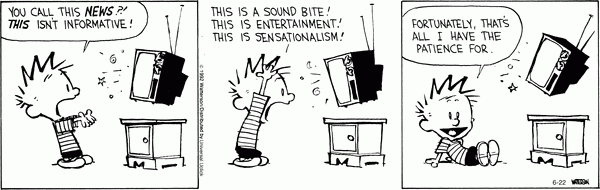
“Online search engines have overtaken traditional media as the most trusted source for general news and information, according to a global survey of 27,000 people by Edelman, a public relations firm. . . .
“And the striking thing is that Google does not actually report on anything, but instead serves up links to stories on a mix of other sites that users, apparently, trust less than the aggregator itself.” —John McDuling, “Google is now a more trusted source of news than the websites it aggregates,” Quartz.com, Jan. 20, 2015
• Editorial Comment: I saw this in the Times, but didn’t believe it until I saw it on HuffPo.
PeezPix by Ted Pease

Atom on one side (played by a former Superman)
and Ant-Man on the other.
Daredevil on TV, from the beginning, and Luke Cage named.
“Marvel’s Agents of SHIELD” keeping folks guessing (as is my other Tuesday night favorite, “The Flash”), while the “new” “Fantastic Four,”…..well, I don’t know what to say about that yet.
An upcoming “Lego Batman” movie.
Even a radio show starring Cap on “Agent Carter.”
Superhero crossovers now becoming a new television tradition, while “Gotham” settles into praise and criticism.
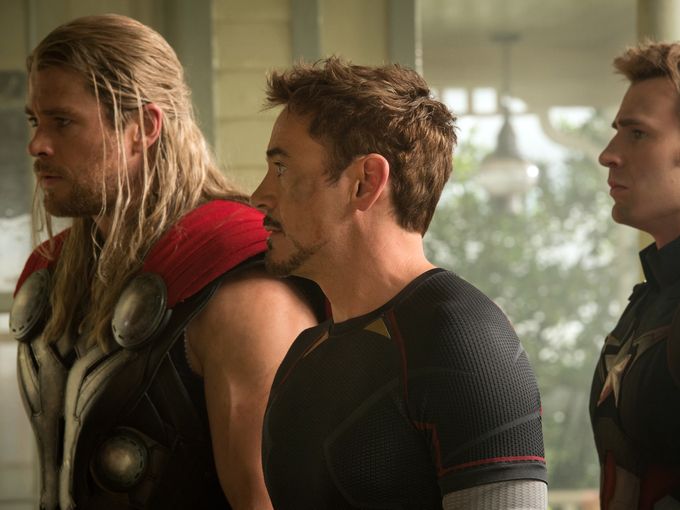
Then there’s the new “Avengers: Age of Ultron” trailer, below:
And here’s the original trailer, but in Legos! LOL!
(Will Dr. Stephen Strange make a cameo in “Ultron?”)
Female superheroes are finally about to get their film due. (And one on the Web. And women creators, in film.)
And finally, are comics (continuing the) re-writing (of) themselves to match the movies? Has it really gotten to this point?
TOO MUCH TO FOLLOW!
Media Advisory
FOR IMMEDIATE RELEASE
Dec. 3, 2014
CONTACT PHONE & EMAIL:
202-291-9310
President@CapitalPressClub.orgNational Press Club and Capital Press Club (CPC) to Make Historic Acknowledgement During CPC 70th Anniversary Gala This Week
Joint forum to discuss media coverage of Ferguson and race in America slated for early 2015The Capital Press Club, founded in 1944 during the 47 years in which the National Press Club refused to accept Black members, will honor nine legendary Black journalists Thursday, Dec. 4, during its 70th Anniversary gala reception at the National Press Club.
The Theme of the evening will be “70 Years in the Black, Telling Our Own Stories, Pleading Our Own Cause”.
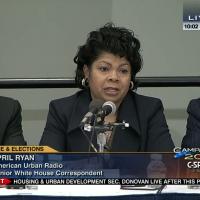
Honorees will include Simeon Booker, pioneering editor, JET Magazine; Barbara Reynolds, founding editor, USA Today; JC Hayward, iconic anchorwoman, WUSA; Roy Lewis, photographer, the Black Press; Paul Brock, pioneering journalist; Denise Rolark Barnes, publisher, Washington Informer; April Ryan, White House Correspondent, American Urban Radio Networks; Joe Madison, Radio Talk Show Host, SiriusXM; Richard Prince, columnist, Journal-isms, Maynard Institute.
In addition to the awards, National Press Club President Myron Belkind and Capital Press Club President Hazel Trice Edney will reflect on the impact of the National Press Club’s refusal to accept Black members from its founding in 1908 to 1955 when it accepted its first African-American male member. Historically, it is well-known and publicized that the NPC did not accept Blacks as members until 1955. However, the historicity of this acknowledgement is – in part – that it will be made in the presence of the Capital Press Club, which was formed because of the racial discrimination.
Belkind and Edney will then announce a joint 2015 forum to discuss media coverage of race issues in America, to be held at the National Press Club, using the Ferguson riots as a microcosm.
WHO: The Capital Press Club at the National Press Club
WHERE: The National Press Club, 529 14th St NW, Washington, DC 20045
WHAT: Service project to improve student literacy skills
WHEN: Thursday, Dec. 4: Gala Reception 6:30-10 pm; Awards Ceremony and Program, 8-9 pmAs the oldest African-American multidisciplinary communications association in the nation, The Capital Press Club has a 70-year commitment to the success of African-American journalists as well as all media professionals. Established in 1944, its founding president was Alfred E. Smith, a columnist for the then Chicago Daily Defender, now the Chicago Defender. The Founders were dedicated to upgrading the status and working conditions of African-American journalists.

This was easily one of the best programs Jared and Mark have done for WPFW.
Also: I found this conversation interesting, because it was so radically different in relation to my upbringing.


 Drums in the Global Village