Category Archives: american history
Airwave Dijelis (Griots): Asante Sana, Bob Law #BobLaw #Nighttalk #NighttalkwithBobLaw
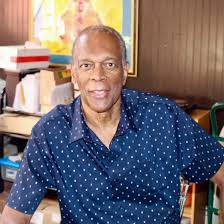
From my 2001 doctoral dissertation. The references have not been updated. Any mistakes–factual, grammatical or ideological–are mine, not the University of Maryland’s.
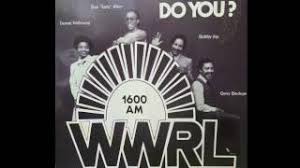
“He stood at the mic like a lighthouse, unblinking in the storm. A voice for the people, a spine for the truth. Fearless in witness, relentless in love for his community. An icon — not because he sought it, but because he earned it.”
– New York City radio broadcaster Rennie Bishop, from an email upon hearing about Law’s transition into the Realm of the Ancestors
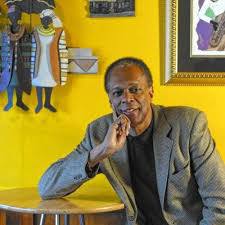
BOB LAW, TO MY surprise, was not born with a radio microphone in or near his mouth; once upon an early-’70s raised fist, he was a hell-raising New York City civil rights activist. In the previous decade, he had worked with the radical Brooklyn branch of the Congress for Racial Equality, a national civil rights organization. He also worked in the 1960s with the Northern Student Movement and as an East Coast organizer for the Student Nonviolent Coordinating Committee. He had learned graphic design and communications arts at Pratt Institute, a New York City arts college. Law said one of his greatest influences in the 1960s was Malcolm X, whom he called “…the great educator. The great teacher. He raised questions about what we were doing in the movement. He raised questions about street life. And he was a primary influence in the lives of a great many people, particularly the group of young people that I was a part of.”
Law led a group called IMPAC–the Independent Movement for Political Action. Law appeared on Bernie McCain’s WWRL-AM Sunday afternoon show “Tell It Like It Is” to talk about his organization’s campaign against the use of the drug Ritalin, a drug that counteracts hyperactivity, in New York City’s public schools. Law and other activists believed the drug was disproportionately being used on Black schoolchildren. Law said McCain was a pioneer of “activist radio,” where a host would actually campaign–and get his listeners organized–against an injustice. When McCain became program director at KDIA-AM in Oakland, California, Law became WWRL’s public affairs director and host of a show called “Black Dialogue”–an interesting, and typical for Black radio, version of, as the expression went at the time, from the streets to the suites.
In 1981, the same year WLIB, a rival AM Black-formatted station, began Black news-talk programming, “Night Talk with Bob Law” premiered on the National Black Network, originating on WWRL. (The station’s all-night slot had been held by Law’s friend Gary Byrd, who soon moved his “Gary Byrd Experience” show down the dial to WLIB; more on his story here.) “Night Talk” with Bob Law was the first national Black radio call-in talk show. It ran weeknights, from midnight to 5 a.m., Monday through Friday mornings. It was a national forum for Black issues in the news and Black politics. One scholar said it “quickly became the most popular Black talk radio show in the country.”
Law said the value of the national show was that Blacks struggling for social justice in one area “learn that their situation is not isolated. And [they] are even encouraged by [other] people who struggle against that oppression.” Using his ’60s swagger, he used the forum not just to inform, but also to prepare his listeners to spring into action. Early in its history, civil rights leader Jesse Jackson Sr. was Law’s “Night Talk” Tuesday co-host, using his visibility to prepare for his 1984 Presidential campaign. Law regularly invited activists and scholars, such as John Henrik Clarke and Dr. Yosef ben-Jochannan, to discuss their specialties.
The wee-hours host used his late-night pulpit to run many campaigns and crusades. When I began listening to the show in 1987, a major focus was fundraising for the New York chapter of the Black United Fund, a self-help philanthropy group. Named New York Coordinator for 1995’s Million Man March, “Night Talk” pushed hard for a large national turnout. In his book, Law lists some of “Night Talk'” s crusades, with special emphasis on one campaign in particular:
And there are many examples of NIGHTTALK’s influence on a national level: We helped raise $100,000 for a Kansas City teenager, we financed a summer softball league for children on behalf of [Law’s] Respect Yourself Youth Foundation, and we helped [in 1982] to save the Lorraine Motel, the site of Martin Luther King· s assassination [from an auction] …[Local businessmen] wanted to convert the hotel into a Martin Luther King museum, which I agreed would be much more fitting than the stone marker and plastic flowers that had been placed at the door of Dr. King’s room. The plan was to prevent the auction by paying off the debt owed by the motel. and then raise the money to build the Martin Luther King Museum.
I agreed to make the appeal and organize various fundraising events in local communities around the country, in conjunction with my on-air activity. I wanted the museum to make one adjustment [,] however. I wanted the museum to be dedicated to the entire Civil Rights Movement, with Dr. King as its centerpiece. The group agreed, and we launched a national radio campaign on NIGHTTALK… The NIGHTTALK audience also responded by calling the Judge who was to rule on the auction, to assure him that they were donating to the memorial fund and that the money was indeed on the way. On the strength of those phone calls and the renewed and expanded enthusiasm for the project, the Judge delayed the auction, giving the Memorial Foundation a few more days to receive contributions from its new supporters throughout the country.
We were successful! The Martin Luther King Memphis Memorial Foundation was able to buy the motel and the time they needed to raise the additional funds to build the excellent museum of the Civil Rights Movement that currently exists at the site of the old Lorraine Motel. Strangely enough. there is no mention of the NIGHTTALK campaign in any of the museum· s literature, nor was a promised plaque installed in the museum’s entrance to acknowledge the donations of African Americans around the country. These donations did in fact make the Civil Rights Museum possible.
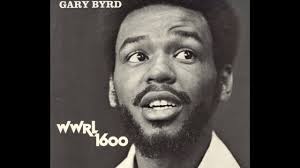
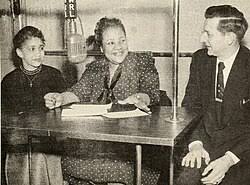
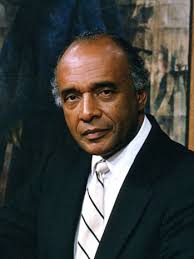
IN 1989, LAW’s FRIEND and former WWRL co-worker, now calling himself Imhotep Gary Byrd, was on a roll so he decided to openly celebrate a role. His “GBE” was now renamed the “Global Black Experience.” On WLIB, the self-styled call-in radio magazine grew so popular that it began broadcasting live from the Apollo Theater. So he took full advantage of that, devoting a week to big-upping his Black-oriented media peers. From Monday through Thursday during a late-August week, the new, dashiked ”GBE” hosted a tribute to New York City’s “Pioneers in Broadcasting.” With a packed studio audience from the community, he honored the late Alma John, whose WWRL show was a ’60s Black radio staple and whose New York area community work was still remembered. Byrd also honored New York radio legend Hal Jackson, who was celebrating his 50th year in radio broadcasting. In addition, Byrd honored two of his peers: WABC-TV’s Gil Noble, producer and host of the award-winning Black public affairs television program “Like It Is,” and Law. (More on Noble and his show here.)
Onstage at the Apollo, which had basically become an African-centered Black community space during the hours of Byrd’s broadcast, Noble spoke with his friend about his career and professional philosophy (his professional journey began in the 1960s as a WLIB newscaster). Noble recalled how he learned from Pan-Africanist Queen Mother Moore that, as a displaced African in America, he didn’t even know his true [African] name. She “made me understand the severity of my condition … I didn’t even know my name.” That perspective, according to Noble, helped him to “ward off the intoxication” of becoming successful in a white-dominated industry. He said that he always remembers it was the Civil Rights Movement, particularly the 1967 Black insurrections in Newark and elsewhere, that got him his job at WABC-TV “..and that’s why I’ve spent my career trying to give back.” The program, he explained, was important for Blacks and whites because “white people need to learn the truth about themselves, too.” The predominantly Black audience laughed and applauded. Noble blamed America’s Eurocentric educational systems as the reason why Blacks who enter journalism all too often consider themselves journalists first and African-Americans second. He thanked Byrd for honoring him, noting that he was glad Byrd had such a public forum to be praised by callers and members of the studio audience, the latter of whom began moving to microphones near the Apollo stage to join the conversation. A Black woman, identifying herself as 83-year-old Beatrice Johnson from Queens, said she never missed “Like It Is” when it was broadcast on early Sunday afternoons. “I don’t miss it. That’s like church to me,” she said. One Black man asked Noble why he didn’t try to go after the lucrative and powerful WABC “Eyewitness News” weeknight anchor chair. “I am constantly reminded of the condition of our people,” responded Noble. “And that it is severe and grave. And that is my focus. And I don’t believe I can make a [similar] contribution anchoring the news as [I do with] ‘Like It Is,” since he said it was the only program on New York television controlled and conceptualized by people of African descent. “I think it is important for ‘Like It Is’ to stay alive because it allows people to see the world through the eyes of the majority of the people in the world instead of the minority.”
The next day on the “GBE,” Law was honored on the Apollo stage for his work on WWRL and on “Night Talk.” He talked to Byrd about his activist history in New York City prior to becoming a broadcaster–particularly the influence Malcolm had on him. He mentioned that Hal Jackson, whom Byrd had honored earlier that week, was the host of “Community Forum” on WLIB. where Law, as a young activist, would appear as a guest in the late 1960s. He said that the future of radio, especially AM radio, was talk and information, and that format was “…absolutely necessary in the African-American community,” since radio “is the only thing on in the Black community 24 hours a day.” A 65-year-old Black woman from the studio audience confirmed this. saying that she had gotten a thorough political and cultural education from her “daytime man” Byrd and her nighttime “husband” Law. The audience applauded and cheered, and both broadcasters quietly and humbly thanked her for her statement.
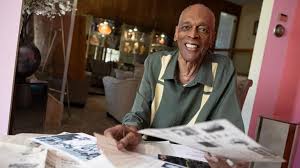
“LIKE IT IS,” WWRL-AM AND WLIB-AM are textbook examples of the multiple roles of Black media. The three forums have attempted to present an African-centered worldview using mass media. The hosts of these programs discussed here argue that their shows are antidotes to white mainstream media programming, which, due to its disproportionate control by whites, collectively present a white view of the world as mainstream. These forums allow African-Americans in the New York tri-state area and, in the case of WWRL’s “Night Talk” nationally, to see and hear themselves from the varied historical and cultural perspectives of Africans and African-Americans. They also allow a counter-narrative from the culturally white and politically right-wing views of white mainstream talk radio in New York City. Because the distinct roles they play are well within the concept of the Black media imperative. The mass communication products of Noble, Law and Byrd exemplify the Two-Pronged Black Critique of White Media Hegemony: l) the critique of white media supremacy and 2) the Black counter-narrative.
Noble, Law and Byrd share common professional and personal characteristics. All are tall, charismatic men who are more than 50 years old. The Civil Rights and Black Power movements forged all three ideologically, but as those movements developed in the North — specifically in New York City, the headquarters of the movements of Marcus Garvey and Malcolm X. They did not formally study journalism, although Law learned the basics of communications at Pratt. All started their careers in Black radio during turbulent years in American society. The three work as communicators who say they attempt to use their craft for the improvement of African-Americans. All three are artists: Noble, a piano player, led the Gil Noble Trio, a jazz band, in the 1950s; Byrd is a performance poet, songwriter and entertainer; Law is a graphics artist.
There are some slight differences. Law is the only one of the trio with a college degree. Noble was the only of the three not known to have been an athlete as a youth, unlike Byrd (football) and Law (baseball). Noble is the only one of the three working in white mainstream media. Law is the only one with a background in community organizing.
All three broadcasting forums are strongly focused from a Black worldview. For more than 15 years, the “Like It Is” title sequence has started with drums and a visual collage of the African-American experience, ranging from drawings of Africans being enslaved through pictures of the abolitionist period and the Civil Rights Movement to “Like It Is” interview clips from the 1970s to, finally, a still picture of a baby being born. After the collage, a red, black and green flag–the universally accepted symbol of Black Nationalism–is created onscreen, with the title of the show appearing in front of the flag shortly afterward. Law’s radio show started with an announcer saying “Night Talk” was “for people who live in the Black community and whose actions affect the Black community.” That description could easily apply to all three programs.
Not surprisingly, the shows sound different. Noble’s on-air demeanor, if not his line of questioning, is very calm and “objective;” he does not blatantly express his opinion on the air. Law and Byrd, on the other hand, have been open advocates on-air whose opinions on most topics are clearly known. Unlike Law and Byrd. Noble does not use music during the show; the show’s transitions to commercials and closing credits are done in silence. Noble is “Like It Is”s’ only interviewer, while Law and Byrd took calls from their audiences. Noble’s show is a weekly hour; the others had at least 16 hours of radio time to fill every week.
All three seem to be addressing the same audience–one seeking the Black media imperative as preferred programming. In my view, the audience Law, Byrd and Noble seem to target is composed of serious-minded African-American adults who want to l) learn about African-American politics, history and culture and 2) do something to improve the condition of African-Americans from a left-of-center, Nationalist-oriented point of view. The hosts seek to increase understanding of the African-American experience by creating programs that inspire African-Americans to become race-conscious citizens. By doing this, from my perspective, they serve the movements that created them and push a new generation to be exposed and, hopefully, become actively involved in social justice struggles.
The fact that Law, Byrd and Noble are part of a generation of Blacks influenced by the Civil Rights and Black Power movements does not make them at all unusual; millions of African-Americans were also shaped by “the Sixties,” the period between 1960 and 1979. What makes the story of these three men and their forums worthy of scholarly study is how, as media professionals, they consciously chose to make the mass media their own instead of being made by the mass media. As Black men who see their history, politics and culture as central to their identity as American citizens and human beings, they decided to make media from that experience during virtually the same time period–the late 1960s; they chose to make media that matched their beliefs, thoughts and opinions. They chose to use the media to present and discuss the African and African-American experiences from the often-controversial perspectives of their activist peers, not from the “objective” perspective taught in journalism school to Black and white journalists alike. In so doing, they became both proponents of the Black media imperative–”living mediums” standing on electronic stepladders–and ideological heirs of the movements they have championed.
https://americanarchive.org/catalog/cpb-aacip-529-ks6j09xd10
https://www.youtube.com/results?search_query=bob+law+night+talk
 Drums in the Global Village