Whither The Black Press, Vol. 125?

A. Peter Bailey

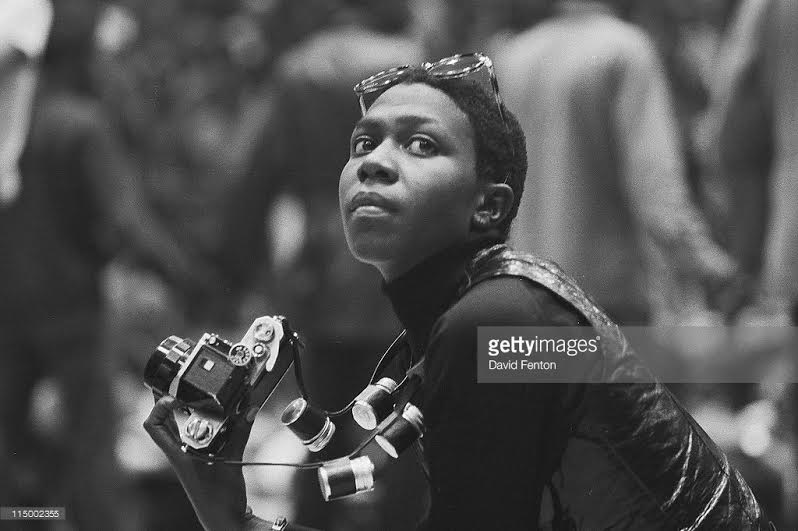
A. Peter Bailey, veteran of Jet magazine and currently with the Trice Edney News Service, speaks at the Journalists Roundtable. Photo by Sharon Farmer.


I stole this stuff from Richard Prince’s Facebook page. With Sidmel’s death earlier that day, it was a bad day for Black journalists.

Journalists Roundtable, Oct. 6, 2015

Updated last Thursday

Photos (c) by Sharon Farmer


Crown Bakery, Washington, D.C.

Our October roundtable changed topics quickly in response to news the previous day of the resignation of George E. Curry, editor-in-chief of the news service of the trade association for black community newspapers, and one of his staff members.

The National Newspaper Publishers Association had cut their salaries in half and its board chair, Denise Rolark Barnes of the Washington Informer, disclosed that the NNPA board imposed the budget cuts after a decline in revenue and sponsorships prompted by competition from the digital world.

“The drain couldn’t continue,” Barnes said. <http://bit.ly/1FRGfDc>.

Barnes joined us along with roundtable regular Hazel Trice Edney, a former editor-in-chief of the NNPA news service who founded TriceEdneyWire.com.

We also heard from DeShuna Spencer, a social entrepreneur, journalist and the Founder/CEO of kweliTV, an internet video streaming network for the black consumer. She won a $20,000 grant from The New U: News Entrepreneurs. See: <http://unityjournalists.org/news/unity-announces-newu-2014-winners/>.

DeShuna described kweliTV as a “black Netflix,” a phrase she would rather not use since she believes such projects should be described on their own terms. One criterion for adding films to the site is that they have appeared in film festivals.

Denise said it was imperative that black publishers move more quickly into the digital age. “For the last three or four years, we haven’t made any money,” she said of the NNPA websites. The latest difficulties “provide us with an opportunity to get refocused.”

She noted that in June, Apple announced it was looking to hire editors with a journalism background to work on its new app called News it <http://observer.com/2015/06/apple-is-hiring-journalists/>, and yet NNPA members, herself included, have not been contacted. “What perspective are these stories going to have?” Denise asked.

Still, she said, the black press has always been struggling. The first black newspaper was published 50 years before the end of slavery, when most black people were illiterate. Gannett, which publishes the Informer, will no longer be able to do so under its new direction, so that will be another challenge. Yet the black press also steps up to the plate for community activities when needed, again demonstrating its value.

The Informer now sponsors the Prince George’s County spelling bee, since the Washington Post Co. closed the Prince George’s Gazette, the bee’s previous sponsor, in August. The Informer started a monthly section for millennials, WI Bridge, though fewer younger people are turning to newspapers.

However, publishing a newspaper is no longer enough. Advertisers now want digital prowess, Denise said. “Now we’ve got to tap dance and sing,” too, she said.

A surprise was that Denise agreed with mostly everything those in the roundtable said about problems with the black press. Fifteen of us participated, and most had worked in the mainstream media.

Much of the discussion was about how to get companies to recognize their obligation to advertise in the black press, given the number of dollars African Americans spend with those companies. A. Peter Bailey, an author, speaker, journalist and former Malcolm X associate, suggested that publishers make public the number of dollars black consumers spend with certain business sectors. “Let these people see that you’re not doing us a favor,” he said.

Peter added that black publishers should require organizations whose leaders want columns in the black press to make sure their members are reading black newspapers.

Likewise, when Jesse Jackson goes to Detroit this week to discuss diversity within the auto industry and attends Friday’s 16th Annual Rainbow Push Global Automotive Summit, he should raise the issue of advertising in the black press. [Denise said later that Jackson’s automotive report card to be released on Friday will include advertising.]

Richard Prince contended that advertisers and consumers should want the product because it is compelling, not because of a sense of obligation.

Denise agreed, and added that the black press “needs an echo chamber, such as black Twitter.” Peter said the black press should do more on white subjects that affect the black community, such as the Koch brothers. “We’re writing these stories,” Denise said, but they need promotion.

Lynne Adrine said the name “black press” itself is dated. Why not say “black media?” DeShana went so far as to recommend that NNPA change its name to get rid of “Newspaper.” “The whole mindset needs to change,” she said. Richard Prince gave the example of the online-only Q City Metro <http://www.qcitymetro.com/> in Charlotte, N.C., started by Glenn Burkins, who was business editor of the Charlotte Observer. See: <http://mije.org/richardprince/barbering-while-black-clipping-while-hispanic#Burkins>.

“We are somewhat isolated,” Denise said. “My role is to expose our publishers” to these other ideas. “They need to hear what we’ve heard and what’s expected of us.”

Moreover, publishers have to believe in the value of their product.

When Denise asked why black people in the mainstream press who had been laid off aren’t flocking to the black press, roundtable members said that there are cultural as well as professional differences.

Prince said people need to feel that they are working for an organization that is part of the future and forward-looking ways. Consumers don’t want to wait a week for news anymore. The Village Voice and the New Yorker, though weekly print products, now publish daily online. Black publishers must start thinking that way, too.

Denise agreed and said she has been disappointed when she has gone to black press websites for information on breaking news and seen Associated Press copy. That doesn’t advance the purpose of the black press.

In another part of the discussion, Peter Bailey and Hazel Edney insisted that authentic black publications must be published by black people. [Bailey added later that he “refers to White-owned media that attempts to attract Black people or address issues of Black people as ‘Black-oriented media” — not authentic Black media.]

Betty Anne Williams and Richard Prince maintained that the content is what counts to the consumer. A Ta-Nehisi Coates, Prince maintained, is no less authentic because he appears in the white-owned Atlantic.

Hazel said that the social justice tradition of the black press should not be overlooked as a key element in authenticity. She also suggested that NNPA’s board include more people from such corporations as AT&T and Verizon in addition to publishers. Hazel maintained that black newspapers will always exist. “They’ve been here since 1827,” she said.

Referring to the new partnership between NNPA and the National Association of HIspanic Publishers <http://www.prweb.com/releases/2015/10/prweb12991418.htm>, Prince suggested looking into a partnership with the Association of Alternative News Media, whose members include alternative weeklies such as the Village Voice and the Washington City Paper, since that organization has acknowledged a diversity problem. <http://bit.ly/1ifOGh2>.

Denise said was open to the idea, as she has joined other newspaper associations, such as the Maryland, Delaware, DC Press Association. Other black publishers have joined similar associations.

The first roundtable took place in May 1999 with Alice Bonner, Betty Anne Williams, Bobbi Bowman, Richard Prince and Bill Alexander. The purpose was to commemorate Alice’s return to Washington after obtaining a Ph.D at the University of North Carolina, Chapel Hill. Paul Delaney, Jessica Lee and Walt Swanston were also among the early founders.

When Alice left, she asked that we keep the gatherings going while she was gone, and we have. Some of the faces at the dinner gatherings have changed, but the enthusiasm for the fellowship has only grown.

Melki On The Trumpet Awards

TrumpetLogo_SM_Gold
So, Melki, are you watching the Trumpet Awards, a.k.a. now The Al Sharpton Awards?

It’s a seamless transition from previous productions and an actual awards show that you can watch with your children where big stars actually show up.
They had Rev. Joseph Lowery up there and he’s still entertaining at 94 years old.

There’s a real political edge this year that addresses police brutality heavily and that’s all Rev. Al’s work.

A lot of Negus hate on Rev. Al, but they probably sitting there with their kids watching the Trumpet Awards now!!!

Do revolutionary’s eat Fried Chicken???

Um, I guess. Anything else?

I just wanna mention ‎Xernona Clayton, who carried the banner for the beginning for the Trumpet Awards. She deserves all the respect in the world for positioning the show to a place where people like TV One and Rev. Al could take it to another level. Her job was much harder.

Cool. I have a Black Press Fellowship named after her!

Melki Speaks His Mind (On “Empire” Season 2 and Trevor Noah, “The Daily Show”‘s New Host)

Semple

I have begged my friend Melki to get a blog so he can share all these comments on emails he sends to me, and instead he just gives me permission to use them. So, here goes:

On “Empire”‘s second season:

empire_season2

empire_season_2

The good thing about “Empire” coming back, Melki, is that it diverts attention from the news that the Bill Cosby total is now PAST 50!

This is great in many ways only because it reminds me of early hiphop and jazz when all the great artists worked together on the same projects. Ludacris had a role in this episode and my man who played with Wesley Snipes in Sugar Hill. All these great actors who won’t getting no shine from Hollywood. With Empire and Kevin Hart’s Real Husbands eury black actor is getting some checks and Tyler Perry’s name ain’t on it no more! LOL! 🙂

So I can use this for the “Drums” blog, Melki?

sure! I just don’t want the Lion trying to roll up on me! These internet streets is real, sun!

*******

Trevor

So, Melki, what do you think about the brother who’s taken over from Jon Stewart?

All I can say is Trevor is way funnier than John Stewart.
Sadly, well not too sadly, but he and John Oliver are the funniest and hardest hitting right now.
Haven’t seen the latest Colbert *&$! and “The Nightly Show” is running 3rd in the realm of news satire.
Oliver’s addressing of the issues and Noah’s comedic timing put them above every one else.
Wilmore is on their trail and is blacker which is always good!

OCTOBER 15th UPDATE FROM MELKI: A few notes on Empire. The actor I mistakenly identified as Michael Wright is actually Andre Royo: http://www.imdb.com/name/nm0747420/?ref_=ttfc_fc_cl_t29 he plays the streetwise attorney who has quickly become Lucious Lyon’s right hand man, willing to do whatever it takes to keep him out of jail. The last episode also featured an almost video done in the Black Panther motiff addressing the issue of police brutality which is becoming more and more a prominent aspect of the tv show. While being arrested by some jump out cops, Cookie screams ““If I die in police custody, I did not commit suicide.”….so this means my last post about art and protest uniting for this generation is starting to hit home more and more.

The New, New Black Public Intellectuals (Or, The Digger-ati ;))

Black Twitter

Leave it to Michael Eric Dyson to write this. (I remember he did something similar almost 20 years ago in his book “Race Rules.” )

It’s an interesting list. It would be a bit more interesting if it included people I met over the years, like Jared Ball and Rosa Clemente. They are no strangers to public intellectual work, but, alas, they don’t color within the lines.

But then again, looking at the older generation:

* Herb Boyd has written about 25 books in the 30 years since he left academe AND he has TWO National Association of Black Journalists awards (one with Dyson!), including a NABJ Hall of Fame award: when does HE get picked as a starter on the schoolyard? When he turns 80 in three years? 
* Another friend and mentor, Don Rojas, should be writing and teaching right now about the Grenada revolution.
* A Black radio broadcaster I grew up listening to,  Imhotep Gary Byrd, is holding on in the 21st century, incredibly, with a free two-hour show on WBAI-FM on Friday nights and a WLIB/WBLS two-hour simulcast on Sunday nights. He will turn 70 (?) in 2019: when does HE get a DAMN NATIONAL show in either/both broadast mediums!?!? Almost 30 (!) years ago in Newark, when I had more hair and teeth than I have now :), I used to listen to the Rev. Al Sharpton on Byrd’s WLIB show, so how can Sharpton get TWO national Black radio shows and ONE national white TV show and Byrd, with almost 50 years in the game as a living legend, can’t get ONE of these?!? (Even the guy at The New York Daily News who used to cover Byrd and the rest of New York City’s Black radio fairly just got canned. :))
* And, if we can broaden out to Latinos here, will Amy Goodman hire Juan Gonzalez as a REAL “Democracy Now!” co-host once The slow-death News lets him go? How much more award-winning (I still remember his “stolen” Pulitzer for 911 ash) investigative journalism does his 66-year-old, clearly-spends-all-his-spare-time-writing-serious-history-books butt has do? When he’s cut, will he get the $200,000 a year New York City professorships others of less stature, ability and accomplishment get?

I just remember that Manning Marable and Earl Ofari Hutchinson were among those who started this “post-Civil Rights Movement Black public intellectual” thing 40 years ago on the Op-Ed pages of Black newspapers that only a few give a crap about now. Time is not the only thing that keeps on slipping into the future.

Thank You, Jack Larson, The First Jimmy Olsen America Saw

Damn!

First Batgirl, Yvonne Craig, and now this! Who remains alive from my telly days as a wee lad? 😦

(The above is not his best performance (it’s not even a regular episode, but a special film presentation sponored by the U.S. government for American schoolchildren. I am using it because it was in the public domain.)

OCTOBER 20th UPDATE: Indirectly speaking of Superman on TV, I liked this “Supergirl” article, because it explained why American broadcast network television has gone superhero-crazy.

“Do You Remember? / The 21st Night Of September/…..”

ANY excuse to post ANYTHING about EWF will ALWAYS be taken! So I was happy to see this article about this song! 🙂 Black Beatles forever!

Now, if someone could just write about EWF’s theme song (below), one of its most underrated songs (since the group considers “That’s The Way of The World” its “national anthem“).

SEPTEMBER 2016 UPDATE: This was GREAT! Thanks, Richard Prince, for showing me this!

Thank You, Dr. Wayne Dyer

Wayne-Dyer

I learned a lot of basic spiritual lessons from this man, who dominated PBS fundraising for at least a decade!

I’ll miss those long Sunday morning sessions! In my time in Maryland, it was the closest I ever got to going to church!

See you on YouTube, Dr. Dyer!