Wow! “Flash”/”Arrow” Universe Spinoff And New One! Wow! (CW’s “Legends of Tomorrow” and CBS’ “Supergirl”)

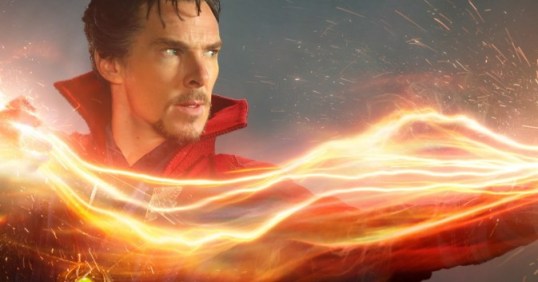
LOL! Lookit Arthur Darvill (“Rory”) doing HIS Doctor, with long David Tennant-like coat and stuff! LOL! 🙂 Long time to January!

Hmm…..a Black Jimmy Olsen and the return of Calista Flockhart to network television? Not too bad. It’ll move to the CW when CBS screws with it. 🙂

(Everything I liked got renewed: “Marvel’s Agents of SHIELD,” “Agent Carter,” “Arrow,” “Flash,” “Gotham,” and now the above stuff added! That’s a LOT of comicbook network TV!)

MOVE-ing Tribute (May 13, 2015)

MOVE mural

6221

MOVE

(Photos by Dr. Mark Bolden)

MOVE is not just some memory, but an existing–and perhaps even mainstream!–organization, I learned yesterday.

Thanks to Jared Ball for the trip and Mark Bolden for the photos.

Book Review: Within The Cage

Benga

Spectacle: The Astonishing Life of Ota Benga.
Pamela Newkirk.
New York: Amistad/HarperCollins.
304 pp.; $25.99 (hardcover).

It’s the ingredients for a powerful devil’s brew: take white supremacy, slavery and colonialism and mix thoroughly with late 19th and early 20th century zoology, ethnology, wildlife conservation and taxidermy. Sprinkle with Darwin’s theory of evolution and simmer in Greater New York, the precursor to New York City. Simmer. Then pull back the curtain and pour, showing the African—the so-called “pygmy”—on public display in the monkey cage at the Bronx Zoo, all for the sake of greed disgustingly disguised as science.

Written by New York University journalism professor Pamela Newkirk in as dispassionate a tone as can be attempted, “Spectacle” shakes all the way to the reader’s core. The tale of Ota Benga, the Congolese forest dweller—exhibited with other captured people in the 1904 World’s Fair, the symbol of white world progress, and then, two years later, solo at the zoo—crackles with 21st century disbelief, even after taking into account an elementary historical understanding that many Europeans and white Americans for centuries publicly declared Blacks sub-human.

“For the general public [of the World’s Fair], the sight of barely clad, presumably primitive people assembled across the fairgrounds was evidence enough of Caucasian superiority,” writes Newkirk. “The beings whom scientists had described as semi-human, cannibalistic dwarfs were no longer regulated to mythology or to anthropological field notes. The reality—that the delegation comprised captured African children—if considered at all, was understood as merely a means to a scientific end.”

The painful, and painstakingly researched, work of social history goes beyond the surface level of “Whites Only” signs into the bleached hearts of an insecure, psychologically disturbed people who, in the early part of the 20th century, argued over the level of humanity of an African they had caged, failing to see the obvious irony. The efforts of a group of Black preachers to free Benga from his Bronx Zoo cage is prominently noted (as is the intellectual combativeness of the voice of true scientific reason, the anthropologist Franz Boas), but their limited, and relative, access to their own freedom and power dangles in the background.

Because Newkirk had no historical access to Benga, the public sensation via personal violation, she had the challenging task of writing around the man at the center of the monkey cage—the “prey for a merciless hunter.” That hunter’s name is Samuel Phillips Verner, and he is the central subject of this merciless defilement. He proves the old adage that some people in life pose as a friend in order to get into position as a more effective enemy.

Verner is, in many ways, the quintessential unapologetic white man for this type of unapologetically harsh story, fitting the perfect casting call for the benevolent white American liberal who interrupts African life for gold, status and power. He is a liar and thief who camouflages his character through the chronological guises of missionary, then adventurer, and finally an amateur “scientist” and “African expert” in this white world of European and American pseudo-science. In the histories and academic studies written and embedded by white men, he is the man who did well by doing good. Newkirk exposes his decades of shameless, opportunistic motives and behavior in what should be called visionist history.

Belgian King Leopold II’s shadow, and especially the mass graveyards of his uncounted African victims, loom over this work. Benga’s “rescue” by Verner, while the “hero” cuts business deals almost every waking hour, is symbolic of the American complicity in the raping of the continent by Europe. (As Newkirk shows, Belgium’s public relations campaign to get greedy American imperialists on its side—with Verner as one of many leaders—was quite successful, while it lasted.) The public shaming of white supremacy in the Congo by true heroes Mark Twain, George Washington Williams and Booker T. Washington are mentioned, but it is Verner’s ruthless ambitions that solidify the book’s central vortex.

Meanwhile, Benga—who a New York Times editorial charitably described as “a human being, of a sort”—resisted his captors as best he could, being a stranger in an absurd land surrounded by paternalistic friends. One day, he defies the zookeepers by physically fighting them. When he was physically prodded by the rowdy throngs that crowded the park to see him, he struck back. When he was allowed to roam the park, and another horde decided to track him, he fired an arrow at one of the rabble. He pulled a knife against a handler. Later, when he was moved to a museum, he attempted to escape. And finally, now years separated from his village, refusing to ask his former captors for help getting back to the Congo, he does what he must to ease his deepening depression. The author allows Benga’s actions to speak above the crushing waves of this psychologically tortuous history.

The Bronx Zoo, the Smithsonian Institution, the Museum of Natural History, the National Geographic Society and their institutional fellow travelers in quantitative academia—all historic bastions of elite, white male privilege—will have a lot of questions asked by Newkirk’s readers to answer. Complicity in the crimes against African humanity connects like amber waves of grain. “Me no like America,” Benga said from his cage.

Frederick Douglass said in a famous 1852 speech that the United States of America was guilty of “crimes that would disgrace a nation of savages.” This superb book proves that postulate again, right in time for recent, post-modern generations of Americans who seriously need to come to terms with that consistent, historical truth.

So, With “Avengers: Age of Ultron” Checked Off, My Year Of Waiting Begins Anew For……..

captain-america-x-iron-man-civil-war

….”Captain America: Civil War,” which began filming earlier today!

Starring…well, almost everybody from “Captain America: The Winter Soldier” and “Avengers: Age of Ultron!” LOL! 🙂

And Watson from BBC/PBS “Sherlock?!?” WOW AND WTF?!?

And (SHUDDERS) Spider-Man?!? I repeat…..

Here’s the synopsis:

Steve Rogers leads the new team of Avengers in their continued efforts to safeguard humanity. After another international incident involving the Avengers results in collateral damage, political pressure mounts to install a system of accountability and a governing body to determine when to enlist the services of the team. The new status quo fractures the Avengers while they try to protect the world from a new and nefarious villain.

WOW!!!! MAY 6th!!!!!!! Just 364 days left!!!!!!! 😉

Take that, “Dawn of Justice!” LOL! As they used to say in the comics, “Make Mine Marvel!” (Although, make no mistake: I will be there for the “Man of Steel” sequel as well 🙂 )

ADDENDUM: And then there’s THIS in 2018 and 2019! AAUUGGHHH!!!!!!!! 🙂

JUNE 3rd UPDATE: Enjoyed reading this, since it crossed over between Marvel and “Doctor Who.”

Free Marylin Zuniga!

The above video is from April. The photos and video below are from last night.

Mother

Mother2

Crying2

Zuniga Crying

Zuniga

So long as one just person is silenced, there is no justice.”–Mumia Abu-Jamal

(That’s the issue, right? Boy, irony abounds in Black/Brown life! :))

The next meeting of the Orange Board of Education is Tuesday, my old newspaper said.

I’ve long argued Mumia Abu-Jamal was a political prisoner of the First Amendment, and I understand that what Ms. Zuniga did was not in regulation with Orange Board of Education policy, but this looks like she’s a prisoner of the First Amendment, too!

MAY 15th UPDATE: Sad, but not surprising.

Book Review: Demons, Twinned And Intertwined

Janis Gaye

After The Dance: My Life with Marvin Gaye.
Jan Gaye with David Ritz.
New York: Amistad/HarperCollins.
282 pp., $25.99 (hardcover).

In ancient African religious systems, Ibeji (an Orisha, from the Yoruba and the Ifa) is known as the deity of twins, while Ma’at (from Egypt) was the goddess of, among other things, balance. This book, a memoir of a talented, troubled attractive young woman who falls in love with an equally troubled man whose voice and lyric reverberated around the world, tells a story that screams for their intercession. If these gods did act, they chose to abruptly end the dualities that circled around them like cocaine and marijuana: when Marvin Gay Sr. murdered his son in 1984 with the gun the son had purchased, it almost seemed like either an evil or heavenly release of all of the tension, anger and depression that had wafted around the singer.

Whether it fashions itself thusly or not, and whether the authors admit it or not, “After The Dance: My Life with Marvin Gaye” is a supplement to Ritz’s 1985 stellar biography, “Divided Soul: “The Life of Marvin Gaye.” The emotional divisions introduced by Ritz 30 years ago are laid bare by Marvin’s ex-wife, Janis. Serenity vs. paranoia. Love vs. fear. And ultimately, conflict into love and clarity into a warped sense of being. Discord, turmoil and competition were necessities for Marvin Gaye, a man who competed with his own domineering father for his mother’s love, competed with other Black recording artists for chart dominance and public adoration, competed with other men to win Janis back when he lost her, and even tried to seriously compete with Muhammad Ali in a charity boxing exhibition. He was a man who, according to Janis, believed that “perhaps misery and conflict make for great music. Perhaps without misery and conflict my well would run dry.” And, like the first Aquarian, what was the water he was bringing? “To get people to see below the surface of reality.”

The entire book is awash in 1970s post-Civil Rights Movement euphoria. Music, television and performance made gods of men and women, flawed human beings who were openly worshipped and adored. Marvin Gaye was the first Motown artist to break free of the company’s strict formula; to demand artistic freedom. He became his own Black Power Man, with his own studio, his own musical ideas and with his own family separate from Motown—the one he created with a young teenage girl he saw while in the studio. He sang a song to her, this surface ingénue, who was, and perhaps would always be, his premier acolyte.  They were almost instantly conjoined by sensuality, by spirituality, by pain and the promise of enjoying, and finding home in, the new freedoms available.

In this book, the Gayes are twins of pain, cycling through, and back to, their dysfunction. Their marriage, Gaye’s second, eventually ended in the early 1980s (“The struggle to stop struggling was finally over”). Artistically, Marvin Gaye was on a comeback. Unfortunately, he did not have the chance to exorcise his personal devil—the one that had his name on it, written by his own hand—even though he knew he had to give it up. His father’s sick need to win their competition dominated, and a talent stilled, existing forever in a musical loop, a skullcap covering his head like a crown.

Marvin Gaye represented African (-American) people’s joy and pain like few artists in the 20th century. Janis Gaye’s story emphasizes all of the edges of the disjointed souls these drama junkies occupied and shared with each other, grasping for an elusive peace while naturally plotting ever-accessible turmoil. It is the story of a couple who needed love, and found it, but failed to create a life that belonged only to themselves, because ultimately, even when it was just the two of them, there were just too many sides to satisfy.