Brief Comments About Eps. 1-3 of PBS’ “Fight The Power: How Hip Hop Changed The World”

The small clips of Sista Souljah and Afeni Shakur, the examination of Afeni’s son Tupac, hiphop’s sexism and Danyel Smith’s and Ice-T’s discussion comparing New York to L.A. in Episode 3 almost save this, but if executive producer Chuck D can’t connect the historical-cultural dots for us, then all is lost. 😦

No discussion of COINTELPRO. No connecting national police brutality to the edicts of the Federal Bureau of Investigation’s J. Edgar Hoover.

No connecting the history of L.A. police brutality to the SWAT teams, units created to destroy the Oakland, California-based Black Panther Party and other Black revolutionary groups.

Nothing on the obvious African cultural roots of hip-hop.

Nothing about South African apartheid or the anti-apartheid movement!!!! (Okay, those super-brief clips of Winnie Mandela in Queen Latifah’s “Ladies First” are in here.)

Nothing on New York’s Black radio, the communication power of Black deejays nationwide and New York’s Black news-talk radio!!!!!!

Nothing on *why* the early 1970s hiphop artists *publicly* ignore artists shown (Gil Scott-Heron, The Last Poets, etc.)–the aftermath of the brutal, public repression of New York groups like The Panther 21, the Black Liberation Army, etc.

Nothing about early white corporate ownership and the shaping of hiphop. But Episode 3, however, at least starts the later discussion, at least, and it gives some justice to C. Delores Tucker.

Nothing on the more radical/Muslim/nationalist hiphop artists of the ’80s–X-Clan, Poor Righteous Teachers, etc.

Gee….. 😦

FEBRUARY 21TH UPDATE: It’s kinda sad on Malcolm X Assassination Commemoration Day to see such a light touch on hip-hop’s contradictions. (Where was the “dick-riding Obama” clip from “The Boondocks?” 🙂 ) Episode 4 should have been called “How Hiphop Didn’t Change The World.” This story, which somehow turns Eminem into (Black/hiphop) America’s hero (?), would have worked much better as two episodes.

P.S: Tupac Shakur has been dead for almost 30 years now.

P.P.S. We really need a big, full bio of Jesse Jackson Sr.

140-Word Review Of The First Two Episodes Of Hulu’s (And Nikole Hannah-Jones’) “The 1619 Project”

Easily the most militant, near-radical Oprah product yet. 🙂 Episode One is the usual (corporate) skewered portrait of Black people (only) wanting as-is American identity through American liberal democracy and capitalism instead of freedom, which is a much more complicated socio-political discussion that American documentarians wish to ignore. (Docs like this conveniently 🙂 forget that the American Civil Rights Movement was a McCarthyite compromise to what Blacks really wanted and had to politically dismantle–a Freedom Movement.) But admittedly, having a Black woman on-camera asking other Black women about the state of American democracy, regardless of the lack of imagination of the answers, feels new. Episode Two’s Black womanist-centered approach to the discussion of the concept of race, again, felt quite innovative. Overall, the personal-is-political approach works for Hannah-Jones since it creates tensions not normally “scene” in Black American docs.

FEBRUARY 16TH UPDATE: I finished the whole series. Nikole Hannah-Jones deserves her own family-centered, elite-access-influenced worldview, but I think future explorations of Black America should be divided into sections of multiple commentators/producers/narrators, etc. I believe that this historical doc should establish a new tradition.

Philadelphia’s 6th Annual Martin Luther King Symposium, Featuring Marc Lamont Hill, Jared Ball, Charisse Burden Stelly, And Others

“Green screen…” “Black history Starter Pack…” Good hate…. 🙂

My Loudmouth :) Black Power Media Discussion Of Al Sharpton’s “Loudmouth”

My passionate first few minutes here are a manifestation of my core belief that writers should take sides but not necessarily be on sides. Big difference.

Congrats, Golden Globe Winners!

Zendaya, “Euphoria”

I’m so sorry I wasn’t able to be there tonight, but I just wanted to say thank you to @goldenglobes for this incredible honor. To my fellow nominees, it is a privilege to be named beside you, I admire you all deeply. Thank you to my Euphoria family, without you, none of this is possible. Lastly, thank you from the bottom of my heart to everyone who has allowed Rue into theirs. I think everyone knows how much she means to me, but the fact that she can mean something to someone else is a gift. I’m honestly at a loss for words as I type this, all I can say is thank you thank you thank you. Goodnight♥️

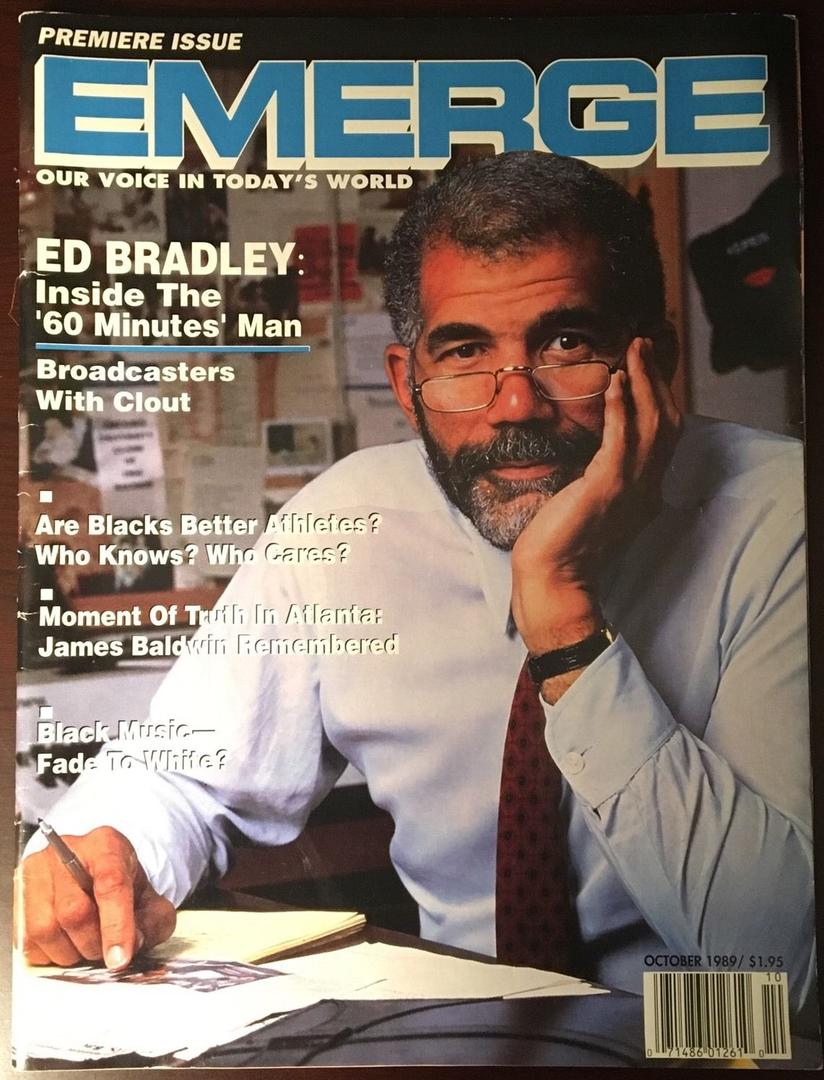
Magazines I’ve Found I Can’t Live Without In 2023

Scattershots:

  • It’s important that I say it took all of this, and The New Yorker, to replace the old Rolling Stone in my heart.
  • I’m really impressed with the scholarship of the Review and the style of New York.

Judy, Barbara And Juan: Random Thoughts About A Journalism-Filled Holiday Weekend

Watching and, frankly, enjoying the unapologetically hagiographic network television tributes to the semi-retired Judy Woodruff and newly-deceased Barbara Walters over the weekend, and then waking up to this Juan Gonzalez speech on Democracy Now!, shows how stark differences in mainstream American journalism can be–or at least, used to be, pre-Web and pre-1,000 channels. I accept my membership in Juan’s camp. But it’s clear to do today and tomorrow what he did means using Substack, etc. Effective mainstream journalism has this weird history of coming out of the American muckraking and capitalist traditions, and the millions made by mass advertising created a lot of space for approaches that don’t exist today. So you have to make them yourself, the way I.F. Stone and those folks did.

What’s also interesting to me is how in America, “alternative” spaces, if created by middle-class whites, can eventually become mainstream–or, as some critics of the mainstream would say, co-opted. We remember that at its creation almost 50 years ago, The MacNeil/Lehrer Report and All Things Considered, the newsmagazine of National Public Radio, were silent critiques of, and alternatives to, commercial mainstream news. (Note that among NPR’s alumni is former Philadelphia radio journalist and now Leftist legend Mumia Abu-Jamal.) Almost 30 years ago, Democracy Now! was a radical, almost anarchist critique of the million-dollar media institution it now is. 😉 I guess it now sees itself through that Gonzalez lens of outsider-within-the-inside. Which makes me think: is the middle-class, millionaire blond public television anchor Judy Woodruff just a “purer” version of her commercial counterpart, the long-ago-gone-Hollywood Barbara Walters? It’s a good, fair question.

In 2023 and beyond, more and more truthtellers must struggle with Amiri Baraka’s words, applied to race but easily, in this monochromatic circumstance, given to class:

***

I know it’s hard to be Black, and we’re all controlled by white folks.

[W.E.B.] Du Bois said we always have the double consciousness.

We’re trying to be Black, and meanwhile you got a white ghost hovering over your head that says, “If you don’t do this, you’ll get killed. If you don’t do this, you won’t get no money. If you don’t do this, nobody’ll think you’re beautiful. If you don’t do this, nobody’ll think you’re smart.”

That’s the ghost.

You’re trying to be Black and the ghost is telling you to be a ghost.

***

I appreciate Walters intervening Egyptian president Anwar Sadat. But I appreciate more that she said a few years ago that in today’s commercial news media climate, no one would care about it. I will appreciate what Woodruff soon will teach me about parts of America of which I know nothing. But I still see ghosts in my TV tube. And with money and stardom on the line, very few Juan Gonzalez-es who will challenge powerful people like Woodruff’s and Walters’ employers.