For the sake of national Black journalism not narrowed down to one person, his may have to be the first time I’m ever gonna root for something led by Niger Innis! Maybe…..!
Because the ones I’m reading right now are “off the chain,” as the post-modern expression goes.
This must be the month magazine’s submit for the National Magazine Award, because the Sunday going-to-meeting clothes have appeared on the last Rolling Stone (excellent articles on the Pope and cover-boy Trump), and October’s Smithsonian (the Egyptian pyramids, Einstein, the Brazilian Gordon Parks, and Hemingway)! I’ve viewed Smithsonian as a wannabe National Geographic, but it does more than that. I especially like its articles on technological and popular culture history.
The October National Geographic promised and delivered on a lost city in Honduras, the Congo River, Sweden wilderness, sea wolves and, on the cover, a new link in the human evolutionary chain! WOW!
It’s an interesting list. It would be a bit more interesting if it included people I met over the years, like Jared Ball and Rosa Clemente. They are no strangers to public intellectual work, but, alas, they don’t color within the lines.
But then again, looking at the older generation:
* Herb Boyd has written about 25 books in the 30 years since he left academe AND he has TWO National Association of Black Journalists awards (one with Dyson!), including a NABJ Hall of Fame award: when does HE get picked as a starter on the schoolyard? When he turns 80 in three years?
* Another friend and mentor, Don Rojas, should be writing and teaching right now about the Grenada revolution.
* And, if we can broaden out to Latinos here, will Amy Goodman hire Juan Gonzalez as a REAL “Democracy Now!” co-host once The slow-death News lets him go? How much more award-winning (I still remember his “stolen” Pulitzer for 911 ash) investigative journalism does his 66-year-old, clearly-spends-all-his-spare-time-writing-serious-history-books butt has do? When he’s cut, will he get the $200,000 a year New York City professorships others of less stature, ability and accomplishment get?
I just remember that Manning Marable and Earl Ofari Hutchinson were among those who started this “post-Civil Rights Movement Black public intellectual” thing 40 years ago on the Op-Ed pages of Black newspapers that only a few give a crap about now. Time is not the only thing that keeps on slipping into the future.
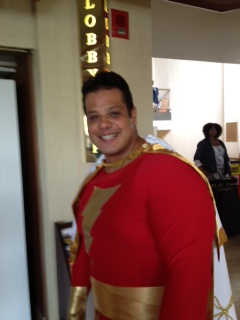
The Heath Ledger Joker scared the bejesus out of me, and I had no problem telling him so! LOL! 🙂 The Darth Vader guy was as tall as the original, and he had that breathing sound with him!
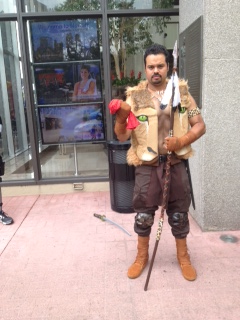
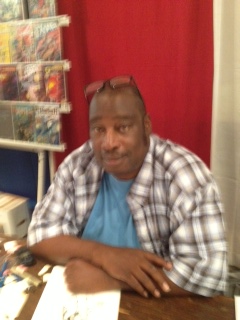
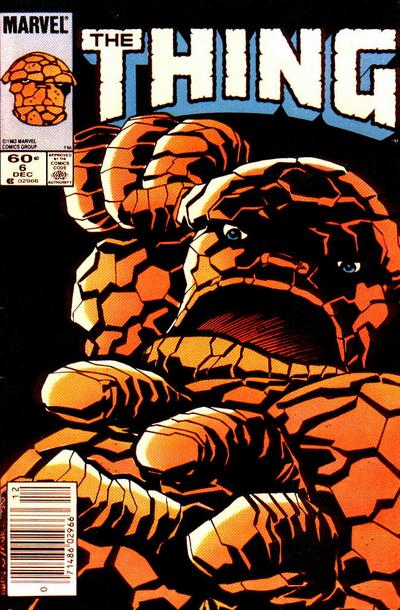
The guy at the end of this photo collection (after Kraven the Hunter, complete with Spider-Man mask!), is Ron Wilson, a famous Marvel comicbook artist remembered for Marvel Two-In-One and early issues of The Thing solo series in the late 1970s-early 1980s. I fanboyed all over him!
They had a brother comicbook creator there,DarrellGoza, whose lecture on Black superheroes and Black comics was so well-researched and contextualized, it made me ashamed that I had ever taught a class on comics history during my Morgan State days. It’s always good to run into people who have forgotten more than you will ever know on a subject! I gotta buy the poster (!) he had on the history of Black superhero comics and support his books! I told the organizer Goza’s lecture should be a PERMANENT part of this Comic-Con!
This event proves that Newark is on the move, ready or not!
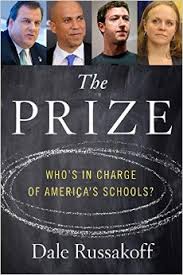
The word “conspiracy” gets thrown around a lot in African communities, ever since the middle of the last century. And it’s understandable: the assassinations of King and X, the discovery of the Federal Bureau of Investigation’s COINTEL-PRO files, and the disposal in one way or another of any leader of African descent who doesn’t toe the blood-dotted line of the West. But how much of a conspiracy is it when the victim doesn’t have the required amount of power for self-determination in the first place? This book, released today, is about how relatively powerless people fought back against their status when, insult to injury added, even their relatively little power was taken from them.
It starts with Cory Booker, the neo-liberal mayor of Newark, New Jersey, and Chris Christie, the conservative governor of the state, secretly deciding all by themselves in the backseat of a Chevy Tahoe in 2009 that they will transform American education by turning Newark into a laboratory for the New York-based, greatly monied education reform movement. Mark Zuckerberg, the founder and CEO of Facebook, develops a political man-crush on Booker and signs on by 2011, pledging $100 million (to be matched by other donors) to make New Jersey’s largest city into a charter-school haven in five years, staffed by six-figure, non-unionized teachers. Like the benevolent colonizers of old, all believe they go in with good intentions: self-government by the dark, poor people has not worked in the internal colony, the reasoning goes, or the state would not have taken over the school district back in 1995. The teacher’s unions are stopping progress, the reformers argued to themselves, by making sure they tie the hand of local politicos and school board members. So, they privately reasoned, the only way to change the system is to overthrow it—to go past all the community obstacles. So they hire $1,000-a-day consultants and get to work.
After absorbing the opening shot heard-round-the-world of the revolution it now understood it was a pawn in, the Newark grassroots is then introduced to Cami Anderson, a white woman of hippie background who has been named the school’s superintendent by Christie and Booker. Like education reformer Michelle Rheedid in Washington, D.C., she then sets out, from the community perspectives, to close as many schools and alienate every teacher and parent she can. Meanwhile and not coincidentally, charter schools, some rising out of the closed public ones, begin flourishing in the the old, struggling-against-decay, never-recovered-from-the-1967-rebellion ghetto, providing resources and specialized attention to small, selected groups of poor Black and Brown children the always-struggling public schools can’t match.
Everyone flexes what muscle they have. The teacher’s unions demand their back pay as a condition to their negotiations with Booker and Anderson over being able to fire bad teachers and financially reward good ones, and get it. The money people get their calls answered from the celebrity mayor, who eventually uses his Captain America persona to get elected to the U.S. Senate in 2013. Newark students organize and protest Anderson, with more than a little help from a well-known local name: Ras Baraka, a high-school principal and city councilman (and one of the sons of poet-activists Amiri and Amina Baraka). He seizes the issue that will get him elected mayor in 2014, defeating a Theo Huxtable-type candidate propped up by the same education reform movement. “The festering resistance to Anderson, the backlash against [the top-down reforms], and the first mayoral campaign of the post-Booker era became one and the same.” The street protests grow so large and consistent in Newark that Christie—days away from announcing his Republican presidential nomination run this past summer—makes a deal with newly-elected Mayor Baraka that, at this September 2015 writing, may transfer city education power back to the people a year from now. A bewildered Anderson is sent packing, replaced, amazingly, by a former state education commissioner—one of the chief architects of the neo-colonial plan! Whether the new school district superintendent cleans up his own mess is this story’s next chapter, to be written by today’s journalists and tomorrow’s historians.
Dale Russakoff, a longtime Washington Post journalist and resident of Montclair, a middle class suburb of Newark, embeds herself with Christie, Booker and Anderson while, simultaneously, sits in on more than 100 school-related community meetings (“There it was again: disrespect. The word rose from conversations all over the auditorium”), and the reporting not only shows, but shines. Her spectacular juggling act blames everybody but those whose demonstrated first commitment is to the students. In her telling, nearly everyone involved received something and/or learned something but the city’s least-of-these. She makes a clear observation that needs to be on T-shirts in the city: “For four years, the reformers never really tried to have a conversation with the people of Newark. Their target audience was always somewhere else, beyond the people whose children and grandchildren desperately needed to learn and compete for a future.”
The book’s author might not agree with the following assessment: that her carefully crafted work clearly documents that white supremacy’s psychotic historical urge to covertly or overtly experiment with the lives of poor Black people—whether medically, socially, economically or, in the case, educationally—is not some obscure 19th or 20th century Africana Studies classroom topic, but as current as the next awarded education grant. African-Americans used to be classified as sub-human, because of their three-fifth status under the U.S. Constitution. Then, after the Civil War, they became second-class citizens, because they didn’t have the right to vote or use public accommodations. In this updated 21st century form of pseudo-democracy, poor Black and Brown communities like Newark are filled with sub-citizens: those who have no input on their future, no matter how much taxes they pay and how often they vote. Christie and (especially) Booker should be ashamed of their public actions here, but who could, or would, succeed in shaming them that they would actually respect?












 Drums in the Global Village