Please read this.

Please read this.

The nuclear family blows up
A memorial interrupted by a war film. Whether this is an epic will depend on how it fades into (Marvel) film history. If it’s not, it’s not because of a lack of trying by writer-director Ryan Coogler and co-writer Joe Robert Cole. Marvel’s ability to acknowledge fans and critics simultaneously is quite extraordinary and remarkable. #BlackPantherWakandaForever
MAY 18, 2024 UPDATE:


So it’s too early in the morning to worry about whether this post will be an example of good writing. I’m watching (listening, really, to) Vigilante, Greg Palast’s new documentary on Georgia voting suppression while I’m updating my blog.
This post-Halloween pre-dawn screening is an appropriate end to a frightening weekend. Tiffany Cross is fired from MSNBC on Friday for directly confronting our enemies and unapologetically using late-’60s-style Black activist language in doing so. A Yale academic conference spends two days directly linking American white-supremacist history to what Palast is outlining in my ears. In my New Jersey hometown, the-used-to-be-a-ghetto Newark, former Black nationalists cry out in the Newark Public Library for us to vote because, as I’ve heard them say all my life, it’s the only way to stop the coming fascist tide. Meanwhile, some of my Dee Cee folks are decrying the choice between, as one of them calls it, Fascism and Fascism Lite.
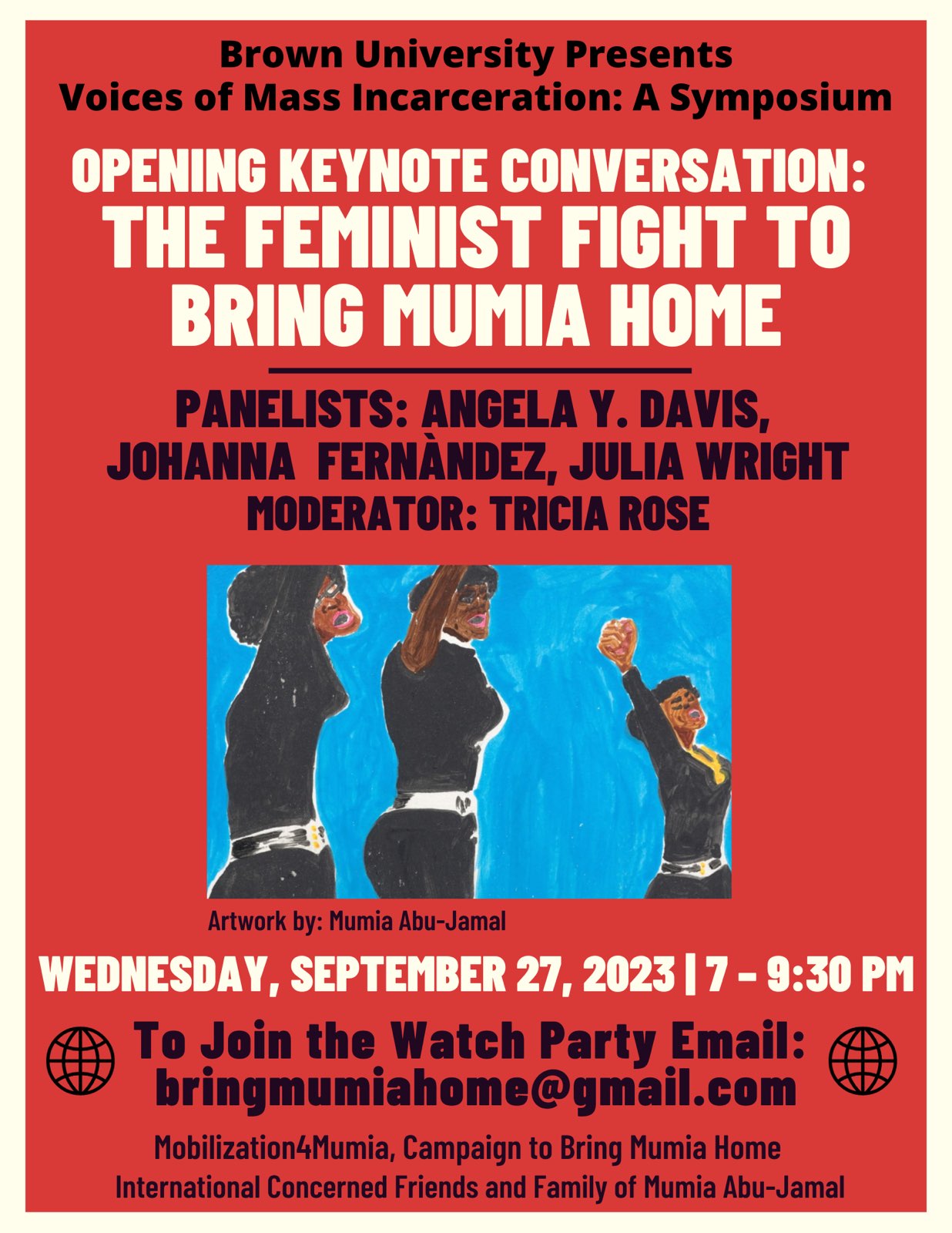
Everybody’s right, particularly if we meld an insider/outsider strategy, but that’s not enough. Why? Because between then and this Monday morning’s typing while viewing, I made the mistake on Sunday of getting offline just long enough to read last week’s New Yorker. Pennsylvania has gone crazy (to no surprise to Mumia Abu-Jamal and his supporters, I’m sure!) and very well-organized right-wing school activists refuse both fact and truth.
See this post’s lead photo? That’s my attempted reading this week so can I reward myself, guilt-free, with the half-escapism that Wakanda, the white-created and corporate-endorsed theme park of the African mind, represents.
Damn, was John Henrik Clarke and other historians right when he said that “all history is current events.” Well, I really hope the historical half-successes of both Black liberalism and Black revolutionary-ism loop around again and soon, because Palast is reminding us that in 2022 only one side knows they’re at war, and for many reasons, it doesn’t seem to be ours. And those retrograde warriors, not us, seem more willing to confront their opponents face-to-face, kidnap, kill, go to jail, slander and lie with every single breath, organize and vote like their children’s lives depend on it and spend their last billionaire dollar to maintain the white American race-supremacist structure that was so inspirational and utilitarian in the last century to both the apartheid South African government and Nazi Germany. Not surprisingly, these right-wing warriors are not “outside” the white-supremacist, capitalist system they created for their own benefit, but they are unapologetically and consistently clear that their collective goal is to make sure we Wakanda forever are.

The deadliest of the species
So a Brazillian media outlet interviewed me via email about a certain Marvel character and a certain film. Here’s what I wrote:
*****
Todd Steven Burroughs, 54, writer, comicbook geek, public historian and adjunct Africana Studies professor at Seton Hall and Wayne State universities. He is the author of Marvel’s Black Panther: A Comic Book Biography, From Stan Lee to Ta-Nehisi Coates.
1) In your opinion, what is the importance of continuing the legacy of Black Panther in cinema, as it was one of the rare positive representations in Hollywood of a Black king, seen here at the head of an African nation among the most powerful countries in the world?
I struggle over “importance” being the right word. The comicbook geek and the Africana scholar forever warring inside me go back and forth on it. This is a white corporate product starring characters originally created by white Americans with some later help from African-Americans, and now it’s a film produced by a white conglomerate, one written and directed by African-Americans starring both African-Americans and the children of continental Africans. This is not an authentic, organic African cultural product–which shows our powerlessness to do one ourselves. Remember: America was comfortable having a Black president serve two terms but there is still no Black American that can greenlight a Hollywood film. The great writer Haki Madhubuti has called the first film “dangerous.” And if you are committed to African liberation, how can you not call it that? The first Black Panther is an exciting and powerful movie, one that made me tear up with joy, but it’s also a film whose climax shows a white male CIA agent shooting down African revolutionaries. I have known about T’Challa since I began reading Marvel Comics as a pre-teen, but I have only loved him since I first read, while in grad school in the late 1990s, a groundbreaking, satirical Black Panther comic series written by Christopher Priest, its first Black writer. Reginald Hudlin, its second Black writer, did his best to make T’Challa a decolonized character fighting European imperialism. But what about real, decolonized African heroes and Black/African films? Black Panther only shows that the billion-dollar Disney/Marvel Cinematic Universe can make popular any kind of story starring anyone, that it can make anybody in the world into a popular superhero, but it is not an advance for Black, African and African Diasporic filmmaking. I’m excited as any fantasy-loving Marvel Zombie about this sequel–I got my ticket for the November 10 Thursday afternoon sneak preview weeks ago–but the African reality always is in the back of my mind. At the same time, I quietly agonize, I do acknowledge what this franchise means: African children–and some adults–around the world get to see themselves as the most powerful people on Earth. I think that’s where any importance really lies. So it’s complicated for me, internally and externally, intellectually and emotionally.
2) How much do you think the success of the original film is due to the ferocity and brilliance with which Chadwick Boseman embraced the role of King? Can a sequel be as successful without him? He was the heart of the movie, in a way, right?
I have in my living room a mounted, framed poster of Chadwick Boseman on the cover of Rolling Stone magazine, so I don’t want my next sentence misinterpreted. I don’t think it’s an insult to say that Boseman’s channeling of Nelson Mandela–even using similar speech patterns–made him the most boring character in the film! LOL! In my view, the success of Black Panther was the dramatic balance between T’Challa (Boseman), the amazing Dora Milaje and other female characters (Gurira, Nyong’o, Wright, Bassett) and Killmonger (Jordan). This may sound strange, but as I mourned Boseman I did not worry about the sequel at all because I knew director/screenwriter Ryan Coogler and Marvel mastermind Kevin Feige could and would compensate and recalibrate well. That first teaser trailer–one that caused tears to flow on YouTube, including my own–showed they were still in command of this world they made–Wakandan characters in particular and the MCU as a whole. The film is already on track to make $1 billion worldwide, so all is well.
3) Since we have now some distance from the first film, do you see any positive impact of Black Panther on the way Hollywood mainstream films portray Black people these days?
Well, here’s what I wrote one year in. I don’t think it’s changed Hollywood at all, with one obvious exception: it’s clear that without Marvel’s Black Panther, there would not exist The Woman King. (Look at the chronology of the greenlighting of that film here.) And I definitely don’t think The Woman King‘s familiar-feeling vibes, non-sophisticated story and Hollywood filmmaking style, along with a wide release date right in front of Black Panther: Wakanda Forever, is in any way coincidental. As I wrote, The Woman King is Black Panther 1.5. 🙂
I will be very interested in how indigenous people in the Americas will react to seeing Meso-American people and culture as a major part of the MCU worldwide juggernaut. I think turning Namor, The Sub-Mariner and his people indigenous is a stroke of genius! I’ve loved the Sub-Mariner since seeing him as a pre-teen in very dramatic animated stories on second-run syndicated television in the 1970s (which is the link; here’s info on the original 1966 limited-animation show I saw in ’70s reruns).
And, an important note: the fact that Wakanda Forever‘s bi-cultural, big-screen clash of the titans is coming at the close of a year that saw the Disney+ streaming emergence of an Egyptian superhero and Desi people getting a deservedly critically-acclaimed drama starring teenage superhero Ms. Marvel, is neither accidental nor incidental. Again, Disney/Marvel is leaving no money on the table. 🙂
It’s clear that if the great writer Ta-Nehisi Coates is right in that the first Panther was Black people’s Star Wars, Wakanda Forever is positioning to be the trying-to-be-bigger, trying-to-be-even-better sequel, a Black Empire Strikes Back.
But here’s what I’m most fascinated with as 2023 approaches: will Angela Bassett, an Academy Award nominee, be nominated and win a Best Supporting Actress Oscar for her anchoring Wakanda Forever and Oscar winner Viola Davis be nominated for and win Best Actress for her film, too? Can Black American women sweep the female Oscar contests for portraying African royalty? As they say in the comics that inspired all this Panthermania, to be continued!

He writes the songs of love/ And special things
A deeply appropriate parody of all music biopics, with sly commentaries on based-on-a-true-story anachronisms, falsehoods twinned with factual distortions and even white appropriation of Black music. This film solidifies Daniel Radcliffe as a rising comic genius.


Imagine what you want then get out of the way
Remember energy follows thought so be careful what you say
So be careful what you ask for
Make sure it’s really what you want
Because your mind is made for thinking
And energy follows thought
—Willie Nelson, “Energy Follows Thought”
***
“You must stay drunk on writing so reality cannot destroy you.”
–Ray Bradbury, Zen in the Art of Writing
While watching Serena struggle through her last (?) second set last night, I got the news update on my phone: Barbara Ehrenreich had died. That nonfiction champion of working people was 81, 41 years older than the history-breaking wonder woman I was watching on ESPN.
I immediately went back to Williams because it’s consistently amazing to watch her form and spirit, even when she loses. And I confess I had been watching the U.S. Open all week to see how she would lose, how she would leave the field and then go to—what’s her word?—oh, yeah, “evolve.”
It’s a very reflective time for me because it’s the silver anniversary of someone who once yearned to be smart yet did a real dumb thing: leave a fulltime job to go to graduate school. Thirty years ago, give or take a week, when I was much less foolish and reckless than I am now, I decided to leave home and become a writer. I am so grateful for my life of failure that resulted from that decision.
When I decided to ditch covering Newark, N.J. mayors for mastering decimal numbers at Maryland and D.C. libraries, Bill Clinton hadn’t yet been elected and The Dark Knight and the X-Men had just made the jump from comic books into serious FOX Kids Saturday-morning-network animation. Will Smith was still the Fresh Prince and Serena and Venus were white Roman goddesses found in mythology books.
Here’s what I didn’t know back then:
This was the period where Williams was professionally born and Ehrenreich came of nia age. Off to work. Never give up, never surrender, as the Captain Kirk-ish lead of Galaxy Quest made famous at the end of a decade devoted to Star Trek.
Is giving up or staying the course nature or nurture? Ta-Nehisi Coates, a man whose father told me once drove a cab, said on some Facebook video I once saw that people don’t fulfill their writing ambitions because they give up. Because that was Winner Advice, which is by its nature dishonest, he didn’t say why they give up. In a famous 2009 graduation address to the UC Berkeley Graduate School of Journalism, Ehrenreich was more forthcoming: “You are going to be trying to carve out a career in the worst economic downturn since the Great Depression. You are furthermore going to be trying to do so within what appears to be a dying industry. You have abundant skills and talents – it’s just not clear that anyone wants to pay you for them.”
Every single time I force myself twice monthly to pay a very nice woman to clean my apartment, I remember the line Ehrenreich dropped that scared me the most (and still does): “You won’t get rich, unless of course you develop a sideline in blackmail or bank robbery. You’ll be living some of the problems you report on – the struggle for health insurance, for child care, for affordable housing. You might never have a cleaning lady. In fact, you might be one. I can’t tell you how many writers I know who have moonlighted as cleaning ladies or waitresses. And you know what? They were good writers. And good cleaning ladies too, which is no small thing.”
By the time the famous author said this, Williams was still grand-slamming on the way to GOAT status and I was a lifer, still searching for literary immortality in a post-literate culture, armed with nothing but graduate degrees, the memorized arcs of a 1989 James Baldwin documentary and the Alex Haley episodes of Roots: The Next Generations, and a six-figure student loan debt. I had not yet accepted that writing doesn’t exist in the real world where people pay serious dues every day to ensure their survival. Unless you are in the Talented Tenth it’s an invisible, irrelevant profession. Don’t believe me? On May 23rd of this year, I went online and got my Wu-Tang clan-generated name: PHANTOM ARTIST. Yeah! Um, wait…. On August 22nd, I went back to try a second time, wary as 55 approaches next year. Wu-Tang renamed me LUCKLESS HOODOO. I accept my fate.
The destinies of other scribes happily cross over into the academy. All the living writers I followed as a 20-something are journalism professors now—most at Howard University, Hampton University and the place I got let go from 10 years ago next spring, Morgan State University. I learned during my six MSU years that being a professor is not a writing job. I was taught in the 20th century that if you want to go write, write; If you want to make writing your fun nights-weekends-and-summer hobby, the analog mantra went, go be a professor. Twenty-two years into somewhere else, reality can be quite a witch when compared to memory. Other than my mentor Herb Boyd (himself a part-time professor for decades) and my friend Richard Prince, the only full-time Black writer I follow in 2022 has been in prison for 40 years.
For some there is only one path. Williams never gave up, never surrendered. Neither did Ehrenreich. But on the other hand, if you are not like them–either not the very best or not in that opportunity zone–that survival move and mode, I now know, slowly turns into professional evolution and eventual advancement in the real world outside your window. Thirty years later, pretty much everybody I know evolved well: they either/and: a) know what it’s like to get a promotion; b) make six figures or near it, c) have a house paid off and/or d) are fantastic and proud parents.
Ehrenreich and Williams have shared that accomplishment story, and on their own terms. They have inspired many who, like myself, will never get higher than fifth place in life’s Olympics—who will remain invisible to history but fulfilled in the private spaces. That in itself is a GOAT-level accomplishment.