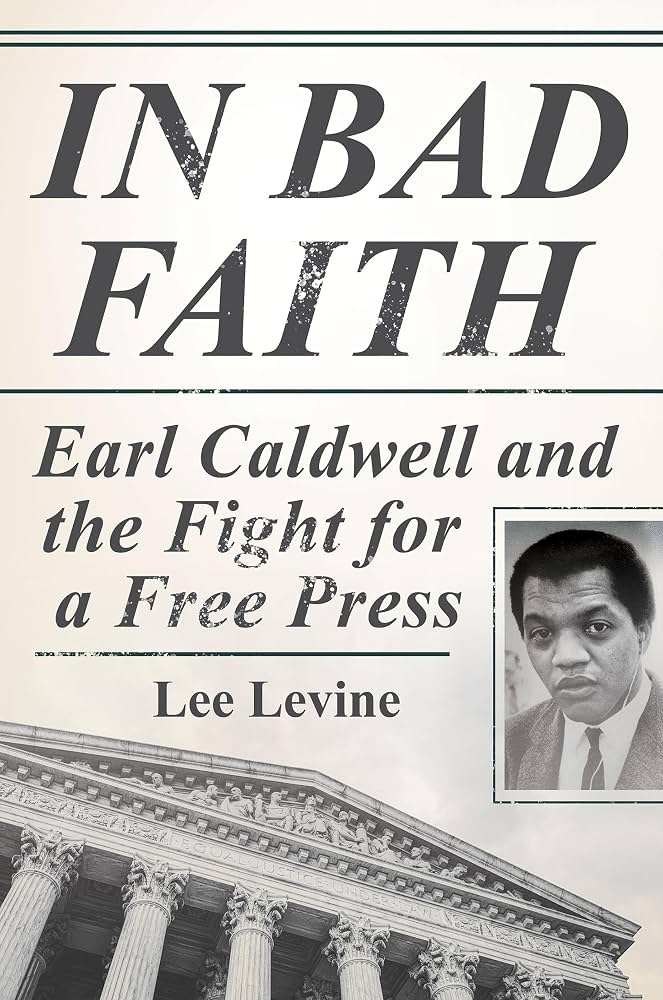
In Bad Faith: Earl Caldwell and the Fight for a Free Press.
Three Hills. 312 p. $29.95.
Calvin Duncan and Sophie Cull.
Penguin. 400 p., $20.
The recent raid on U.S. Rep. Ilhan Omar’s house by federal agents reminds Black Americans how it was American laws that allowed Blacks to first be slaves, then ex-slaves with “no rights a white man is bound to respect,” followed by the dubious “second-class citizens,” and then to the present, where Blacks have learned to live their lives in fear of the law.
Both books discuss how fragile the legal system is–one of judges, not law. As one inmate told Duncan, the second-person narrator (thanks to the nonfiction mastery of Cull), of how he mastered the law in prison to help free other inmates while working on his own case: when the judges change, so do a person’s rights.
The journalist Earl Caldwell lucked out: he understood his rights, which included not to be an informant for the group he was covering, the Black Panther Party, and he had lawyers and U.S. Supreme Court justices who understood them, too. The fight changed American law for the better and strengthened press freedom as Caldwell’s paper, The New York Times, was publishing The Pentagon Papers and The Washington Post was digging into what surrounded the money used for the Watergate burglars. Levine, an established and distinguished servant of the law, does an excellent job of putting everything in socio-historical context, offering detailed perspectives from Caldwell, the Supremes, and the Death Star known as J. Edgar Hoover’s Federal Bureau of Investigation and its counterintelligence program.
Both Caldwell and Duncan knew that they had to take an organized approach. Black journalists and free-speech advocates organized for Caldwell, and Duncan organized his own mind, disciplining himself to such a Nelson-Mandela-in-Robben-Island degree that he created allies, then freedom, and then the opportunities that came from that freedom. Caldwell served the public, and Duncan served people.
Freedom remains temporary in Black America. These books remind those about to enter the post-Donald Trump world that the carbon monoxide of ignoring The Powers That Be and what they (seek to) entrench into law will turn an apathetic sleepiness into a more permanent and final state, albeit slowly and softly.

