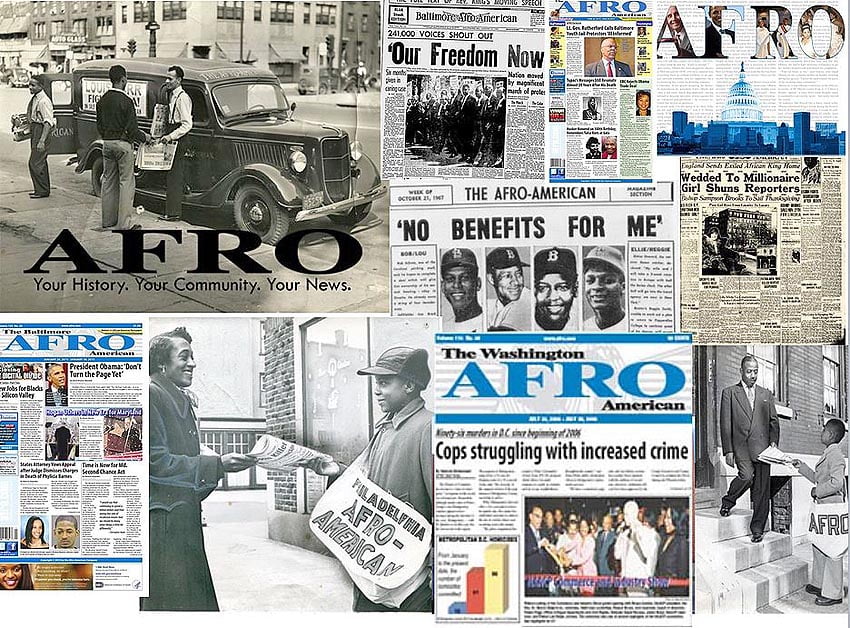
#TodayinBlackHistory #BlackHistory #NewarkHistory #BlackPressHistory #NewspaperHistory #apartheid #SouthAfrica #SouthAfricaHistory #antiapartheid #antiapartheidhistory #NewJerseyHistory #PeoplesOrganizationforProgress #AfroAmericanNewspaper #NewJerseyAFRO Today Is….

….the 40th anniversary of the event that spurred my first published article ever, done for the 4,000-circulation weekly. It was about a massive anti-apartheid march in Newark, N.J.

I was folded into The New Jersey Afro-American by Deborah P. Smith-Gregory, the article’s key and lead author.
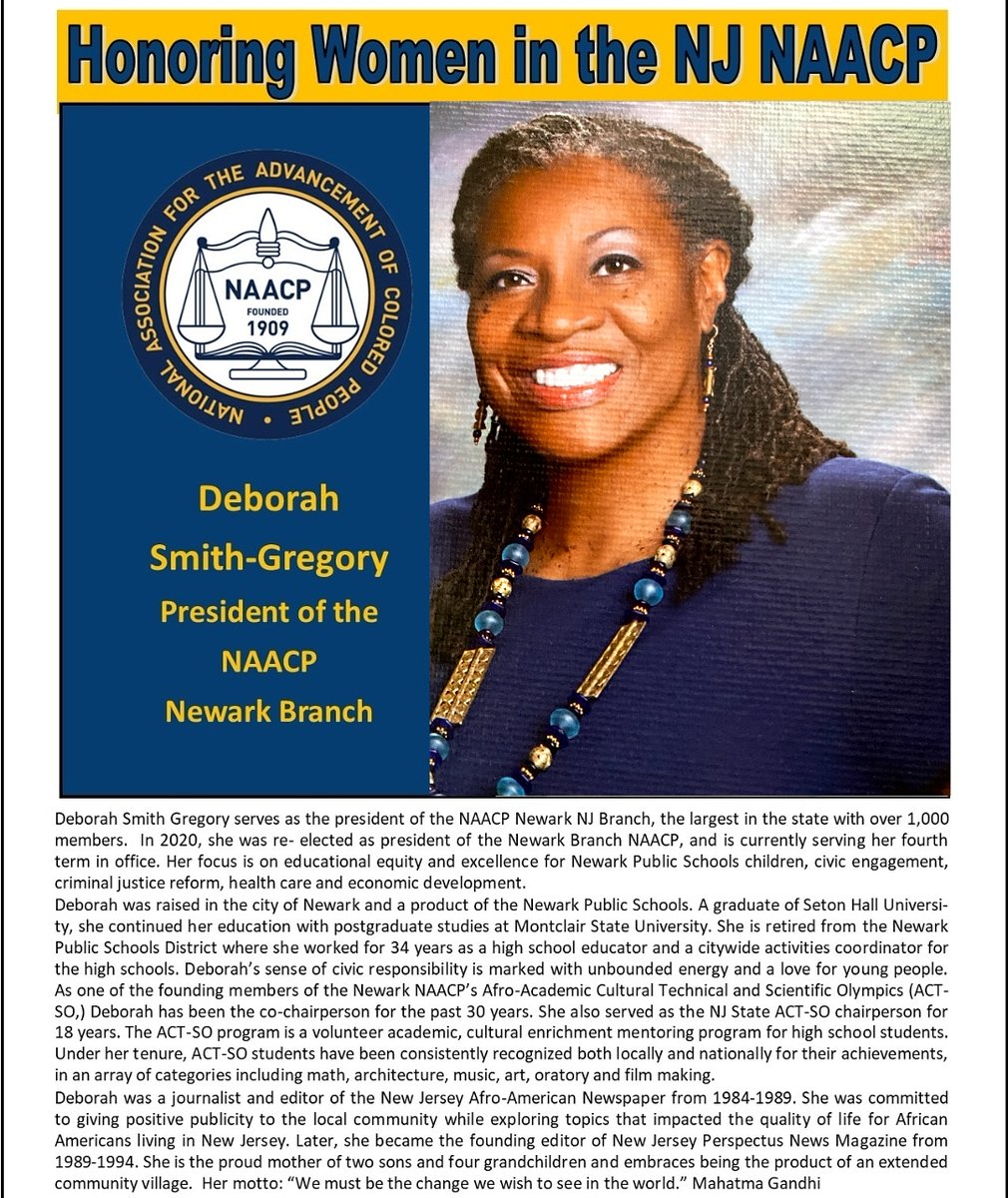
Deborah worked for local Afro legends Harry B. Webber and editor-in-chief Bob Queen. She would succeed him in 1987, becoming the paper’s first woman editor.

From here:

Robert C. Queen (1912-1996) was born in Newark and served most of his life as a reporter and newspaper editor. Queen’s career started in 1938 when he was a reporter for the New Jersey Guardian. Later he was a writer and city editor for The New Jersey Herald. In the 1950s, he was managing editor of The Philadelphia Independent. Subsequently, he worked for the Philadelphia offices of The Pittsburgh Courier. In 1963, he returned to Philadelphia to become managing editor of the Philadelphia edition of The Afro-American. His final stop required him to return to Newark as editor of The New Jersey Afro-American. For the better part of a half century, Bob Queen covered Newark’s political and entertainment scenes, telling stories of interest to African-Americans that tended to be overlooked, misunderstood or forgotten by mainstream journalists. Former city councilman Calvin West recently recalled how, when he and Irvine Turner, Newark’s first black councilman, were in office, Queen made it a point to report the African-American viewpoint. The son of a lawyer, Bob Queen had little formal training in journalism, yet he was one of his era’s best reporters. A contemporary reporter described him as a mover and shaker in the Newark community and beyond. During his lengthy career, Queen interviewed Roy White, one of the famous Scottsboro Boys. He also wrote of nightlife in Trenton, where he played piano in his youth at local watering holes. Like other leaders, Queen gave of his time and talents to many organizations, including the Philadelphia Citizens’ Committee, Sigma Delta Chi Journalistic Society, and the Philadelphia Child Development Program. His honors included an award for journalism from Temple University, the W.E.B. Dubois Award from the Newark Branch of the NAACP and the New Jersey Association of Black Journalists’ award. Queen also received an honorary doctorate from Essex County College, was inducted into the Black Press Hall of Fame and was cited by the Garden State Association of Black Journalists. He was well thought of by contemporaries such as Sally Carroll of the Newark NAACP. As his wife, Edna, commented, ‘Once you knew him, you had a friend for life.’ Old-schooled and gentlemanly, Queen was indeed a friend to his many colleagues and associates.

Some Unorganized Thoughts As To How We Live Now

I’m listening to New York Gov. Andrew Cuomo now as I type, telling me how long COVID can stick on surfaces and hang in the air. He’s become my daily obsession. The Mumia Abu-Jamal event I’m waiting for is a little less than four hours ahead.

Still meditating on what happened just a couple of hours ago. I opened the front door, unmasked, waiting for my Whole Foods delivery, and immediately saw a sanitation worker–Friday is Garbage Day in our ward–in distress. Something powderish (?) had spilled on his face while working on our block, and he was less than panicked but more than disturbed.

He asked for warm water and soap and, thanks to me and the homeowner, Annette Alston, we quickly compiled.

Coming back out, I hear a voice to my right yell, “Amazon!” Delivery Dude is peeping the happenin’, so he quickly drops my bags at the foot of the stairs (social distancing, rigghht) and does a great imitation of Ricochet Rabbit. Annette hands me my mask to wear–after all, I’m now in close proximity to two people–and for the first time since the Apocolopyse, I wear it. I’ve been inside the house for weeks, writing my Mumia bio–only leaving the house to take out the garbage–so I hadn’t fully accepted this reality until I finally yielded to Paul Lawrence Dunbar.

Cuomo is talking now about an “economic tsunami” and is daring Senate Majority Leader Mitch McConnell (R-Ky) to allow states to declare bankruptcy legally. “I dare you to do that!”

I really felt for the Sanitation Brother, an Essential Worker. This is not the time to be dealing with unknown substances. What was on his face? Oh, man…..

A neighbor from across the street is checking from her window, asking about his welfare. (Newark is a small town that, paradoxically and correctly, looks like a Big Ghetto from the outside.)

“What did we learn?” Cuomo is asking.

As a “lifelong student of Black media” (a quote from my bio), it’s fascinating how fast we have Zoomed along.  We were well along the road to becoming our own Black public-affairs shows via Facebook Live before the drip-blip, but it’ll be interesting to see how much of Black America will just junk prepared broadcast packages altogether for the live and interactive, the digital harambee. (Meanwhile, The Afro-American newspaper is trying to hold on, having laid off 25 percent of its staff.) I like to approach the study and teaching of media history from many perspectives, and one is from the changing of habits. Are we, slowly and eventually, the “B-SPAN” (Black C-SPAN) I’ve/we’ve been looking for?

Cuomo reads a letter from a Kansas farmer who has sent a mask for a New York health worker. “God Bless America,” Cuomo declared, who is not, he keeps saying, running for president. 🙂

Now he’s talking about taking versus giving. I’m glad Annette and I were able to help the brother. In this time of fear and uncertainty, our community is standing steady. He thanked me as, of course, we are all thanking them.


My Latest Book Review, About The Power Of The 20th Century Black Press……

….is here.