Tag Archives: history
Airwave Dijelis (Griots): Asante Sana, Bob Law #BobLaw #Nighttalk #NighttalkwithBobLaw
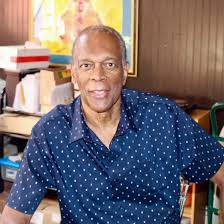
From my 2001 doctoral dissertation. The references have not been updated. Any mistakes–factual, grammatical or ideological–are mine, not the University of Maryland’s.
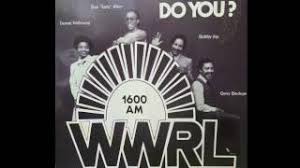
“He stood at the mic like a lighthouse, unblinking in the storm. A voice for the people, a spine for the truth. Fearless in witness, relentless in love for his community. An icon — not because he sought it, but because he earned it.”
– New York City radio broadcaster Rennie Bishop, from an email upon hearing about Law’s transition into the Realm of the Ancestors

BOB LAW, TO MY surprise, was not born with a radio microphone in or near his mouth; once upon an early-’70s raised fist, he was a hell-raising New York City civil rights activist. In the previous decade, he had worked with the radical Brooklyn branch of the Congress for Racial Equality, a national civil rights organization. He also worked in the 1960s with the Northern Student Movement and as an East Coast organizer for the Student Nonviolent Coordinating Committee. He had learned graphic design and communications arts at Pratt Institute, a New York City arts college. Law said one of his greatest influences in the 1960s was Malcolm X, whom he called “…the great educator. The great teacher. He raised questions about what we were doing in the movement. He raised questions about street life. And he was a primary influence in the lives of a great many people, particularly the group of young people that I was a part of.”
Law led a group called IMPAC–the Independent Movement for Political Action. Law appeared on Bernie McCain’s WWRL-AM Sunday afternoon show “Tell It Like It Is” to talk about his organization’s campaign against the use of the drug Ritalin, a drug that counteracts hyperactivity, in New York City’s public schools. Law and other activists believed the drug was disproportionately being used on Black schoolchildren. Law said McCain was a pioneer of “activist radio,” where a host would actually campaign–and get his listeners organized–against an injustice. When McCain became program director at KDIA-AM in Oakland, California, Law became WWRL’s public affairs director and host of a show called “Black Dialogue”–an interesting, and typical for Black radio, version of, as the expression went at the time, from the streets to the suites.
In 1981, the same year WLIB, a rival AM Black-formatted station, began Black news-talk programming, “Night Talk with Bob Law” premiered on the National Black Network, originating on WWRL. (The station’s all-night slot had been held by Law’s friend Gary Byrd, who soon moved his “Gary Byrd Experience” show down the dial to WLIB; more on his story here.) “Night Talk” with Bob Law was the first national Black radio call-in talk show. It ran weeknights, from midnight to 5 a.m., Monday through Friday mornings. It was a national forum for Black issues in the news and Black politics. One scholar said it “quickly became the most popular Black talk radio show in the country.”
Law said the value of the national show was that Blacks struggling for social justice in one area “learn that their situation is not isolated. And [they] are even encouraged by [other] people who struggle against that oppression.” Using his ’60s swagger, he used the forum not just to inform, but also to prepare his listeners to spring into action. Early in its history, civil rights leader Jesse Jackson Sr. was Law’s “Night Talk” Tuesday co-host, using his visibility to prepare for his 1984 Presidential campaign. Law regularly invited activists and scholars, such as John Henrik Clarke and Dr. Yosef ben-Jochannan, to discuss their specialties.
The wee-hours host used his late-night pulpit to run many campaigns and crusades. When I began listening to the show in 1987, a major focus was fundraising for the New York chapter of the Black United Fund, a self-help philanthropy group. Named New York Coordinator for 1995’s Million Man March, “Night Talk” pushed hard for a large national turnout. In his book, Law lists some of “Night Talk'” s crusades, with special emphasis on one campaign in particular:
And there are many examples of NIGHTTALK’s influence on a national level: We helped raise $100,000 for a Kansas City teenager, we financed a summer softball league for children on behalf of [Law’s] Respect Yourself Youth Foundation, and we helped [in 1982] to save the Lorraine Motel, the site of Martin Luther King· s assassination [from an auction] …[Local businessmen] wanted to convert the hotel into a Martin Luther King museum, which I agreed would be much more fitting than the stone marker and plastic flowers that had been placed at the door of Dr. King’s room. The plan was to prevent the auction by paying off the debt owed by the motel. and then raise the money to build the Martin Luther King Museum.
I agreed to make the appeal and organize various fundraising events in local communities around the country, in conjunction with my on-air activity. I wanted the museum to make one adjustment [,] however. I wanted the museum to be dedicated to the entire Civil Rights Movement, with Dr. King as its centerpiece. The group agreed, and we launched a national radio campaign on NIGHTTALK… The NIGHTTALK audience also responded by calling the Judge who was to rule on the auction, to assure him that they were donating to the memorial fund and that the money was indeed on the way. On the strength of those phone calls and the renewed and expanded enthusiasm for the project, the Judge delayed the auction, giving the Memorial Foundation a few more days to receive contributions from its new supporters throughout the country.
We were successful! The Martin Luther King Memphis Memorial Foundation was able to buy the motel and the time they needed to raise the additional funds to build the excellent museum of the Civil Rights Movement that currently exists at the site of the old Lorraine Motel. Strangely enough. there is no mention of the NIGHTTALK campaign in any of the museum· s literature, nor was a promised plaque installed in the museum’s entrance to acknowledge the donations of African Americans around the country. These donations did in fact make the Civil Rights Museum possible.
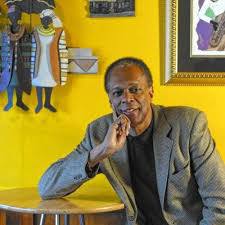
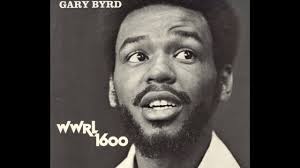
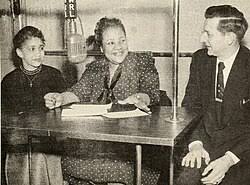
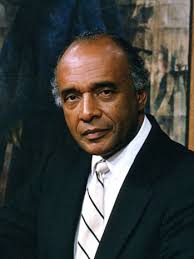
IN 1989, LAW’s FRIEND and former WWRL co-worker, now calling himself Imhotep Gary Byrd, was on a roll so he decided to openly celebrate a role. His “GBE” was now renamed the “Global Black Experience.” On WLIB, the self-styled call-in radio magazine grew so popular that it began broadcasting live from the Apollo Theater. So he took full advantage of that, devoting a week to big-upping his Black-oriented media peers. From Monday through Thursday during a late-August week, the new, dashiked ”GBE” hosted a tribute to New York City’s “Pioneers in Broadcasting.” With a packed studio audience from the community, he honored the late Alma John, whose WWRL show was a ’60s Black radio staple and whose New York area community work was still remembered. Byrd also honored New York radio legend Hal Jackson, who was celebrating his 50th year in radio broadcasting. In addition, Byrd honored two of his peers: WABC-TV’s Gil Noble, producer and host of the award-winning Black public affairs television program “Like It Is,” and Law. (More on Noble and his show here.)
Onstage at the Apollo, which had basically become an African-centered Black community space during the hours of Byrd’s broadcast, Noble spoke with his friend about his career and professional philosophy (his professional journey began in the 1960s as a WLIB newscaster). Noble recalled how he learned from Pan-Africanist Queen Mother Moore that, as a displaced African in America, he didn’t even know his true [African] name. She “made me understand the severity of my condition … I didn’t even know my name.” That perspective, according to Noble, helped him to “ward off the intoxication” of becoming successful in a white-dominated industry. He said that he always remembers it was the Civil Rights Movement, particularly the 1967 Black insurrections in Newark and elsewhere, that got him his job at WABC-TV “..and that’s why I’ve spent my career trying to give back.” The program, he explained, was important for Blacks and whites because “white people need to learn the truth about themselves, too.” The predominantly Black audience laughed and applauded. Noble blamed America’s Eurocentric educational systems as the reason why Blacks who enter journalism all too often consider themselves journalists first and African-Americans second. He thanked Byrd for honoring him, noting that he was glad Byrd had such a public forum to be praised by callers and members of the studio audience, the latter of whom began moving to microphones near the Apollo stage to join the conversation. A Black woman, identifying herself as 83-year-old Beatrice Johnson from Queens, said she never missed “Like It Is” when it was broadcast on early Sunday afternoons. “I don’t miss it. That’s like church to me,” she said. One Black man asked Noble why he didn’t try to go after the lucrative and powerful WABC “Eyewitness News” weeknight anchor chair. “I am constantly reminded of the condition of our people,” responded Noble. “And that it is severe and grave. And that is my focus. And I don’t believe I can make a [similar] contribution anchoring the news as [I do with] ‘Like It Is,” since he said it was the only program on New York television controlled and conceptualized by people of African descent. “I think it is important for ‘Like It Is’ to stay alive because it allows people to see the world through the eyes of the majority of the people in the world instead of the minority.”
The next day on the “GBE,” Law was honored on the Apollo stage for his work on WWRL and on “Night Talk.” He talked to Byrd about his activist history in New York City prior to becoming a broadcaster–particularly the influence Malcolm had on him. He mentioned that Hal Jackson, whom Byrd had honored earlier that week, was the host of “Community Forum” on WLIB. where Law, as a young activist, would appear as a guest in the late 1960s. He said that the future of radio, especially AM radio, was talk and information, and that format was “…absolutely necessary in the African-American community,” since radio “is the only thing on in the Black community 24 hours a day.” A 65-year-old Black woman from the studio audience confirmed this. saying that she had gotten a thorough political and cultural education from her “daytime man” Byrd and her nighttime “husband” Law. The audience applauded and cheered, and both broadcasters quietly and humbly thanked her for her statement.
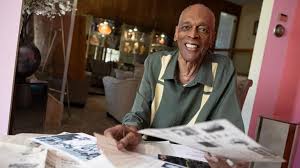
“LIKE IT IS,” WWRL-AM AND WLIB-AM are textbook examples of the multiple roles of Black media. The three forums have attempted to present an African-centered worldview using mass media. The hosts of these programs discussed here argue that their shows are antidotes to white mainstream media programming, which, due to its disproportionate control by whites, collectively present a white view of the world as mainstream. These forums allow African-Americans in the New York tri-state area and, in the case of WWRL’s “Night Talk” nationally, to see and hear themselves from the varied historical and cultural perspectives of Africans and African-Americans. They also allow a counter-narrative from the culturally white and politically right-wing views of white mainstream talk radio in New York City. Because the distinct roles they play are well within the concept of the Black media imperative. The mass communication products of Noble, Law and Byrd exemplify the Two-Pronged Black Critique of White Media Hegemony: l) the critique of white media supremacy and 2) the Black counter-narrative.
Noble, Law and Byrd share common professional and personal characteristics. All are tall, charismatic men who are more than 50 years old. The Civil Rights and Black Power movements forged all three ideologically, but as those movements developed in the North — specifically in New York City, the headquarters of the movements of Marcus Garvey and Malcolm X. They did not formally study journalism, although Law learned the basics of communications at Pratt. All started their careers in Black radio during turbulent years in American society. The three work as communicators who say they attempt to use their craft for the improvement of African-Americans. All three are artists: Noble, a piano player, led the Gil Noble Trio, a jazz band, in the 1950s; Byrd is a performance poet, songwriter and entertainer; Law is a graphics artist.
There are some slight differences. Law is the only one of the trio with a college degree. Noble was the only of the three not known to have been an athlete as a youth, unlike Byrd (football) and Law (baseball). Noble is the only one of the three working in white mainstream media. Law is the only one with a background in community organizing.
All three broadcasting forums are strongly focused from a Black worldview. For more than 15 years, the “Like It Is” title sequence has started with drums and a visual collage of the African-American experience, ranging from drawings of Africans being enslaved through pictures of the abolitionist period and the Civil Rights Movement to “Like It Is” interview clips from the 1970s to, finally, a still picture of a baby being born. After the collage, a red, black and green flag–the universally accepted symbol of Black Nationalism–is created onscreen, with the title of the show appearing in front of the flag shortly afterward. Law’s radio show started with an announcer saying “Night Talk” was “for people who live in the Black community and whose actions affect the Black community.” That description could easily apply to all three programs.
Not surprisingly, the shows sound different. Noble’s on-air demeanor, if not his line of questioning, is very calm and “objective;” he does not blatantly express his opinion on the air. Law and Byrd, on the other hand, have been open advocates on-air whose opinions on most topics are clearly known. Unlike Law and Byrd. Noble does not use music during the show; the show’s transitions to commercials and closing credits are done in silence. Noble is “Like It Is”s’ only interviewer, while Law and Byrd took calls from their audiences. Noble’s show is a weekly hour; the others had at least 16 hours of radio time to fill every week.
All three seem to be addressing the same audience–one seeking the Black media imperative as preferred programming. In my view, the audience Law, Byrd and Noble seem to target is composed of serious-minded African-American adults who want to l) learn about African-American politics, history and culture and 2) do something to improve the condition of African-Americans from a left-of-center, Nationalist-oriented point of view. The hosts seek to increase understanding of the African-American experience by creating programs that inspire African-Americans to become race-conscious citizens. By doing this, from my perspective, they serve the movements that created them and push a new generation to be exposed and, hopefully, become actively involved in social justice struggles.
The fact that Law, Byrd and Noble are part of a generation of Blacks influenced by the Civil Rights and Black Power movements does not make them at all unusual; millions of African-Americans were also shaped by “the Sixties,” the period between 1960 and 1979. What makes the story of these three men and their forums worthy of scholarly study is how, as media professionals, they consciously chose to make the mass media their own instead of being made by the mass media. As Black men who see their history, politics and culture as central to their identity as American citizens and human beings, they decided to make media from that experience during virtually the same time period–the late 1960s; they chose to make media that matched their beliefs, thoughts and opinions. They chose to use the media to present and discuss the African and African-American experiences from the often-controversial perspectives of their activist peers, not from the “objective” perspective taught in journalism school to Black and white journalists alike. In so doing, they became both proponents of the Black media imperative–”living mediums” standing on electronic stepladders–and ideological heirs of the movements they have championed.
https://americanarchive.org/catalog/cpb-aacip-529-ks6j09xd10
https://www.youtube.com/results?search_query=bob+law+night+talk

#BreakingTheSoundBarrier Column: On The #Smithsonian and #Slavery: #PresidentTrump’s #DonaldTrump’s #POTUS’s Whitewashing of #USHistory #AmericanHistory #WorldHistory #BlackHistory

Weekly Column
Thursday, August 21, 2025
By Amy Goodman & Denis Moynihan
On Tuesday, President Trump attacked the narrative long taught in US schools and documented in museums, about the abhorrent, centuries-long practice of slavery. He focused on The Smithsonian Institution, the world-renowned center of learning and culture based in Washington, DC.
Trump wrote on his social media platform, “The Smithsonian is OUT OF CONTROL, where everything discussed is how horrible our Country is, how bad Slavery was.”
“How bad slavery was.” It is simply unbelievable that such a statement could be uttered by a president in 2025. Yes, slavery was bad, President Trump. It was evil and remains a stain on this country. We should never stop talking about it.
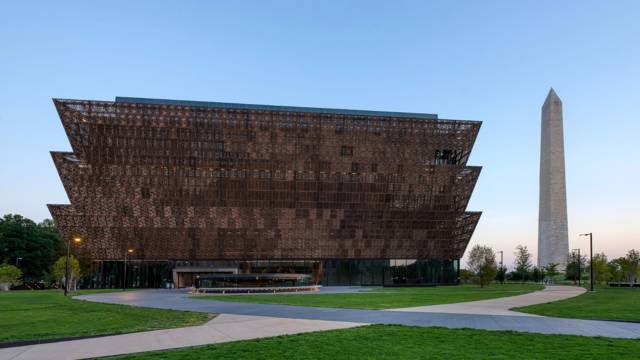
Lonnie G. Bunch III is the 14th Secretary of the Smithsonian, overseeing the entire institution. Prior to that, he was the co-founder of the Smithsonian’s internationally renowned National Museum of African American History and Culture.
Democracy Now! interviewed Bunch in February, 2020, just before the pandemic struck. Bunch described the importance of depicting slavery:
“One of the most important things for me was to talk about the slave trade…I felt that we had to find real remnants of a slave ship,” Bunch said.
“We found the São José. It was a ship that left Lisbon in 1794, went all the way to Mozambique and picked up 512 people from the Makua tribe, was on its way back to the New World when it sank off the coast of Cape Town. Half of the people were lost. The other half were rescued and sold the next day.”
Bunch recalled Trump’s visit to the African American Museum in 2017, at the beginning of his first term as president:
“The first place Donald Trump visited in an official capacity was the museum. I think he was stunned by the stories we told, and there was so much he didn’t know,” Bunch said. “What I realized is that if people who didn’t know but had political influence could come through the museum, I could help them understand, hopefully, something that would change the way they did it.”
Given Trump’s new assault on The Smithsonian, it seems his visit to the African-American Museum didn’t have Lonnie Bunch’s hoped-for uplifting impact.
In late March of this year, Trump issued an executive order targeting the museum conplex. The order alleges that “the Smithsonian Institution has, in recent years, come under the influence of a divisive, race-centered ideology.” The order further creates a committee to review the contents of exhibits for “improper ideology.”
Trump has set the tone, normalizing the rejection of history, of the indescribable horror of slavery in the United States. His loyalists follow suit.
In 2023, Florida Governor Ron DeSantis promoted a revision to the state’s school curriculum, to include instruction on “how slaves developed skills which, in some instances, could be applied for their own personal benefit.” DeSantis defended the offensive guidelines, saying “I think that they’re probably going to show some of the folks that eventually parlayed, you know, being a blacksmith, into doing things later in life.”
Trump’s Defense Secretary Pete Hegseth recently joined a growing Christian Nationalist congregation. The church’s co-founder, Doug Wilson, has written that slavery “produced in the South a genuine affection between the races.” Hegseth has ordered that previously removed statues of Confederate officers be put back, and is restoring Confederate names to military installations that had been recently removed.
The National Park Service has announced that the only outdoor statue in Washington, DC honoring a Confederate, Albert Pike, which was removed following the racial justice protests of 2020, will be restored. Pike was a Confederate general and alleged member of the Ku Klux Klan.
And as Trump has successfully defunded public broadcasting, some are advocating that PBS content be replaced with material from the rightwing media company PragerU. In one clip from Prager already being used in 10 states, an animated cartoon Christopher Columbus is shown downplaying slavery:
“Being taken as a slave is better than being killed, no?”
Annette Gordon-Reed, professor of history at Harvard University, president of the Organization of American Historians and Pulitzer award-winning author, said on Democracy Now!, “It’s an attempt to play down or downplay what happened in the United States with slavery…This is a whitewashing of history.”
With Trump’s all out assault on truth, learning, and the institutions that preserve and curate our collective history, places like The Smithsonian Institution are more important than ever.
“In the era of Donald Trump,” Bunch concluded in 2020, “the museum has become a pilgrimage site, a site of resistance, a site of remembering what America could be, and a site to engage new generations to recognize they have an obligation to make a country live up to its stated ideals.”
The original content of this program is licensed under a Creative Commons Attribution-Noncommercial-No Derivative Works 3.0 United States License. Please attribute legal copies of this work to democracynow.org. Some of the work(s) that this program incorporates, however, may be separately licensed. For further information or additional permissions, contact us.
Book Mini-Review: A Clock Approaching Midnight Encourages An African Writer’s Memory Bombing

Decolonizing Language and Other Revolutionary Ideas.
Ngugi wa Thiong’o.
New York and London: The New Press. 209 p., $25.99.
Books are weird containers now because, formerly/formally, they were a way to combine things that would probably never be found on their own because they existed only in memory or microfilm/fiche; with the new century a quarter old, books are still necessary so people can listen to one container, at their own speed, instead of setting up a 10-hour #YouTube playlist. This mini-reader, kind of a ” #NgugiwaThiongo 101″ that would be perfect for an undergraduate class, is highly readable and approachable, with only a few notes at the end. It’s a compilation of some of the artistic activist’s presentations, essays, speeches, lectures and panel presentations, organized thematically. The shocking fact that there’s no introduction, no attempt to summarize such an amazing life of ideas and risk for them, makes sense when the reader realizes that wa Thiong’o, a literary legend still alive and thriving, is 87 and has been writing novels and his multi-volume memoir series from childhood up to his famous 1977 arrest, convicted of essentially strong playwrighting in his native Kenya. The first half of the essay collection summarizes his beliefs about how European colonial languages are incredibly effective in setting up an intellectual and psycho-social hierarchy so dominant that some African nations argue, or worse, don’t argue, about English being their official language. The second is his scattered memories of many of his continental artistic and activist contemporaries, written in essays so short and plain that it seemed he wanted to make sure to get them down as fast as possible. But when you are wa Thiong’o, even phoning it in is to walk boldly as an African through the 20th- and 21st-centuries, constantly measuring the meanings and contradictions of neo-colonialism and other difficult, incomplete freedoms.
Book Mini-Review: #BlackBoomers Teach #Movement101

A Protest History of the United States.
Gloria Browne-Marshall.
Boston: Beacon Press, 360 pp., $31.95.
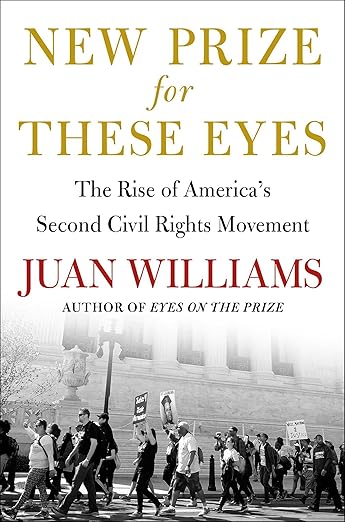
New Prize for These Eyes: The Rise of America’s Second Civil Rights Movement.
Juan Williams.
New York: Simon & Schuster, 288 pp., $28.99.
These books have never been more timely than today since they will probably be blocked from being adopted in school libraries and taught at universities across several states. Marshall, a modern-day, award-winning hyphenate in a way the late #MayaAngelou would be impressed with, and Williams, often known as a liberal (contrarian), both give context to the evening news’ #PresidentTrump executive orders. Both explain how the war is never-ending and that protest is constant and normal when you are up against oppression, whether historically naked or cloaked in the latest fashions. Williams attempts to B.C. and A.D. two different and consecutive #CivilRightsMovements, with #BarackObama on the cross. The first is the traditional, analog, PBS one (and Williams is an expert, having written the original #EyesonthePrize companion book) and the second is the one we have now–digital, fast and furious, with #BlackLivesMatter demanding the right to grow and make mistakes in public. (As we know and as Williams writes, the organized white-nationalist, right-wing response is equally digital but more deadly.) Marshall dissects protest to illustrate that it is, among other things, “primal” and an “investment,” the carbon dioxide exhaled within the racist/sexist/capitalist carbon-monoxide-filled American experiment; it is a visceral and always-correct response to the Dollar Eagle’s generations of Nos and Thou Shalt Nots. If #LeroneBennett and #HowardZinn adopted a child and raised her, it would be Marshall. And if Newark Mayor #RasBaraka #MayorRasBaraka #NewarkMayorRasBaraka is right in that perhaps the only legitimate thing about America is the struggles within it for democracy, then these Boomerooks 🙂 should only be read outside on campuses, in between demands for #Palestinian grad students–the new, respectable #politicalprisoners!–to return to a 2025 America the authors know all too well from the historic shadows and breaking-news currents they present and represent.
#AmyGoodman #BreakingTheSoundBarrier Weekly Column: First They Came for #MahmoudKhalil
First They Came for Mahmoud Khalil
Weekly Column
April 03, 2025
By Amy Goodman & Denis Moynihan
The Trump administration’s nationwide roundup of international students accused of holding opinions it dislikes is picking up speed, sowing fear, separating families and driving people to go underground or out of the country. This targeting appeals to President Trump and his followers as it bolsters three pillars of the MAGA movement: It attacks universities, long reviled as a source of liberal power; it fuels the anti-immigrant fervor long promoted by people like Trump advisor Stephen Miller; thirdly, by targeting Palestinian solidarity activists on campus, it amplifies the false narrative that criticizing the state of Israel is antisemitic (even though many of the protesters are Jewish) enabling the attacks on academia while providing cover for Israel’s resumed ethnic cleansing in Gaza.
History teaches us that standing by silently as others are disappeared is a failed strategy, as the next person grabbed off the street by masked agents of the state may be you.
Mahmoud Khalil, a Columbia University grad student until last December, was the first arrested, on March 8. He was a legal permanent resident of the United States, with a green card (now revoked). His wife, Dr. Noor Abdalla, is a U.S. citizen who is about to give birth to their first child. Eight months pregnant, she filmed her husband’s arrest as she spoke to his lawyer on the phone. She tried to learn the identities of the arresting plainclothes agents as they dragged Mahmoud into an unmarked car.
Mahmoud joined in the Palestine solidarity protests at Columbia University last spring, and was accepted by both the protesters and administration as a negotiator. He thus had a prominent public role in the first major protest encampment against Israel’s ongoing assault on Gaza, which sparked similar encampments nationwide. This is very likely why he was targeted for deportation. He has been held in an ICE jail in Jena, Louisiana, since March 9. A federal judge has blocked his deportation while his legal team fights for his release.
Days after his arrest, President Donald Trump threatened on his social media site, “This is the first arrest of many to come.” Secretary of State Marco Rubio, addressing the press on March 27, claimed that at least 300 student visas had been revoked.
Names of those targeted have been surfacing day by day.
Ranjani Srinivasan, another Columbia graduate student, left for Canada after her visa was revoked and agents came to her door. She wrote in an open letter, “With the rapidly escalating situation, the criminalization of free speech, and imminent travel bans, what has happened to me can happen to you. … We must exert maximum pressure on Columbia and other universities to protect international students from these arbitrary state actions.”
Momodou Taal, a graduate student at Cornell University and a citizen of both the U.K. and The Gambia, left the U.S. rather than risk deportation or imprisonment. Before leaving, he appeared on the Democracy Now! news hour, saying from an undisclosed location, “What we’re seeing now isn’t just a crackdown on pro-Palestinian speech … but we’re seeing that any criticism of the state of Israel, any criticism of the United States government or Trump’s administration, you can be liable for deportation.”
Those targeted include Columbia students Leqaa Kordia, a Palestinian from the Occupied West Bank, and Yunseo Chung, a South Korean native and green card holder, who has been in the U.S. since she was 7 years old. Rasha Alawieh, a Brown University medical doctor, was deported to Lebanon. Badar Khan Suri of Georgetown University has been locked up by ICE, not for his activism, but likely because his wife, a U.S. citizen and thus not deportable, is an activist.
In one of the most disturbing incidents, Tufts University Ph.D. student and Fulbright scholar Rumeysa Ozturk was snatched off the street outside Boston by half a dozen masked ICE agents as she was walking to iftar with friends, to break the daily fast during Ramadan. The abduction, caught on a neighbor’s doorbell camera, was a chilling demonstration of the brutal tactics being used against this vulnerable population. The day after her arrest, over 1,000 people turned out to protest near Tufts, demanding her release.
Back at Columbia University, protests continue. On Wednesday, about a dozen Jewish students chained themselves to two campus gates. Aharon Dardik, an Israeli American student, speaking to Democracy Now!, explained why:
“We, as Jewish students … said that we weren’t going to leave until the university named who it was amongst the trustees who collaborated with the fascist Trump administration to detain our classmate, Mahmoud Khalil, and try to deport him.”
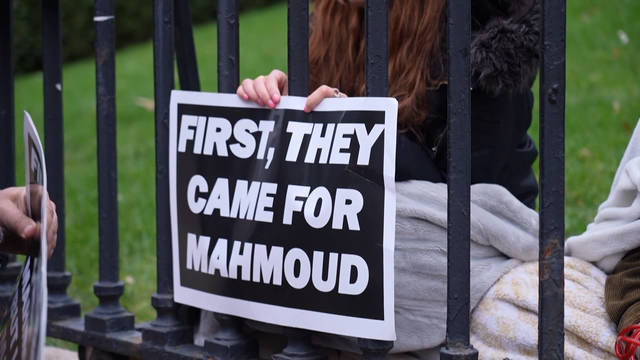
Among the signs they held was one that read, “First, they came for Mahmoud,” a reference to Pastor Martin Niemöller’s famous saying from Nazi Germany that ends, “and I said nothing … then they came for me, and there was no one left to speak out.”
The original content of this program is licensed under a Creative Commons Attribution-Noncommercial-No Derivative Works 3.0 United States License. Please attribute legal copies of this work to democracynow.org. Some of the work(s) that this program incorporates, however, may be separately licensed. For further information or additional permissions, contact us.
Column: This #Thanksgiving, #PresidentBiden Should Grant Clemency to #LeonardPeltier
As posted from here: https://www.democracynow.org/2024/11/27/this_thanksgiving_biden_should_grant_clemency
November 27, 2024
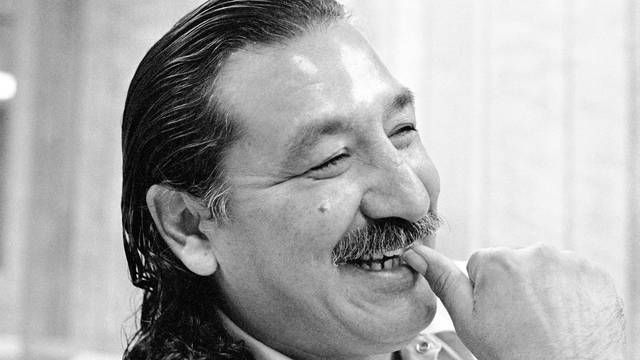
Political prisoner Leonard Peltier is the author of the memoir Prison Writings: My Life Is My Sun Dance.
By Amy Goodman & Denis Moynihan
While many brace for the return of Donald Trump to the White House, let’s remember that until Monday, January 20th, #JoeBiden is still president, with all the power that confers. The Constitution grants the president the “Power to grant Reprieves and Pardons for Offences against the United States,” to remedy a criminal justice system riddled with faults. One strong candidate for presidential clemency, as recently called for by Amnesty International USA, is 80-year-old Anishinabe-Lakota elder #LeonardPeltier, who has been incarcerated for close to half a century for a crime he maintains he did not commit. This Thanksgiving weekend, when people across the US enjoy a holiday based on the myth of a shared meal between native people of Massachusetts and the English settler-colonists who would later violently displace them, #PresidentBiden should free Leonard Peltier.
The case of Leonard Peltier encapsulates the modern era of indigenous resistance. After centuries of #genocide launched by #ChristopherColumbus and expanded by successive waves of European settlers, by the 1950s most of the surviving indigenous nations in North America had been contained in isolated and impoverished reservations. Hollywood appropriated, caricatured and monetized the vibrant mosaic of indigenous cultures. Many Native people moved to cities seeking economic opportunity but still faced racism and discrimination. Out of this, and amidst the civil rights and other social movements of the 1960s, the #AmericanIndianMovement, or #AIM, was born.
In 1973, AIM went to the #PineRidgeReservation in South Dakota, where a corrupt tribal government was working in league with federal and local authorities to violently suppress a growing movement to restore traditional practices – and to block extractive industries from exploiting traditional lands. More than 50 Lakota people and their allies were murdered there over a three-year period.
On June 26, 1975, Leonard Peltier was present at an AIM camp on the property of a targeted family. The camp was fired upon by unknown assailants, and the AIM members returned fire. In the ensuing minutes, two FBI agents and one young AIM activist were killed.
Two AIM members were later arrested for killing the agents. At trial, the jury agreed that they had fired in self-defense and acquitted them. Leonard Peltier, arrested later, was tried separately and convicted. Peltier’s trial was marked by gross FBI and federal prosecutorial misconduct, with the coercion of witnesses, fabricated testimony, and suppressed exculpatory evidence.
When Peltier was on trial in 1976, Joe Biden, then a young US Senator, was a founding member of the Senate Select Committee on Intelligence. The committee was created after the explosive Church Committee hearings that investigated the unconstitutional and criminal conduct of the FBI and its “ #COINTELPRO ” operations against civil rights leaders and organizations, including AIM.
A global movement grew, demanding justice for Leonard Peltier. Human rights icons like South African #PresidentNelsonMandela and #ArchbishopDesmondTutu called for his release, as did one of the federal judges involved, and, years later, one of the prosecutors who tried the case.
#AmnestyInternational has campaigned for Peltier’s release for decades. The group recently sent a letter to President Biden, reiterating their demand.
“Over the decades at Amnesty, we have been calling on administration after administration to do the right thing by Leonard. He was in hospital in June, he was in hospital again in October. It’s time to give him a chance to spend his last days with his family and with his community,” Paul O’Brien, Executive Director of #AmnestyInternationalUSA, said on the Democracy Now! news hour.
In late October, President Biden traveled to the Gila River Indian Community in Arizona to formally apologize for the US government’s treatment of Indigenous children forced into boarding schools.
“All told, hundreds and hundreds of Federal Indian Boarding Schools across the country. Tens of thousands of Native children entered the system. Nearly 1,000 documented Native child deaths, though the real number is likely to be much, much higher; lost generations, culture, and language; lost trust. It’s horribly, horribly wrong. It’s a sin on our soul,” Biden said.
Nick Tilsen, executive director of the Indigenous-led NDN Collective, responded on #DemocracyNow!, saying,
“What this means for Indian Country is that we hope that this is the beginning of an era of repair between the United States government and the Indigenous people, the First People of this land…He [Peltier] was in the Sisseton Wahpeton boarding school, in South Dakota. Leonard Peltier and many people who became leaders in the American Indian Movement were boarding school survivors. They came out of that era, and then they resisted.”
If President Biden’s apology at Gila River was genuine, he could demonstrate it by commuting the sentence of Leonard Peltier. It would be a long-overdue gesture to Indigenous people across the US, for which we could all give thanks.
The original content of this program is licensed under a Creative Commons Attribution-Noncommercial-No Derivative Works 3.0 United States License. Please attribute legal copies of this work to democracynow.org. Some of the work(s) that this program incorporates, however, may be separately licensed. For further information or additional permissions, contact us.
A Public Mention of #LeonardPeltier Earlier Today

Nick Tilsen, founder and CEO of the Indigenous-led NDN Collective and a member of the Oglala Lakota Nation.
NICK TILSEN: ….The other thing that we’re calling upon is, you know, America’s longest-living Indigenous political prisoner in American history is a boarding school survivor, and his name is Leonard Peltier. And so, we’re calling upon President Biden for executive clemency for Leonard Peltier….
AMY GOODMAN: So, on the issue of Leonard Peltier, there is also another incredible connection, because Leonard Peltier was a survivor of the residential boarding schools, wasn’t he, Nick?
NICK TILSEN: Absolutely. You know, he was in the boarding schools, in — he was in the Sisseton Wahpeton boarding school, and —
AMY GOODMAN: In North Dakota?
NICK TILSEN: South Dakota. And so, he was in that boarding school, taken from his home. And what a lot of people don’t realize is that Leonard Peltier and many people who became leaders in the American Indian Movement were survivors of boarding school. They came out of that era, and then they resisted. And so, Leonard Peltier is part of that resistance. And so, it’s an incredibly reflective thing to think about, that America’s longest-living Indigenous political prisoner, who is incarcerated right now at the age of 80 years old in maximum-security prison, is actually a boarding school survivor. And so, that’s why, you know, if we want —
AMY GOODMAN: Imprisoned in Florida. I remember asking President Clinton on Election Day 2000 if he would consider granting clemency for Leonard Peltier, which he said he was weighing at the time. That was almost a quarter of a century ago.
NICK TILSEN: Yeah, that was almost a — I mean, and here we are now, you know? And so, we are continuing to push. We’d like to see, you know, executive clemency for Leonard Peltier. And I think that one of the ways that this can happen is that Biden can give executive clemency to Leonard Peltier by humanizing him and recognizing Leonard Peltier is a survivor of boarding schools. And he just apologized for the impact of boarding schools. And the freedom that Leonard Peltier was fighting for was to break free of those things that happened by the impact of boarding schools on Native communities and Indigenous communities. And so, this is a profound opportunity. And it’s a way — it’s a way for President Biden to take action, you know, in a huge issue that would impact throughout Indian Country.
–from today’s #DemocracyNow
Book Mini-Review: The Seer’s Notes

Working: Researching, Interviewing, Writing.
Robert A. Caro.
Knopf. 207 pp. $25.00.
This historian turning his anecdotes inward is interesting to hardcore Caro-ites, like this writer. The how and the why are answered. The rules are simple: Marry the right woman (Ina Caro, a historian in her own right and Caro’s only researcher, needs her own published version of these stories). Turn every page. Ask thousands, What did you see? What did you hear? Now ask the questions repeatedly. Also simple is Caro’s origin story. He was a young Princeton grad who did well at Long Island Newsday when all of that mattered, and who, luckily for him, found the team that is now American literary legend: Lynn Nesbit and Robert Gottlieb. So for more than 50 years, Caro has been financially freed up to read, research, interview, and write about American political power. The winner of enough literary awards to weigh down a battleship, he can afford the incredible amount of shoe-leather that allows him to patiently find any buried truth or fact, anywhere. “Of course there was more,” he writes. “If you ask the right questions, there always is. That’s the problem.” Caro, who admits this book is a sort-of collection of memories and notes for a coming memoir, says biography must be a visual medium to be successful, and that “silence is the weapon” in interviews. The author’s real weapon is total immersion, and the lonely-by-necessity Lyndon Baines Johnson scribe makes many top-notch American presidential biographers into little more than weekend historians by comparison. The man who hates the unanswered question has decided to ask every single one, repeatedly if necessary, no matter how long, or where, it takes.
 Drums in the Global Village