#TodayinBlackHistory #BlackHistory #NewarkHistory #BlackPressHistory #NewspaperHistory #apartheid #SouthAfrica #SouthAfricaHistory #antiapartheid #antiapartheidhistory #NewJerseyHistory #PeoplesOrganizationforProgress #AfroAmericanNewspaper #NewJerseyAFRO Today Is….

….the 40th anniversary of the event that spurred my first published article ever, done for the 4,000-circulation weekly. It was about a massive anti-apartheid march in Newark, N.J.

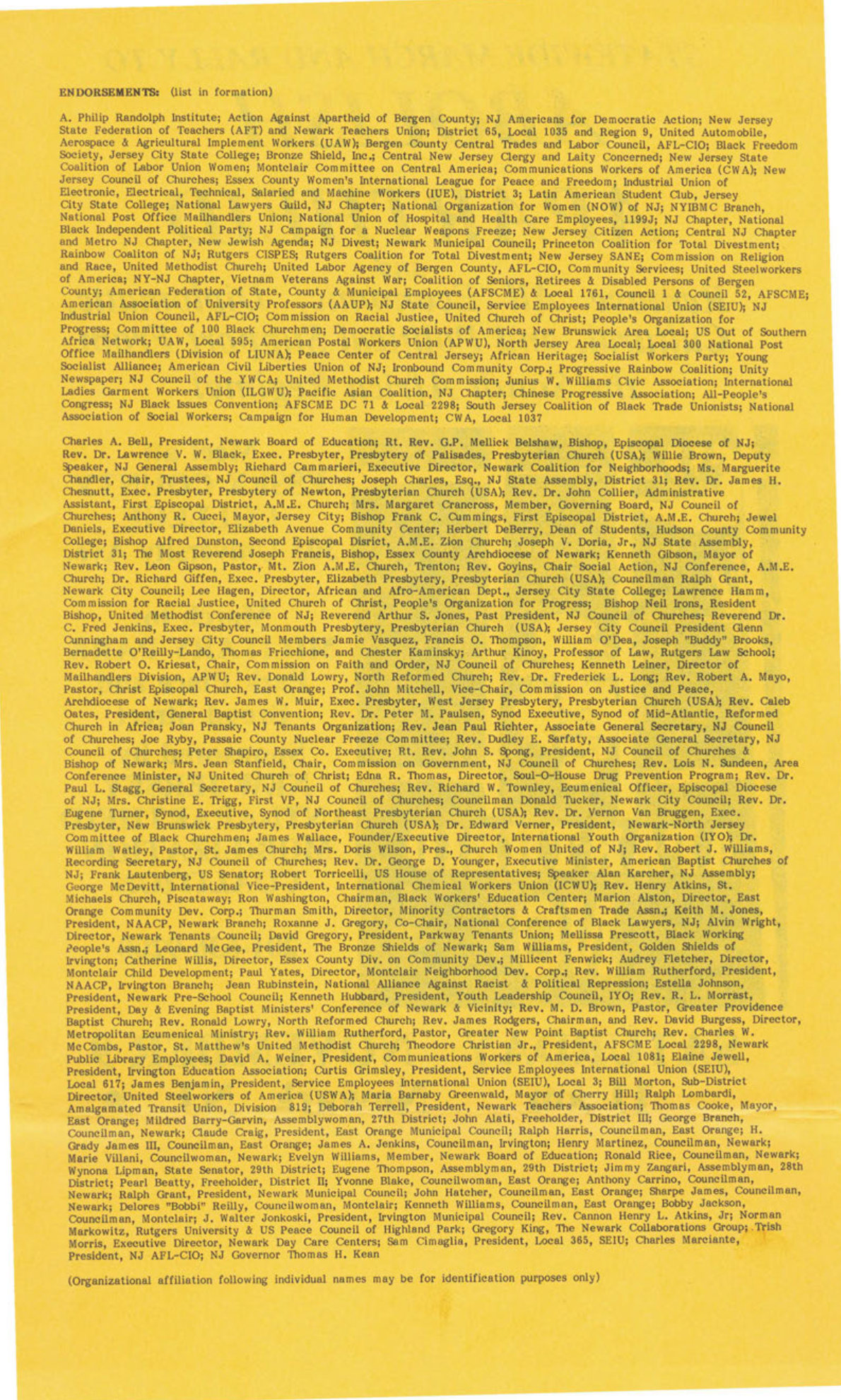
I was folded into The New Jersey Afro-American by Deborah P. Smith-Gregory, the article’s key and lead author.
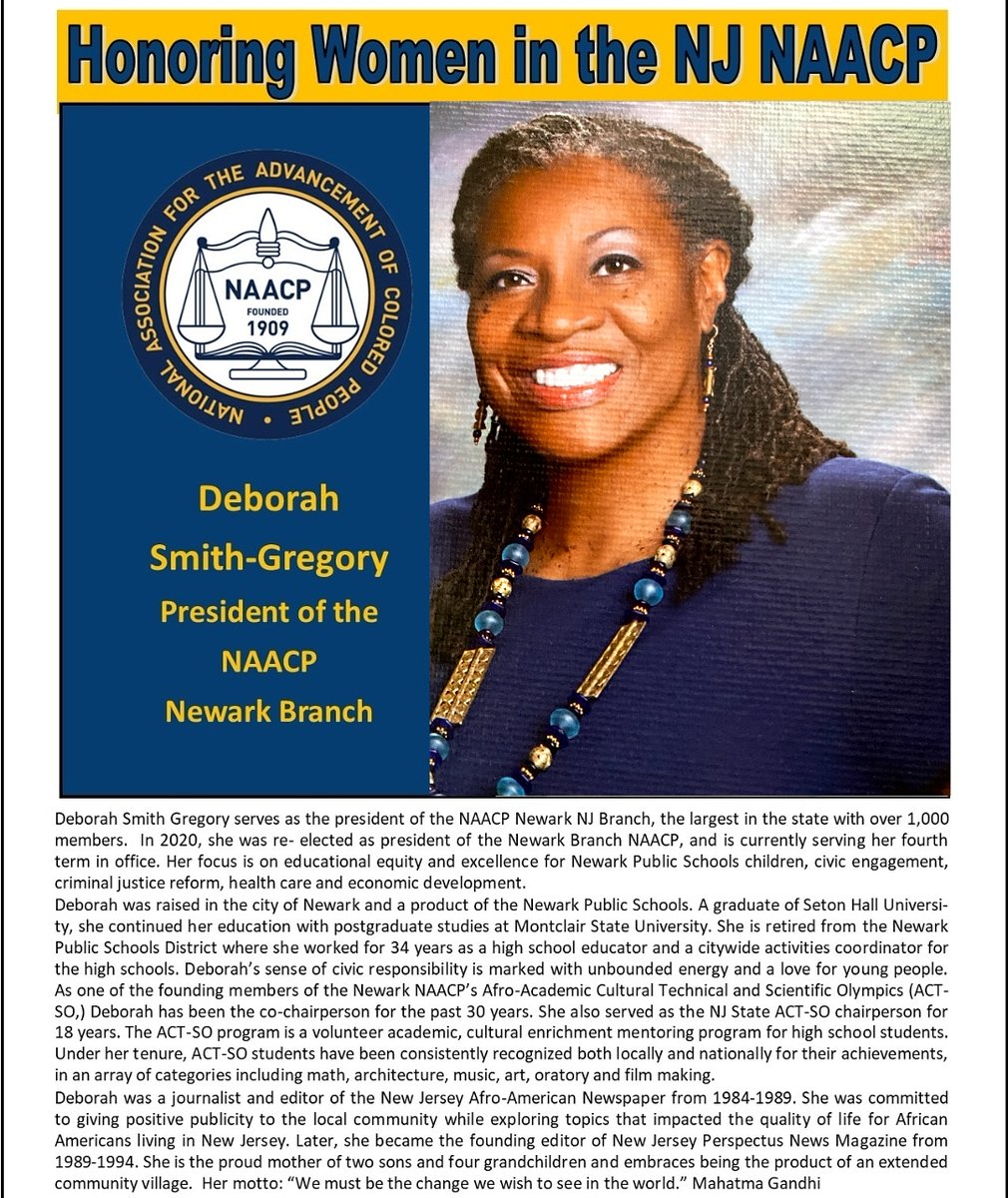
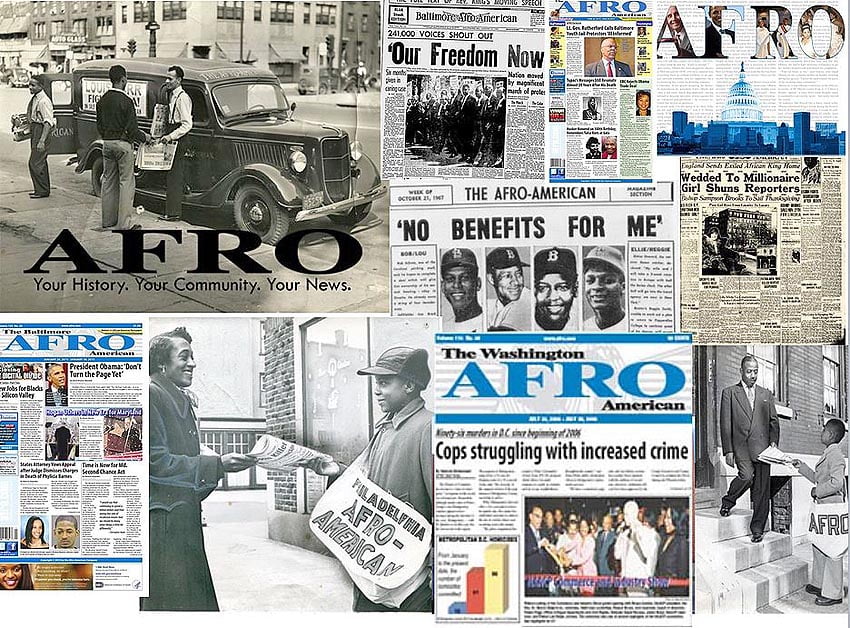
Deborah worked for local Afro legends Harry B. Webber and editor-in-chief Bob Queen. She would succeed him in 1987, becoming the paper’s first woman editor.

From here:

Robert C. Queen (1912-1996) was born in Newark and served most of his life as a reporter and newspaper editor. Queen’s career started in 1938 when he was a reporter for the New Jersey Guardian. Later he was a writer and city editor for The New Jersey Herald. In the 1950s, he was managing editor of The Philadelphia Independent. Subsequently, he worked for the Philadelphia offices of The Pittsburgh Courier. In 1963, he returned to Philadelphia to become managing editor of the Philadelphia edition of The Afro-American. His final stop required him to return to Newark as editor of The New Jersey Afro-American. For the better part of a half century, Bob Queen covered Newark’s political and entertainment scenes, telling stories of interest to African-Americans that tended to be overlooked, misunderstood or forgotten by mainstream journalists. Former city councilman Calvin West recently recalled how, when he and Irvine Turner, Newark’s first black councilman, were in office, Queen made it a point to report the African-American viewpoint. The son of a lawyer, Bob Queen had little formal training in journalism, yet he was one of his era’s best reporters. A contemporary reporter described him as a mover and shaker in the Newark community and beyond. During his lengthy career, Queen interviewed Roy White, one of the famous Scottsboro Boys. He also wrote of nightlife in Trenton, where he played piano in his youth at local watering holes. Like other leaders, Queen gave of his time and talents to many organizations, including the Philadelphia Citizens’ Committee, Sigma Delta Chi Journalistic Society, and the Philadelphia Child Development Program. His honors included an award for journalism from Temple University, the W.E.B. Dubois Award from the Newark Branch of the NAACP and the New Jersey Association of Black Journalists’ award. Queen also received an honorary doctorate from Essex County College, was inducted into the Black Press Hall of Fame and was cited by the Garden State Association of Black Journalists. He was well thought of by contemporaries such as Sally Carroll of the Newark NAACP. As his wife, Edna, commented, ‘Once you knew him, you had a friend for life.’ Old-schooled and gentlemanly, Queen was indeed a friend to his many colleagues and associates.
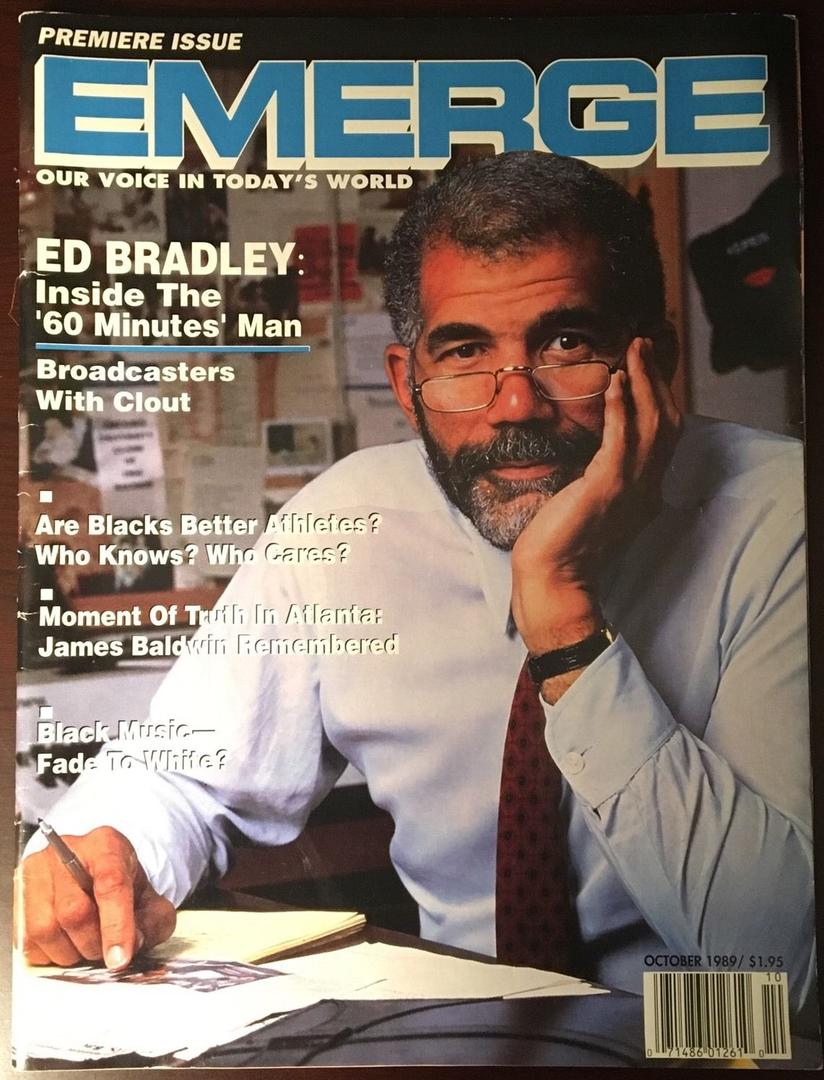
Every Writer Has At Least One Book Or Article That *Forced* Him/Her/They Into The Pain And Madness. I Recently Found A Key One That Made Me Myself.

It was originally published in the premiere issue of this magazine.

See the date, right above the bar code?!? Wow! I was 21 then, just hired at a daily newspaper, a ghetto Jimmy Olsen. Post-reading, I was doomed thereafter to roam the post-modern American wilderness looking for this kind of adventure and glossy chronicling opportunity, wishing to become either scribe, ready at any moment to greedily take either role, either side of the Ziegiest mirror. As I got older (note that I’m not writing “more mature”), that role/goal became my criteria to be involved with pretty much anything. Is this where my lifelong obsession with the lives of Black writers started? Hmmm…..

I’ve been laughing all week at how this article–a remembered and reconstructed momentary snapshot of place, person and circumstance, filled with 20th-century American post-rebel historic residue–has defined pretty much my entire life, while for its author, it was just an interesting part of a journalism career that loooong ago ended (he’s now a family therapist and adjunct professor at Antioch University, where he retired from as a pretty popular, multifaceted guy). He traveled light years from the experience, and I didn’t! Maybe I should call him so he can talk me down from the ledge? 🙂

Too long times ago. Two long times ago.

Be careful reading this. The truth moment, reprinted in the latest issue of The James Baldwin Review, is below.

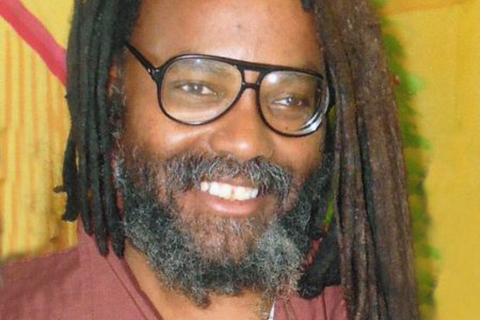
My Latest Book Review, About Mumia Abu-Jamal’s Second In His American Empire Book Trilogy,…..

…..is here.


Book Mini-Review: The Seer’s Notes

Working: Researching, Interviewing, Writing.
Robert A. Caro.
Knopf. 207 pp. $25.00.

This historian turning his anecdotes inward is interesting to hardcore Caro-ites, like this writer. The how and the why are answered. The rules are simple: Marry the right woman (Ina Caro, a historian in her own right and Caro’s only researcher, needs her own published version of these stories). Turn every page. Ask thousands, What did you see? What did you hear? Now ask the questions repeatedly. Also simple is Caro’s origin story. He was a young Princeton grad who did well at Long Island Newsday when all of that mattered, and who, luckily for him, found the team that is now American literary legend: Lynn Nesbit and Robert Gottlieb. So for more than 50 years, Caro has been financially freed up to read, research, interview, and write about American political power.  The winner of enough literary awards to weigh down a battleship, he can afford the incredible amount of shoe-leather that allows him to patiently find any buried truth or fact, anywhere. “Of course there was more,” he writes. “If you ask the right questions, there always is. That’s the problem.” Caro, who admits this book is a sort-of collection of memories and notes for a coming memoir, says biography must be a visual medium to be successful, and that “silence is the weapon” in interviews. The author’s real weapon is total immersion, and the lonely-by-necessity Lyndon Baines Johnson scribe makes many top-notch American presidential biographers into little more than weekend historians by comparison. The man who hates the unanswered question has decided to ask every single one, repeatedly if necessary, no matter how long, or where, it takes.