…..here’s a group and a speaker. It’s from 2014, but I was just shown it recently. And on time, too.
Category Archives: radio
Goodbye, President Obama
So that’s his legacy, according to him. Some would have other views, of course. 😉
Whither The Black Press, Vol. 125?

A. Peter Bailey, veteran of Jet magazine and currently with the Trice Edney News Service, speaks at the Journalists Roundtable. Photo by Sharon Farmer.
I stole this stuff from Richard Prince’s Facebook page. With Sidmel’s death earlier that day, it was a bad day for Black journalists.
Journalists Roundtable, Oct. 6, 2015
UpdatedPhotos (c) by Sharon Farmer
Crown Bakery, Washington, D.C.
Our October roundtable changed topics quickly in response to news the previous day of the resignation of George E. Curry, editor-in-chief of the news service of the trade association for black community newspapers, and one of his staff members.
The National Newspaper Publishers Association had cut their salaries in half and its board chair, Denise Rolark Barnes of the Washington Informer, disclosed that the NNPA board imposed the budget cuts after a decline in revenue and sponsorships prompted by competition from the digital world.
“The drain couldn’t continue,” Barnes said. <http://bit.ly/1FRGfDc>.
Barnes joined us along with roundtable regular Hazel Trice Edney, a former editor-in-chief of the NNPA news service who founded TriceEdneyWire.com.
We also heard from DeShuna Spencer, a social entrepreneur, journalist and the Founder/CEO of kweliTV, an internet video streaming network for the black consumer. She won a $20,000 grant from The New U: News Entrepreneurs. See: <http://unityjournalists.org/news/unity-announces-newu-2014-winners/>.
DeShuna described kweliTV as a “black Netflix,” a phrase she would rather not use since she believes such projects should be described on their own terms. One criterion for adding films to the site is that they have appeared in film festivals.
Denise said it was imperative that black publishers move more quickly into the digital age. “For the last three or four years, we haven’t made any money,” she said of the NNPA websites. The latest difficulties “provide us with an opportunity to get refocused.”
She noted that in June, Apple announced it was looking to hire editors with a journalism background to work on its new app called News it <http://observer.com/2015/06/apple-is-hiring-journalists/>, and yet NNPA members, herself included, have not been contacted. “What perspective are these stories going to have?” Denise asked.
Still, she said, the black press has always been struggling. The first black newspaper was published 50 years before the end of slavery, when most black people were illiterate. Gannett, which publishes the Informer, will no longer be able to do so under its new direction, so that will be another challenge. Yet the black press also steps up to the plate for community activities when needed, again demonstrating its value.
The Informer now sponsors the Prince George’s County spelling bee, since the Washington Post Co. closed the Prince George’s Gazette, the bee’s previous sponsor, in August. The Informer started a monthly section for millennials, WI Bridge, though fewer younger people are turning to newspapers.
However, publishing a newspaper is no longer enough. Advertisers now want digital prowess, Denise said. “Now we’ve got to tap dance and sing,” too, she said.
A surprise was that Denise agreed with mostly everything those in the roundtable said about problems with the black press. Fifteen of us participated, and most had worked in the mainstream media.
Much of the discussion was about how to get companies to recognize their obligation to advertise in the black press, given the number of dollars African Americans spend with those companies. A. Peter Bailey, an author, speaker, journalist and former Malcolm X associate, suggested that publishers make public the number of dollars black consumers spend with certain business sectors. “Let these people see that you’re not doing us a favor,” he said.
Peter added that black publishers should require organizations whose leaders want columns in the black press to make sure their members are reading black newspapers.
Likewise, when Jesse Jackson goes to Detroit this week to discuss diversity within the auto industry and attends Friday’s 16th Annual Rainbow Push Global Automotive Summit, he should raise the issue of advertising in the black press. [Denise said later that Jackson’s automotive report card to be released on Friday will include advertising.]
Richard Prince contended that advertisers and consumers should want the product because it is compelling, not because of a sense of obligation.
Denise agreed, and added that the black press “needs an echo chamber, such as black Twitter.” Peter said the black press should do more on white subjects that affect the black community, such as the Koch brothers. “We’re writing these stories,” Denise said, but they need promotion.
Lynne Adrine said the name “black press” itself is dated. Why not say “black media?” DeShana went so far as to recommend that NNPA change its name to get rid of “Newspaper.” “The whole mindset needs to change,” she said. Richard Prince gave the example of the online-only Q City Metro <http://www.qcitymetro.com/> in Charlotte, N.C., started by Glenn Burkins, who was business editor of the Charlotte Observer. See: <http://mije.org/richardprince/barbering-while-black-clipping-while-hispanic#Burkins>.
“We are somewhat isolated,” Denise said. “My role is to expose our publishers” to these other ideas. “They need to hear what we’ve heard and what’s expected of us.”
Moreover, publishers have to believe in the value of their product.
When Denise asked why black people in the mainstream press who had been laid off aren’t flocking to the black press, roundtable members said that there are cultural as well as professional differences.
Prince said people need to feel that they are working for an organization that is part of the future and forward-looking ways. Consumers don’t want to wait a week for news anymore. The Village Voice and the New Yorker, though weekly print products, now publish daily online. Black publishers must start thinking that way, too.
Denise agreed and said she has been disappointed when she has gone to black press websites for information on breaking news and seen Associated Press copy. That doesn’t advance the purpose of the black press.
In another part of the discussion, Peter Bailey and Hazel Edney insisted that authentic black publications must be published by black people. [Bailey added later that he “refers to White-owned media that attempts to attract Black people or address issues of Black people as ‘Black-oriented media” — not authentic Black media.]
Betty Anne Williams and Richard Prince maintained that the content is what counts to the consumer. A Ta-Nehisi Coates, Prince maintained, is no less authentic because he appears in the white-owned Atlantic.
Hazel said that the social justice tradition of the black press should not be overlooked as a key element in authenticity. She also suggested that NNPA’s board include more people from such corporations as AT&T and Verizon in addition to publishers. Hazel maintained that black newspapers will always exist. “They’ve been here since 1827,” she said.
Referring to the new partnership between NNPA and the National Association of HIspanic Publishers <http://www.prweb.com/releases/2015/10/prweb12991418.htm>, Prince suggested looking into a partnership with the Association of Alternative News Media, whose members include alternative weeklies such as the Village Voice and the Washington City Paper, since that organization has acknowledged a diversity problem. <http://bit.ly/1ifOGh2>.
Denise said was open to the idea, as she has joined other newspaper associations, such as the Maryland, Delaware, DC Press Association. Other black publishers have joined similar associations.
The first roundtable took place in May 1999 with Alice Bonner, Betty Anne Williams, Bobbi Bowman, Richard Prince and Bill Alexander. The purpose was to commemorate Alice’s return to Washington after obtaining a Ph.D at the University of North Carolina, Chapel Hill. Paul Delaney, Jessica Lee and Walt Swanston were also among the early founders.
When Alice left, she asked that we keep the gatherings going while she was gone, and we have. Some of the faces at the dinner gatherings have changed, but the enthusiasm for the fellowship has only grown.
My Recent 88.9 WEAA-FM “Mark Steiner Show” Appearance Talking About Extreme American Politics….

…..is here.
The New, New Black Public Intellectuals (Or, The Digger-ati ;))

Leave it to Michael Eric Dyson to write this. (I remember he did something similar almost 20 years ago in his book “Race Rules.” )
It’s an interesting list. It would be a bit more interesting if it included people I met over the years, like Jared Ball and Rosa Clemente. They are no strangers to public intellectual work, but, alas, they don’t color within the lines.
But then again, looking at the older generation:
* Herb Boyd has written about 25 books in the 30 years since he left academe AND he has TWO National Association of Black Journalists awards (one with Dyson!), including a NABJ Hall of Fame award: when does HE get picked as a starter on the schoolyard? When he turns 80 in three years?
* Another friend and mentor, Don Rojas, should be writing and teaching right now about the Grenada revolution.
* A Black radio broadcaster I grew up listening to, Imhotep Gary Byrd, is holding on in the 21st century, incredibly, with a free two-hour show on WBAI-FM on Friday nights and a WLIB/WBLS two-hour simulcast on Sunday nights. He will turn 70 (?) in 2019: when does HE get a DAMN NATIONAL show in either/both broadast mediums!?!? Almost 30 (!) years ago in Newark, when I had more hair and teeth than I have now :), I used to listen to the Rev. Al Sharpton on Byrd’s WLIB show, so how can Sharpton get TWO national Black radio shows and ONE national white TV show and Byrd, with almost 50 years in the game as a living legend, can’t get ONE of these?!? (Even the guy at The New York Daily News who used to cover Byrd and the rest of New York City’s Black radio fairly just got canned. :))
* And, if we can broaden out to Latinos here, will Amy Goodman hire Juan Gonzalez as a REAL “Democracy Now!” co-host once The slow-death News lets him go? How much more award-winning (I still remember his “stolen” Pulitzer for 911 ash) investigative journalism does his 66-year-old, clearly-spends-all-his-spare-time-writing-serious-history-books butt has do? When he’s cut, will he get the $200,000 a year New York City professorships others of less stature, ability and accomplishment get?
I just remember that Manning Marable and Earl Ofari Hutchinson were among those who started this “post-Civil Rights Movement Black public intellectual” thing 40 years ago on the Op-Ed pages of Black newspapers that only a few give a crap about now. Time is not the only thing that keeps on slipping into the future.
Thank You, Jack Larson, The First Jimmy Olsen America Saw
First Batgirl, Yvonne Craig, and now this! Who remains alive from my telly days as a wee lad? 😦
(The above is not his best performance (it’s not even a regular episode, but a special film presentation sponored by the U.S. government for American schoolchildren. I am using it because it was in the public domain.)
OCTOBER 20th UPDATE: Indirectly speaking of Superman on TV, I liked this “Supergirl” article, because it explained why American broadcast network television has gone superhero-crazy.
“Do You Remember? / The 21st Night Of September/…..”
ANY excuse to post ANYTHING about EWF will ALWAYS be taken! So I was happy to see this article about this song! 🙂 Black Beatles forever!
Now, if someone could just write about EWF’s theme song (below), one of its most underrated songs (since the group considers “That’s The Way of The World” its “national anthem“).
SEPTEMBER 2016 UPDATE: This was GREAT! Thanks, Richard Prince, for showing me this!
Book Review: Mumia–Still, Not Stilled

Writing on the Wall: Selected Prison Writings of Mumia Abu-Jamal. Edited by Johanna Fernandez. Foreword by Cornel West.
San Francisco: City Lights.
370 pp., $17.95 (paperback).
If the fight earlier this year for the right of imprisoned writer Mumia Abu-Jamal to get correct care for his diabetes had failed, this book, his eighth, would have been possibly the last he would get to approve under his name. The diabetes complication was not just a shock to his system. There is an insane sense of normality that has now developed around the idea of Abu-Jamal’s work—the assumptions that he is writing, and will be writing frequently, that his commentaries will get emailed around the world, that his recorded voice will be on YouTube. Frankly, Abu-Jamal’s rat-a-tat journalistic contribution would be almost taken for granted if he hadn’t almost died. The ubiquitousness of the author and product shows how much he has succeeded in creating a foothold in Black radical thought in the last 20 years.
And that Panther-inspired bootprint continues here. Following in the steps of Noelle Hanrahan’s 2000 Abu-Jamal column collection “All Things Censored,” Fernandez, an assistant professor of history and Black and Puerto Rican Studies at Baruch College/City University of New York, creates a second unofficial “Mumia Reader” of 107 columns and speeches that span from the former Black Panther Party member’s 1981 arrest for the killing of a white Philadelphia police officer to 2014. The editor takes significant time to explain the how, when, what and why of Abu-Jamal’s essays. She shows that the intellectual scope and depth of Abu-Jamal’s writings precede Hanrahan’s mid-1990s recordings—the ones that, along with a 1995 death warrant and a ready-to-go international anti-death penalty movement, jump-started the “Free Mumia” movement and pushed it straight to the international Leftist stage.
The “new” gems discovered here are, ironically, among his oldest. “Christmas In a Cage,” his rarely read 1981 account of his own arrest and treatment by the police (“Where are the witnesses to the [police] beating that left me with a four-inch scar on my forehead? A swollen jaw? Chipped teeth?”) is worth the price of the book alone.
The editor situates the first few columns in a way that explains him, not just his opinions. Upfront, his love for the MOVE Organization and its founder, John Africa, is clearly articulated, using the 1982 trial and conviction statements he made as an understandably angry young man. (“John Africa is not a slave to this foul, messed up system—he is not bought and sold.”) An example of what he told the court after it decided it wanted his death: “On December 9, 1981, the police attempted to execute me in the street; this trial is just a result of their failure to do so.”
And as the wall writing progresses with a combination of memories, obits and news riffs that, policy-wise, string Reagan to Obama, the reader feels the air from the older Abu-Jamal’s steady, intellectual darts thrown at, for example, the post-911 legalization of COINTEL-PRO under George W. Bush, the devastation that followed Katrina, et. al. Abu-Jamal’s commentaries, taken together, target the contradictions of the established order, pointing to its corrupt nature versus the natural power of people-fueled resistance. (“The objective of all politics is power,” he writes in a 2000 column about the police killing of Amadou Diallo, a Black man shot in his building’s vestibule in New York City. “No major political party in America can even begin to promise Black folks in America the power to stand on their own doorstep[s], or ride their own car[s], or walk the streets of the urban center, without the very real threat of being ‘accidently’ blasted into eternity.”) The book, therefore, is a half-lifetime of well-researched, historically radical Black print rage, from waxing nostalgia about his brief political brush with Huey Newton in and the Black Panther Party circa 1970 to predicting in advance the acquittal of George Zimmerman of the 2012 shooting of Trayvon Martin.
It is now assured that, whatever his future health in prison, Abu-Jamal’s body of work will outlast his actual one. The writer, as Cornel West discusses in the preface, belongs in “that cultural continuum of struggle that shaped urban Black people between 1950 and 1980.” It remains to be seen in a 2015 world of social media if the masses of “Black Lives Matter” Tweeters will develop the skill, discipline and commitment of their now- elder statesman Abu-Jamal, who wrote in the margins of the society decades before it became cool.
Is There A Formula For Black Media?

Someone asked me that recently. It’s a question no one has ever asked me in the almost-25 years I’ve been studying the history and development of Black American mass media (e.g., Black radio, Black newspapers, etc.).
Here was my answer ((c) 2015 by Todd Steven Burroughs, all rights reserved. ;)):
—————————————-
1) Availability. You must be one of the people. They must be able to reach out to you and see that you are living with them, facing the same problems, etc.
2) Integrity. The audience must see/hear/read (that) you stand up for the interests of Black people unapologetically. You must be for Black people first and last.
3) Ubiquitousness and Longevity. The audience must see you as a permanent part of their lives, like a public utility. And you must be consistently THERE for years, if not decades.
—————————————-
That’s really about it!
AUGUST 2015 UPDATE: And THANKS to Ebony for printing a truncated version of this in the display box of its August 2015 issue!
Book Review: Demons, Twinned And Intertwined
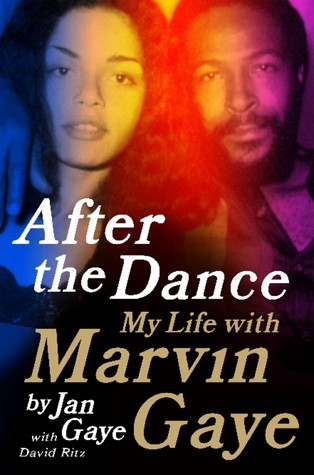
After The Dance: My Life with Marvin Gaye.
Jan Gaye with David Ritz.
New York: Amistad/HarperCollins.
282 pp., $25.99 (hardcover).
In ancient African religious systems, Ibeji (an Orisha, from the Yoruba and the Ifa) is known as the deity of twins, while Ma’at (from Egypt) was the goddess of, among other things, balance. This book, a memoir of a talented, troubled attractive young woman who falls in love with an equally troubled man whose voice and lyric reverberated around the world, tells a story that screams for their intercession. If these gods did act, they chose to abruptly end the dualities that circled around them like cocaine and marijuana: when Marvin Gay Sr. murdered his son in 1984 with the gun the son had purchased, it almost seemed like either an evil or heavenly release of all of the tension, anger and depression that had wafted around the singer.
Whether it fashions itself thusly or not, and whether the authors admit it or not, “After The Dance: My Life with Marvin Gaye” is a supplement to Ritz’s 1985 stellar biography, “Divided Soul: “The Life of Marvin Gaye.” The emotional divisions introduced by Ritz 30 years ago are laid bare by Marvin’s ex-wife, Janis. Serenity vs. paranoia. Love vs. fear. And ultimately, conflict into love and clarity into a warped sense of being. Discord, turmoil and competition were necessities for Marvin Gaye, a man who competed with his own domineering father for his mother’s love, competed with other Black recording artists for chart dominance and public adoration, competed with other men to win Janis back when he lost her, and even tried to seriously compete with Muhammad Ali in a charity boxing exhibition. He was a man who, according to Janis, believed that “perhaps misery and conflict make for great music. Perhaps without misery and conflict my well would run dry.” And, like the first Aquarian, what was the water he was bringing? “To get people to see below the surface of reality.”
The entire book is awash in 1970s post-Civil Rights Movement euphoria. Music, television and performance made gods of men and women, flawed human beings who were openly worshipped and adored. Marvin Gaye was the first Motown artist to break free of the company’s strict formula; to demand artistic freedom. He became his own Black Power Man, with his own studio, his own musical ideas and with his own family separate from Motown—the one he created with a young teenage girl he saw while in the studio. He sang a song to her, this surface ingénue, who was, and perhaps would always be, his premier acolyte. They were almost instantly conjoined by sensuality, by spirituality, by pain and the promise of enjoying, and finding home in, the new freedoms available.
In this book, the Gayes are twins of pain, cycling through, and back to, their dysfunction. Their marriage, Gaye’s second, eventually ended in the early 1980s (“The struggle to stop struggling was finally over”). Artistically, Marvin Gaye was on a comeback. Unfortunately, he did not have the chance to exorcise his personal devil—the one that had his name on it, written by his own hand—even though he knew he had to give it up. His father’s sick need to win their competition dominated, and a talent stilled, existing forever in a musical loop, a skullcap covering his head like a crown.
Marvin Gaye represented African (-American) people’s joy and pain like few artists in the 20th century. Janis Gaye’s story emphasizes all of the edges of the disjointed souls these drama junkies occupied and shared with each other, grasping for an elusive peace while naturally plotting ever-accessible turmoil. It is the story of a couple who needed love, and found it, but failed to create a life that belonged only to themselves, because ultimately, even when it was just the two of them, there were just too many sides to satisfy.
 Drums in the Global Village