FROM AI:
In Christopher Nolan’s The Odyssey, ancient Greek myth is reframed as a grounded, human drama exploring the psychological burdens of leadership, the distortion of trauma, and the societal value of empathy. Odysseus’s wandering serves as an externalization of an internal battle with war-induced guilt, while the film’s structural symbols chart his descent into moral compromise and eventual reckoning.
Core Thematic Symbolism
- Trauma and Addiction: Calypso’s island and the lotus flower function as psychological defense mechanisms. They represent an addiction to denial, allowing Odysseus to numb the horrific realities of his past campaigns and hide from the guilt of his actions.
- The Law of Xenia: Nolan elevates the Greek concept of guest-friendship (xenia) into the fundamental “glue” holding human civilization together. It symbolizes the vital need to treat strangers with grace, serving as a boundary line between order and total barbarism.
- Historical Hubris: Antagonist figures embody the lethal cost of unchecked ambition, while Odysseus (Matt Damon) represents the torturous struggle to strip away the destructive, warmongering identity of his past to regain a peaceful, domestic life.
The Trojan Horse: Weaponizing Hospitality
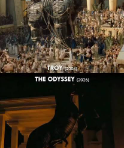
Instead of framing the Trojan Horse as a stroke of heroic genius, Nolan highlights it as the ultimate violation of xenia.
- The Perversion of the Gift: Left by the seashore, the horse mimics a sacred offering. By smuggling a slaughter inside a gesture of goodwill, Odysseus weaponizes the very concept of hospitality.
- The Deconstruction of Strategy: The horse symbolizes a tipping point where tactical intelligence degrades into absolute corruption and deception, marking the exact origin point of the moral rot that follows the Greeks home.
The Burning Structure: The Price of Sins
Revealed fully in the film’s finale through a haunting flashback, the burning of the Trojan Horse carries layered thematic weight:
- The Erasure of Civilization: The fiery horse reflects the total collapse of order, showcasing that the war machine leaves no survivors intact, even its victors.
- The Crucible of PTSD: Throughout his journey, Odysseus is haunted by visions of fire. The final reveal that he was staring at the burning horse symbolizes his profound guilt, showing that his mind is permanently trapped inside the inferno he ignited.
- The Cyclic Nature of Sins: The burning horse mirrors the final, bloody purge of the suitors back in Ithaca. Nolan highlights the inescapable loop of human violence, noting that human societies are perpetually built, burned, and rebuilt in the wake of their own structural mistakes.
Zendaya’s Dual Role: The Ghost of Conscience
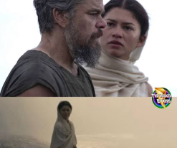
The film’s most profound psychological twist lies in Zendaya’s dual casting as both the goddess Athena and a nameless Trojan priestess murdered during the sack of Troy.
- The Manifestation of Guilt: As the Greeks razed Troy, Odysseus witnessed the brutal beheading of a young Trojan woman on the steps of Athena’s temple, directly alongside a statue of the goddess whose head was also lopped off. Unable to face the horror of what his wooden-horse trick unleashed, Odysseus’s fractured mind mapped the face of the dead woman onto his visions of Athena.
- Divine Projection: Rather than a literal deity directing his path, Zendaya’s Athena is revealed to be an interior monologue—a coping mechanism and a projection of Odysseus’s own weeping conscience.
- The Devastating Moment of Grace: When Odysseus finally confesses his crimes to Penelope (Anne Hathaway), “Athena” holds his hand. The revelation that she is actually the ghost of a civilian he failed to save creates a powerful moment of tragic grace. It signifies that Odysseus’s true obstacle was never external monsters, but his own conscience demanding he take accountability for the human cost of his victory.

