From #AprilSilver: “Rest In Peace, #NikkiGiovanni”

Yolande Cornelia “Nikki” Giovanni Jr

June 7, 1943 – December 9, 2024

“My dream was not to publish or to even be a writer: my dream was to discover something no one else had thought of. I guess that’s why I’m a poet. We put things together in ways no one else does.” – Nikki Giovanni
Rest in peace our beloved, dear Nikki Giovanni.
Kevin Powell reached out to me moments ago, in the 11pm hour, to share the sad report that had just broke on national news. I’ve not processed this yet. I’m simply sharing this report because I have no words, no clear headedness right now. A report only: A giant amongst us has left this realm and things are a bit darker now.
ars.

*****

Every Writer Has At Least One Book Or Article That *Forced* Him/Her/They Into The Pain And Madness. I Recently Found A Key One That Made Me Myself.

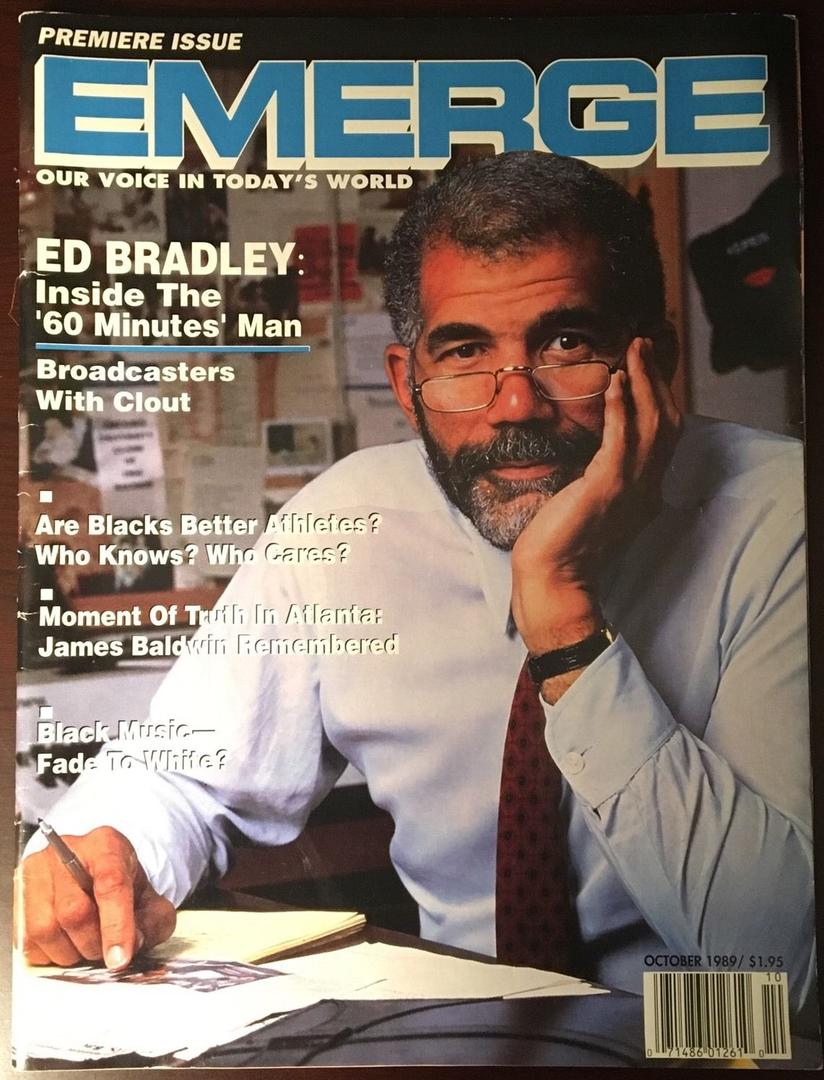
It was originally published in the premiere issue of this magazine.

See the date, right above the bar code?!? Wow! I was 21 then, just hired at a daily newspaper, a ghetto Jimmy Olsen. Post-reading, I was doomed thereafter to roam the post-modern American wilderness looking for this kind of adventure and glossy chronicling opportunity, wishing to become either scribe, ready at any moment to greedily take either role, either side of the Ziegiest mirror. As I got older (note that I’m not writing “more mature”), that role/goal became my criteria to be involved with pretty much anything. Is this where my lifelong obsession with the lives of Black writers started? Hmmm…..

I’ve been laughing all week at how this article–a remembered and reconstructed momentary snapshot of place, person and circumstance, filled with 20th-century American post-rebel historic residue–has defined pretty much my entire life, while for its author, it was just an interesting part of a journalism career that loooong ago ended (he’s now a family therapist and adjunct professor at Antioch University, where he retired from as a pretty popular, multifaceted guy). He traveled light years from the experience, and I didn’t! Maybe I should call him so he can talk me down from the ledge? πŸ™‚

Too long times ago. Two long times ago.

Be careful reading this. The truth moment, reprinted in the latest issue of The James Baldwin Review, is below.

Book Mini-Review: The Artist Is Human, And Black Too

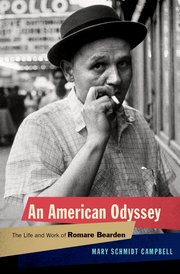
An American Odyssey: The Life and Work and Romare Bearden.
Mary Schmidt Campbell.
Oxford University Press, 464 pp. $34.95.

As the third decade of the 21st century swiftly approaches, it might be difficult for some fine artists under 35 to understand a time when the self(ie) was not unapologetically at the center of the artistic experience. The first biography of Bearden in almost 20 years, and clearly the fullest, Campbell–who knew the author, trading letters with him going back to the 1970s–has crafted a quality book about 20th- and 21st-century Black ritually- and visually-based aesthetics through American history’s prism. (The fact that, as Campbell writes, “Bearden seemed to delight in exploring the use of color” has a acute, and subtle, significance.) With a lack of dangerous 20th century socio-political action and adventure to reconstruct, Campbell, president of Spelman College and a former leader in the New York City artistic community, must go around and through the topic, briefly profiling the many artists in his orbit, such as Aaron Douglas, Charles Alston and Augusta Savage. She documents well, and with great care, his artists’ organizing efforts, his many important writings and his forgotten early-political cartoonist career. What was most important to this reviewer is her detailed, and thoughtful, placement of Bearden at the slow-but-perfect storm of the development of 20th century American media, technology, popular culture and racial struggle. Although Campbell’s theme of the Black American Odysseus is sound, this book is actually about how someone fed on the European art classics and the organic African-American experience (of Harlem and Pittsburgh) slowly realizes something when the latter becomes in vogue in the 1960s (perhaps not-so-coincidentally), allowing him to ultimately collage his being fully as both an artist and a Black man: that being and presenting one’s Black self in New York City, the then-new center of the art world in the center of the century, forever seeing and remembering, is more than profound enough.