Thoroughly enjoyed! As usual, thanks to Jared Ball for telling me about this. Maybe this will end the conspiracy talk. Do we really need another year of that? LOL! 🙂
Category Archives: world history
Reversed?

Victory! (I think.)
As a so-called “professional content producer” and/or “artist,” I do understand how complex this could get.)
And here’s an important related story.
"Red Tails": Malik Russell's View
My friend Malik Russell has this to say about “Red Tails”:

I heard George Lucas say that he had to put up the money that the studio’s wouldn’t. Imagine that? George F’ing Lucas a god in Hollywood action genre and he couldn’t get Hollywood to back a Black film? I think its excellent and noble what Lucas has done. He stands alone among the Hollywood giants who talk equality but walk segregation in their industry.
I disagree though with Lucas attempt to say that this movie is about showing that Black films can make money. We know from Tyler Perry that Black films can make money. Its unfair to put all that pressure on one Black film to prove that our films can make money in the action genre. There are tons of historical busts action-themed films that did not make money and none of them ever deterred Hollywood from funding them or making more of them. Will Smith has proved that you can have Black leads in action films and if enough films are made there are going to be some successes and failures.
Is the prevailing belief, that if Red Tails doesn’t do blockbuster numbers, Hollywood—which didn’t fund this one—will justify why it doesn’t make any more?
No White-themed film has held the responsibility for an entire sub-genre on its shoulders and neither should Red Tails.
It should just be a film that we go out and enjoy, and then go to video and used to tell a story over the years.
Any genre in Hollywood can make money as long as its held by the same rules and not held under segregated-standards where as usual, Black people are expected to accept having to do more with less, just to prove they are equal.

Harry Belafonte On "Charlie Rose"
Nothing more to be said.
Freestyling In South Africa!
Untitled from Shawn Utsey on Vimeo.
Wow! I’m proud to say I know the dude on the left—Dr. Mark Bolden.
"Occupying Mumia's Cell" by Alice Walker
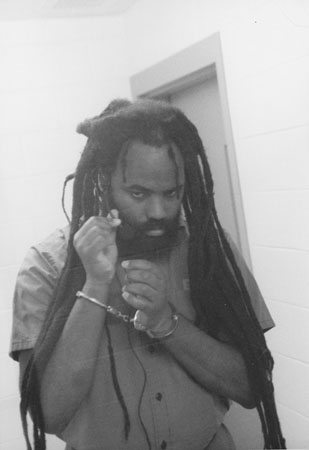
Occupying Mumia’s Cell
(Copyright © 2011 by Alice Walker)

I Sing of Mumia
brilliant and strong
and of the captivity
that
few black men escape
if they are as free
as he has become.
What a teacher he is for all of us.
Nearly thirty years in solitary
and still,
Himself.
He will die himself.
A black man;
whom many consider to be
a Muslim, though this is not
how he narrows down
the criss-crossing paths of
his soul’s journey.
Perhaps it is simpler
to call him
a lover of truth
who refuses
to be silenced.
Is anything more persecuted
in this land?
No boots will be allowed
of course
so he will not
die with them on;
but there will always be
boots
of the mind and spirit
and of the heart and soul.
His will be black and shining
(or maybe the color of rainbows)
and they will sprout wings.
Mumia
they have decided
finally
not to kill you
hoping no blood will
stain their hands
at the tribunal
of the people;
but to let you continue
to die slowly
creating and singing
your own songs
as you pace
alone, sometimes terrorized,
for decades of long nights
in your small cage
of a cell.
We lament our impotence: that we have failed
to get you out of there.
Your regal mane may have thinned
as our locks too, those flags of our self sovereignty, may even have
disappeared;
waiting out this unjust sentence,
until we, like you, have become old.
Still,
if you will: accept our gratitude
that you stand, even bootless,
on your feet. We see
that few of those around us,
well shod and walking, even owning, the streets
are freed.
Somehow you have been.
Enough to remind us
of freedom’s devout
internal and
ineradicable seed.
What a magnificent Lion
you have been all these
disastrous years
and still are,
indeed.
"Media, Message And Visual Culture:" Black Male Identity Project Symposium
My department colleague, Dr. Baruti Kopano (starts at about 40:00; you MUST hear his pledge at 1:51:50!), was part of this recent event. Check it out!
Mini-Book Review: Capitalism And Color Mix In America’s White Supremacist Media History
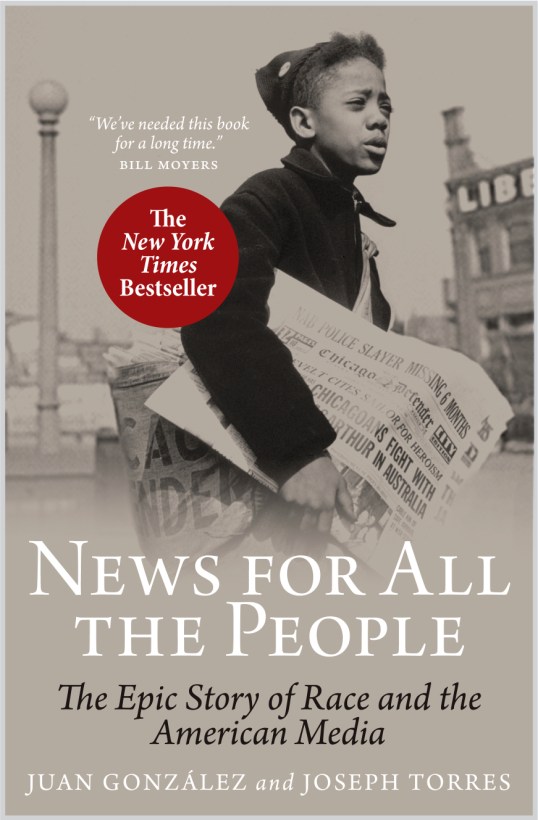
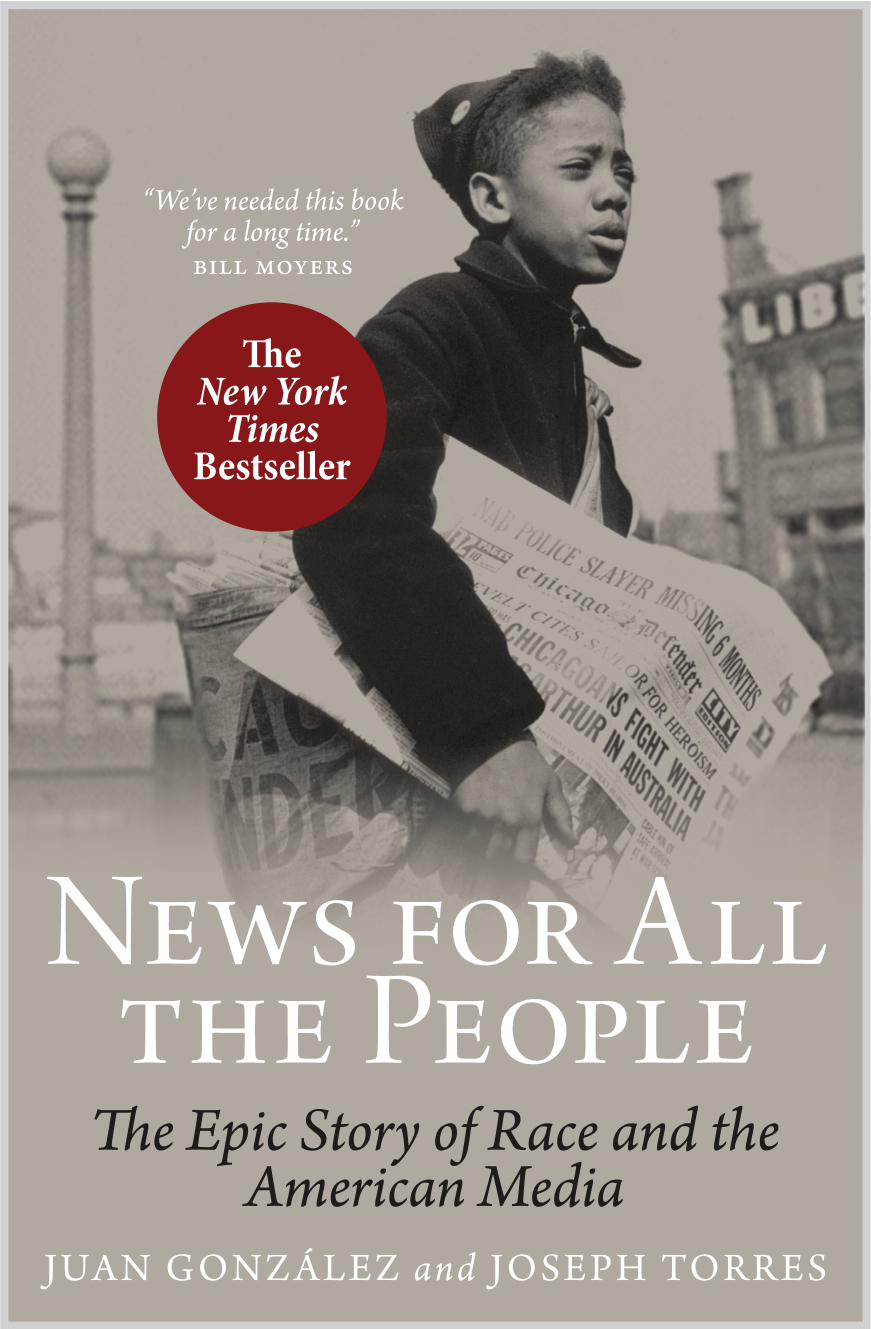
News For All The People: The Epic Story Of Race And The American Media.
Juan Gonzalez and Joseph Torres.
Verso.
480 pp. $29.95.
When journalists write history, there is always the danger of that history being shallow, surface-level. This remarkable book is one of the rare instances of such a problem being a positive, due to its great, realized ambition. For this narrative successfully weaves the history of Black media, Native American media, Hispanic media and Asian media within the context of the history of America’s capitalistic media development.
Building on the work of media historians and colonial and American newspapers from three centuries, the authors outline a people’s history of American media, with the people publishers and broadcasters of color, and how this history ebbs and flows with the creation of The One Percent and its information expansion throughout the country, respectively. It matches the growth of the media with the constant surging of America’s white supremacy, each reflecting the other. It finds “rebel editors” of all colors and their publications who resisted the racist tides, often at great personal risk. And it connects these historical figures with the up-to-date issues and modern resistance that the media reform movement is currently waging to save the World Wide Web from being consumed by corporations. “With each day that passes, with each new advance in mass communications technology,” Gonzalez and Torres posit, “our biggest media companies feverishly race to readjust, to become bigger and more dominant in the marketplace. Only by clearly grasping the main conflicts and choices that shape our current media system can ordinary citizens successfully unite with the concerned journalists and workers within the system to bring about meaningful reform. The second democratic revolution of the U.S. media has already begun.”
Ultimately, the authors believe that explaining the history of this sometimes radical, sometimes capitalistic reform will inspire 21st century media practitioners—meaning, all of us—to (continue to) organize with keyboards and cellphones. As 2011 ends, Gonzalez and Torres provide not just a clear understanding of how the enemy built the empire, but merge historical ideas on how to use the new/old tools at our disposal to resist it.
A New Record!

A lot of money for faded newsprint! But what faded newsprint it is! LOL!
I Pledge Alliegiance……..
As always, thanks to Jared Ball for telling me about this!