Once apon a time there was a little girl in the ghetto (in my home ghetto, in fact) who wanted to be a princess. She had the talent (and, yes, beauty) to get away with it. She could sing with the range of her godmother and the articulation, the clarity of her cousin. She found that she could sing white songs in a very Black way. And so, she got the tiara and the castle. The Prince, however, brought out the ghetto in her that was hidden. Monsters dwelled and haunted endlessly. And so she died from everything. (Whitney Houston, 1963-2012)
Category Archives: world history
Thanks, Courtland…….
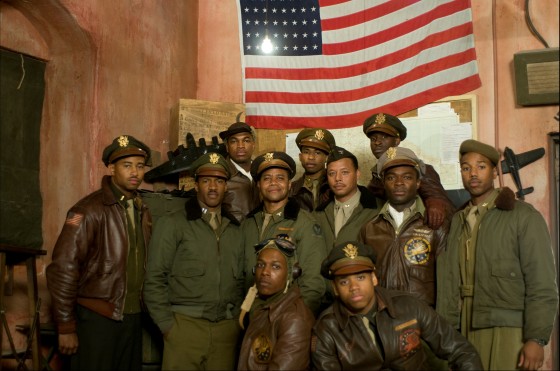
…..for keepin’ it real with “Red Tails.” Yep, we saw the same movie—the one with the *%$#$%-up script! (Enjoyed reading the “Letters To The Editor.”) Folks, this film made me want to run out and buy the HBO ’90s joint on DVD! LOL! 🙂
Darth Facebook, Darth Google: Cue John Williams


Change! (2)
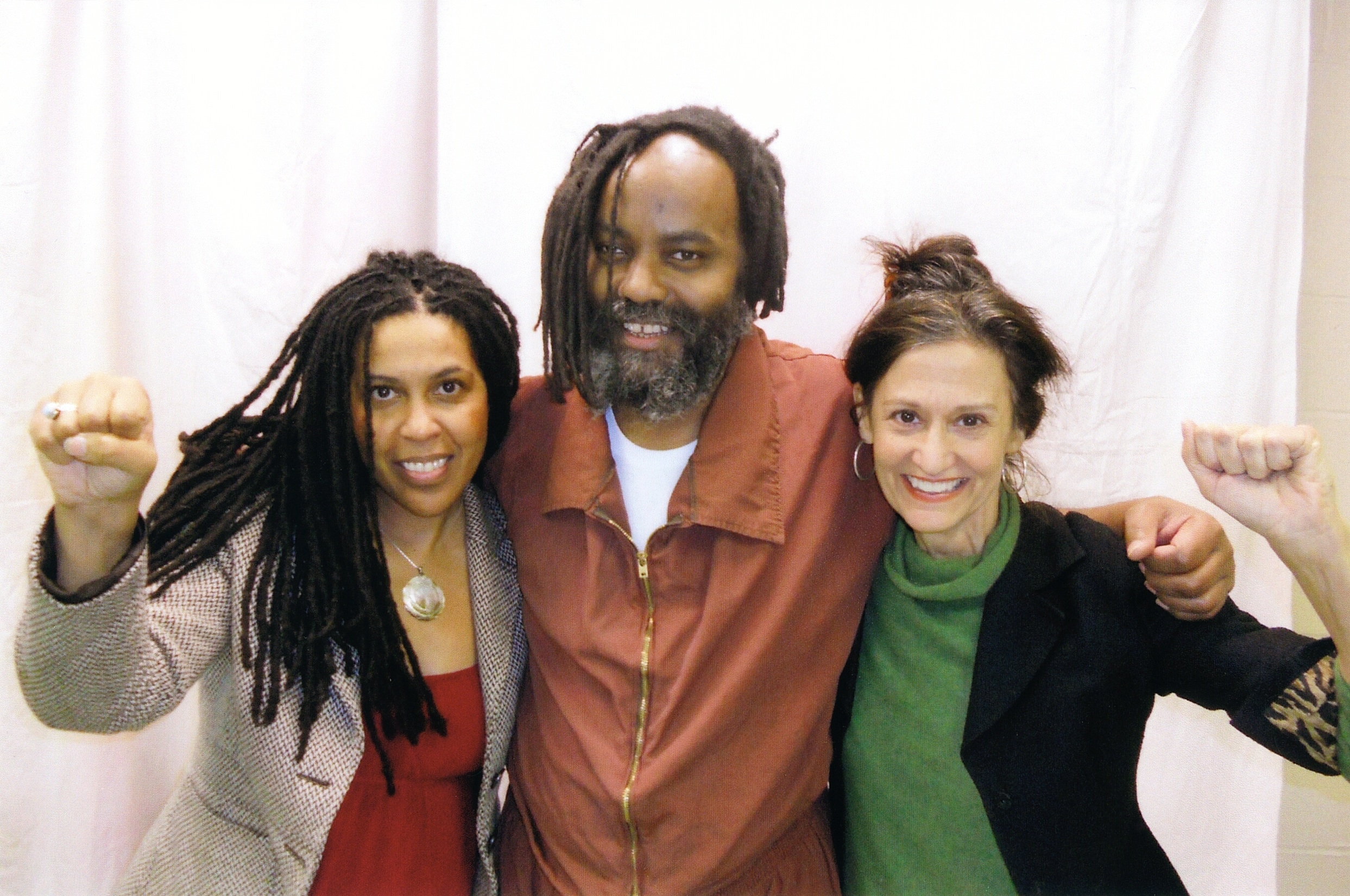
PHOTO AND CAPTION FROM NATIONAL LAWYERS GUILD: SCI Mahanoy, February 2, 2012. Mumia Abu-Jamal celebrates his move off of death row with Heidi Boghosian and Professor Johanna Fernandez. This was Mumia’s second contact visit in 30 years. His transfer to general population comes after a federal court ruled that instructions to jurors during his trial influenced them to choose death. A broad people’s movement secured this victory, and it can now refocus on the goal of freedom. Join us on April 24, Mumia’s birthday, as we Occupy the Justice Department in Washington, DC!
****************************************************
Double WOW! So this is what Mumia looks like in 2012! And he’s hugging folks! Let’s find out more from these folks hugging Mumia:
Comrades, Brothers and Sisters:
Heidi Boghosian and I just returned from a very moving visit with Mumia. We visited yesterday, Thursday, February 2. This was Mumia’s second contact visit in over 30 years, since his transfer to General Population last Friday, Jan 27. His first contact visit was with his wife, Wadiya, on Monday, January 30.
Unlike our previous visits to Death Row at SCI Greene and to solitary confinement at SCI Mahanoy, our visit yesterday took place in a large visitor’s area, amidst numerous circles of families and spouses who were visiting other inmates. Compared to the intense and focused conversations we had had with Mumia in a small, isolated visiting cell on Death Row, behind sterile plexiglass, this exchange was more relaxed and informal and more unpredictably interactive with the people around us…it was more human. There were so many scenes of affection around us, of children jumping on top of and pulling at their fathers, of entire families talking intimately around small tables, of couples sitting and quietly holding each other, and of girlfriends and wives stealing a forbidden kiss from the men they were there to visit (kisses are only allowed at the start and at the end of visits). These scenes were touching and beautiful, and markedly different from the images of prisoners presented to us by those in power. Our collective work could benefit greatly from these humane, intimate images.
When we entered, we immediately saw Mumia standing across the room. We walked toward each other and he hugged both of us simultaneously. We were both stunned that he would embrace us so warmly and share his personal space so generously after so many years in isolation.
He looked young, and we told him as much. He responded, “Black don’t crack!” We laughed.
He talked to us about the newness of every step he has taken since his release to general population a week ago. So much of what we take for granted daily is new to him, from the microwave in the visiting room to the tremor he felt when, for the first time in 30 years, he kissed his wife. As he said in his own words, “the only thing more drastically different than what I’m experiencing now would be freedom.” He also noted that everyone in the room was watching him.
The experience of breaking bread with our friend and comrade was emotional. It was wonderful to be able to talk and share grilled cheese sandwiches, apple danishes, cookies and hot chocolate from the visiting room vending machines.
One of the highlights of the visit came with the opportunity to take a photo. This was one of the first such opportunities for Mumia in decades, and we had a ball! Primping the hair, making sure that we didn’t have food in our teeth, and nervously getting ready for the big photo moment was such a laugh! And Mumia was openly tickled by every second of it.
When the time came to leave, we all hugged and were promptly instructed to line up against the wall and walk out with the other visitors. As we were exiting the prison, one sister pulled us aside and told us that she couldn’t stop singing Kelly Clarkson’s line “some people wait a lifetime for a moment like this.” She shared that she and her parents had followed Mumia’s case since 1981 and that she was overjoyed that Mumia was alive and in general population despite Pennsylvania’s bloodthirsty pursuit of his execution. We told her that on April 24 we were going to launch the fight that would win Mumia’s release: that on that day we were going to Occupy the Justice Department in Washington DC. She told us that because she recently survived cancer she now believed in possibility, and that since Mumia was now in general population she could see how we could win. She sent us off with the line from Laverne and Shirley’s theme song – “never heard the word impossible! “- gave us her number, and asked us to sign her up for the fight.
We’re still taking it all in. The journey has been humbling and humanizing, and we are re-energized and re-inspired!!
In the words of City Lights editor Greg Ruggiero:
“Long Term Goal: End Mass Incarceration. Short Term Goal: Free Mumia Abu-Jamal!”
–Johanna Fernandez
Attention Black Parents Of Teenage Girl Readers: I Would Like To Suggest…..



Thank You, Angelo Dundee………
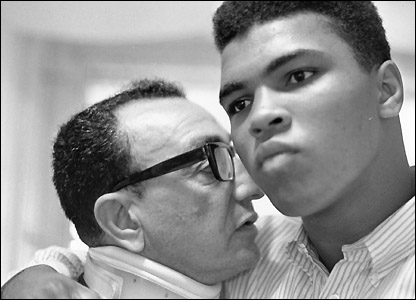
……for standing by Muhammad Ali. When I think of him, I always chuckle. Because the first time I ever heard of him he said a line I never forgot: “I didn’t know what a Muslim was, really, because I thought it was a piece of cloth!” LOL! 🙂
Asante Sana, Don Cornelius
All I can say is THANKS.
Change!
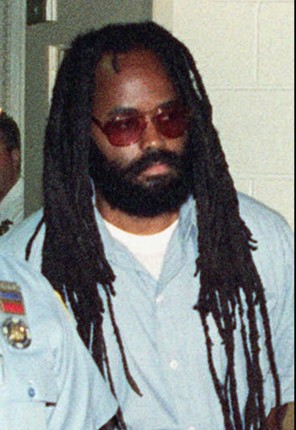
Abu-Jamal moved into general prison
population for first time
by Frank Kummer
Philly.com StaffMumia Abu-Jamal has been moved into the general prison population for the first time since going on death row for the killing of Officer Daniel Faulkner.
Susan McNaughton, a spokeswoman for the Pennsylvania Department of Corrections, said Abu-Jamal was moved yesterday from the restricted housing unit at the SCI Mahanoy facility in Frackville, Schuylkill County.
In the restricted housing unit, Abu-Jamal had largely been in solitary confinement for up to 23 hours a day.
Abu-Jamal was convicted of the 1981 shooting death of Faulkner. His transfer into the general prison population comes after his original death sentence was overturned on appeal to the federal courts last year.
The federal appeals court ruled that the trial judge’s instructions to the jury were unfairly weighted toward execution.
That ruling in Philadelphia was affirmed by the U.S. Supreme Court in October.
As a result, Philadelphia District Attorney Seth Williams said in December that he would not re-seek a new death penalty hearing, and instead agreed to a life term.
Abu-Jamal had been on death row at SCI Greene, in Waynesburg until he was transferred to SCI Mahony, a medium-security institution, shortly after Williams’ decision.
Judith L. Ritter, a law professor and director of the Criminal Defense Clinic at Widener University, and who represented Abu-Jamal in recent appeals, said yesterday in a statement:
“This is a very important moment for him, his family and all of his supporters. We are all grateful for the roles played by so many in getting him off death row after so very long.”
Abu-Jamal supporters, through various websites and social networks, applauded his move into the general population, but still maintain he is innocent.
However, Faulkner’s widow, Maureen, and many others, steadfastly maintain that Abu-Jamal was her husband’s killer. She has denounced Abu-Jamal for “operating a cottage industry in prison.”
Posted: Sat, Jan. 28, 2012, 12:45 PM
UPDATE:
To: Litestar01@aol.com , nattyreb@gmail.com , pamafrica@gmail.com Date: Sun, 29 Jan 2012 09:11:39 -0500
Subject: [Spam:8] Mumia’s Message to supporters Status: Normal
CC: From: Litestar01@aol.com
Reply-to: Litestar01@aol.com
Saturday, July 28, 7:30 PM
Message from Wadiya A Jamal, wife of Mumia Abu-Jamal [:]
I just received a call from my beloved husband who is now out of Administrative Custody and in general population at SCI Mahanoy. He is relieved after being in these solitary torture chambers for over 30 years. He can’t wait to face and embrace me, his wife, and his children and grandchildren. The next moment is for him to be released from the belly of the beast. He is surprised at how many men are in these prison cells–black, white, hispanic. He said he’s been shown a lot of love, from the others in population. We need to bring Mumia, and all the other men, home!
Mumia said he wanted to see me as soon as possible, to come up tomorrow, Sunday, a visiting day. But the prison won’t let me visit until Monday.
Wadiya A Jamal, with BIG pride.
****************
Mumia’s Message to Supporters in call from General Population, SCI Mahanoy to his wife, Wadiya Jamal:
My dear friends, brothers and sisters — I want to thank you for your real hard work and support. I am no longer on death row, no longer in the hole, I’m in population. This is only part one and I thank you all for the work you’ve done. But the struggle is for freedom!
From Mumia and Wadiya, Ona Move. Long Live John Africa! =
*****************
JANUARY 31st UPDATE:
To: Litestar01@aol.com , nattyreb@gmail.com , pamafrica@gmail.com
Date: Tue, 31 Jan 2012 14:41:43 -0500
Subject: [Spam:6]!! Mumia Has First Contact Visit With His Wife!!
Status: Normal
CC:
From: Litestar01@aol.com
Reply-to: Litestar01@aol.comONA MOVE, LONG LIVE JOHN AFRICA!!! Mumia had his first contact visit in general population, yesterday Monday 1/30, with his wife, Wadiya. The next step is to bring him home but we should celebrate the victories and use these victories to motivate us to keep working, keep pushing and NEVER GIVE IN. We have done a great job—-LONG LIVE REVOLUTION—–Ramona
Book Mini-Review: Trying To Explain The Craziness

Dear White America: Letter To A New Minority.
Tim Wise.
City Lights Books.
190 pp. $14.95.
The South Carolina crowd jumped up, giving Newt Gingrich a standing ovation for beating down Juan Williams. On radio, it sounded like just a reporter being assertive, and an interview subject giving strong pushback in front of an audience. But in tone and in content, everyone knows it was more than that.
Tim Wise has been writing about issues like the above for at least a decade. He has made a career learning about what people of color know and understand about white supremacy, and sharing what he has learned to other whites. (Since I’ve read James Baldwin”s “Stranger In The Village” and “The Fire Next Time,” I’ve never read—or, frankly, felt the need to read—any of Wise’s books.) In his latest, he cuts to the core of white fears, using his white authority and white privilege to tell other whites that yes, it’s time for you to deal with yourselves and the new American reality you now inhabit. It explains why white conservatives need the 1950s (because the 1960s changed everything), why the “public good” and “Big Government” are no longer good (because they now serve people of color, so working-class whites now feel like losers in the Great Recession) and why whites are so angry about multiculturalism (because the president and the dominant popular culture is Black, which means that, for the first time in America, whiteness to white eyes is now a color instead of being universal).
If you know some ignorant white folks who want to know why the Republicans are tripping over each other trying to be reactionary, this is the book to give them. Blacks, Latinos, Asians and Native Americans got this particular memo 160 years ago when Frederick Douglass broke down The Fourth of July.
The Dangerous Road Before Mumia Abu-Jamal
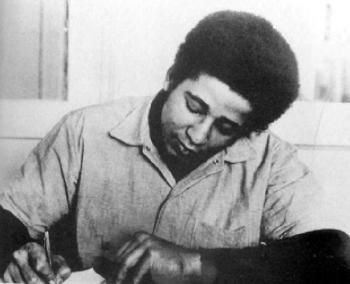
Dumping below some stuff I turned in to BAR as possible sidebars to this article.
George Jackson
( © Copyright 1971 Bob Dylan)
I woke up this morning
There were tears in my bed
They killed a man I really loved
Shot him through the headLord, Lord, they cut George Jackson down
Lord, Lord, they laid him in the groundSent him off to prison
For a seventy dollar robbery
Closed the door behind him
And they threw away the keyLord, Lord, they cut George Jackson down
Lord, Lord, they laid him in the ground
[ Lyrics from: http://www.lyricsfreak.com/b/bob+dylan/george+jackson_20207841.html ]
He wouldn’t take shit from no one
He wouldn’t bow down or kneel
Authorities, they hated him
Because he was just too realLord, Lord, they cut George Jackson down
Lord, Lord, they laid him in the groundPrison guards, they cursed him
As they watched him from above
But they were frightened of his power
They were scared of his loveLord, Lord, so they cut George Jackson down
Lord, Lord, they laid him in the groundSometimes I think this whole world
Is one big prison yard
Some of us are prisoners
The rest of us are guardsLord, Lord, they cut George Jackson down
Lord, Lord, they laid him in the ground
*******************************************
Mumia Abu-Jamal’s NEW Address:
Mumia Abu-Jamal
AM 8335
SCI Mahanoy
301 Morea Road
Frackville, PA 17932

