Category Archives: television
Book Review: The Semi-Confessions Of A Self-Described “Literary Sharecropper”

Selected Letters of Langston Hughes.
Edited by Arnold Rampersad and David Roessel with Christa Fratantoro.
New York: Knopf.
423 pp., $35 (hardcover).
If he were alive today, Langston Hughes would have tried to write this book review as quickly as possible. He had bills to pay (and loans from friends to pay back), so he leapt into the plays, novels and short stories he had to write. Meanwhile, an ever-mounting pile of correspondence awaited him to sort and answer—which he did, often into the late night and early morning.
Luckily for Hughes aficionados, that lifetime’s worth of letters were regularly shipped, from 1940 until his 1967 death at the age of 65, to Yale University’s James Weldon Johnson Memorial Collection of American Negro Arts and Letters. (The idea for the collection was Carl Van Vechten’s, the man history identifies as the white champion of the Harlem Renaissance.) It’s from that massive Hughes output—thousands of letters that date back to 1921, letters that eventually filled 671 boxes—that the reader can see the artist at work.
And it’s almost mostly just his work schedule—with a smattering of self-opining and sometimes-frank opinions of his fellow artists thrown in—that’s absorbed from this comprehensive survey. Hughes’s definitive biographer Arnold Rampersad and literature scholar David Roessel, with help from independent scholar Christa Fratantoro, chose the letters that give as much insight as the often-intangible Hughes chooses to reveal. His most frequent communications, according to this assemblage, were to his literary agent, Maxim Lieber, his publisher Blanche Knopf (the matron of the publishing house that is celebrating its centennial with this book and a re-issue of Hughes’ first-and-still-classic 1926 poetry collection The Weary Blues), his friend and quasi-patron Noel Sullivan, and his best pal and writing partner, Arna Bontemps.
In this book, which mightily struggles to be more than a work ledger, Hughes is almost constantly at work, writing anything from quickie children’s books to newspaper columns to his two autobiographies, 1940’s The Big Sea: An Autobiography and 1956’s I Wonder as I Wander: An Autobiographical Journey. Sadly for the general reader but semi-happily for Hughes, the master poet had a near-obsession with writing a successful stage musical, which would have given him the financial security that eluded him his entire struggling-against-being-a-vagabond life. His attempts to fight being fleeced by racist white producers and playwrights are as tedious as they are outrageous.
Hughes kept everything that interested him. He followed Black newspapers and magazines with great care, and kept track what those periodicals were saying about Black artists, especially him. Periodicals were Hughes’ lifeblood: he sold many short stories, poems and essays to Black magazines such as The Crisis and Phylon and white magazines such as Esquire. Irony abounds in Negro life: Hughes’ Chicago Defender Op-Ed column hit book and stage musical paydirt for with his creation of the character Jesse B. Semple (“Simple”), but The Defender, now having access to cheaper, white columnists, wanted to cut the little he made from it.
With the exception of the musical producers and, not insignificantly, the McCarthy witch-hunters who tried to destroy him in the 1950s, these collective letters display a man’s need to be loved and needed by everyone. He is always attempting anthologies (especially for African writers) and is ceaselessly encouraging his fellow scribes, especially younger ones that he proudly claims as his discoveries, like Margaret Walker (Alexander) and, later, a young Alice Walker (“She is really ‘cute as a button’ and real bright…Mine is her first important publication [and her first story in print], so I can claim her discovery, too, I reckon,” he writes to Bontemps in 1966). For the most part, he holds back his anger and his hurt, and tries to put a positive spin on almost everyone, even the younger, angrier writers—James Baldwin and LeRoi Jones—who criticize him in his later years. The personal outlook matches the professional persona well, since Hughes had to depend on the largesse and kindness of many, many friends and associates in order to survive. The letters are his day-to-day-reality-as-performance, but his romantic life, his sexuality, his personal needs are permanently off-stage, not for even semi-public consumption.
Rampersad’s high biographical standard continues to hold. The annotations alone—of people, places end events that populate Hughes’ almost-countless adventures and misadventures around the world and around New York City—make it worth the time it takes to go through his life, one thought and one year at a time. The introductions to the chronological sections show the trio of writers at their concise, detailed best.
This book can be read on its own, but it is the perfect companion to either of Hughes’ autobiographies, Rampersad’s two-volume biographical magnum opus, or even just a collection of the artist’s poetry. It’s not too obvious to say it is a fantastic addition to the bookcases filled with Hughes’ writing and Hughes scholarship. It is a must for those who want a peek behind the curtain of a Black artist, but don’t need to see too much.
*******
APRIL 11th UPDATE: An earlier version of this review was printed inside here.
Happy Valentine’s Day!

My Root Article on Langston Hughes and Carter G. Woodson……..


Black Lightning, The Animated Shorts!
Just discovered these last night! Quite charming! Yay for the Black family, and good for DC!
Black Lighting here is the only version of him I don’t have in action-figure form–and I want!
Only In Newark……..
…….could both its current mayor
and his new Communications Director
been on HBO’s “Def Poetry Jam!” LMAO! 🙂
It’s A Superhero World, Vol. 4

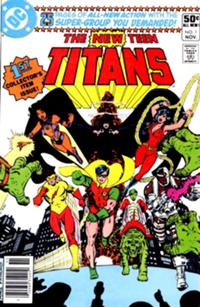
And now we know the membership of TV’s Teen Titans.
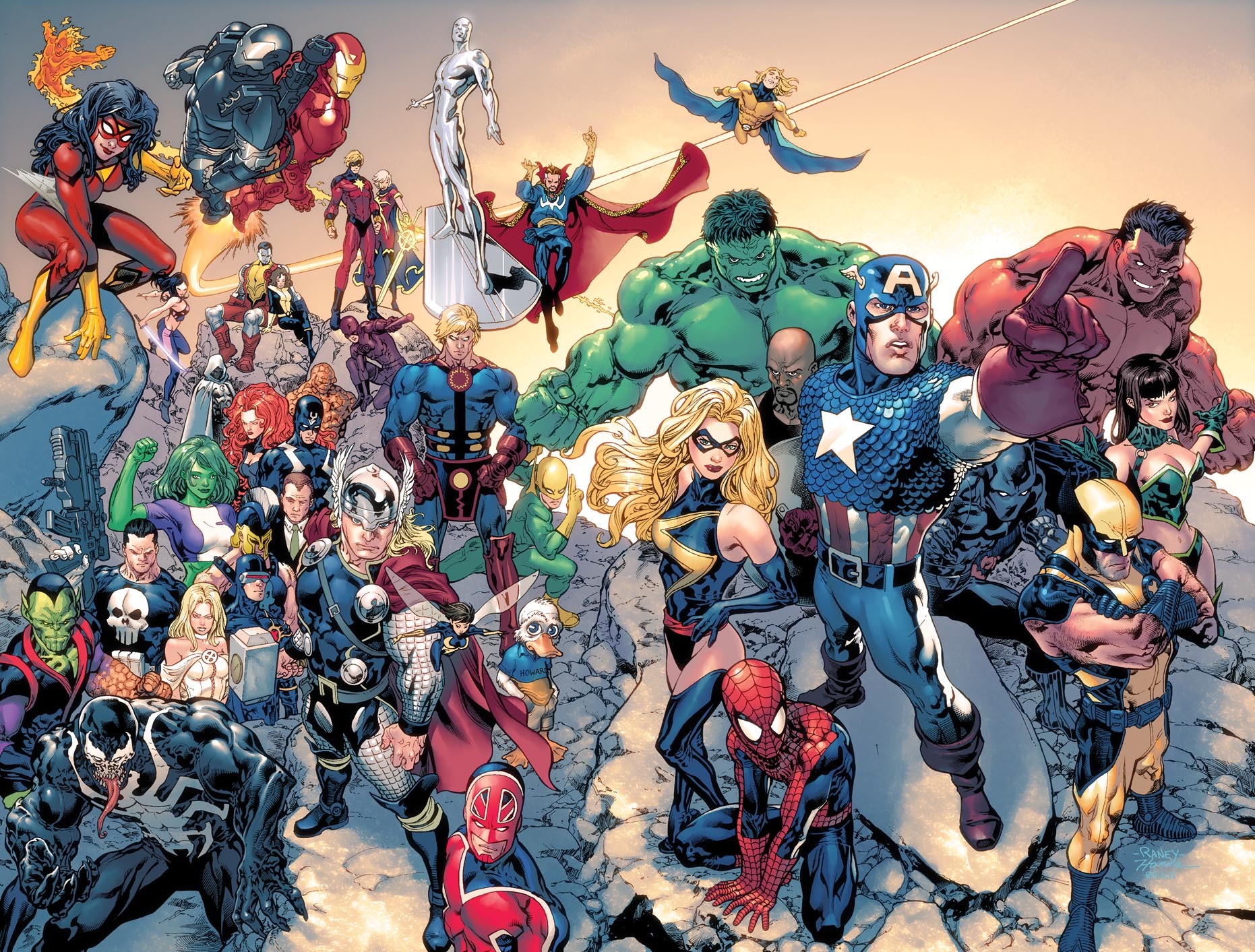
WOW! But I guess it is time, after 50 years!
And, speaking of Marvel:
Okay, Marvel is going with Ultimate Fantastic Four. (After all, the movie Avengers is Ultimate Avengers, so…) I read it, and didn’t hate it. So we’ll see if I like it, even if it’s not my Fantastic Four.

Crossover?!? YES!!!! I’m still excited! Less than four months to go!

Lotta geek buzz for “Agent Carter!” I try to catch glimpses of it when I’m home.
Enjoyed seeing The Howling Commandos!
FEBRUARY 8th UPDATE:

Diggle as the John Stewart Green Lantern one day?!? It’s one of those ideas that I hate on paper, but I admit I wanna see it! LOL!
“The Black Panther Party: Vanguard Of The Revolution”
Okay! Ready!
Capital Press Club/National Press Club Forum On Race Coverage

Book Review: The Essence Of Convergence
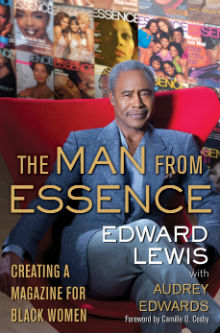
The Man From Essence: Creating A Magazine For Black Women.
Edward Lewis with Audrey Edwards.
New York: Atria Books.
295 pp., $25 (hardcover).
This book is an in-your-face victory lap for Edward Lewis, who wants to be known as the last man standing when Essence magazine, that bold, highly educated, hooped-earring-ed soul sister, sold itself to Time Warner ten years ago. This work is a great story of how one “gets over,” in all the ways that implies. It is a tale of Black American success: of how Civil Rights Movement-era Black capitalism converged with elite white liberal guilt and embryonic Black feminism (and, whether the author acknowledges it enough, the Black Power movement and all that radical movement entailed) to birth a powerful vehicle that spoke to, and for, Black women.
It’s in the tradition of books such as Reginald F. Lewis’ “Why Should White Guys Have All The Fun?” and John H. Johnson’s “Succeeding Against The Odds.” Lewis, with help from Audrey Edwards, a former Essence executive editor, explains how the magazine idea was birthed in 1969 by four Black male business partners and ended its Black-owned reign with just him, the quiet, cold, calculating survivor.
Essence and Black Enterprise both exploded onto the scene in 1970—new Black magazines for a new Black Baby Boomer generation of conscious but ambitious young people. Lewis recounts the days when his allies were white liberals who were more liberal and felt guiltier about white supremacy than they do in 2015, and when doors were opening for new people to try ideas and build new institutions. These young Black people watched new television shows such as “Soul Train,” wore new clothes, rode new cars, and thought anew about how to reconcile the Black with the American. This new, emerging, African-American middle class was no longer taking its cue from, say, The Crisis magazine: it had to learn new roles on the fly while always looking cool and in control.
Although Lewis is a few years in front of the Baby Boomers, he understood the incoming tide well. “By the time we started raising capital for the magazine, a race and a gender had been transformed,” Lewis writes. “We were on the cusp of the revolutionary seventies, a decade in which Negro became Black; Black became uppercased; women publicly burned their bras; sex became liberated; and Black is Beautiful became the new anthem for a race that seemed to be on the verge of winning the struggle for civil rights. The civil rights movement was cresting just as the women’s movement was gaining momentum, empowering a new generation of Black women to ride on the tide of both, and a new magazine to be in the vanguard of marketing to them.”
This was also a period in American history in which magazines engaged in narrative journalism that television and radio did not yet know how to match, when weekly and monthly magazines had personal, passionate relationships with millions of readers. Essence was tailor-made to join that elite white magazine club, using the finest African-American literary and visual fabric that could be created. By 1980, its tenth year, that relationship of Essence to consumer was, to use a word in the exclamation of the times, solid.
The central relationships in the book, however, are all turbulent: those between the partners themselves and their individual relationships, in turn, with the editorial staff. The drama’s early players range from Playboy magazine to Gordon Parks to Black magazine pioneers such as Ida Lewis (no relation to the author), one of the many early Essence editors-in-chief who the male partners fought to rein in, to manage. There is enough one-upmanship and public and private maneuvers among the Essence Communications Inc. family to keep the readers’ attention throughout, as Black people struggled with how they treated each other, what they expected from each other, and their meaning to each other in this capitalistic enterprise.
(Humming in the background are these questions: What do the other Essence founding partners and editors think about the critical way they are portrayed here: as admirable losers who, in the end, just couldn’t, or wouldn’t cut it? And how do they see the cunning victor? Perhaps one day soon we will find out.)
Essence’s stupendous growth under Marcia Gillespie and, subsequently, Susan Taylor is recounted in detail, moles and all. Their editorial strength, consciousness and courage made Essence required reading in the Black community. Lewis spares no story in how Gillespie and Taylor, during their tenures as editors-in-chief, became culture heroes in the public eye and divas in the editorial office.

The narrative almost seems quaint in the soon-to-be mid-21st century, the social media “buzz” age, a time where millions of Black women (including emerging LGBT leaders) have video, audio, 140-character and 500-word voices that they use for their empowerment. (Jamilah Lemieux, in 2015 the rising feminist star and resident firebrand of a much-more-female-focused Ebony.com, for example, is almost young enough to be Taylor’s granddaughter.) Black intellectual Melissa Harris-Perry has her own program on MSNBC. Black women celebrities participate with feminist-ish fervor on broadcast network chat shows such as ABC’s “The View,” CBS’ “The Talk” and FOX’s syndicated “The Real.” All of this does not even take into account the staying power of longtime Essence reader Oprah Winfrey, her O magazine and her cable television channel OWN. Essence visionary leaders Gillespie and Taylor deserve their bows as the Sojourner Truth of post-segregated American mass media, creating the comfort Black women feel today speaking their truths out loud.
Meanwhile, the traditional substance that used to resonate in the pre-Time Warner Essence and elsewhere—the detail, the intellectual grounding, the lyric—is returning to the literary “little magazine” genre, sadly. Once upon a people, Essence was a mass-market lifestyle magazine that, at its root, could be just as serious in some of its content as, say, Black World and Freedomways, those half-remembered intellectual period(ical) pieces. It’s now just another Time Warner vehicle, reflecting the post-modern marketplace. Ultimately, “The Man From Essence” is more Lewis’ triumph than those of the audience he said he protected by closing the deal.
AN IMPORTANT P.S.: I think the first time I ever heard of Essence was through its television program.
 Drums in the Global Village

