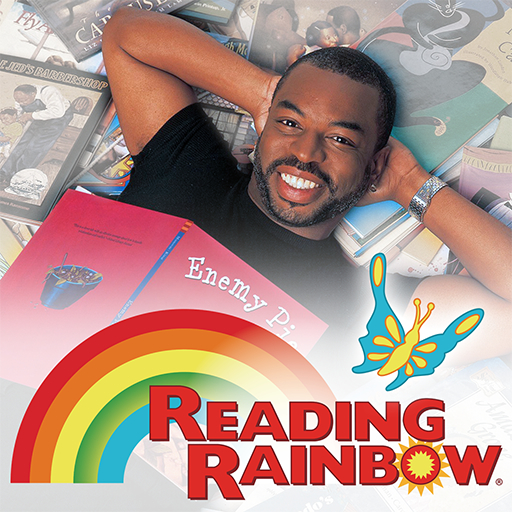
(And here’s Lavar answering some shade thrown by The Washington Post about his venture being for-profit)
And, just for fun:
(And here’s Lavar answering some shade thrown by The Washington Post about his venture being for-profit)
And, just for fun:

The corrected, corrected version. 🙂
NEWARK, N.J.—Ras Baraka, one of the sons of the late poet/playwright Amiri Baraka, handily beat rival Shavar Jeffries Tuesday night to become the next mayor of his father’s city. How he did it was no mystery to those paying attention.
The mayor-elect paid tribute to his father, who died in January, and his mother, Amina Baraka, who was nearby off-stage at the Robert Treat Hotel here.
“I know that my father’s spirit is in this room today, that he is here with us, and I want to say ‘Thank you’ to him for believing in me up into his last days of his life, and him passing out flyers even on his hospital bed. He fought all the way to the end,” he said to his jubilant supporters.
To Amina Baraka he said, “Happy Mother’s Day, Ma. You deserve this more than me. My mother’s whole life has been Newark. She has struggled and fought, and even (fought) with all of us to make sure we go right and do right by the city of Newark.”
Using unofficial Essex County Clerk’s Office results available at deadline, Baraka’s vote total was 23,416 (53.73 percent of the vote) to Jeffries’ 20,062 (46.03 percent).
“Today we told them, all over the state of New Jersey, that the people of Newark are not for sale,” he said, referring to the estimated $2 million that Jeffries’ financial supporters, many of them anonymous donors, poured into his rival’s campaign.
Baraka threw shirts to his supporters that read, “I’m the mayor.” His slogan was, “When I become mayor, we become mayor.” He told the crowd to celebrate, and then get ready to “roll their sleeves up and get ready to be the mayor.”
The mayor-elect and the hundreds of supporters then left the hotel and marched to Newark City Hall.
Baraka, 44, will become Newark’s 40th mayor at his July 1 inauguration.
Newark, an overwhelmingly Democratic city, has no party primary, with officials instead elected on citywide tickets. This situation allowed Jeffries and Baraka, both Democrats, to slug it out over who was best qualified to reduce crime, spur the city’s economic development and fight to repair the city’s struggling school system, the latter controlled by the state for the past 19 years.
The election is seen as important because Newark is the heart of predominantly Democratic Essex County, an important collection of votes for anyone running for New Jersey governor.
Since Newark elections have now been populated by candidates relatively new to the city, the prickly question of “authenticity” has become a real one here in the last 20 years.
A mayoral candidate now has to prove himself sufficiently Black (and soon, sufficiently Latino), urban and progressive. U.S. Sen. Cory Booker (D-N.J.), the previous mayor, promised new energy and new investments, but he still had to earn his way from Yale Law School to the Newark City Council, and eventually the mayor’s chair, vote by brick.
When the mayoral race narrowed to two, Baraka kept jackhammering at the main fault line of the Shavar Jeffries campaign: its open hubris.
Jeffries may have been born in Newark, but he appeared from Seton Hall University Law School fully formed and fully funded—by anonymous donors. Jeffries served on the Newark Advisory School Board and was president of the Newark Boys and Girls Club, two very important city positions.
But that just doesn’t carry the same juice as being on the council, where a councilmember is directly responsible for Newarkers’ lives and where people test his or her power and commitment to the city’s decaying working-class neighborhoods and the people who live in them.
The campaign had the atmosphere of history around it because of the obvious question: could the son of Amiri Baraka, a Black communist poet and playwright who was beaten by police during the 1967 Newark insurrection, be elected Newark mayor?
Until his transition into ancestry this past January, Amiri Baraka was known as a living legend in Black literature, and an historic figure in 20th century Black politics. But to many Newarkers on the street for decades, he was known as “that Black radical” and that old, cranky guy who sponsored poetry and jazz concerts in the basement of his home or in downtown city parks.
The question became less significant the more time spent on the Newark streets. Baraka received no “sympathy vote” because of his father (or his slain sister Shani, for that matter). Newarkers who were interviewed kept mentioning that they knew, or knew of, Baraka and didn’t know Jeffries.
As a deputy mayor, he accepted only a salary of $1, rejecting the doubling of his school district income. At the last debate, he said that, as mayor, he will actually receive a pay cut from his combined council and high school principal posts.
People on the street notice things like that. They also know well their elected representatives, children’s teachers and principals, and the principles all hold.
The radical Howard University student activist who returned to Newark and became a city schoolteacher, and later vice-principal and principal, taught outsiders, and reminded returning sons, that many, many Newarkers are actually committed to living here.
That radical faith in maintaining and renovating the old bricks of his city, like the younger Baraka’s ability as a poet, may be partly hereditary, but, in the end, he earned every vote he got every day between his 1991 Howard graduation and Tuesday night.
And now The Pulitzer!
A very good year for (white, male elite) journalism! And, yes, a vindication for people who needed none.
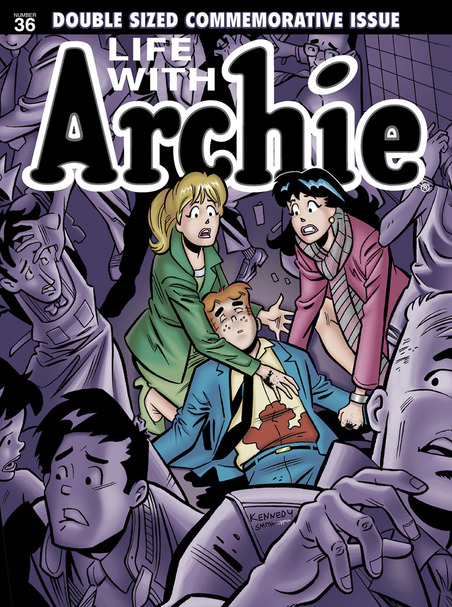
This is (and soon, was) the only Archie title I’ve ever read from No. 1, subscribed to and collected. It was a good book, but I did feel it was running out of steam.
I gotta give Archie Comics credit. The company has learned how to be relevant in the/to teens (See this story’s accompanying video). 🙂 Gay characters who get married. Zombies (watch the scary trailer!). Marrying Archie off–not just to Betty and Veronica, but even to fine-ass Valerie from Josie and the Pussycats!
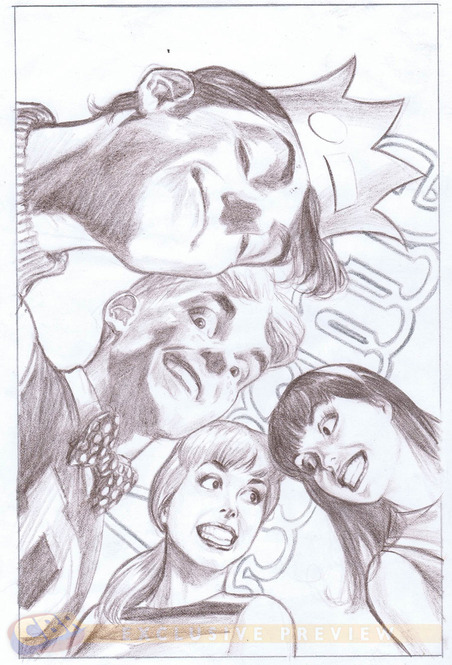
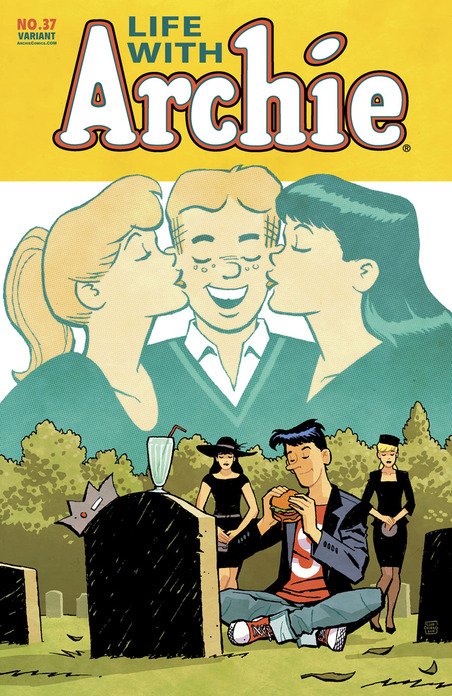
Here are the variant covers to Nos. 36 and 37:
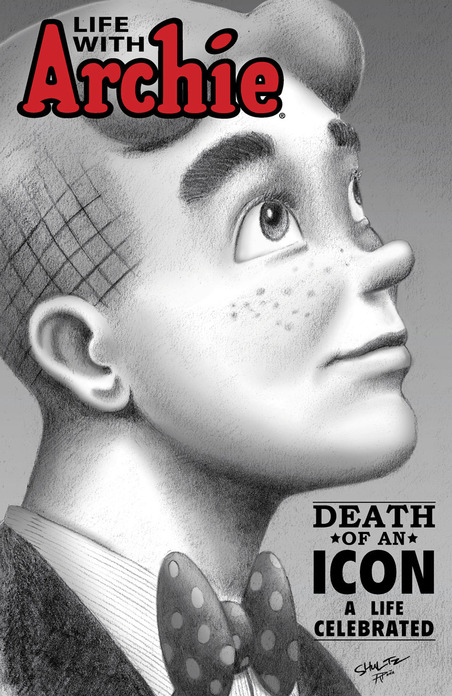
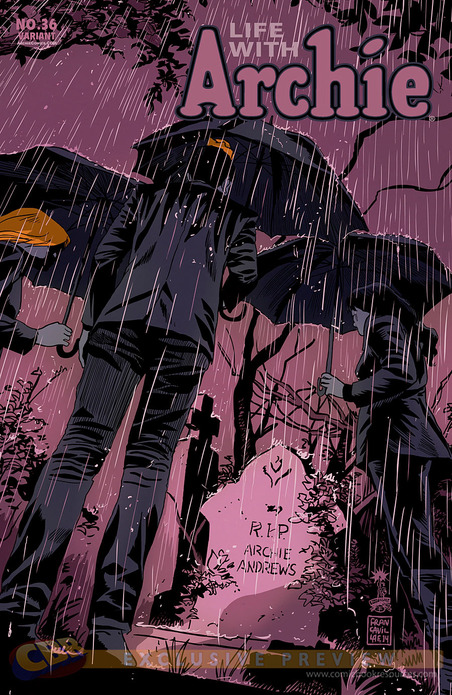

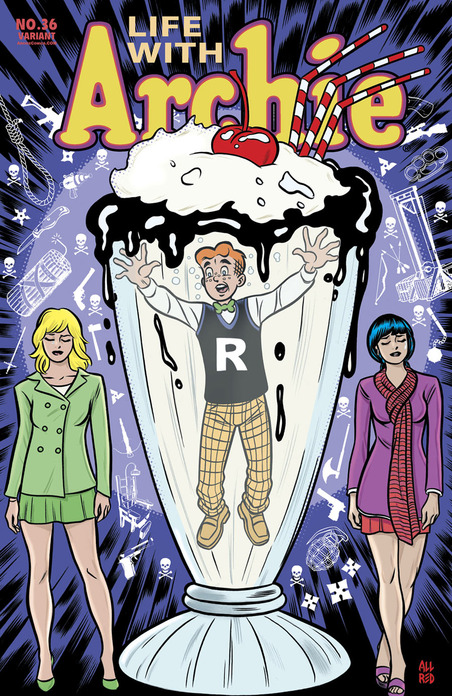
(Leave it to Mike Allred to do something that weird 😉 )
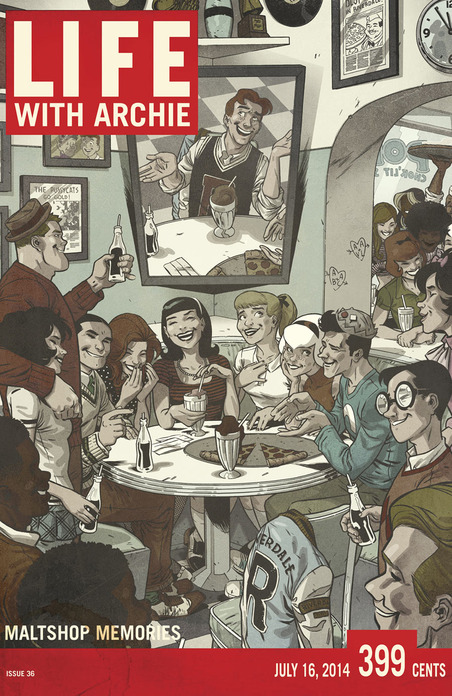






Boy, are a lot of people mad with this guy!
I was laughing all the way through, because he was clear what he was about all along: I’m gonna use my Latin charm, athletic six-pack and lookism completely to my advantage, since a group of fame-hungry women and a broadcast television network are allowing me the complete power to do so. I’m gonna be on TV dating and tonguing (and more) some princesses for a couple of months, and have ABC pay for it. Boy, this is fun! Oh, I’m sorry to hurt you.
(Now, I’m gonna stop oinking for a moment 🙂 to ask a feminist question: What kind of gender-conscious woman would volunteer–fight, actually!–to play this game in the 21st century? Talk about “enlightened sexism!” And no, “The Bachelorette” doesn’t even the score.)
Juan Pablo Galavis refused to play along with the show’s mythology last night (and, really, for the whole season), and exposed this series for the sham it was conceived to be, last year’s “happily ever after” couple be damned.
By the way, “Writing on the Wall,” the forthcoming Mumia book Fernandez is editing, will be Mumia’s eighth. Here are the previous seven, in chronological order.
And here’s the Mumia biography filmmaker’s response. Here’s the text, in case the blog moves on:
Behind the Flash mob Attack on Obama’s DOJ Attorney General Nominee Debo Adegbile
There is a story that lies behind the Adegbile partisan fight on the senate floor. If you want to understand why the Republicans are using Adegbile’s association with Mumia Abu-Jamal to try and block his nomination, take a long hard look at ‘Mumia: Long Distance Revolutionary”, www.mumia-themovie.com. This will give you the measure of the man. It chronicles Mumia Abu-Jamal’s evolution as one of the world’s most notable public intellectuals.
Today’s stage is the floor of the U.S. Senate where a cloture vote on Adegible’s nomination takes place in the wake of his clearing the Judiciary Committee. According to an OP ED in the Wall Street Journal Adegbile’s representation of Mumia Abu-Jamal when he headed the NAACP LDF is reason enough to derail his nomination. The Fraternal Order of police, Fox News and bipartisan derision from Pennsylvania politicians republican Senator Pat Toomey, and Democrat Bob Casey has fueled the impending drama.
It is a drama where U.S. Senators and political pundits regurgitate blatant lies that seek to demonize Mumia because they face zero accountability to the facts(1). Just one fact: When Terry Maurer Carter, a court reporter came forward and sworn in an affidavit that Albert Sabo the original judge said of during the first week of Mumia’s trial” “I am going to help them fry the nigger”, Philadelphia Common Pleas court judge Pamela Dembe ruled it “irrelevant”, and that it was not an indication that the case was racially biased.
The media and congressional pundits deplore that Mumia’s death sentence was overturned and he was removed from death row. They repeatedly attribute this result to advocacy lawyers who put forward fabricated tale of racial bias. Come now, really? Racial bias in the U.S. Criminal Justice system and Philadelphia is a fairy tale?
They also conveniently ignore that Mumia’s death sentence was overturned by a court: the U.S. Third Circuit and that decision was upheld by the U.S. Supreme court- hardly a liberal bastion by any means.
But why is Mumia relevant at all. Why are they concerned that he lives or dies? What does he represent? Why must he have remained silent. The answer is because what he says and has been saying for over thirty years is relevant.
Mumia Abu-Jamal, is an internationally acclaimed intellectual who writes in the tradition of Franz Fanon and Noam Chomsky. That he has done his work from an Pennsylvania prison cell for over 33 yrs. (30 of which were spent in solitary on death row) is remarkable. His weekly worldwide radio broadcasts and bestselling books have been translated into nine languages.
Nelson Mandela, the European Parliament, Maya Angelou, E.L. Doctorow, Amnesty International, Danielle Mitterrand, Danny Glover, among many others have called his trial a miscarriage of justice and lauded his incisive writing.
Abu-Jamal through his radio essays and writing directly challenges the false but convenient “we have realized the dream narrative” that everyone from Time Magazine to Obama is promulgating as we honor Martin Luther King and celebrate Black History month.
Mumia Abu-Jamal is the conscience of America. And the backlash is swift. The level of vitriol and outright demands for his death/silence reminds one of the terrorist label put on Nelson Mandela for a quarter of a century.
Certain revolutionary ideas were not meant to survive the U.S. state sponsored “programme” that targeted Black freedom leaders such as Martin Luther King and ultimately for the last fifty years, black life in America.
The “dream” was assassinated whether it is comfortable to admit that or not. Mumia Abu-Jamal survived. And he is one of the many U.S. political prisoners, who are the living witnesses to the true struggle to realize the dreams of freedom and justice. The United States government through CointelPro and other repressive means has consciously and deliberately attempted to suppress the hopes and dreams of many African Americans. Listen to Mumia Abu-Jamal www.prisonradio.org.
Noelle Hanrahan, Producer “Mumia: Long Distance Revolutionary
And this after the relatively good news about Russell “Maroon” Shoatz!
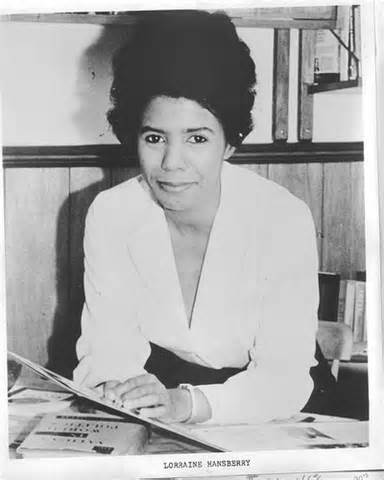
Thought this was fascinating! (And it reminded me of the interesting articles the “old” Village Voice used to run every week in the late ’80s and early ’90s, back when I was in my late teens and early 20s. (I still can’t forget “Albert Murray’s Blues People,” the name of that long, thorough Joe Wood profile of Albert Murray in the VV‘s Literary supplement. Sadly, both are ancestors in 2014. Yep, I’m old. :))

