Well, it was a good try–pretending I wasn’t going to watch every episode. 🙂
Category Archives: news
It’s Official: Jesse Jackson Must Be Involved In Anything Black :)

Why, Jesse. Why? Not a fan of “The Flash,” so you need something to do? LOL! 🙂
“The Flash” Premieres Tonight!


Mumia Abu-Jamal’s Goddard College Commencement Address
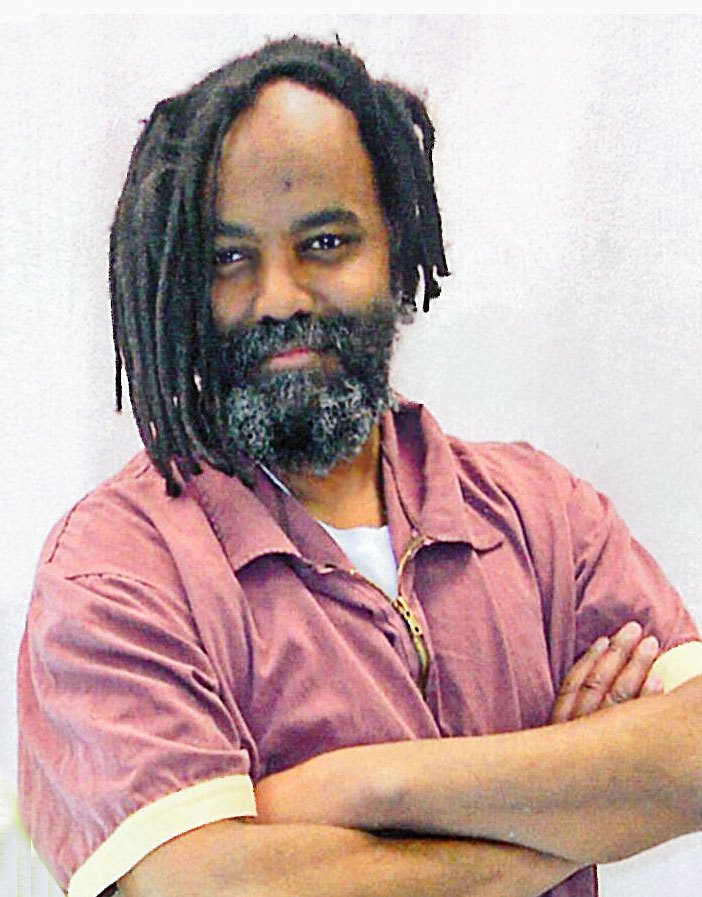
I cut-and-pasted this from Prison Radio.
Click here to listen to this message on Vimeo.
Dear Fellow Goddard-ites, Students, Graduates, Parents, Professors:
I thank you for your kind invitation to join you in voice today. I’ve been away from Goddard College perhaps longer than most of you have been alive.
I last walked on campus during the late 70’s. But although it was undoubtedly quite a long time ago, it still sits in memory, and sometimes even visits in dreams of the funky atmosphere that suffused the campus like a cloud of exhaled marijuana smoke. What really moved me however, was the green life, the abundance of grass, trees standing like ancient sentinels. The majestic mountains of Vermont which possessed a beauty that was, to a guy from the city, simply breathtaking. I remember with crystal clarity walking through woods back to our dorms, Third World Studies, and feeling pure rapture in the presence of those trees. How many centuries had those trees stood on this earth? My mind looked back to Indians who must’ve trod through these very same woods; my steps touching the ground that once crunched under their moccasined feet. Not only have these surviving remnants of their once great numbers been vanished from the land of their fathers, but the reverence with which they held these lands, their collective embrace of Mother Earth, has been vanished as well.
That living immensity, more sacred than anything built by man, has never left me and rises up like a phoenix whenever I think of the campus. But of course what really matters here is not my experience, but yours. This is your commencement and as such, I will dwell on the world that you are about to enter into – in habit, and true to Goddard’s founding ideals, hopefully transform.
As we all know Goddard is rightfully famous for its non-traditional teaching methods focus. Here students stand at the center of the educational endeavor and they are urged and expected to follow that vibe in their hearts. That which gives them passion to determine not just what they will study, but how those studies can have impact and meaning in the larger society – Y’know, this aint a cookie cutter school. Goddard, deeply influenced by the ideas of John Dewey (1859- 1952), strives to reach that happy and singular medium between the teacher and the taught. With one exploring with the other how best to achieve a meaningful resolution to questions that arise in the life of the mind. Quoting Dewey: “Education is not preparation for Life. It is Life itself.”
Dear graduates, never have words such as these been truer to the hour that is upon us. For the nation is in deep trouble – largely because old thinking both domestically, and globally, has led us into the morass that the nation now faces. Which may be encapsulated by references to place names that ring in our minds: Gaza, Ferguson, and Iraq – again! These are some of the challenges that abide in the world, which it will be your destiny to try to analyze and resolve. As students of Goddard you know that these challenges are not easy, but they must be faced and addressed.
The Brazilian scholar Paulo Freire, and his groundbreaking Pedagogy of the Oppressed posits the power of literacy to transform psychology, to deepen and broaden ones place in the world. Moreover, when one seeks to interrogate ones radical beliefs, it draws one deeper into contact with the meaning of social change and social transformation. One is changed; the prerequisite to social change.
Goddard, because of its size and orientation, has given students the time and attention to find the focus to answer questions that few other places have even dared to entertain. In many ways it is issues such as these that make Goddard, Goddard. Questions of power, of politics, of race, of gender, of place. Questions about where one stands in the world, and how to move, act, interact in a world awash in complexity. Essentially how does a young person, or for that matter even an older one, looking at the vast wide world with a quiet sense of terror have a voice amidst that monstrous din? How does she find that voice that can create space to think? To be? To grow?
We know that it must come from the place within – that which moves you, that which stirs you. That which is your truest, deepest self. Goddard, unlike most such institutions of higher learning, quietly asks that you listen to and interrogate that voice, and when appropriate, amplify it. For who knows? Within that deepest you may dwell the very voice that is resonating within the nation if not the very world itself. Here social change and social transformation forms the raison d’etre of Goddard.
We need new questions for the world of the 21st century. But more importantly we need new answers. We live in a world where massive wars can be launched by rumors and innuendo. Where the material interests of corporations are superior to the interests of working people, and remember – corporations are people – so sayeth the Supreme Court. Where the ecological threats to fresh water supplies, clean air, and the environment in American cities, pulls challenges that seem beyond arcane.
Did I not say that we need new thinking? The present social, political, ecological and global course is, to say the least, unsustainable. Perhaps some of you, new graduates of Goddard, will think up ways to forestall some of the challenges facing the living and generations unborn.
I noted earlier my reverie in the woods of Goddard that exquisite freshness and the wintery air, the nighttime respiration of hundreds of magnificent evergreen trees has refreshed my mind even when miles and decades away from Goddard’s sweet cool earth. Our cities, built during the heights of the industrial age and now engulfed in post-industrial ennui badly need a greening. Areas should be set aside where children and mothers can breathe and remember air loaded with freshness delivered by green life, not air conditioned. Think of the myriad of problems that beset this land and strive to make it better. That’s Dewey’s vision, and Goddard’s.
Let me say something that I’ve never said before. When I came to Goddard, I was intimidated. Although teachers and adults told me that I could do the work, I rarely believed them. I felt woefully unprepared. But guess what? Goddard gave me confidence and I never lost that feeling. When I returned to Goddard many years later, I was a man on Death Row, with a date to die. I was able to transfer credits from Continuing Education and my final paper utilized the writings of Franz Fanon and Ignacio Martín Barό, to examine the concepts of both in liberation psychology and liberation theology. Only at Goddard. Only at Goddard!
Goddard reawakened in me my love of learning. In my mind I left Death Row to travel to France, where Fanon studied psychiatry. And on to Blida hospital, north of Algiers, where he practiced and later joined the Algerian revolution. By studying Martín Barό, I traveled to El Salvador, where he worked as a priest and psychologist, teaching literacy to peasants when the nation groaned under military terror, supported by El Norte, the U.S. Empire. Who were these figures? Well, Fanon was born in the Caribbean Island Martinique, then a colony of France. When he witnessed the oppression of the Arabs in Algeria he felt compelled to join the revolution on the side of what he called ‘the wretched of the earth.’ Ignacio Martín Barό was among six Jesuit priests, a housekeeper and her daughter slain by the U.S. trained Atlacatl Battalion, a notorious Salvadoran death squad.
Goddard supported those “trips abroad,” if only in the mind, and I thank the school and many of my friends and alums there immensely for opening a door closed for decades. Goddard allowed me to really study what interested and moved me – revolutionary movements, and through that doorway – history, psychology, politics, and of course economics. In one of the most repressive environments on earth, Death Row, Goddard allowed me to study and research human liberation and anti-colonial struggles on two continents: Africa and Latin Central America. I thank you for that grand opportunity.
For you graduates, your studies – visits to lands beyond your own – were done to give you both insights and confidence to work in the world, to try to create social change. Your job isn’t how to get a job. It’s to make a difference. I thank my friends at Goddard for inviting me back.
If it’s done for you half of what it’s done for me, I assure you, you will have been well served. Now take what you know and apply it in the real world. Help be the change you’re seeking to make.
I thank you all.
For the class of 1996, Goddard, this is Mumia Abu-Jamal.

Cornel West On Radical Black Journalists, Intellectuals
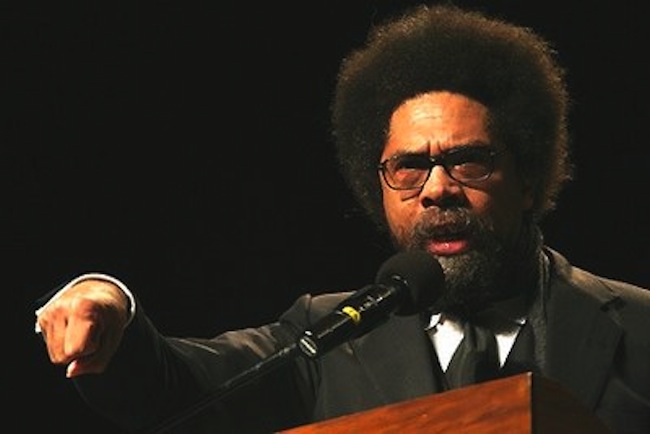
Getting REAL tired of Cornel West, but enjoyed this. Part Two is here. The below transcript is from Part One.
JUAN GONZÁLEZ: We spend the rest of the hour with renowned scholar, author and activist Dr. Cornel West. He’s a professor at Union Theological Seminary and author of numerous books. His latest, out this week, is Black Prophetic Fire. In it, he engages in conversation with the German scholar and thinker Christa Buschendorf about six revolutionary African-American leaders: Frederick Douglass, W. E. B. Du Bois, Martin Luther King Jr., Ella Baker, Malcolm X and Ida B. Wells.
AMY GOODMAN: Even as the United States is led by its first black president, Dr. West says he’s fearful we may be, quote, “witnessing the death of black prophetic fire in our time.”
Dr. Cornel West, welcome back to Democracy Now!
CORNEL WEST: Always a blessing to be here. And I want to salute both of you, what mighty forces of good you are, to use the language of John Coltrane. And I want to acknowledge, too, Sister Christa, who is the most distinguished American scholar, or at least scholar on American studies in not just Germany, but Europe, as not just an interlocutor, but the book would not exist without her. So it’s a wonderful call-and-response, dialogical engagement with this most precious of modern traditions, of black prophetic tradition.
AMY GOODMAN: What do you mean by “black prophetic fire”?
CORNEL WEST: Black prophetic fire is really about a deep love for black people, a love of justice, but it’s connected to the four questions that Du Bois wrestles with. How does integrity face oppression? What does honesty do in the face of deception? What does decency do in the face of insult? And how does virtue meet brute force. So, in the face of terror, in the face of trauma, in the face of stigma, 400 years of black people wrestling with all three, what do we produce? This caravan of love, this love train—love of justice, love of poor people, love of working people.
But it’s weak and feeble these days. It’s week and feeble, trying to bounce back. But Ferguson, among the young people, we’re seeing it. Now, this was written, of course, before Ferguson. But when you look at the Phillip Agnews of Dream Defenders, when you look at the Organization of Black Struggle down there, you look at Tef Poe and Tory and the others in Ferguson, you see this magnificent renaissance. And that brings joy to my heart.
JUAN GONZÁLEZ: Well, the book, you begin with Frederick Douglass.
CORNEL WEST: Yes, yes, yes.
JUAN GONZÁLEZ: And not only as an activist and scholar, but as an incredible writer and his importance in 19th century America.
CORNEL WEST: Yeah, he’s certainly the most eloquent ex-slave in the history of the modern world. And by “eloquence,” I mean what Cicero and Quintilian meant: wisdom speaking—of course, he connects it with courage, unbelievable courage to act, and deep, deep love. And there’s simply nobody like him. And we need his spirit these days, because we live in the age of the sellout. We live in the age of those who are willing to sacrifice integrity for cupidity or integrity for venality, of selling their souls. And Douglass, flawed like all of us, stood tall right in the heat of struggle. No matter what popularity was to be sacrificed, he told the truth about the viciousness of white supremacist slavery.
AMY GOODMAN: Can you just give us a thumbnail sketch of who he was, born on the Eastern Shore of Maryland, enslaved as a youth and teenager?
CORNEL WEST: Yes, to, well, actually made his way up, first to New England, you know, underground, with the help of his wife. He’s in camouflage, as it were. And he meets the white abolitionists, of course, towering white brother like William Lloyd Garrison and a host of others. Wendell Phillips would be another. Charles Sumner would be another. They would be vanilla brothers, who, in deep solidarity with the black struggle for freedom—like Father Pfleger in Chicago, like Christopher Hedges, like Noam Chomsky, Eric Foner. You’ve got a number of them, of course, Dorothy Day, and like Sister Amy herself. We’re talking about on the vanilla side of town, look at Americans say, “We’re going to focus on these particular black folk, these particular black folk.” And that’s a beautiful thing. Rabbi Abraham Joshua Heschel would be an example like that. And, of course, the rich tradition of Latinos. My god, Albizu Campos put black folk at the center, the Puerto Rican—Cesar Chavez.
AMY GOODMAN: Talk about Frederick Douglass’s struggles, who he was recognized by.
CORNEL WEST: Well, the first text, of course, he had to be authorized by William Lloyd Garrison and Wendell Phillips, who would write the introduction and say he actually wrote this book, because in America the very idea of a black person writing a book was rendered—was under deep suspicion. And so, in his first autobiography, where he told this powerful story—of what? Very much like this recent text by Brother Edward Baptist on slavery and American capitalism. It was not just terror, but torture, to generate high levels of productivity—for what? Profit, profit, profit. So that when we talk about American terrorism—and we live in the age of terrorism. And terrorists, of no matter what stripe, no matter what color, they’re gangsters, and they’re thugs. No doubt about that. But American terrorism, we don’t like to talk about, first toward our precious indigenous peoples, and then the slaves for 240 years, and almost 80 years under the U.S. Constitution, the U.S. Constitution being a pro-slavery document, a pro-terrorist document, for over 80 years, in practice. Wonderful words on paper, now, but when it came to black folk, it was still a rationalizer of vicious of slavery. And Douglass was keeping track of the humanity of those precious black folk and saying, “I’m willing to tell the truth”—with a bounty on his head.
JUAN GONZÁLEZ: And Douglass was not only a revolutionary in terms of the struggle for emancipation of African Americans, he was also, in his newspaper, one of the fiercest critics of the U.S. war against Mexico. He was also an advocate for women’s suffrage and the equality of women. Can you—
CORNEL WEST: Absolutely, absolutely. You see, because integrity requires moral consistency, what Jane Austen called constancy, being willing to follow through on your moral convictions regardless of what the cost is, regardless of the risk that you have to take. And most importantly, he was willing to die. You see, anybody in America who tells the truth about the barbarity of white supremacy and its legacy must be willing to die. You’ve got to recognize that you become a target, not just of fellow citizens with character assassination, but with literal assassination in terms of the powers that be. Why? Because the most dangerous thing in America is for black rage to take the form of love and justice among everyday people, among the black masses, that then invite human beings of integrity of all colors. That’s a major threat to the system. That’s one of the reasons why our young black people are being so viciously targeted with the soul murder in the educational system, with the vicious mass incarceration. You know, Brother Carl Dix and I have called for stop mass incarceration today, stop it now. And one of the reasons why you see this massive unemployment, and yet no serious attention to it, the level of almost genocidal attack on our precious young people is really beyond language. We don’t really have a language for it. It’s that vicious. It’s that ugly.
AMY GOODMAN: Some have talked about the killing of Mike Brown as a modern-day lynching. Can you talk about Ida B. Wells?
CORNEL WEST: Yes, yeah, Ida B. Wells.
AMY GOODMAN: Tell us who she was.
CORNEL WEST: We end the text with Sister Ida B., because in many ways she’s probably the most courageous of all of them. And that’s hard to say, but it really is true, because she, at a time in which Booker T. Washington and W. E. B. Du Bois are arguing back and forth over conceptions of education, civil rights struggle versus subservience to the powers that be, in Booker T. Washington’s case, she looks the raw violence in the face and writes the classic, Red Terror. “I want to talk about Jim Crow-Jane Crow lynching that sits at the very center of American life, has been trivialized in so many ways.” And, of course, she’s run out of Tennessee with a bounty on her head. Thank God that T. Thomas Fortune at The New York Age was in place at that time.
AMY GOODMAN: She was born in 1862.
CORNEL WEST: She was born a slave.
AMY GOODMAN: Mississippi.
CORNEL WEST: She was born a slave in Mississippi. Both parents died very quickly. She had to raise her brothers and sisters, and went on to become one of the great intellectuals, one of the great freedom fighters. And, yeah, she—
AMY GOODMAN: Championed the campaign against lynching?
CORNEL WEST: Oh, yes, anti-terrorism. See, a lot of people don’t realize, you see, black freedom movement has always been an anti-terrorist movement. NAACP itself responded to the riots in Springfield, Illinois. It’s in the face of American terrorism. And Ferguson is an extension of it. It’s in the face of American terrorism.
AMY GOODMAN: Juan, you also write about Ida B. Wells in your book, News for All the People.
JUAN GONZÁLEZ: Well, yeah, I mean, just as Cornel mentioned, the fact that she began reporting in her Memphis Free Speech and Headlight about the killing of three of her friends in Memphis and was run out of town, her press destroyed, but then she went all around the country covering—exposing lynchings throughout the country. And really—was really—
AMY GOODMAN: Didn’t they burn her press to the ground?
JUAN GONZÁLEZ: She really was one of the original muckrakers, but the muckrakers that are not talked about.
CORNEL WEST: Before Upton Sinclair. Before.
JUAN GONZÁLEZ: Before Sinclair and Lincoln Steffens and all the others.
CORNEL WEST: That’s exactly right. And this is very important in terms of our present moment, because you remember Carl Rowan. Carl Rowan was the most popular black journalist in the 1960s. He demonized Malcolm X. He trivialized Martin Luther King Jr. when he came out against the empire in Vietnam. And we’re living in a moment now where there’s a kind of Carl Rowanization of black journalism. So you see it on TV, in MSNBC and so forth, of people who act as if they’re saying something critical, but in fact it’s milquetoast, and it’s well adjusted to the status quo. And when we look back at the 1960s, very few people talk about Carl Rowan in any positive way. And you see his vicious attacks on Spike Lee when Spike made the movie on Malcolm X, and especially that Reader’s Digest piece that he wrote in ’67 talking about how Martin Luther King Jr. had lost integrity, lost responsibility. You say, “Carl, what are you talking about?” But same is true for so many of the black journalists today on TV and those who are often in mainstream white newspapers. The black independent press is being lost, just like black independent radio is being lost. And this Black Prophetic Fire is simply a way of saying, well, when it comes to our youth, when it comes to our music, when it comes to the culture, when it comes to politics, we need a renaissance of integrity, courage, vision, willingness to serve and, most importantly, willingness to sacrifice.
JUAN GONZÁLEZ: One of your other subjects in the book is W. E. B. Du Bois. And you call him, along with John Dewey, one of the two towering intellectual figures of the early 20th century.
CORNEL WEST: Yeah, it’s true. I mean, W. E. B. Du Bois, you just say that brother’s name, and you want to be silent for a while. You know, 95 years of struggle. And keep in mind, what did he say when he was on the boat after 95 years? “Cheer up, Negro. You can never win in America. You must cast your struggle on an international stage. I’m going to Ghana. I’m going to Africa. I remain tied to the best of America, but I recognize that it may very well be the case that America needs a revolution. But America but does not have the capacity for revolution, only capacity for counterrevolution at the moment. But we can go other places—Latin America, Asia, Africa.” There’s nobody like W. E. B. Du Bois.
AMY GOODMAN: He was a sociologist, a historian, a civil rights activist, born in 1868, dies in 1963. We want to play a clip of W. E. B. Du Bois speaking in 1951 about African Americans’ and workers’ rights in an audio recording preserved by the Pacifica Radio Archives.
W. E. B. DU BOIS: Because most American Negroes of education and property have long since oversimplified their problem and tried to separate it from all other social problems, they conceive that their fight is simply to have the same rights and privileges as other American citizens. They do not for a moment stop to question how far the organization of work and distribution of wealth in America is perfect, nor do they for a moment conceive that the economic organization of America may have fundamental injustices and shortcomings which seriously affect not only Negroes, but the whole world.
AMY GOODMAN: W. E. B. Du Bois, speaking in 1951—
CORNEL WEST: Wow, that’s incredible.
AMY GOODMAN: —the Pan-Africanist, the sociologist, the civil rights leader. Talk about how he was represented and how he’s remembered and how you feel he was sanitized? What has been whited out of his history?
CORNEL WEST: Well, it’s just amazing to hear his voice. I salute both of you for keeping his voice alive, his presence alive. Keep in mind he’s 83 years old. He’s just emerged from a court case where they’ve had him in handcuffs. He was head of the Peace Information Center, which is simply an organization to ban nuclear weapons. He was viewed as a representative of a foreign government or agent of a foreign government. He was under arrest. He had just married Sister Shirley Graham Du Bois, a towering freedom fighter in her own right, on Valentine’s Day of 1951. And he’s still strong as ever. He’s left-wing. He’s a threat, not just to the system; he’s a threat to the black middle class. They’re attempting to gain access to a mainstream. They’re attempting to become more and more part of a status quo. He is determined to follow through on the love for poor people, oppressed people. But he begins on the chocolate side of town, as so many of us. He starts with black people and loves brown, red, yellow, white, across the board. And when, I think, the history is written of the decline and fall of the American empire, Du Bois’s voice will probably be the major voice, along that of Herman Melville and Toni Morrison and a few others. He was a truth teller.
JUAN GONZÁLEZ: The importance of his major works, Black Reconstruction, Souls of Black Folk, in terms of shaping how modern scholars deal with the history of African Americans?
CORNEL WEST: Absolutely, because he put capitalism at the center. He put at the center of American capitalism slavery. He put at the center of American slavery black humanity, black agency, with the oppression—what kind of creative responses. When you heard Curtis Mayfield sing “We are a Winner,” where does his hope come from? Where does his joy come from? You’ve got to keep track of the creativity. You’ve got to keep track of the sense of community, the we consciousness. When he always cast it in an international—or didn’t always, he started casting it in an international context in the 19-teens, so he understood empire, as well. His famous essay, “The Damnation of Women,” highly sensitive to patriarchy emerging. Of course, I think he would say similar things about our gay brothers and lesbian sisters.
AMY GOODMAN: His feelings about communism?
CORNEL WEST: Well, he started as a pink socialist; he ended very much as a communist. He joined the Communist Party before he left the United States. But he always recognized a certain kind of free thinking. At a certain moment, he’s critical of Stalinism; another moment, he’s too uncritical of Stalinism. But he’s very improvisational in his concern with oppressed peoples. And he always understood the centrality of music, primarily the spirituals for him. For us, it would be blues and rhythm and blues and hip-hop.
AMY GOODMAN: I wanted to ask you about Ella Baker.
CORNEL WEST: Oh, yeah.
AMY GOODMAN: Born 1903, dies 1986. She played a key role in some of the most influential organizations of her time, including the NAACP, the Southern Christian Leadership Conference and the Student Nonviolent Coordinating Committee, or SNCC. This is Ella Baker speaking in 1974 in a video produced by the Ella Baker Center for Human Rights.
ELLA BAKER: Brothers and sisters in the struggle for human dignity and freedom, I am here to represent the struggle that has gone on for 300 or more years, a struggle to be recognized as citizens in a country in which we were born.
JUAN GONZÁLEZ: That was Ella Baker speaking in 1974. Her importance in the struggle overall?
CORNEL WEST: I think she is the central figure in this text, and, I think, in the American tradition when it comes to democratic theory and practice. And here she’s even more important than Brother Martin, because Martin is still tied to a messianic model of leadership. He’s still tied to that one charismatic figure at the top. Ella Baker understood that leadership is something that comes not just from below, but it comes in the creative capacities of those Sly Stone called everyday people, those James Cleveland called ordinary people. So she’s always highly suspicious of the charismatic messianic figure at the top, the male egos that bounce off against one another in front of the cameras when it comes to various marches. She’s doing the work and understands that leadership comes from among the everyday—interacting with the everyday people and, most importantly, understanding the centrality of we consciousness, as opposed to that isolated ego. And she enacted it. Stokely, Bob Moses, Diane Nash—we can go on and on and on—Occupy, in that sense, is an extension of the best of Ella Baker. And I think anytime we talk about Martin Luther King Jr., we must talk about Malcolm X, we must talk about Ella Baker. All three go hand in hand.
AMY GOODMAN: And talk about, as you do, Martin Luther King and Malcolm X—
CORNEL WEST: Oh, yes.
AMY GOODMAN: —in this book, Black Prophetic Fire.
CORNEL WEST: Oh, absolutely. Malcolm, I mean, good God, we just don’t have a language for that brother. He’s black music in motion. He’s jazz enacted and embodied, in that sense. And as he grew, he’s John Coltrane’s Love Supreme at the core. He starts not loving white folk enough, but he grows. He matures. But his intensity, his authenticity, his sincerity in telling the truth and exposing lies and bearing witness is, I think, in many ways, unprecedented. In the beginnings as a gangster, he’s Malcolm Little. He’s loved by Elijah Muhammad, Malcolm X. And then he takes on the world with his love, with his willingness to live, his willingness to die, for struggle for the people.
JUAN GONZÁLEZ: And Martin Luther King Jr., who—the only one of these figures who’s been adopted by American society as part of the lexicon or the history of our own country?
CORNEL WEST: Yeah, exactly, the deodorized, sanitized Martin. Of course, Martin, in many ways, is the closest to me as a Christian, because we both choose the way of the cross. And the way of the cross is unarmed truth and unapologetic love. And the condition of the truth is always to allow the least of these suffering to be heard. And, of course, that love means that you end up loving not just neighbor, not just stranger, but you even love your enemies, because enemies can change. You don’t trump their sense of possibility. It’s tied to a cross of a Palestinian Jew named Jesus, and it’s something that allows you to look death in the face and say, “Death, where is thy sting? Grave, where is thy victory?” We’re willing to live and die for the everyday people.
AMY GOODMAN: We have 20 seconds, but where does President Obama fit into this picture? Or does he?
CORNEL WEST: President Obama is a neoliberal centrist. He is a pro-imperial president. He is brilliant, he’s charismatic, but he is the head of the American empire and sits at the center of the U.S. status quo. The black prophetic tradition is a profound critique and indictment of the system that he heads, and of course generates profound disappointment in the priorities of Wall Street, of drones, of mass surveillance that we’ve seen in his administration. But we say it in love. People say, “Oh, Brother West, you’re always putting the president down and then talking about love.” I love the brother. I pray for his safety and his family. He’s wrong.
AMY GOODMAN: Cornel West, Black Prophetic Fire.
TaNehisi Coates At CBC On Reparations
I still gotta get to reading his article.
More Justice?

The Question I Ask Myself Every Day……………

……is here.
Clip From Tonight’s “Marvel’s Agents of SHIELD”
Okay. Not watching this. Well, maybe not. 😉
And boy, have fan newsletters become fancy in the 21st century! LOL!
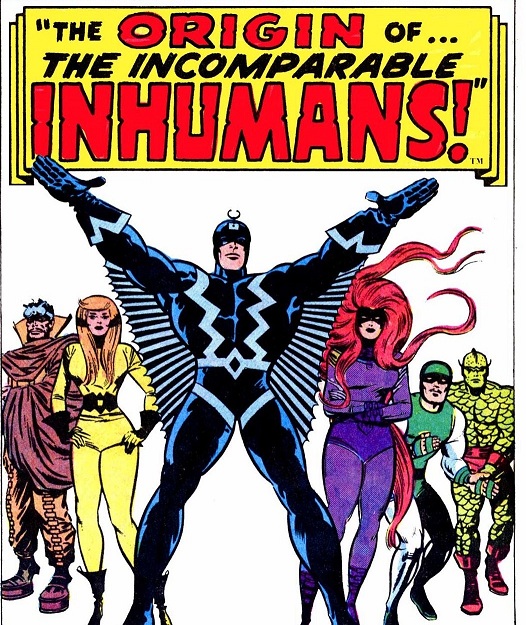
In other “Marvel’s Agents of SHIELD” news (or, more appropriately, rumor): So Skye’s an Inhuman? A lotta folks on the Interwebs think so! Hmmmm……….
Sundiata Acoli Is Free!

Great news! (Boy, New Jersey is maaadd…… ;)) First , Eddie Conway, now Sundiata! 😉

