LOL! 🙂
Category Archives: music
My Root Appreciation of Earth, Wind and Fire’s Maurice White……

And Thinking of Music And Conscious Words…..
Back Home Listening To Imhotep Gary Byrd On WBAI (And Now, Simulcast On WLIB And WBLS) Again…..
….makes me think of the first time I paid attention to his voice 30 years ago, which was on this song on a cassette tape and the above PSA that I saw on New York local television.
I guess the PSA came as a result of the below.
Melki On Black Movies That Are Not Part Of The Blaxploitation Era
Well, Melki, you seem to have a lot of free time on your hands, so tell me what’s going on with you.
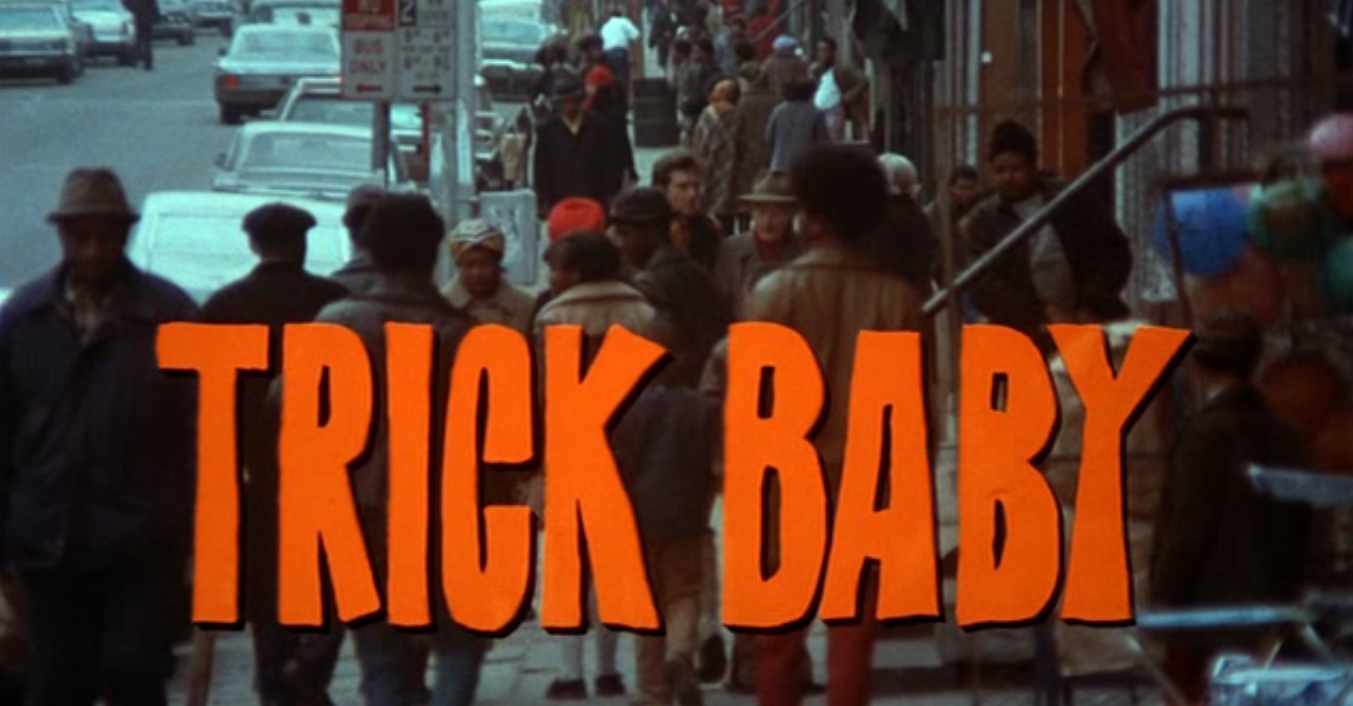
Watching the movie “Trick Baby” on Bounce TV and amazed how much better the so-called Blaxploitation films were in terms of addressing racism than an overwhelming majority of the black films of today. How much better the dialogue is and understanding of how the system of white supremacy is standing on our neck squeezing the literal blood out of our communities. When I watch Shaft, SuperFly, The Mack and tons of lesser known movies from the 70’s, I see human beings completely aware of their struggle and what they are struggling against and who. Most of all, you see that they are struggling to be accepted as human beings. They are not proving this to themselves but to the rest of the world. I recently saw Claudine again with James Earl Jones and Diahann Carroll and a young Lawrence Hilton Jacobs, we all remember from “Welcome Back Kotter,” and it was refreshing in that their humanity shined against the oppression they faced. They refused to bow down or scrape or question their value as a human being simply to survive. When we look at a majority of our movies over the past 30 years, they present many of the same struggles with a major, major exemption. They portray the vivid and beautiful struggle minus the structural oppression that subconsciously takes the lens off the true culprits that create and maintain so-called ghettos, Hoods, physical and mental. They don’t address the systematic oppression under white supremacy – they instead tend to focus on environment and the prejudices of the few. In Cornbread Earl and Me, the failure of Black Lives to matter and overt retaliation for presumption of our humanity was clear and front center, without transforming Negus into their often and always incorrectly used “worse enemy.” We shifted from Blaxploitation to Blockploitation.
Maybe Hollywood learned something and made it a point to no longer allow these types of films to exist for fear that if this generation reconnects the dots between art and protest, real change is possible? Or simply maybe American materialism has won over previous generations to the extent that they no longer saw the connection between art and protest except for a few exemptions such as Spike Lee, Haile Gerima and the conscious hiphop movement? Or just maybe these films exist but are banished to some artistic prison never to be shared among the masses? Regardless, there remains hope. Hope that we see in the massive mobilization my young people and students over issues like police brutality. More than likely, this generation gets it and more than likely we’ll have art that once again not only fights the power, but kicks the power’s ass! Overstand!
You act like you have discovered a hidden gold deposit.
Man, I had netflix and now have Amazon video and there are so so many movies from that era that are dope that most of the current generation including ours have never heard of. And the majority of them had a message about fighting the system. Some ain’t made so great but what moves me most about them is the dialogue. I don’t feel that way listening to whoever is writing these films nowadays except for a few ocassions. They talked to each other like Negus was intelligent and could go deep, not like they were 2 dimensional characters. And maybe that is it right on the head – a lot of the people writing and making the films had enough real experiences to talk. This is the way I plan to write my movies. Growing up in the projects, I never got the feeling that Negus was stupid. They was the smartest mawfukas I ever knew. A lot of movies nowadays go for the confused look as if a Negus don’t understand the why or hows of their situation, which I guess is dramatic if you want to stroll someone along because your plot is weak? You find yourself staring at the movie like why didn’t he say something? Like damn, if he actually responded intelligently in that scene maybe a few more intelligent scenes would have to be written and that might fuck up the cookie cutter – bad hollywood films for dummies step by step process! lol There are some great people out there, so I don’t want to lump everyone in together…this is an attack on Hollywood and reasons why we’ve got to at least find a way to create our own studios and creative space, which some say the ATL might actually become once all that residual money from reality tv, strip clubs and hiphop starts growing dividends for folks’ children! lol
As Amiri Baraka Is Remembered In Newark For The Second October In A Row, An Interesting Saying

I missed this because I was at the MMM.
Liked the below, from Ras Baraka’s Twitter account:
power reveals our limitations and trouble exposes our character
Four Reasons Why Minister Farrakhan’s Christmas Boycott Will Not Work (And Some Disorganized MMM Comments/Observations)
Boycott Christmas? I have to admit–that’s REAL Black and radical! LOL! 🙂
At the 20th anniversary of the Million Man March in Washington, D.C. yesterday, Nation of Islam leader Louis Farrakhan said it was a mass action Blacks could use to punish the whites who enslaved their Ancestors centuries ago and whose police shoot them down in the street today.
Here’s four reasons why what the Minister wants will be difficult to implement:
1) Yes, Black people have buying power, but they don’t have wealth. Black people spend money for the same reasons as every other group–to sustain themselves. And let’s be real: many Christmas gifts are practical items people seriously need.
2) Yes, Black people are angry about the public epidemic of police shootings. But historically, boycotts work when an aggrieved community decides collectively that their interests will be served by the group sacrifice. (See Montgomery, Alabama and Martin Luther King.) If there was an actual, practical end result that was measurable for Black people–an actual gain that, for example, would make them safe in the presence of the police–I believe the people would follow Minister Farrakhan and make the sacrifice. But if not, no.
3) Economic boycotts have to be well-organized. Is the NOI going to spend the millions in organizational support, media advertisements, etc., it would take to organize 40 million people in roughly 40 states? To do it right, it would have to be on the scale of a presidential election campaign.
4) Black people love Christmas–all of it. For many Blacks, all of the X-Mas traditions are as important to them as their churches. (It’s why Maulana Karenga, the founder of modern-day Kwanzaa, set up the holiday between Christmas and New Year’s as an alternative/substitute/supplement to it, because he understood the deal.)
What Farrakhan is asking for, and how he is talking about doing it, is admirable, but without the buy-in (if you forgive the expression) of a substantial part of Black America, the call has all the potency of, say, demanding statehood for the District of Columbia: maybe someday it will happen with a lot of struggle, but not today–and definitely not this Christmas.
*****
Near me a Sigma and a Delta brought their children, who sat on their child lawn chairs, eating and working on a puzzle book. Apologies to Sly and the Family Stone, but….
The Nation of Islam showed that it may be the first Black group to understand that youth must be served by publicly serving. The emcees–Tamika Mallory, a former youth leader for the Rev. Al Sharpton, Nuri Muhammad of the Nation of Islam (who talked about Black people’s war with police, which he called the “Blu Klux Klan” and also with “niggativity”) and upcoming leader the Rev. Jamal Bryant, were presented as emerging leaders, not “youth leaders.”
Farrakhan, 82, was a grandfather talking to his grandchildren. He said what the Nation and the crowd knew: “What good are we if we think we can last forever and not train the young to follow in our footsteps?”
“Do You Remember? / The 21st Night Of September/…..”
ANY excuse to post ANYTHING about EWF will ALWAYS be taken! So I was happy to see this article about this song! 🙂 Black Beatles forever!
Now, if someone could just write about EWF’s theme song (below), one of its most underrated songs (since the group considers “That’s The Way of The World” its “national anthem“).
SEPTEMBER 2016 UPDATE: This was GREAT! Thanks, Richard Prince, for showing me this!
Book Review: “Soul!” On Ice: New Book On Pioneering PBS Black TV Show Takes Pale Route To Find Africanized American Culture

It’s Been Beautiful: Soul! and Black Power Television.
By Gayle Wald (with photographs by Chester Higgins).
Durham, N.C.: Duke University Press.
288 pp. $25.95 (trade paperback).
This book understands the right story to tell—one of, in author Gayle Wald’s words, “a fragile alliance of liberal and radical interests, both public and private”–and, thankfully, arrives at the right places. “Soul!” (1968-1973), a nationally distributed public television program that could loosely be described as the radical sister of the more commercial “Soul Train,” fired the imagination and reflected the multi-faceted sensibilities of its Black community of viewers. Using largely untapped wells of research about the early days of American public television vis-à-vis Black America, Wald relates a nuanced story of how the condescension of white American public television officials seeking to provide an outlet for the angry Black community in the late 1960s led to a (largely) Black-controlled showcase of the Black Arts Movement on (largely) Black aesthetic terms. It is the restrained approach, however, of choosing as this book’s scholarship basis intellectual sources outside the “soul” of Black/African folks that makes this book strangely appealing and more than a little irritating.
“Soul!” (episodes of which can be found online) was first a product of Black insurrection. Reacting to that outpouring of anger and violence, white funders, somewhat accidentally, allowed a Black producer, Ellis Haizlip, to have his way. WNET-Channel 13 (now known as Thirteen), then and now the New York-based flagship station of the PBS collective, wanted a companion show to “Black Journal,” its Black newsmagazine. The initial and white idea of a “Black Tonight Show” developed under Haizlip into a Black Arts salon that was cooler than the “The Flip Wilson Show” and Don Cornelius’ large Afro. Wald wisely includes as much of Haizlip’s life story into this book as she can fit. (A documentary film on the “Soul!” producer, done by his niece Melissa Haizlip, is struggling to get funding.) The letters of support “Soul!” received are well used in Wald’s book; they show the involvement of the Black community instead of just describing the appreciation of an audience.
“It’s Been Beautiful” builds somewhat on Devorah Heitner’s “Black Power TV,” a pioneering 2013 intellectual narrative on the early days of East Coast Black public affairs television, and does so with great intellectual gusto. Wald, a professor of English and American Studies at George Washington University, rightly uses the New York-based “Soul!”—a program that would feature, for example, Nikki Giovanni interviewing James Baldwin or a studio performance of The Last Poets, or Earth, Wind and Fire—to find “a key TV text of the era or as a cultural project joined by common cause to 1960s and 1970s political struggles.” The show’s arc matches its era: Martin Luther King, Jr. was killed two weeks before the grant to create the show was submitted, and it was cancelled because PBS’ funders, facing the onslaught of the Nixon era and the fading of the Black Power movement, wanted to create programming that would have Blacks and whites interacting.
Chapters Three and Four—which dissect “Soul!” as a program, along with its performers and producers—are worth the price of the book alone. Wald does not shy away from explaining Black American culture in all its glory and anger. But she doesn’t seem to want to dig into the African, non-Western roots of what she is seeing and describing. She correctly emphasizes the ideological and cultural diversity of the performances, and explores the unity-without-uniformity cultural and political ideology present at the time, but doesn’t want to go in-depth into how Africans in America came to create those products and their ideas in a world drenched in white supremacy and anti-African-ness. Instead, Wald chooses to emphasize the gender and sexual orientation undercurrents of the visual text: “’Soul!’ created a television space where Black people—imagined to include Latinos of various hues who were seeking alternatives to whiteness, Black women marginalized by nationalist conceptions of both the public and private spheres, and Black gays and lesbians rendered as ‘unnatural’ and ‘freakish’—could see, hear and almost feel each other.” For example, she seems more interested in Haizlip’s negotiation of his public gayness than the undiluted African thought processes that produced him and his approach to Black art and the Black community. Wald is not ignorant of African-centered thought; she doesn’t think it’s intellectually relevant enough to examine when quotes from Black Arts Movement stalwarts will do.
The 21st century public television landscape is deeply complicated in ways that this book’s bell-bottom era forecasts. The fact that, for example, on “The PBS NewsHour,” one will find in 2015 occasional in-depth discussions of African and African-American artists and their work is the realization of public broadcasting’s assimilation goals. (After reading Wald, the cross-cultural appeal of PBS’ “Tavis Smiley” could been seen as a page out of a memorandum written by the 1970s PBS executives.) And the 2015 decision by the Sesame Workshop to sell first-run rights of “Sesame Street” to premium cable outlet Home Box Office shows that funding and producing these non-commercial programs are still challenging, even for PBS’ signature programs. So Wald accomplishes with her detail the goal of all scholars: to be both historical and current.
Wald’s and Heitner’s approach to analyzing Black media—focusing on the televisual performance and its socio-political and socio-cultural implications, grounded in European-approved disciplines of American (film) studies, (Black) feminism, queer studies, et. al.—provides both a fascinating read and important scholarship. (Anyone interested in continuing their newly-established tradition should seriously consider studying PBS’ “With Ossie and Ruby,” an almost-forgotten treasure of a Black cultural container similar to “Soul!” in important ways. A study from those perspectives would be fascinating, and perhaps a scholar will one day attempt it.) Ultimately though, Black people need scholarly narratives of these Black cultural television programs from the unapologetic point-of-view of African-centered thought and philosophy.
Music That Never Leaves My Mind :)
Since it’s the soundtrack for the commercial about Eva Mendes’s clothing line, which has been on TV EVERY weekday evening for MONTHS.

