
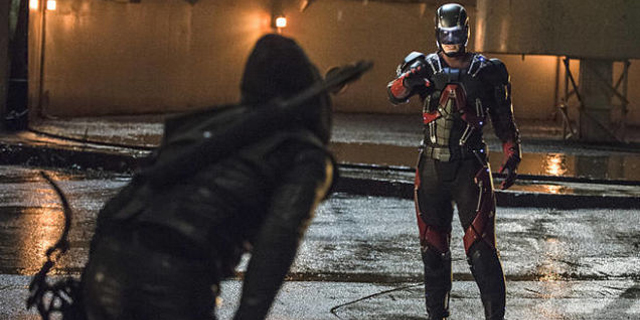
(And Hawkgirl, too, huh? Boy, these folks at the CW are very confident!)

Thanks to this show and “The Flash,” Tuesday is now my favorite day of the week!

Enjoyed this. Enjoying even more that neither she nor Playboy are backing down from it.
The following is most of the race exchange.
AZEALIA BANKS in April 2015 Playboy (Pages 105, 126)
PLAYBOY INTERVIEWER: Rob TannenbaumPLAYBOY: Is there someone whose career you want to emulate?
BANKS: Jay Z. That’s the only person I have my eye set on. The race thing always come up, but I want to get there being very Black and proud and boisterous about it. You get what I mean? A lot of times when you are a Black woman and you’re proud, that’s why people don’t like you. In American society, the game is to be a nonthreatening Black person. That’s why you have Pharrell or Kendrick Lamar saying, “How can we expect people to respect us if we don’t respect ourselves?” He’s playing that non-threatening Black man shit, and that gets all the white soccer moms going, “We love him.” Even Kanye West plays a little bit of that game—“Please accept me, white world.” Jay Z hasn’t played any of those games, and that’s what I like.
PLAYBOY: If people read your Twitter account and don’t like you, is that because of race?
BANKS: It’s always about race. Lorde can run her mouth and talk shit about all these other bitches, but y’all aren’t saying she’s angry. If I have something to say, I get pushed into the corner.
PLAYBOY: And whenever you point out that discrepancy, someone on Twitter says, “Why are you making this about race?”
BANKS: Because you motherfuckers still owe me reparations! [LAUGHS] That’s why it’s still about race. Really, the generational effects of Jim Crow and poverty linger on. As long as I have my money, I’m getting the fuck out of here and I’m gonna leave y’all to your own devices.
PLAYBOY: Do you want to leave the U.S.?
BANKS: Yes! I hate everything about this country. Like, I hate fat white Americans. All the people who are crunched into the middle of America, the real fat and meat of America, are those racist white conservative people who live on their farms. Those little teenage girls who work at Kmart and have a racist grandma—that’s really America.
PLAYBOY: If people don’t like you, does that mean they’re racist?
BANKS: No, not at all. There’s misogyny, and then there’s something called misogynoir [a term coined by writer Moya Bailey to describe “the unique ways in which Black women are pathologized in popular culture”]. We have all these stereotypes in society: The gay man is a faggot and he’s over-the-top, or you’re an untrustworthy cracker, or you’re a loud Black bitch. All these things exist for a reason, you know what I’m saying? Yeah, I am loud and boisterous—
PLAYBOY: And you are Black.
BANKS: And I am Black, and I am a pain in your ass. But I’m not really talking to you, and that’s what makes these people mad. You’re not invited to this conversation. This is not about you.
PLAYBOY: This has been an issue ever since hip-hop spread outside New York City. It’s a Black art form that’s subject to being critiqued by people who don’t understand it.
BANKS: When you rip a people from their land, from their customs, from their culture—there’s still a piece of me that knows I’m not supposed to be speaking English. I’m not supposed to be worshipping Jesus Christ. All this shit is unnatural to me. People will be like, “Oh, you’re ignorant because you don’t speak proper English.” No. This is not mine. I don’t even want this shit, so I’m going to do whatever the fuck I want to do with this languages. I’m going to call you a fag or a cracker or a bitch.
PLAYBOY: Are you writing about these topics in your songs?
BANKS: No, not in the songs. I get annoyed with the fact that I’m even asked to explain myself. Why do I have to explain this to y’all? My little white fans will be like, “Why do you want reparations for work you didn’t do?” Well, you got handed your grandfather’s estate and you got to keep your grandmother’s diamonds and pearls and shit.
PLAYBOY: Haven’t you put yourself in the position of explaining yourself?
BANKS: No, y’all put me in the fucking position.
PLAYBOY: You don’t have to want to talk about it if you don’t want to.
BANKS: But I want to talk about it!
PLAYBOY: Then keep talking about it. They’re aren’t enough musicians who talk about the issues you bring up.
BANKS: You’re not paying attention. There are plenty of intelligent musicians. Kanye West, J. Cole, Ariel Pink, Lauyrn Hill, KRS-One, Q-Tip—lots of people. I’m not special.
PLAYBOY: Do you agree there are more artists who don’t talk about it than artists who do?
BANKS: Of course.
PLAYBOY: Then we agree.
BANKS: No, we’re not agreeing. We are absolutely not agreeing. I get upset when people are like, “Why don’t you just make music?” What would happen if I couldn’t sing? Then I’d be another Black bitch to y’all. It’s really fucking annoying. Black people need reparations in this country, and we deserve way more fucking credit and respect.
PLAYBOY: Are your creative impulses closely related to your destructive impulses?
BANKS: Yes. In my adulthood I’m having to destroy all these things society really wants you to think. The history textbooks in the U.S. are the worst if you’re not white. “The white man gave you the vote. He Christianized you and taught you how to speak English. If it weren’t for him, you’d still be living in a hut.” I could write a book about why Black people shouldn’t be Christians. Young Black kids should have their own special curriculum that doesn’t start from the boat ride over from Africa. All you know as a Black kid is we came over here on a boat, we didn’t have anything, and we still don’t have anything. But what was happening in Africa? What culture were we pulled away from? That information is vital to the survival of a young Black soul.
PLAYBOY: You said that Black people aren’t supposed to be Christians. What religion do you identify with?
BANKS: I don’t want to say, but I’ll tell you about one form of the religion. It’s called 21 Divisions. When they brought the slaves over to the Caribbean, they syncretized all their African gods with Catholic saints. So in 21 Divisions there are Black gods and goddesses, and my mother practiced that when I was little. Whenever problems happened, we turned to 21 Divisions to fix it. It’s funny, because my friends would be on the block in Harlem, their mothers would be like, “Oh, you fucking with that witchcraft. You working roots.” You can cleanse people with root work or do bad things to them. But 21 Divisions in celestial.
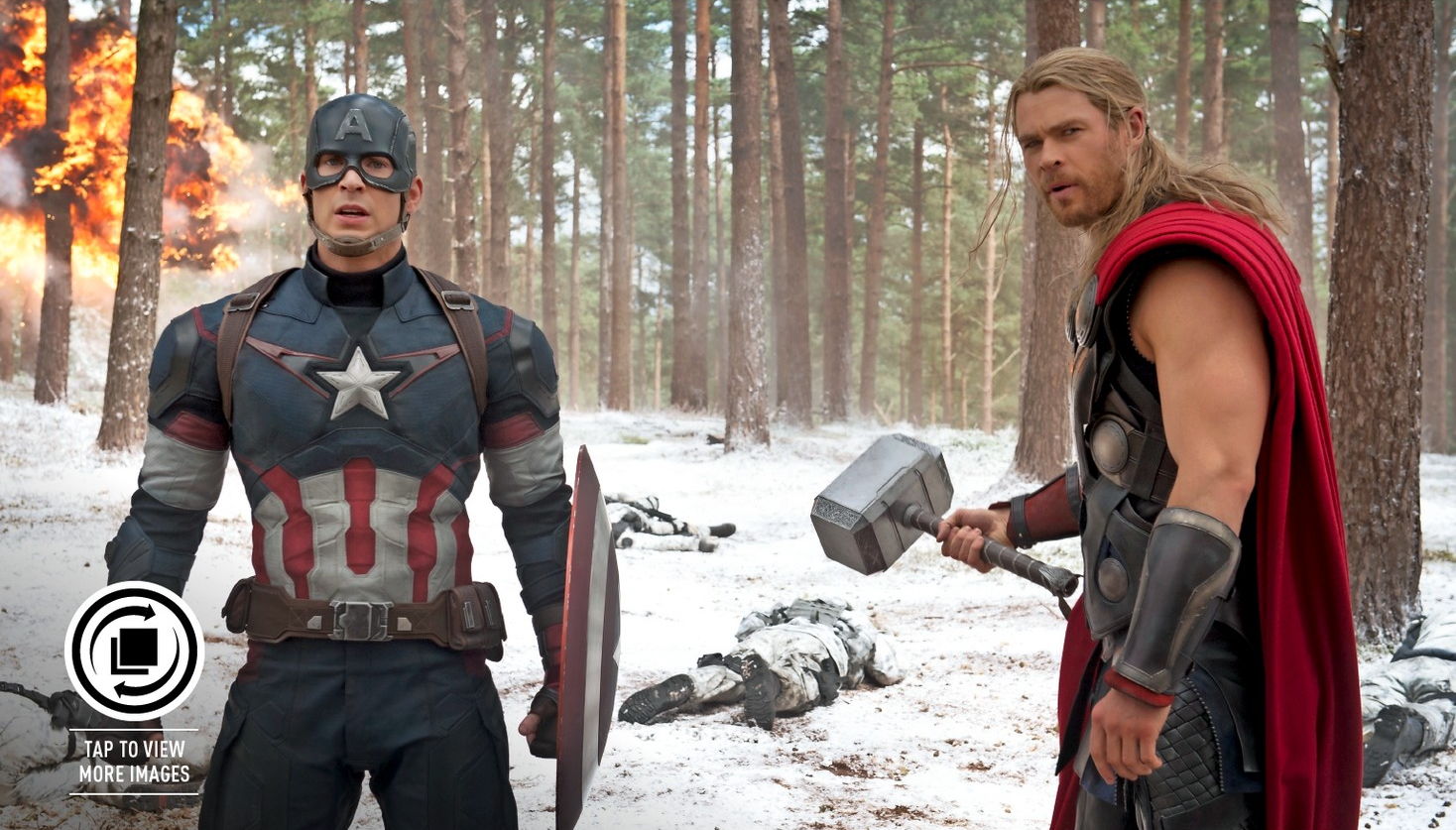
This might be my last posting of this type because I think I finally have accepted the very funny truth: there is a superhero press, and they work everyday like I used to do!
As the TV spots increase, I am getting more and more excited for you-know-what a little more than a month from now! (The “SNL” parody is making me keep it together. As well as the fan stuff. The GREAT fan stuff!)
Meanwhile, movie news and TV news–spinoffs?–abound. New, new, new, new, new. (And people to remember.)
(Related aside: Still recovering from that “Spider-Man” movie deal.)
More and more info. The news and rumors—and random thoughts and previews and images (and more images)–are faster than Quicksilver! Who’s interested in joining Marvel? There’s a new Jubilee? How diverse are the new Avengers in the comics? Who’s getting new costumes? Who has signed onto the Suicide Squad movie?
And even more fun stuff! How do Marvel and “Doctor Who” cross over? (And did I mention how good the fan stuff is–really good?)
After that cool “Suicide Squad” animated movie (trailer below), I’ll take any version! LOL!
And tonight’s big fight:

Selected Letters of Langston Hughes.
Edited by Arnold Rampersad and David Roessel with Christa Fratantoro.
New York: Knopf.
423 pp., $35 (hardcover).
If he were alive today, Langston Hughes would have tried to write this book review as quickly as possible. He had bills to pay (and loans from friends to pay back), so he leapt into the plays, novels and short stories he had to write. Meanwhile, an ever-mounting pile of correspondence awaited him to sort and answer—which he did, often into the late night and early morning.
Luckily for Hughes aficionados, that lifetime’s worth of letters were regularly shipped, from 1940 until his 1967 death at the age of 65, to Yale University’s James Weldon Johnson Memorial Collection of American Negro Arts and Letters. (The idea for the collection was Carl Van Vechten’s, the man history identifies as the white champion of the Harlem Renaissance.) It’s from that massive Hughes output—thousands of letters that date back to 1921, letters that eventually filled 671 boxes—that the reader can see the artist at work.
And it’s almost mostly just his work schedule—with a smattering of self-opining and sometimes-frank opinions of his fellow artists thrown in—that’s absorbed from this comprehensive survey. Hughes’s definitive biographer Arnold Rampersad and literature scholar David Roessel, with help from independent scholar Christa Fratantoro, chose the letters that give as much insight as the often-intangible Hughes chooses to reveal. His most frequent communications, according to this assemblage, were to his literary agent, Maxim Lieber, his publisher Blanche Knopf (the matron of the publishing house that is celebrating its centennial with this book and a re-issue of Hughes’ first-and-still-classic 1926 poetry collection The Weary Blues), his friend and quasi-patron Noel Sullivan, and his best pal and writing partner, Arna Bontemps.
In this book, which mightily struggles to be more than a work ledger, Hughes is almost constantly at work, writing anything from quickie children’s books to newspaper columns to his two autobiographies, 1940’s The Big Sea: An Autobiography and 1956’s I Wonder as I Wander: An Autobiographical Journey. Sadly for the general reader but semi-happily for Hughes, the master poet had a near-obsession with writing a successful stage musical, which would have given him the financial security that eluded him his entire struggling-against-being-a-vagabond life. His attempts to fight being fleeced by racist white producers and playwrights are as tedious as they are outrageous.
Hughes kept everything that interested him. He followed Black newspapers and magazines with great care, and kept track what those periodicals were saying about Black artists, especially him. Periodicals were Hughes’ lifeblood: he sold many short stories, poems and essays to Black magazines such as The Crisis and Phylon and white magazines such as Esquire. Irony abounds in Negro life: Hughes’ Chicago Defender Op-Ed column hit book and stage musical paydirt for with his creation of the character Jesse B. Semple (“Simple”), but The Defender, now having access to cheaper, white columnists, wanted to cut the little he made from it.
With the exception of the musical producers and, not insignificantly, the McCarthy witch-hunters who tried to destroy him in the 1950s, these collective letters display a man’s need to be loved and needed by everyone. He is always attempting anthologies (especially for African writers) and is ceaselessly encouraging his fellow scribes, especially younger ones that he proudly claims as his discoveries, like Margaret Walker (Alexander) and, later, a young Alice Walker (“She is really ‘cute as a button’ and real bright…Mine is her first important publication [and her first story in print], so I can claim her discovery, too, I reckon,” he writes to Bontemps in 1966). For the most part, he holds back his anger and his hurt, and tries to put a positive spin on almost everyone, even the younger, angrier writers—James Baldwin and LeRoi Jones—who criticize him in his later years. The personal outlook matches the professional persona well, since Hughes had to depend on the largesse and kindness of many, many friends and associates in order to survive. The letters are his day-to-day-reality-as-performance, but his romantic life, his sexuality, his personal needs are permanently off-stage, not for even semi-public consumption.
Rampersad’s high biographical standard continues to hold. The annotations alone—of people, places end events that populate Hughes’ almost-countless adventures and misadventures around the world and around New York City—make it worth the time it takes to go through his life, one thought and one year at a time. The introductions to the chronological sections show the trio of writers at their concise, detailed best.
This book can be read on its own, but it is the perfect companion to either of Hughes’ autobiographies, Rampersad’s two-volume biographical magnum opus, or even just a collection of the artist’s poetry. It’s not too obvious to say it is a fantastic addition to the bookcases filled with Hughes’ writing and Hughes scholarship. It is a must for those who want a peek behind the curtain of a Black artist, but don’t need to see too much.
*******
APRIL 11th UPDATE: An earlier version of this review was printed inside here.

……is here.

Okay, big news, but no real surprise here. Real wheeling-dealing!
(I feel bad for the “Amazing Spider-Man” folks, since I guess it means that it’s all over for them, their coming plotlines, sequels, spinoffs, etc. The other losers–for a while–are hardcore fans of “Black Panther,” which now has been moved to 2018. Really, all the movies have been moved back one slot.)
This means he can join the coming “Civil War” movie adaptation (where, in the comics, he unmasks) and basically be in everybody’s movie, like Black Widow.


