How I Met Your Monster: Some Quick Thoughts About “Get Out”

daniel-kaluuya-as-chris-and-allison-williams-as-rose-in-get-out

Chris uses cotton to stop the brainwashing. This film is filled with interesting historical turn-around tidbits like that.

I like the idea of a horror version of “Guess Who’s Coming To Dinner.” Having white people take the next logical step in their Black fetish was frankly, refreshing to see on-screen, as was the Black hero not being afraid to take out the (white) monsters the way monsters need to be taken out.

Milton “Lil Rel” Howery not just stole every scene he was in, he took them hostage and killed them all after the ransom was delivered.

A psychological sci-fi/horror film, simply done but, contradictorily, with great thought behind the non-complexity.

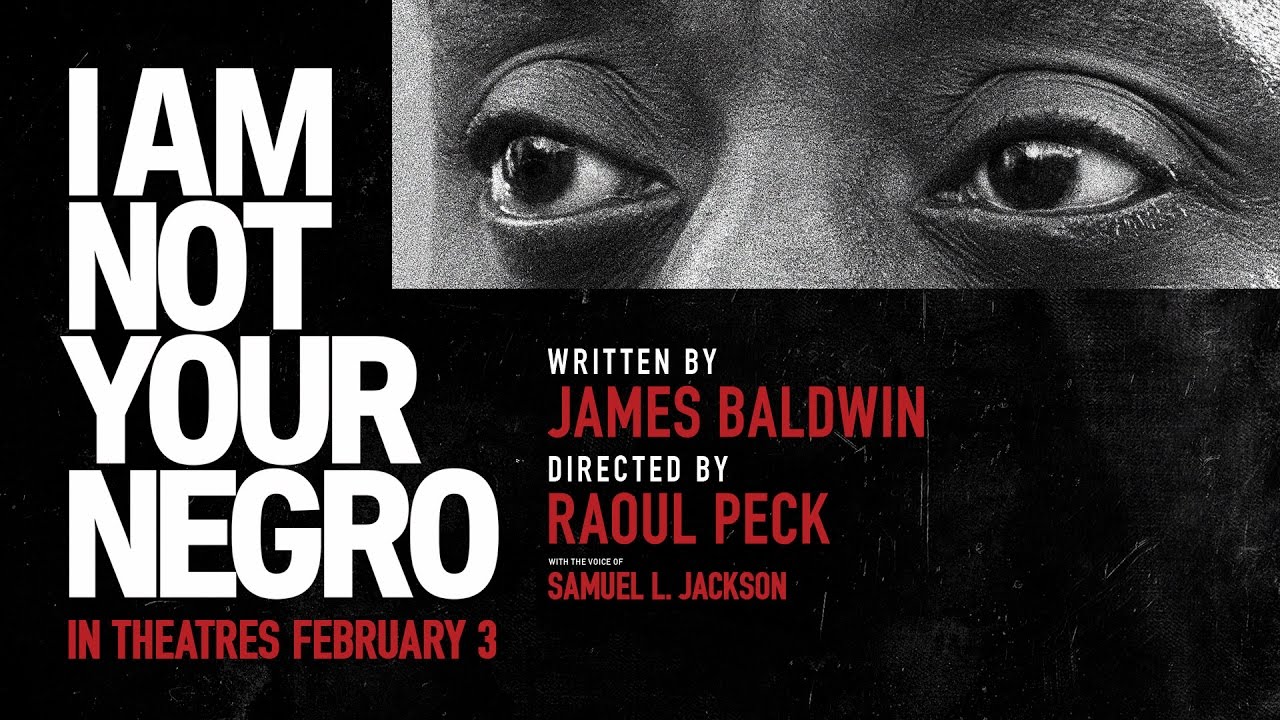
My Day At The Movies: “I Am Not Your Negro” And “Chapter And Verse”

james-baldwin-negro

I celebrated my birthday six days early by going to the movies. Raoul Peck’s “I Am Not Your Negro” and Jamal Joseph’s “Chapter and Verse” were on the Black indie bill.

Peck is my kind of Black artist. All I really know about him is that he made “Sometimes in April,” “Lumumba” and now this. For me, that’s enough.  The Haitian filmmaker used the access he got from James Baldwin’s estate well: he was able to use the outline of one of the writer’s unfinished works, “Remember This House.” Using that piece was an interesting choice, because it meant that the film was not about Baldwin, but about that outline’s subjects: Medgar, Martin and Malcolm. Peck takes that outline and Baldwin’s many recorded interviews and speeches as a base and, with the help of narrator Samuel L. Jackson, seamlessly expands into the essayist’s seemingly entire body of work. America and its mythologies are explained in ways that, yes, cliché though it sounds, are still relevant today. (His and Peck’s quick, time-travel dismissal [sort of] of the Obama years was amazingly well-done; in 40 years, Baldwin scoffs, mocking Bobby Kennedy, “if you’re good, you can be president.” And the Obamas flashed on the screen, symbolic of the instant they occupied, before the film returns to the struggle.) Peck, in full control of his “missing” Baldwin (audio)book, shuttles back-and-forth in time so smoothly that, for an instant, the viewer is confused which period she inhabits; a black-and-white Trayvon Martin fits well into the historic flow. For a writer who used the words “frightening” and “terrified” so much, Baldwin was actually quite fearless. He could say that whites acted like monsters, like he does here, and somehow can get away with that. I miss that level of courage in Black people today. Peck, who succeeds in salvaging and presenting that heroism, pushing it into the Trump Era, has the kind of intellectual clarity that Baldwin would appreciate.

hc-jamal-joseph-harford-library-20160607

I guess Joseph would wince and give me the side-eye if I said “Chapter and Verse” was (just) “Boyz ‘n’ the Hood” for the millennial generation, starring a new-jack Socrates Fortlow. But that’s what it is, and there is nothing wrong with that. Joseph wants the entire Black community to be his audience, so he has something for everyone: for youngsters who crave ‘Hood violence, check; older people who will identify with Loretta Devine, who anchors this film, check; images of historic Black leaders in the background (are they sad angels, witnessing the 21st century Black dysfunction?) for the “conscious” filmgoer who knows he’s watching a film about Harlem done by a Black Panther, check. It’s the sum of its parts, no more and no less. And that’s far from a crime. It’s ambitious only in its theme that the survival of the many takes real planning and real sacrifice by the few.


My Five Screen Portrayals of Nelson Mandela, From Best To Worst

bet-madiba

I had tried to avoid seeing BET’s “Madiba,” because I was afraid of it being really, really bad. I caught parts of it last night and was pleasantly surprised. Laurence Fishburne will die giving some great performance somewhere.

(Dear BET: I’m sure I’m in the minority here, but the little I saw last night made up for six hours of “New Edition” 🙂 Yes, I will relectantly admit it was a supergroup, but still….. SIX? LOL! I turned it off after the group sang “Can You Stand The Rain.”)

Anyway, the little I saw of “Madiba” last night was the Mandela that I had read about.

It made me think about how many times I’ve seen Madiba portrayed on screens big and little over the last 30.

Here are my five Mandela portrayals, from best to worst, with small commentary:

  1. Idris Elba in “Mandela: Long Walk To Freedom:” No shade on Larry, but I wish he had been in this BET one! His movie did not really deal with the socio-political aspects of his story, but he did a LOT with what he had.
  2. Sidney Poitier in “Mandela and DeKlerk:” A cable TV film that should be seen more. (So, shhh…check it out :))
  3. Danny Glover in “Mandela:” Another forgotten cable TV film. (Shh…. :)) I remember falling in love with Alfre Woodard and Winnie Mandela at the same time because of this production. It’s important to point that this film was made during the Reagan administration, when The Powers That Be publicly considered Mandela a terrorist and many of the anti-apartheid protesters thought he would die in prison, sparking a South Africa race war.
  4. Morgan Freeman in “Invictus:” In a way, this should be higher, because Freeman’s portrayal of Mandela the reconciliation president matches the actor’s on- and off-screen assimilationist persona.
  5. The worst of the Nelson Mandela depictions was not hard to figure out. Beyond a shadow of the doubt, it would have to go to Terrence Howard (!) in “Winnie Mandela,” an extremely flawed film based on an extremely flawed book. (However, Jennifer Hudson’s extraordinary performance as the title character almost salvages the flick.) I struggled not to laugh out loud watching Howard, who, to be fair, was giving it his best.


Un-Hidden Figures, Slightly Broken Fences

hensen

I was bombarded with Black images today, both subtle and powerful. Did a double-feature this afternoon—“Hidden Figures” and “Fences.” The former, part of a new trend of “Black History Month Movies” (I am old enough to remember when these kinds of films were only on HBO) made me choke up, while the latter had me in that August Wilson hypnotic state, where his never-ending flow of working-class words arraigned in profound ways continue to fill the mind until you can’t take any more.

“Hidden Figures” did a good job turning a not-so-routine job transfer from a smaller office into a bigger one into a Civil Rights march. It was a very patriotic movie; I guess it helps greatly if your movie on Black excellence is also about John Glenn and NASA. So this is the Henson Black moviegoers have known about for two decades and white people have not been able to stop talking about for the past two years! For the first time, really, I was attracted to her, and yes, it had everything to do with those glasses and the idea that this film was the closest Black America ever had to having its own version of “A Beautiful Mind” without the mental illness. She and her co-sisters displayed with great power their controlled rage of a unprivileged class. I was interested in how much that film was about their discrimination being gender-based. I kept wondering if that emphasis was part of the story, or was it Hollywood’s way of making everyone (reading: white) comfortable. Comfort and humor were sprinkled throughout this film, and both work.

fences

As for “Fences,” I have only wanted to see this play for 30 years; I am quite grateful for this movietelling. I couldn’t stop thinking as Denzel did his best, How did James Earl Jones did it? I bet he sounded louder, angrier. Viola Davis to me is that Black actress who nails down the “Black woman holler” thing, but she is a rainbow of feeling. Denzel had real challenges, the biggest one being making this play—where the camera almost never leaves the house and backyard—as a movie, a moving picture. He keeps the camera on the words, and hopes that you feel enough to compensate for the lack of visual narrative.

What is great about 2017 is that the dam holding back all of the positive images seems to be more cracked than ever. Yes, only the acceptable images are out. No, the more radical parts of the African-American experience are nowhere to be seen. No, we can’t have one of these “Black History Month” movies without a major white actor headlining (the camera seems to find Kevin Costner whenever it can, like it did when Indiana Jones was in the Jackie Robinson flick). But I must admit it was an absolute joy to be able to finally watch Taraji Penda Henson, Viola Davis (who now needs no more, ah, “Help” to get some more statues 🙂 ) and Octavia Spencer without having to flinch. And Janelle Monáe owns the screen like she’s been acting her whole life. More, please. And I hope Denzel follows through on his goal of producing the remaining un-filmed plays of the Black American Shakespeare (yep, I said it!).

10:59 P.M. EST UPDATE: Congrats to Viola Davis!

46-Word Review of “Star Wars: Rogue One”

untitled

“Magic Negro” in “Star Wars?!?”Booo…… And what about all those people of color on the suicide mission to help the white girl?!? WTF?!?

Other than that, it was very good (not being sarcastic), and I was fascinated by the digital Peter Cushing and Carrie Fisher.

(Here’s Peter Cushing from “A New Hope”:)