My only other Fantastic Four. I am in mourning for this show’s demise already. I miss arguing with it, laughing with it, being simultaneously flabbergasted and confused by it. We shall not know its like again.
Category Archives: american history
“Black Panther: Wakanda Forever” Trailer
New Book On Lerone Bennett Jr. Out Now!

I put my request in tonight, and I can’t wait!!!!


Black Power Media Discussion of New Book On Mumia Abu-Jamal
#MumiaAbuJamal #LoveNotPhear #40CitiesForMumia
Monday.

This Marvel Zombie Is In Deep Denial About This Being His Favorite Superhero TV Show [Update: Not Named “Ms. Marvel”] :)
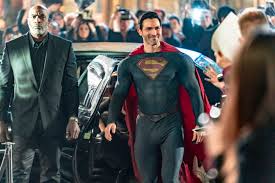
#supermanandlois #superman&lois
Lana (finding out that Clark is Superman and talking about how he took his sweet time coming back to Smallville after he abandoned her to find his way to the cape): Did you ever love me?
Clark: Oh, Lana, of course I did.
Lana: (PAUSE) Just not enough.
I was determined to hate this show when it premiered and initially I was successful. A Superman TV narrative without Metropolis, The Daily Planet, etc.? A re-tread of Smallville? Superman with a brother? No. This ain’t the Thor movies.
But almost two full seasons in and after me pretty much memorizing Season 1, it’s clear this is the best Superman TV show ever. And that’s not easy, since there’s 70 years’ worth of truth-justice-American-way-TV to evaluate (including the very-good, just canceled homage show Naomi). The message of this well-written, well-photographed show–if you don’t take care of your family, every part of it, and do the hard work of sustaining that care every day, your family and you will fall apart–is clearly articulated by its expert use of nearly 100 years of Superman lore.
Lana will heal because she’s not jealous of Lois; she has her own beautiful and loving family to fix. And that’s the point of this show. Everyone’s busy keeping their family foundation solid. It be hard.
The best compliment I can give this show is that the only Marvel TV shows I ever put on loop are Disney+’s WandaVision followed by Daredevil. So for the CW’s Superman and Lois, a proud and strong DC product, to join that ranking is fantastic.
My Latest Book Review, On Radicalism And Technology,…..
….can be found here, right below the above discussion on Black Power Media!
On This “Free Comic Book Day,” We Honor And Thank George Perez

One out of every 10 classic superhero graphic novels I own is done by him. A life of extraordinary achievement by a man who, from all public accounts, was a nice, kind person.


“You Know Because You Read The AFRO!” To Gayle King And Others Like You: It’s Really Okay If You Just Lie Next Time :)
Writing this while reading Richard Prince’s Journal-isms column that has people reacting to the idea that CBS’ Gayle King, one of the nation’s top Black journalists, did not know about the lives and work of Ethel Payne and Alice Dunnigan.
Admittedly, I’m not an average person when it comes to the Black press, so I can’t relate. As a ’80s teenager, I read Ethel Payne in real-time in the newspaper I started my career at, The New Jersey Afro-American! (“You know because you read THE AFRO” was the newspaper chain’s motto 🙂 ) My Afro’s Op-Ed page was “national,” not local, and so that meant it was added on to local editions like ours by the Baltimore headquarters. Payne had an Op-Ed column there, “Behind The Scenes.” And because the Black press is so self-referential, whenever she was honored, they’d tell her history. At 22, I had also read the 2nd edition of Roland Wolseley’s The Black Press, USA, a flawed-but-important book that shaped my decision three decades ago to become a Black media historian. Of course it mentions her, as does later a much better general-history book written by historian Clint C. Wilson II.
Yeah, I wish prominent Black people in public would stop being so honest about their ignorance. 🙂 Not knowing something and being rich and famous means you don’t have to know it, right? This means that Gayle King has never regularly read historic/legacy (20th century) Black newspapers!
It’s one thing when David McCullough admitted in 1989, as he did in his PBS’ American Experience intro on William Greaves’ Ida B. Wells film, that he didn’t know who she was, but another when one of us does it!
Don’t think our young Black journalism students are not peeping that because I’ve taught them at HBCUs and I know. (And this is part of a larger, systemic dumping of all media history classes because of J-schools’ well-funded digital focus. When I last checked, Maryland, my grad alma mater, stopped teaching journalism history as separate classes years ago.) Sadly, this public omission proves Gen Z’s irrelevancy point from its perspective.
P.S. Prince reminded me of this, so they’re really little room for excuses.
 Drums in the Global Village