(I hated the comic, because I thought the characters were just serving the story, not their own established personalities. But the movie characterizations of Cap and Shellhead have done a GREAT job prepping me for it!)
NOVEMBER 2nd UPDATE: And just a reminder how far we’ve come….!
Huge. (Maybe even a Guardians of the Galaxy-Avengers crossover!) Excited over this now-classic storyline ever since it was teased at the post-credit scene of the first Avengers movie.
GREAT NEWS! We’ve only been waiting 25 years for this, ever since the pre-“Blade” Wesley Snipes used to talk about it!
(But is it now the rule that Chadwick Boesman has to be the lead in EVERY Black movie?!? If they can test out little-known Australian actors for Wolverine and Thor, why not an unknown or little-known African actor?)
What? The third instalment in Marvel’s Captain America franchise will see Chris Evans reprise his role as Steve Rogers/Captain America. He will be joined by Robert Downey Jr’s Tony Stark/Iron Man.
When? May 6, 2016 – “coincidentally” just six weeks after DC’s Batman vs Superman: Dawn of Justice.
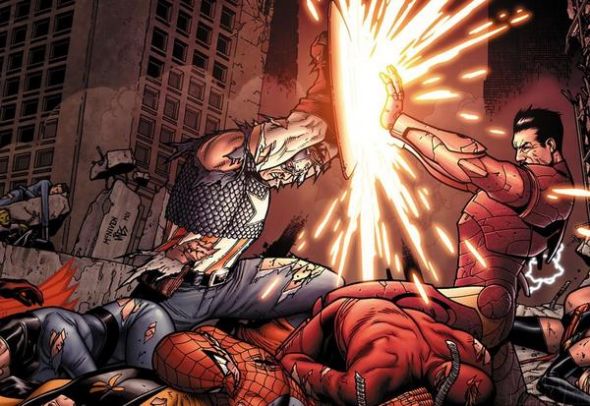
Need-to-know: The title Civil War is taken from a series of Marvel comic books written by Mark Millar, published between 2006 and 2007. In the Civil War storyline, which touches on themes surrounding freedom, security, and the conflict between the two, Captain America and Iron Man come into conflict over a new superhero registration act. Iron Man supports the act, while Captain America opposes it. Given the subject-matter, expect cameos from a number of Marvel superheroes: the studio has already confirmed that the film will contain the first-ever appearance from Chadwick Boseman’s Black Panther.
Doctor Strange
What? The Marvel superhero Doctor Stephen Vincent Strange is a former neurosurgeon who goes on to become the “Sorceror Supreme”, a mystical guardian protecting the Earth from other-worldly threats. The character, created by Stan Lee and Steve Ditko, first appeared in a Sixties Marvel comic book, Strange Tales.
When? November 4, 2016
Cumberbatch? To date, Marvel has made no official casting announcement, but Sherlock star Benedict Cumberbatch is reportedly “in final negotiations” for the role.
Need-to-know: Strange is basically a magician. But one who can do real magic. He can even fly, thanks to his Cloak of Levitation. In the comics, he begins life as a selfish, egotistical character (although to be fair, he is also a brain surgeon). After a car accident damages his hands, leaving him unable to perform operations, Strange begins a journey of self-discovery, leading him towards becoming the Sorceror Supreme. Comic book stories have seen the character tema up with various well-known Marvel heroes, including some variations of the Avengers line-up.
Guardians of the Galaxy 2
What? Peter Quill/Star Lord, Gamora, Drax, Rocket, and Groot return in the hugely-anticipated sequel to James Gunn’s hit 2014 film. Gunn is set to write and direct.
When? May 5, 2017
Need-to-know: Gunn has hinted that he would like to see additional characters from the comic books join the five existing on-screen Guardians in the sequel, telling the website Screen Rant: “One of my true hopes is that we can have at least two women in the next iteration of the Guardians … that we can break this thing of having one women in every [Marvel movie]”. The director then added: “Although I must say, I’m not sure what sex Groot is”. Fans are also hoping that the identity of Quill’s mysterious, non-human father will be revealed in the film.
Thor: Ragnarok
What? Chris Hemsworth will reprise his role as the titular Norse God in the third instalment of Marvel’s Thor franchise. Tom Hiddlestone will also return as Thor’s (adopted) brother, Loki. In the comics, Ragnorak is a cyborg clone of Thor. The character was introduced by Mark Millar and Steve Mcniven in 2006, as part of their Civil War series (suggesting that the Ragnarok storyline may be set up in the 2016 film Captain America 3: Civil War).
When? July 28, 2017
Need-to-know: The film will follow directly on from the events of Avengers: Age of Ultron, and is being described as one of the “key films” of Marvel’s new slate. Expect game-changing events.
Black Panther
What? Created by legendary comic book writer-editor Stan Lee and Jack Kirby, Black Panther, also known as T’Challa, first appeared in a 1966 Marvel comic, and was the first black superhero to ever appear in a mainstream comic book franchise.
When? November 3, 2017
Need-to-know: A description of Black Panther, leader of the (fictional) African nation Wakanda, reads like the most unlikely personal ad ever. A fiercely intelligent scientist and technology genius, with a PhD in Physics from Oxford University, the character is also one of the wealthiest men in the world. Black Panther’s mystical connection with the Wakandan Panther God grants him a number of powers, including superhuman speed and agility, and super-developed senses. The charcter will first appear in Captain America: Civil War, and many fans expect to see him eventually fighting alongside the Avengers.
Captain Marvel
What? Captain Marvel’s “human” name is Carol Danvers. Originally a member of the US Air Force, in the Marvel comics Danvers becomes Ms Marvel after surviving an explosion alongside the male superhero Captain Marvel, and subsequently gaining superpowers. In July 2012, Danvers assumed the mantle of Captain Marvel. (The original male Captain Marvel is dead – or as dead as possible in comic book world.)
When? July 6, 2018
Need-to-know: In the comics, Danvers’ powers include superhuman strength and durability, and the ability to fly faster than the speed of sound. The on-paper version of the character is blonde-haired and blue-eyed, but there’s no guarantee that Marvel will replicate these traits on-screen. At present there’s no casting news for the film, but popular fans choices include Emily Blunt, who has turned down roles in other Marvel films in the past, and Battlestar Galactica’s Katee Sackhoff.
Inhumans
What? In the Marvel comics, the Inhumans are an isolated race of superhumans, originally created after an alien race carried out experiments on humans. Exposure to the Terrigen Mist – a mystical vapour that confers superpowers upon individuals – enhances their abilities.
When? November 2, 2018
Need-to-know: Most of the comic book plot lines are centred around the Inhuman royal family: King Black Bolt, his wife Medusa, her sister Crystal, Black Bolt’s scheming brother Maximus the Mad, Karnak, Gorgon, Triton and canine Lockjaw. While the film will take place within the Marvel Universe, most fans are expecting the franchise to avoid too many overlaps with Marvel’s existing Avengers storyline. The scope for power struggles and political scheming within the Inhuman court has led some observers to speculate that the film may be a “superhero Game of Thrones”, while others are expecting to see something more akin to the X-Men films.
Avengers: Infinity War, Part 1 and Avengers: Infinity War, Part 2
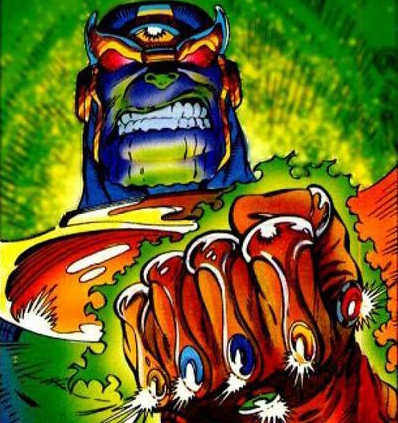
What? The third and fourth instalments of Marvel’s Avengers series, these two epic films will see the team of superheroes continue the war against Marvel arch-villain Thanos. Judging by the film’s title and a short clip shown to the audience yesterday, Thanos will gain control of the all-powerful Infinity Gauntlet (created from the six powerful infinity gems). Judging by recent comments from Marvel Studios President Kevin, who has said that “the [Avengers] roster is altered by the finale of [Age of Ultron]”, it also seems likely that the film may feature an all-new Avengers line-up.
When? May 4, 2018 and May 3, 2019
Need-to-know: Feige has described Avengers: Infinity War Part 1 as “the beginning of the culmination of everything that has come before”. It feels likely that the second film will conclude with the destruction of Thanos. But whether or not it will mark the end of Marvel’s existing Avengers franchise remains to be seen.
And so superhero-moviegoing continues into my 50s, God willing! LOL!
Here’s one opinion about this week’s news. And here’s another.
Writing about Newark, N.J. is always a profound thing for me, even when it’s something as small as that Root Q+A. As I’ve said before: Newark is its own ghetto, not the ghetto section of a major American city. (So if you sing and dance, you gotta cross the river.) Standing for it is not like standing for, say, more historic places like the southeast ward of the District of Columbia or Harlem or the Southside of Chicago or most of Detroit. The difference is (white) people care about those places (or at least acknowledge they exist!) because they are major parts of a larger, prestigious white whole. Because of that geographical, historical and cultural fact, your very relative, conditional worth in those areas is already assumed. Newark, in constrast, is only worth, say, a major book if (and only if) The Washington Post discovers something it finds interesting, or a privileged white boy wants an adventure in order to understand something.
So when a native who has privilege and talent chooses to work hard to earn the respect and trust of and, subsequently, status from people who have none of the third and never will, it’s significant. Folks in my home ghetto don’t get rewarded for serving each other. (No one even sees them, because, as part of the New York City metropolitan area, they live every day in the shadow of the most prestigious ghettos in the world. Quite an oxymoron, I know!) And when those Newark servants die, they don’t get remembered by The People Who Remember. They only get loving memorials by folks who, from the outside, are themselves not deemed worthy of memory.
I’ve been watching “The Trials of Muhammad Ali” on loop over the past few days. It’s probably the best portrayal of the Nation of Islam that’s going to be done this decade by a white documentary film crew.
In one of the commentaries, the filmmakers admitted they saw their film as a prequel to “When We Were Kings.” (OCTOBER 29th UPDATE: By the way, this month is the 40th anniversary of that fight.)
I wrote the following essay and transcribed the subsequent, and untitled, presentation from Dr. Vicky Gholson for a book I haven’t published yet. Gholson was 64. (Those who want to contribute to her funeral costs, please go here.)
G IS FOR……
“The artist is involved in creative processes which foster independent thought and action. He or she is feared by those who have no command of these processes…The problem is between those who control the creative process and those who control the money. The latter would rather destroy the former than co-exist.”
(Photo by Yvette Marie Morgan. Used with permission.)
When you are young and read a lot of books and watch a lot of documentaries, you think that all the amazing people in life have come and gone before you showed up. That you’re too late to see something really special with your own eyes. Something powerful, and true, and maybe a little idiosyncratic. I had to move away from the New York metropolitan area and read hundreds of books, many of them by or about geniuses, to realize that I had seen one, and knew her quite well. Vicky Gholson, Ph.D. Vicky of the Village of Harlem. She has had me confused, confounded and amazed for 25 years now.
She is a product of Harlem—the real one, the one that was unquestionably the Capital of Black America, of Garvey, and Malcolm and Hughes and Baldwin and Hurston and….. And how do you follow all that up? By staying true to who brung you, who loved you and taught you into being. For her it was “those activists from Cuba, Panama, Alaska…those who had shed blood and sacrificed for my people….They take first position of my life.” She means that. Harlem is her root; the tree of Black America’s fruits—activism, jazz, learning, growing. She has been around the world, but she refuses to culturally leave the block. She can talk with intellectuals but is not at home with them. Like an old-school Japanese businessman who purges himself of Western influence when he arrives at his doorway, she removes herself of all that doesn’t come from her when she returns to the village. Her personal growth does not depend on outside influences and outside approval. She is herself alone, but is not alone and not lonely, because she has embraced and fortified the family she has always had.
Hughes lived for poetry. Baldwin lived for fiction and his family. Dr. Gholson lives for teaching and learning. It is at her core. She examines, cajoles, critiques and points forward, but at core she believes the purpose of interpersonal communication is to preserve and revive personal and community values and to decontaminate the African(-American) intellect. As a media specialist, she sees the psychological damage done to African children by mass communications (“a multi-billion dollar attack”), and fights back with her entire life. She has spent her career pushing for higher levels of consciousness, but warning that reaching there requires a higher level of responsibility, a higher level of give-back.
What do geniuses do? What are they like? From my reading, geniuses go their own way; have great accomplishments, have their own era. So for almost 40 years after receiving her doctorate in Mass Communications, Dr. Gholson has lived her life naturally. It could be characterized as an artists’ life. She paints and speaks and produces murals and renovates her brownstone with her own two hands (she was making many statements by doing that) and sculpts and produces radio documentaries and writes screenplays and works in film production and… And she does all of it on her own terms, and accepts the consequences of that. Communication and community come from the Latin “commis,” meaning “a common sphere.” She makes sure her art—her sphere—can reach the common sister or brother. She fights to retain the integrity of Harlem against Columbia University and its expansion beyond so-called “Manhattanville.” She has a community garden for senior citizens. She hosts a block party for The People nearly every summer.
“The set-up has to be designed for our kids. We know what makes them happy, and we know what confuses them. We know what causes them pain, and we know what makes them want to know more…We’ve got to begin to create forums where folks from generation to generation come together. As technology has expanded, so must we in terms of a collective effort.”
She has always sought to connect generations. In 2012, she is balancing holding down the historic fort while walking with the new. The technology to implement her doctoral dissertation—on experimental learning among generations—is finally here, but now she, like all of us, has to fight the dehumanizing aspect of the tech. Power dispersed to The People or The Powers That Be more concentrated, more in control, than ever? Her board game, “Harlem USAll,” was designed years ago to try to bridge generations, to force people to share information, history and culture in ways that will stick. She is trying to generate an internal impact greater that the mind control alphabet of ABC, CBS, NBC, CNN, and on and on. It is her way of lighting the candle instead of cursing the whiteness. She had explained all of this to us, decades ago, when we were mesmerized by mid- 20th century toys—radio, TV, newspapers, etc. The principle was the same. You (African) cannot afford the distraction. You cannot afford the detachment. The stakes are too high in a world in which the African’s former (?) captors own all the brainwashing tools, all the “programming.” Now we are addicts in a iPhone world of individual-based distraction, soon to be multiplied across generations.
“I have not played the white game, I have not played the Black game…Art must replace formula. This will not happen until the true spirit of creativity replaces the Almighty Dollar, craftspeople replace staffers, opportunity replaces The Ol’ Boys Club and humanity replaces stereotype. We have no choice but to become involved in helping to create such a transformation….”
How free does a person, particularly a non-white person, particularly a non-white female, get to be in America? Hughesroamedthe world but never had a damn dime. Baldwin, too, traveled lonely roads before buying a home in France and occasionally occupying it. Dr. Gholson has not had the housing problem; elders, children, students, artists drop in, say hello to “Mom” (her mom), and Mom then searches the house for her.
When you decide to defy America and capitalism and take the ultimate freedoms—to keep your own counsel, to use and own your own intellect for your own purposes and, ultimately, the freedom to lease yourself—you are labeled, on a good day, a maverick and a nonconformist. (Nonconformists are just folks who have made the discovery and nurturing of their own identity central to their maturation process.) Harlem has produced many examples of such nonconformists. Baldwin tried to find himself through the world from the perspective of his church, rejecting the brainwashing but embracing the language, the symbolism, the love ethic. Hughes, like Baldwin, loved the Harlem streets, but needed to see all the world’s streets and all people living there. So Baldwin leaves scores of essays and novels that made the reader identify with his inner conflicts and challenges. Hughes’s smile hid his rage, so you have to read carefully his poems and his Autobiographies, the latter of which are really journalistic travel-adventure tales with the undercurrent of anger between the pages.
Dr. Gholson is the freest person I know. She is at constant war with other’s cynicism, which she feels is the easy and lazy way out of confronting what Cornel West continuously calls the tragicomic nature of the African-American experience . She is angry at ignorance. And elitism. And yes, racism and the other isms. She is impatient that so many people have to grow up—as in, realizing they are not the only residents on Earth—before they can listen to her and allow her to change their thinking into something more conducive to their true nature. (See, because the best nonconformists have not only examined themselves, but, more importantly, accepted themselves, they are a little ahead of the curve.) This makes her sound as impatient as she is. She understands and rages at the unfairness at all of the resources belonging to those at the beginning of the adulthood process. So her talents are occasionally leased to The Alphabet Boys, but not at the expense of herself. There exists, then, a permanent impasse, one she accepts with as much honor as she can muster against the dishonorable. She knows she is representing people who won’t get to say the things she does, people she correctly sees of at least equal worth to those holding the titles, degrees, pacifiers and rattles.
All of the energy within Dr. Gholson can be hard to take by the uninitiated. So nonconformists like her—who challenge your very being if you are not comfortable enough with yourself—are often on the outside looking in. It helps, though, when, like Baldwin and Hughes, you are a public artist. Hughes wrote poetry and read it in front of audiences, and penned a newspaper column for The Chicago Defender. Baldwin wrote essays and made his life into a living missive, one he was constantly articulating out loud. Dr. Gholson is a public artist who has a favorite expression—as in, mediation of the Spirit World between her, her audience and the Ancestors. It is the presentation of entertainment. She absorbs it like trees suck in carbon dioxide. Entertainment to her—particularly entertainment produced by Africans—is the quickest and most powerful connection to the Source of All Things. So she knows the history of entertainment and its social and political development. She views its necessary deconstruction as essential to balance the ego and the prism of the intellect. (Reality-checking the intellectual and celebrity life of paper and pen, camera and mike is a priority to her.) She points out that since any and all gifts come from the Ancestors and the Universe, not you, being selfish and self-absorbed is out of the question.
Home must be Harlem for her, because anybody that free will have great difficulty in finding shelter of any kind, particularly at today’s psychic rates. So she is a living reality check, making sure you are in your right mind, because she is determined to live and die in hers.
“People keep trying to make me into a senior citizen. And I’m not having it!”
Baldwin was openly lonely, even publicly so. Hughes loved being the life of the party to hide his inner loneliness. But Dr. Gholson believes in the “we” taught to her by those who were alone, not lonely. They were alone because they said “No” to the forces that would sweep them into alien-ating success. The kind of success that separates you from the block and makes you want to hate your people because, in Baldwin’s words, “they failed to produce Rembrandt.” So now, one decade before the centennial of the Harlem Renaissance, Dr. Gholson is somewhere doing the Electric Slide in the middle of her block, in the middle of her block party, in front of the house she built up from the inside, smiling and making sure that everyone understands that we are not alone, still all of us in this together.
Dr. Gholson has given me permission to use as her response to my essay an excerpt of her opening comments from the “Media and Social Activism” panel, part of the 2012 Manning Marable Memorial Conference at Columbia University. The panel was held on Sunday, April 29th, at Riverside Church in New York City.(Note: This panel was the only one at the conference set aside for critics of Marable’s deeply problematic Malcolm X biography, “Malcolm X: A Life of Reinvention.”) Aside from Gholson, the panelists were Dr. Lez Edmond of St. John’s University, a member of the “brain trust” of Malcolm X’s Organization for Afro-American Unity, and Dr. Jared Ball, a radical journalist and media activist, radio show host and associate professor of the Department of Communication Studies at Morgan State University. Herb Boyd, a well-known journalist, scholar and historian, moderated. To see the full panel, go to Saswat Pattanayak’s site, radicalcamera.com, at this hyperlink: http://radicalcamera.com/manning-marable-conference-video .
Thanks, everybody, for coming out this afternoon. I’d just like to start by saying that the fact that the organizers of this conference gave credence to this panel, I’d like to congratulate them. At no time should we as a people use methodologies to silence those who critique the family. That should never happen. The discourse between all of those who participate in the struggle is extremely important. What we cannot allow is for outsiders to determine who the stars are. That is criminal.
And that is part of the reason that we find our constant evolution, our native intellect—our youth being assaulted in a multi-billion dollar attack by media—that is the reason our progress is constantly interrupted. It’s interrupted out of fear. It’s interrupted because there are people who cannot understand how we think, and why we come to certain conclusions. It is why and our genius is written off and put into tracking systems, based on who can apply or not apply cognitive skills appropriately—“appropriately” being European standards. It is why when we reach certain social levels, we are not allowed to talk about race. It is why we are not allowed to celebrate our accomplishments and celebrate our people.
So today I want to be very clear. These are my statements. And my statements come from the manner in which I was reared. I was reared by family—my immediate family. I was reared by all my mentors in my Harlem community, from which I grew. I was reared by activists who came from Cuba, from Panama, from Alaska, and they all looked like me. I am reared and mentored by those who have proven, shed blood and sacrificed for my people They take first position in my life. I make no apologies, none whatsoever, for those who want to be a part of my life, and my family’s life—my total family’s life.
But you prove yourself when you enter a family, and you know when to step away when members of a family are discussing business. And it on us to make sure that those lines are clearly defined.
Why am I saying that? Because it is to be understood why Brother Marable’s work would skyrocket into a Pulitzer. Because his base, at the end of his years, was here at Columbia University. An institution, originally King’s College, which rewards the containment of anything that is not for the perpetuation of the standards that this country was established.
So let’s us be very clear. And let us not go after each other. We criticize, because out of the criticism, out of that intellectual struggle, comes a higher level of consciousness. And, therefore, we reach a higher level of responsibility of what we have to give back.
Let me mention a little bit about give back. We are under a multi-billion assault in terms of mass media. Anyone who realizes that needs to begin to say that out loud. It is not a normal attack; it is a psychological attack. Mass communications, as we know it, comes out It comes out of the military in this country. That is how it was created. It was created for three reasons: one, to wash money, two, as propaganda and psychological control, and three, to mold—not to influence—public opinion. Once we understand that, then we can qualify our anger when those around us receive money and rewards for the production of those products which we know are in direct contradiction to the existence of our people….
Mass media and the development of mass communications in the academic system of this country is a very pivotal place for us to look at. It has assisted in polarizing the academic, the scholar and the researcher. It has developed in a way so that the children in a mass public school system can be undermined and, therefore, be taken out of the natural appreciation for the work that goes into nurturing a people intellectually and psychologically. A multi-billion dollar attack that begins during World War I. It creates a whole psychology industry, and this industry has influence on mass health, particularly mass public health, in this country, as we know it. Those were jobs that never existed before.
And that’s what we have to begin to look into that, in terms of creative economies that come out of mass education. Let me give you an example. You take psychologists and you put them together with Madison Avenue. You create a Children’s Television Workshop, which happens over a cocktail conversation. You make it the Number One learning experience for children, for three to four generations. But, in doing it, irresponsibly, you utilize every marketing technique that Madison Avenue uses to sell product. Thereby, you have created three generations of children who, of course, are going to:
Gravitate towards electronics, which bombards the central nervous system;
Be attached to material possessions via the electronic medium, and
Be removed from of the history of ethnic populations.
That sounds a bit heavy. I know some of you are thinking, “How could you throw Big Bird under the bus like that?” But where “Sesame Street” excelled, and brought three generations now of children into learning, electronically, at the same time, because we did not put the checks and balances in, we now have three generations of people who are crass materialists. And the responsibility of that falls on the home, the community and the nation at large.
It is not an accident that we have a generation of children who are not test takers. That’s not an accident; it’s been programmed. And that’s okay! It’s okay to not being able to take a standardized test. But the responsibility to the adults in the scholarship population now is to devise tests to retrieve information in the same way. As people of color, we know this from Day One because we are oral and visual learners. To repeat information that has been given to you is in contradiction to the manner in which we have been brought up as a people. So, therefore, our people have had to learn how to take standardized tests. In order to be truly responsible, we have to figure out how to construct the instruments that will allow us to calculate what has been learned and what has not been learned. And we have to start soon.
Mass education and mass media are the two primary means for which we nurture our young in our country…..and it’s the one struggle we have not been able to penetrate. There is no reason with the enormous amount of intellectual capacity we have, the people we have put through colleges, the people we have who have received outstanding achievements, that we don’t have our history in the public and private school systems, from pre-K through college.
Our children will learn it, hopefully, if our communities are not decimated, because you cannot teach everything in school. So when the community fails, it does not support the parents (or whoever has playing that role to the young people in a community) in the nurturing of children.
The reason I say that is to say to our academics, the scholars, to all who have achieved on the higher education level: In order for us to sustain and protect themselves as a race of people, those kids are going to have to learn and respect the accomplishments, and the discipline behind them, of what has taken place before them. And there has been a multi-billion dollar construct to be able to dismantle every single intellectual discipline that’s necessary for them to be able to do that. And I just want to start there. Because I do believe that we need to focus on where our struggle is. And it is with our kids.






 Drums in the Global Village