Category Archives: world history
Obsessed With Muhammad Ali At The Moment
I’ve been watching “The Trials of Muhammad Ali” on loop over the past few days. It’s probably the best portrayal of the Nation of Islam that’s going to be done this decade by a white documentary film crew.
In one of the commentaries, the filmmakers admitted they saw their film as a prequel to “When We Were Kings.” (OCTOBER 29th UPDATE: By the way, this month is the 40th anniversary of that fight.)
Still Recovering From…….

My Root Article On Mumia Abu-Jamal……..

………..is here.
OCTOBER 24th UPDATE: Mumia speaks some more.
OCTOBER 29th UPDATE: And some more.
NOVEMBER 1ST UPDATE:
Another ‘Mumia Rule’
[col. writ. 10/22/14] ©14 Mumia Abu-Jamal
Anyone even remotely familiar with my case knows about the ‘Mumia Rule’. That’s when the court or agency changes its rule or precedent to go against me.
When Amnesty International wrote about my case, that was it’s essential focus: that laws and precedents that applied to other cases, would be changed when it came to me..
In fact, when my habeas corpus case went before the Third Circuit Court of Appeals, one judge, in dissent (Judge Ambro) essentially said, ‘I know of no reason why we don’t apply our precedents to Abu-Jamal.’
There was one reason: The Mumia Rule.
Now, the Mumia Rule has been enacted into law, the so-called Victim Revictimization Act, signed into law by unconstitutional Tom: PA Governor Tom Corbett.
What makes this remarkable is that Corbett, a former attorney-general, knows perfectly well that this is an unconstitutional law, in violation of the 1st Amendment to the Constitution. An unconstitutional law is like no law at all. He knows this for he’s a lawyer first.
Interestingly, he’s so much a politician, that he was busy running for governor when, under his very nose, children were being raped and abused in the Penn State scandal. As attorney-general, he was on Penn State’s board of trustees at the time these rapes and molestations were happening, and did next to nothing, until the scandal broke.
Oh-he reportedly received a generous contribution from the Chairman of the Board and members, and Jerry Sandusky, the central figure in the Penn State scandal.
Nice job, Tom. Too busy picking up campaign contributions to protect the kids?
Every politician and every lawyer who supported this so-called law did so by knowingly violating their oath of office to ‘protect and defend’ the PA Constitution, Art.1; Section 7; and the First Amendment to the United States Constitution.
They took an oath to honor the constitution – not their campaign contributors. They took an oath to protect the constitutional rights of all Pennsylvanians – not just their funders – the FOP (Fraternal Order of Pigs)
By violating their oaths they bring disrepute on their oath and office. By signing a law they knew to be unconstitutional they departed from the realm of lawmakers –and became constitutional outlaws.
They passed a Mumia Rule –yes- but the damage they have done is greater to themselves than to me.
–© 14maj
Don Rojas’ Speech To the CARICOM Reparations Commission Meeting
Presentation to the CARICOM Reparations Commission Meeting
Antigua, October 12-14, 2014
By Don Rojas,
Director of Communications and International Affairs, Institute of the Black World
Good Morning Ladies and Gentlemen,
Sisters & Brothers,
Friends and Comrades.
It is my singular pleasure and honor as a son of the Caribbean to bring you solidarity greetings from my organization, The Institute of the Black World 21st Century and from other organizations active in the growing reparations movement in the United States which has been inspired and re-energized by your collective work to advance the cause of reparatory justice for Black people and indigenous people throughout the Caribbean.
Moreover, the CARICOM Reparations Commission has breathed new life into the global Pan-Africanist Movement and your work has highlighted reparations as a key element on the international human rights agenda.
As our dear Prof. Sir Hilary Beckles has declared, reparations for 400 years African enslavement and native genocide will become the great moral movement of the 21st Century for people of color throughout the Americas and this historic conference in beautiful Antigua will help significantly to arm ourselves, both intellectually and spiritually, for the epic struggles that lie ahead of us as soldiers in a mighty army on the march for reparatory justice for our ancestors, for ourselves and for the generations yet unborn.
What you have done, sisters and brothers, in establishing national reparations commissions so far in 13 of the 15 nations of CARICOM and in adopting the ten-point program for a region-wide reparations movement is a truly remarkable and inspiring achievement. From my organization and from reparations activists throughout the United States we extend to you all much love and much respect.
Milestone event in Trinidad & Tobago
After experiencing a huge morale boost coming out of the World Conference Against Racism in 2001 in Durban, South Africa, the reparations movement in the United States was hit hard by the tragic events of September 11 just a couple weeks later with the bombing of the World Trade towers in New York and the ensuing months of hysteria and xenophobia that swept across the United States. The movement was forced to retreat in the wake of these circumstances and, unfortunately, slid into a period of dormancy that lasted for more than a decade.
And then came July, 2013 with a milestone event in Trinidad & Tobago, where the Caribbean Heads of government at one of their bi-annual summit meetings agreed unanimously to establish a CARICOM Reparations Commission to push for long overdue repair and restitution from the European powers who had engaged in the holocaust that was the African slave trade since the middle of the 17th Century. The startling news coming out of Trinidad hit the US reparations movement like a bolt of lighting. What a bold and audacious move on the part of these Caribbean nations that no one saw coming. Excitement spread rapidly throughout activist black America. This was not merely a breathe of fresh air but more akin to an unpredicted hurricane sweeping up the Eastern coastline of the USA from the tropical Caribbean.
Blowing North from the region that had produced 20th Century titans who had come to black America and had built mighty movements in the belly of imperialism and in the heart of white supremacy, giants such as the Hon. Marcus Mosiah Garvey, and C.L.R James; George Padmore and Malcolm X; Stokely Carmichael and Louis Farrakhan was introducing into 21st Century narrative a reparations idea that built upon the collective legacies of these giants and, as well, upon the tireless and often unheralded work of reparations pioneers like Callie House and Belinda Royall, and more recently Randall Robinson, author of the beautifully written book, “The Debt.”
You, champions of the Caribbean reparations movement, have thrown down the gauntlet and our organization and others in the USA picked it up and began moving with determination and resolve to start pumping new life into the US Reparations movement.
We at the Institute of the Black World quickly organized a Symposium on Democracy and Development in Africa and the Caribbean in Washington DC last October which was graced by the presence of the Hon. Dr. Ralph Gonsalves, Prime Minister of St. Vincent and the Grenadines who delivered a brilliant keynote address in which he spent a considerable part of his speech on the new CARICOM Reparations initiative.
A few months later in April of 2014, our Institute organized a national reparations forum at Chicago’s State University at which your venerable chairman, Prof. Sir Hilary Beckles delivered an electrifying keynote address before hundreds in a live audience and thousands more across the world viewing the live Webcast of the event.
Ta-Nehisi Coates’s ground-breaking essay
We then launched a special Reparations section of the Institute’s Web site containing a multiplicity of news reports, essays, commentaries, historical documents, videos, slide shows and other multimedia content. This reparations mini site continues to grow by leaps and bounds.
And then in June, the groundbreaking essay by outstanding young African American journalist Ts-Nehisi Coates entitled “The Case for Reparations” was published in the prestigious, mainstream US magazine, The Atlantic and the piece lit up the literary world, catapulting Coates into the realm of media super-star. The public response to the Coates essay was huge. The magazine sold out that particular issue in two days while the traffic on its web site broke all previous records. Coates had struck a nerve in both black and white America, which continues to resonate today across the country and the world.
Other young African-American scholar/activists like Michelle Alexander, author of the best-selling book, “The New Jim Crow,” which focuses on mass incarceration of young black men caught up in America’s failed War on Drugs, have called for reparations for the devastation wrought on African American communities across the country as a consequence of this so-called War on Drugs.
And then most recently on September 26th at the annual legislative conference of the US Congressional Black Caucus, Coates appeared on a reparations panel organized jointly by our Institute and the office of Congressman John Conyers, the dean of the CBC and the author way back in 1989 of HR 40, the landmark reparations legislation that has languished in the US Congress ever since. We say the time has come for the CBC itself and for members of the progressive caucus in the US Congress must seriously champion HR 40 so that it can begin to move through the byzantine committee processes and procedures that characterize the work of the US Congress.
A few years ago the US Congress issued a tepid apology for slavery and for the thousands of lynchings of black people during the post-Reconstruction period in US history but to date, no American President as chief executive of the US State, and that includes Barack Obama, America’s first black president. We hope that President Obama will find the moral courage and the intestinal fortitude (“cojones”, as they say in Spanish) to issue such an apology before he leaves office two years from now. But don’t hold your breath waiting for that to happen.
US police brutality fueled by white supremacy
Today, as this conference meets here in Antigua, thousands of young activists of color have gathered in Ferguson and in St. Louis, MS for three days of protests against the out-of-control epidemic of unjustified police killings of young blacks throughout the USA. Young black males are 21 times more likely to be shot by the police than their white counterparts.
This epidemic of police brutality is fueled by the sickness of white supremacy. And so, not surprisingly, among the demands of many of these demonstrators are demands for reparations to be paid to the families and communities who have lost hundreds of black youth to rampant police killings and to myriad other forms of police abuse and misconduct.
US reparations activists are today ramping up their activism in the streets. Two weeks ago the National Coalition of Blacks for Reparations in America (N’Cobra) demonstrated against Chicago-based US companies that had profited from slavery and coming up on Nov. 1, N’Cobra will leads demonstrations on Capitol Hill in Washington DC calling for reparations and for support of Rep. Conyers’s reparations bill, HR 40.
At the recent reparations panel at the CBC conference Ta-Nehisi Coates said and I quote, “White supremacy is not an invention of white people; white people are an invention of white supremacy, a false doctrine concocted by elitist European philosophers and statesmen to justify the exploitation and oppression of black bodies.
“Enslavement is not ancillary to American history but at its very roots. The enslavement of Africans is foundational to the United States, and it is tough to imagine this country without it. The legacy of that enslavement gave us a suite of policies that injured, and continues to injure people who are alive and well and living in communities all over the USA today.”
The claim for reparations is as old as the United States of America itself. The claim for reparations did not begin a century after the crime. To conceive of reparations as a claim against individual white people, as opposed to a claim against American society is fundamentally flawed. Reparations is a claim by the collective millions of black and brown peoples against the American state, a state that outlives its individual citizens, a state that enjoys a degree of permanence and transcendency” that individual citizens do not.
Coates, the brilliant young author of the seminal Atlantic magazine essay ‘The Case for Reparations’ is, by his own admission, a recent convert to reparations, has done more than any other single African-American in the contemporary period to resurrect the reparations issue and introduce the concept to a new generation of both black and white Americans.
In his recent presentation at a Congressional Black caucus panel on reparations Coates stressed that the process of “extraction” of wealth and opportunities from Africans in America has never been accidental but an ingrained and devastating dimension of the evolution and development of the American nation. If reparations are to be won, this reality must be an integral part of the dialogue.
He urged the audience not to be dissuaded by arguments about the feasibility or practically of the concept but to be motivated by the necessity to achieve justice.
Beckles’s riveting speech before Britain’s House of Commons
Speaking on behalf of Prime Minister Dr. Ralph Gonsalves, who was unable to attend the session, Foreign Minister Camillo Gonsalves provided a comprehensive historical background and rationale for CARICOM’s bold, unanimous decision to demand reparations from the former European colonialists for Native genocide and African enslavement. He stated that the demand for “reparatory justice” has become the cornerstone of the domestic and foreign policy of his country.
Then, in a tribute to Congressman Conyers for his leadership on reparations, Professor Beckles brought the audience to its feet by proclaiming a “Conyers’ Decade of Reparatory Justice” as a theme to galvanize the Reparations Movement in the U.S. and beyond.
Dr. Ron Daniels, President of the Institute of the Black World 21st Century, enthusiastically embraced Professor Beckles’ proclamation of a “Conyer’s Decade of Reparatory Justice.” He suggested that it is a powerful and appropriate theme to motivate members of the Congressional Black Caucus, civil rights/human rights, faith, labor, civic and fraternal leaders to recommit to promote HR-40 (House Resolution #40) in honor of the visionary and courageous work on reparations by Cong. Conyers, the Dean of the Congressional Black Caucus and the longest serving congressperson, black or white. We should also note here that Conyers is not only the author of the reparations bill but was also the congressman who introduced the bill to make Martin Luther King Jr’s birthday a national holiday in the USA.
Obviously moved by the many tributes and calls for a “Conyers’s Decade of Reparatory Justice, in his concluding remarks Congressman Conyers said that “this Reparations Forum has been the most substantive since I began introducing HR-40 in 1989. I expect great things as we move forward.”
CARICOM Reparations Commission to meet in New York
Dr. Daniels announced an agreement in principle for IBW to host an official meeting of the CARICOM Reparations Commission in the U.S. at a mutually agreeable time in the near future (possibly March or April 2015) in New York City.
We think New York is the most appropriate location for such a meeting, given that the largest Caribbean diaspora community in the world is concentrated in the greater New York City region, with over 2 million Caribbean people living and working there and also given that Harlem was one of the global centers of Hon. Marcus Mosiah Garvey’s Universal Negro Improvement Association and also the base from which Malcolm X, whose mother was born in Grenada, carried out most of his life’s political work.
In addition, Daniels used that occasion to announce the creation of an African American Reparations Commission based on the CARICOM model. This Commission will take up the task of formulating a US Reparations Program as a focal point for creating greater public awareness and a mobilizing/organizing campaign to advance the struggle to achieve Reparatory Justice in the U.S. After formulating a Preliminary Program, the Commission would conduct regional hearings for community review, comment and input before adopting a Final Program.
This African American Reparations Commission will be a representative and inclusive body of fifteen women and men beginning with the selection of organizations and leaders who have been in the forefront of the Reparations Movements in the USA over the years, as well as notable leaders who support the concept.
Immediately after the New York events next Spring, we also plan to organize a speaking tour for Prof. Beckles to visit a few key cities across the United States where there are substantial communities of reparations activists, the goal being to formalize relations of solidarity and collaboration between the Caribbean reparations commission and reparations advocates across the USA.
In issuing their joint call for scholarly papers on reparations these publications said, “African Americans should follow the lead of their sisters and brothers in the Caribbean and begin the serious dialogue to formulate our “Ten Point Program.”
The JAAH, The Black Scholar, and other scholarly journals are currently soliciting manuscripts that identify and explain how reparations payments should be used to advance the economic and educational conditions collectively for African Americans in the United States, especially the children and youth. These scholarly journals noted that The Ten Point Program for the United States follows the issuing of the “CARICOM Ten Point Program” formulated by the Caribbean nations and issued in March 2014.
In that same vein, as director of communications and international relations for the Institute of the Black World, I manage the day-to-day operations of the Institute’s Web site and we have created a special Reparations section on our site that’s filled with news reports, speeches, essays, commentaries, slide shows, videos and other forms of new media.
We intend to continue to build this section into an online hub for all things reparations and I’d like to invite all the national reparations commissions and committees that have been established in the CARICOM region to send us reports, statements, press releases, photos and videos and we’ll be happy to publish them on this ‘reparations hub on the Web’ that can be accessed from anywhere and anyone in the world with Internet connectivity.
Crimes Against Humanity
As a former director of communications for both the NAACP and the National Urban League, it would please me no small amount to see the two leading organizations of the US civil rights movement place the issue of reparations squarely on their agendas in the years ahead. I’m realistic enough to recognize that this is not probable in the short term but certainly not impossible in the longer term. What we achieved at the reparations panel at the CBC conference can help to nudge them in this direction.
Comrades, enlightened international public opinion is beginning to understand and appreciate that African enslavement and native genocide are crimes against humanity and as such have no statute of limitations and that demands for restitution, restoration, repair and renewal are right and just.
As we move collectively to globalize the reparations movement in the months and years ahead we must begin to understand the struggle for reparations today within the context of the struggles against globalization, for economic and social justice and for the establishment of a people’s New World Economic order, one that‘s in stark contrast to that which was set up in Bretton Woods after World War 11 by the imperial powers and which is maintained today by the IMF, the World Bank, and the so-called masters of the universe, the captains of global finance who rule the existing world order comfortably from their plush suites on Wall Street in New York, K Street in Washington and similar places in London, Paris, Frankfurt, Brussels and Hong Kong.
Dr. Julius Garvey, in his extraordinary presentation at the opening session of this conference, indeed in his manifesto, correctly situated the contemporary Pan-Africanist movement squarely within the anti-capitalist and anti-imperialist movements of our time.
There are many perceptible parallels between the super exploitation and forcible extraction of wealth from uncompensated slave labor that provided the surplus value upon which capitalism took hold and thrived throughout Europe and the United States in the 19th and 20th centuries and the unequal income and wealth distribution that prevails around the globe today.
Global economic inequality and reparations
Today, economists tell us that the global economy is more unequal now that it has been in 100 years. More and more wealth that is being extracted from the labor of billions of working people around the world and that includes black people in the Caribbean and throughout the Americas, is being transferred at increasingly rapid rates from the bottom 99% to the top 1% of society. This is the modern form of slavery, wage slavery, if you will.
This systemic exploitation is sanctioned and protected by regimes of unjust laws which favor the super-rich over all the rest of us; enforced and policed by repressive national security and surveillaince states run by small but extraordinarily powerful political and economic elites which are dominated by white males and which are accountable to no one and whose unchecked greed make a mockery of democracy.
Just consider this staggering statistic as I bring this presentation to a close—today the top 400 richest persons in the United States own more wealth than the combined GDP’s of 95% of the world’s nations. This level of unprecedented economic exploitation, if left unchecked, will lead the world into an abyss that none of us will recover from. We got a foretaste of this recklessness in the global financial crisis of 2007 and 2008, brought about by the ‘banksters’, none of whom have yet to be prosecuted for their crimes against humanity, yet all of whom have enriched themselves and their class to an obscene degree.
As Dr. Garvey said, capitalism today, in its obscene greed, is raping our planet of its natural resources, destroying its climate and endangering human civilization itself. This veneration and glorification of the so-called “free market” and the argument that there is no feasible alternative to capitalist economic development is bogus and is a white supremacist, Euro-American idea at its very core and it must be rejected by our economists, our public intellectuals and, most importantly, by our political leaders.
So what does widening global inequalities have to do with reparations? Because, the great masses of black and brown people around the world are the most acutely disadvantaged by the neo-liberal model of economics which has produced a few black billionaires in Africa and the United States while simultaneously increasing black poverty on the African continent and throughout the Americas. Neo-liberalism is nothing more than the ugly face of neo-colonialism. In neo-liberal economic thinking, human beings are mere commodities whose labor is bought and sold in the so-called “free market.”
What is needed, in my opinion, is for our Caribbean development economists and our public intellectuals to apply their talents and creativity to design alternative models that are driven both by objective social science and the traditional principles of African communalism and African humanism. And, these new models should be financed by the reparations paid to the Caribbean by the former European slave holding nations.
Our demands for reparations should be viewed as a critical component in a multitude of inter-related claims that we as people of color around the world must make against these modern-day slave masters, these tycoons of global finance, who are the direct descendants of the slave-holding classes of the European and American colonial powers who profited handsomely from the African slave trade of yesteryear and who continue to profit handsomely from the economic order of today.
Our struggle for reparations is not subordinate to any other struggle, should not be subsumed under other struggles but it should function as an equal part of a set of inter-connected struggles against neo-liberalism. This is not abstract ideology or radical rhetoric. This is a life and death matter, fundamentally an existential issue, for all of us.
To be sure, there will be ups and downs, zigs and zags as we push forward with the struggle for reparations in the years ahead. This struggle will be a protracted one but through the difficulties and the challenges that lie ahead let us be reminded of the classic admonition by the great African revolutionary Amilcar Cabral who said, “tell no lies, and claim no easy victories.”
Sisters & brothers, comrades and friends, I thank you again for the kind invitation to the Institute of the Black World to participate in this second conference of the Caribbean Reparations Commission.
You have taken important steps at this conference in Antigua to deepen the reparations conversations among professionals, government officials, academics and activists.
Reparations—the final stage of de-colonization
Now, you and we, are challenged to broaden the engagement in these conversations and debates to include the broad masses of our people and their representatives from the ranks of organized labor, farmers, youth, women, church groups, NGOs, civil society organizations, the Rastafari communities across the region etc.
Our discussions, debates and demands will be won, not merely by persuasive, compelling and eloquent legal, academic and moral arguments but ultimately by the collective power of our people, organized and mobilized into a mighty mass movement for reparations. Garvey’s UNIA is our shining historical precedent of such a global mass movement of black people. It was accomplished in the 1920s and 30s and it can and will be accomplished again in the second and third decades of the 21st Century.
With reparations, we have entered the final stage of de-colonization and we are now beginning the next stage of liberation for all of our region’s countries and for African-descended peoples throughout the Americas–from the Caribbean islands, to Costa Rica, Panama, Belize, Nicaragua, and Honduras in Central America to Harlem and Brooklyn and Chicago in the United States, to Brazil, Colombia, Ecuador, Venezuela, Bolivia, Peru and other countries in Latin America with substantial black populations, in fact, with well over 120 million black people living and struggling for dignity and a decent life throughout this Hemisphere.
“REPARATIONS NOW” should be the slogan that unites us. Not Reparations Tomorrow but Reparations Today, Reparations Now. This is urgent and we should not dilly dally.
And, finally, as we used to say back in the day when the Grenada Revolution, (that I had the privilege to serve from 1979-1983 as the communications director to the late Prime Minister Maurice Bishop)—we used to say at the end of every meeting, conference and rally–Forward Ever, Backward Never.
A Luta Continua!!
I thank you for listening.

The Sore Winners In Pennsylvania
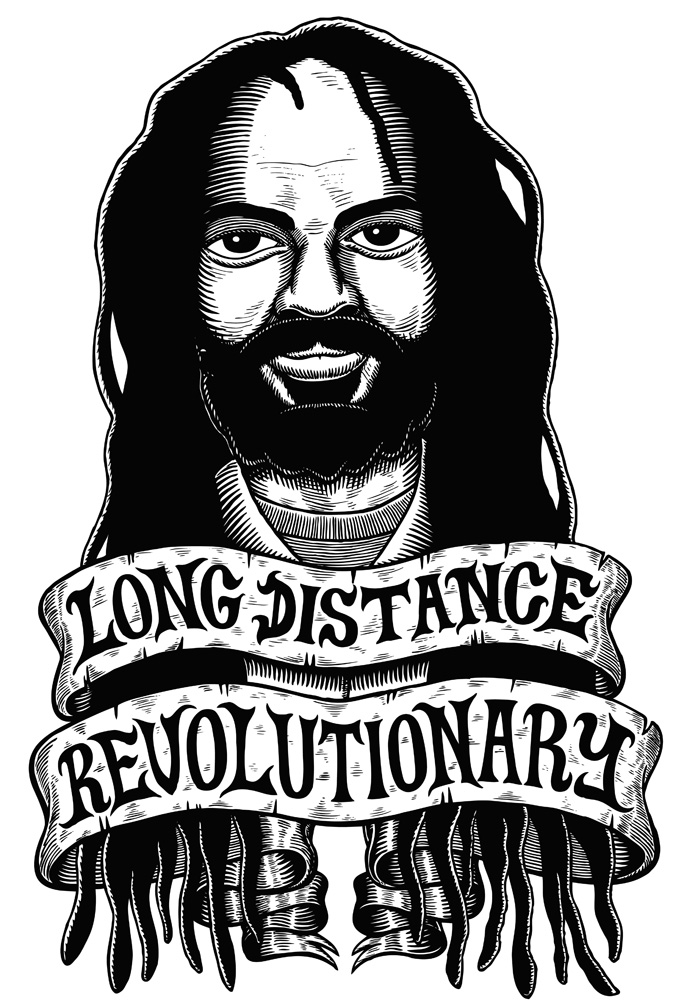
The people who have fought Mumia Abu-Jamal for 32 years (and won back then) won again a while back, and yet they still can’t enjoy themselves.
Below is Abu-Jamal’s statement to his supporters on his 60th birthday. He has been in custody since the age of 28, more than half his life.
His supporters have a point when they say that his opponents just want him dead. But the Abu-Jamal haters themselves took that off the table. So well into the 21st century, the former Black Panther Party member continues to write and speak. The fact that he is still alive–still conscious–rankles those who can’t destroy his presses, [OCTOBER 21st UPDATE] so…..
“Trangression: Whose Booty Is This?” Panel
Thought this was a nuanced discussion.
Asante Sana, Ali Mazuri….
…..for giving me probably my first view of Africa–and one critical of the West, to boot!
Happy About The Nobel Peace Prize Winners, But…..
…..I did think the comments below were important.
Institute for Public Accuracy
980 National Press Building, Washington, D.C. 20045
(202) 347-0020 * http://www.accuracy.org * ipa@accuracy.org
_______________________________________________Friday, October 10, 2014
Nobel Prize: * Child Labor * Peace?
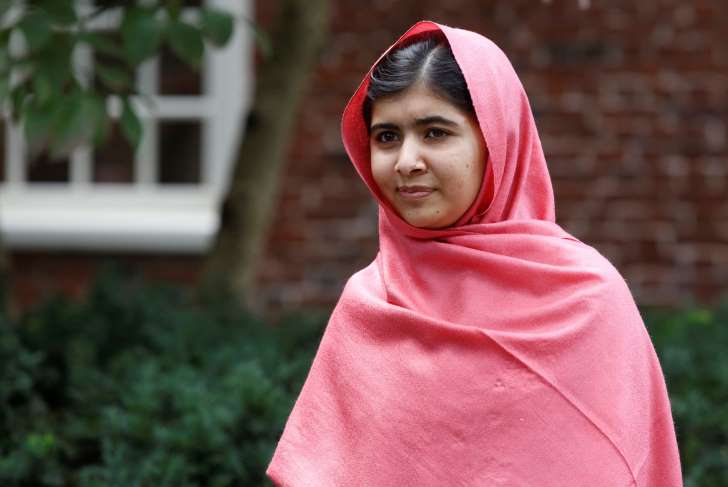
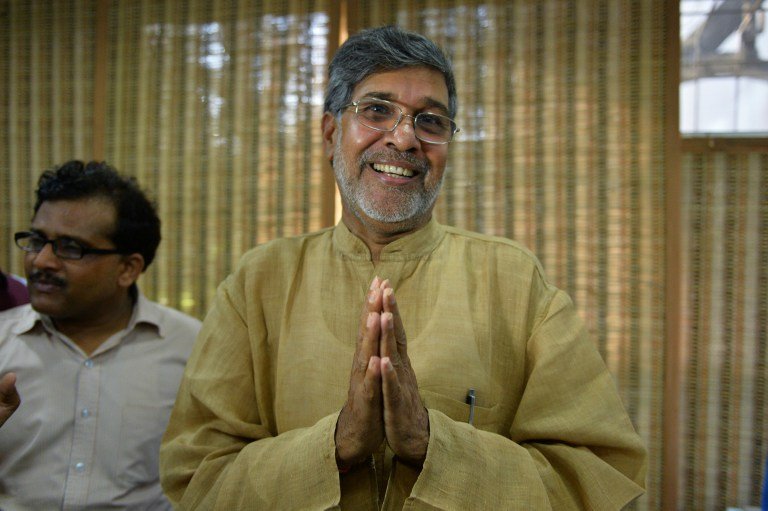
Kailash Satyarthi and Malala Yousafzai were named recipients of the Nobel Peace Prize this morning “for their struggle against oppression of young people and children and children’s right to education,” Thorbjørn Jagland, chairman of the Norwegian Nobel Committee announced this morning. Nobel Committee’s Geir Lundestad stated in a video highlighted at nobelprize.org that: “This is a combination of a human rights and humanitarian work Prize.”
ROBIN BROAD, broad.au@verizon.net
Broad has known Satyarthi for many years. She served on the board of GoodWeave, which Satyarthi founded, until this year. She is professor of international development at American University and has worked extensively on labor rights and child labor. Her books include Development Redefined: How the Market Met Its Match.FREDRIK HEFFERMEHL, [in Norway, 6 hours ahead of U.S. ET] fredpax@online.no
Author of The Nobel Peace Prize: What Nobel Really Wanted, Heffermehl said today: “Malala Yousafzai is a courageous, bright and impressive person, education for girls is important and child labor a horrible problem. Worthy causes, but the committee once again makes a false pretense of loyalty to Nobel and confuses and conceals the plan for world peace that Nobel intended to support. If they had wished to be loyal to Nobel they would have stressed that Malala often has spoken out against weapons and military with a fine understanding of how ordinary people suffer from militarism. Young people see this clearer than the grown ups. She even, when she met U.S. President Obama, gave him a stern warning against drone warfare and said it only served to increase hatred and the number of terrorists.“I do hope that Malala will stick to her early concerns of the problem of militarism. There are signs that her helpers and advisors have turned her away from the delicate issues of militarism and over to the safer issue of education. By moving her away from the Nobel idea of global disarmament she has become more palatable to the Nobel committee.
“Once again the Norwegian awarders have got it wrong. They have a person-focus not an idea-focus. Nobel’s intention was not a prize for nice people doing fine things, but for persons promoting a specific approach to world peace.”
Heffermehl notes that Nobel wanted to reward “the person who shall have done the most or the best work for fraternity between nations, for the abolition or reduction of standing armies and for the holding and promotion of peace congresses.” He also used the term “champions of peace.”
See: “Malala Yousafzai tells Obama drones are ‘fueling terrorism’.”
For more information, contact at the Institute for Public Accuracy:
Sam Husseini, (202) 347-0020; or David Zupan, (541) 484-9167
Asante Sana, Ronald Elder Freeman, A Former Black Panther Party Member