

Category Archives: television
Congrats To…….
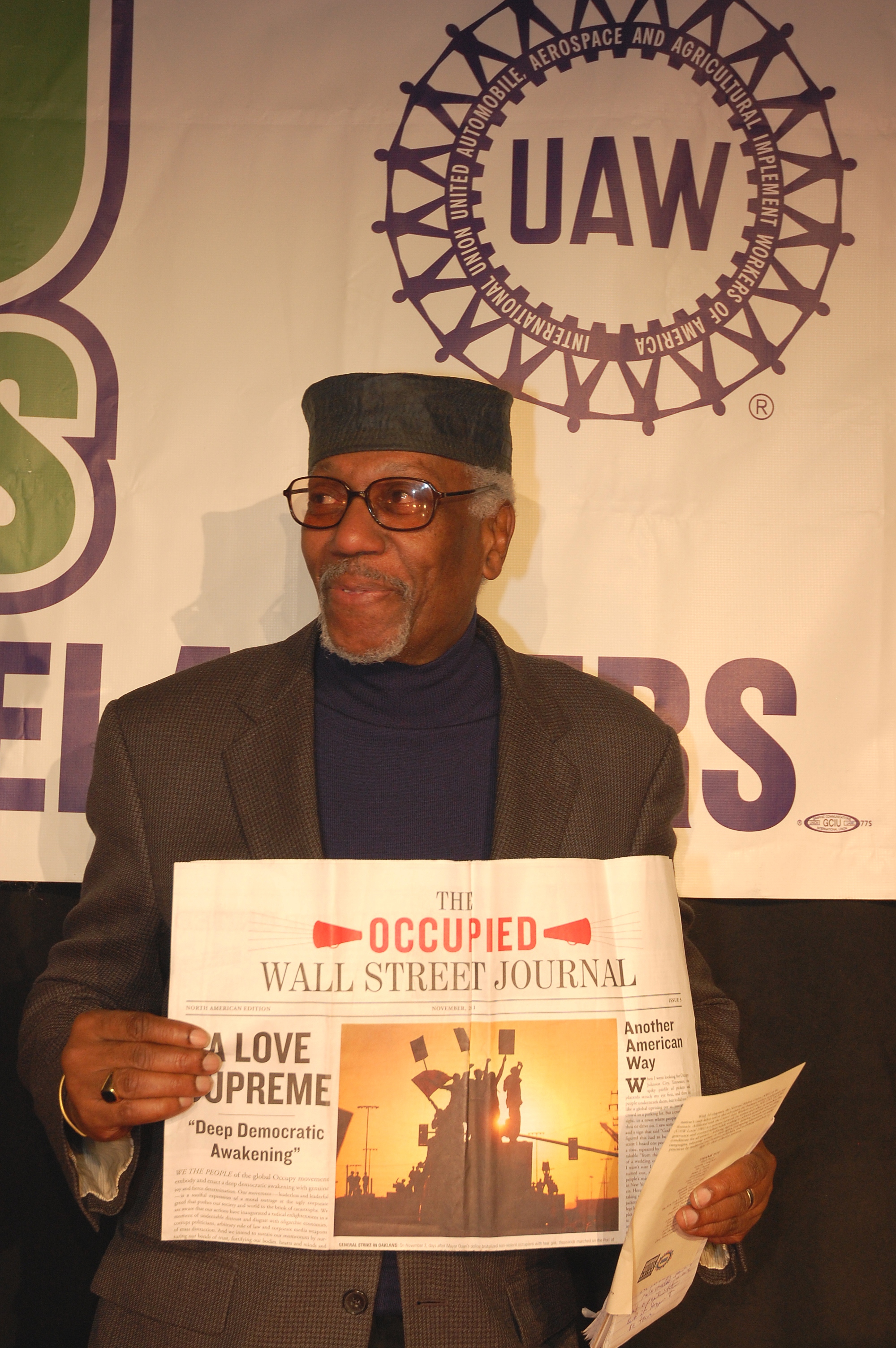
…………..Herb Boyd, for this honor. Kudos also to Dr. Lee Thornton (now an Ancestor), who was on my doctoral committee and was the host and executive producer of a show I helped produced for her.
Blacks Have Obama’s Back–No Matter What! LOL!
LOL! And with the added benefit of being TRUE. 🙂
And below…..LOL! 🙂
“Soul Power Music”

Thanks to Jared Ball and Ericka Blount Danois for this fascinating hour of radio!
I (Heart)ed The “SOUL! Summit!”



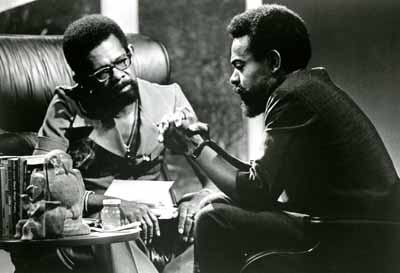
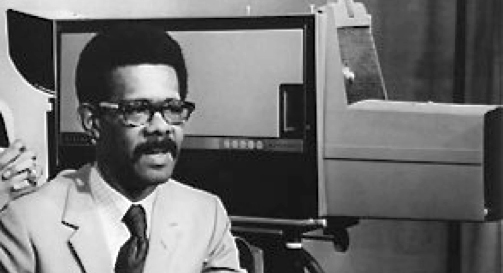
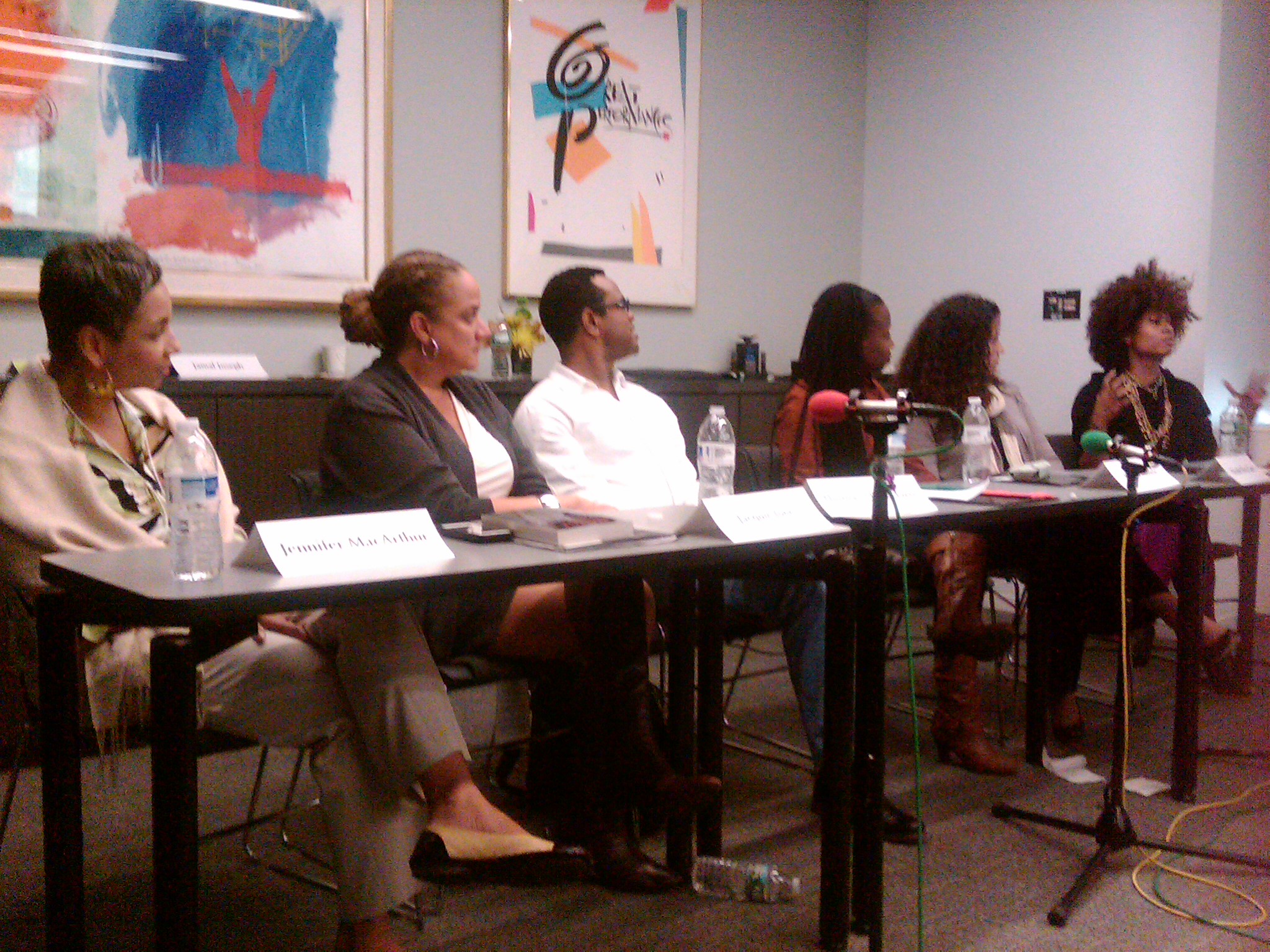
Boy, did I have a great time at the “SOUL! Summit!” Thanks to Melissa Haizlip (below), niece of Ellis Haizlip (above).

A very significant day about a very significant television program.
“Doctor Who” at 50!
OCTOBER 26th UPDATE: And I just found out the main movie theater in Silver Spring is showing it the Monday after Thanksgiving!!! YAY!!!!!!!!!!!!!!! 🙂
Is Rachel Kaadzi Ghansah The Best Black Culture Writer Of This Generation (Not Named Ericka Blount Danois)? :)

Herman Wallace Has Joined The Ancestors
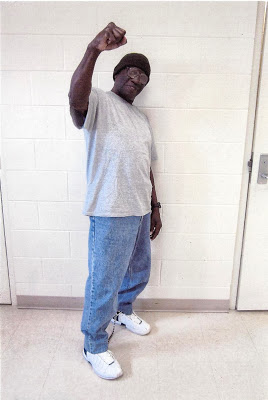
What’s amazing about this is that he enjoys THREE DAYS of “freedom” after a judge finally let him out (scroll to middle)!
This morning we lost without a doubt the biggest, bravest, and brashest personality in the political prisoner world. It is with great sadness that we write with the news of Herman Wallace’s passing.
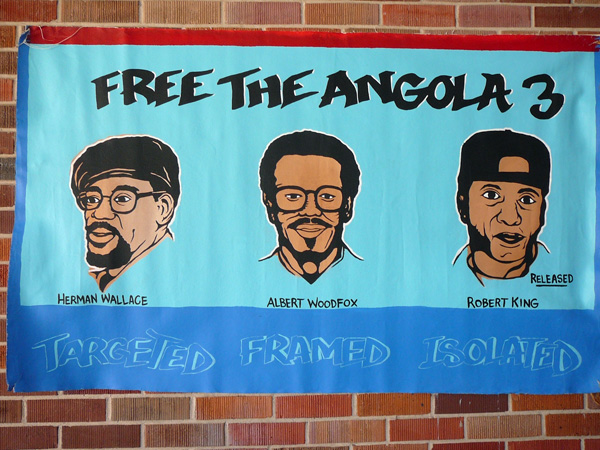
Herman never did anything half way. He embraced his many quests and adventures in life with a tenacious gusto and fearless determination that will absolutely never be rivaled. He was exceptionally loyal and loving to those he considered friends, and always went out of his way to stand up for those causes and individuals in need of a strong voice or fierce advocate, no matter the consequences.Anyone lucky enough to have spent any time with Herman knows that his indomitable spirit will live on through his work and the example he left behind. May each of us aspire to be as dedicated to something as Herman was to life, and to justice.Below is a short obituary/press statement for those who didn’t know him well in case you wish to circulate something. Tributes from those who were closest to Herman and more information on how to help preserve his legacy by keeping his struggle alive will soon follow.———————-On October 4th, 2013, Herman Wallace, an icon of the modern prison reform movement and an innocent man, died a free man after spending an unimaginable 41 years in solitary confinement.Herman spent the last four decades of his life fighting against all that is unjust in the criminal justice system, making international the inhuman plight that is long term solitary confinement, and struggling to prove that he was an innocent man. Just 3 days before his passing, he succeeded, his conviction was overturned, and he was released to spend his final hours surrounded by loved ones. Despite his brief moments of freedom, his case will now forever serve as a tragic example that justice delayed is justice denied.Herman Wallace’s early life in New Orleans during the heyday of an unforgiving and unjust Jim Crow south often found him on the wrong side of the law and eventually he was sent to the Louisiana State Penitentiary at Angola for armed robbery. While there, he was introduced to the Black Panther’s powerful message of self determination and collective community action and quickly became one of its most persuasive and ardent practitioners.Not long after he began to organize hunger and work strikes to protest the continued segregation, endemic corruption, and horrific abuse rampant at the prison, he and his fellow panther comrades Albert Woodfox and Robert King were charged with murders they did not commit and thrown in solitary. Robert was released in 2001 after 29 years in solitary but Herman remained there for an unprecedented 41 years, and Albert is still in a 6×9 solitary cell.Herman’s criminal case ended with his passing, but his legacy will live on through a civil lawsuit he filed jointly with Robert and Albert that seeks to define and abolish long term solitary confinement as cruel and unusual punishment, and through his comrade Albert Woodfox’s still active and promising bid for freedom from the wrongful conviction they both shared.Herman was only 9 days shy of 72 years old.Services will be held in New Orleans. The date and location will be forthcoming.For more information visit www.angola3.org and
http://angola3news.blogspot.com/.
From Wednesday’s “Democracy Now!”:
NERMEEN SHAIKH: We begin today’s show with news in a case Democracy Now! has been following closely. Herman Wallace, a member of the so-called Angola Three, has been released from prison after being held for nearly 42 years in solitary confinement. He was taken directly to the hospital, where he now lays dying of advanced stage liver cancer.
Wallace and two others were in prison for armed robbery, then accused in 1972 of murdering a prison guard at the Louisiana State Penitentiary, known as Angola. The men say they were framed because of their political activism as members of one of the first prison chapters of the Black Panther Party.
The dramatic series of events on Tuesday began when Federal Judge Brian A. Jackson of the Middle District Court of Louisiana ordered Wallace’s release and overturned his conviction. In the order, Judge Jackson called on the state to, quote, “immediately release Mr. Wallace from custody” due to an improperly chosen grand jury that excluded women jurors in violation of the 14th Amendment. The state appealed the ruling, but Judge Jackson quickly responded with another order that said failure to release Mr. Wallace from custody will, quote, “result in a judgment of contempt.”
AMY GOODMAN: As the legal battle played out, Herman Wallace’s lawyers sent an ambulance to wait outside the gates of the prison to pick him up. Then, at 7:30 p.m. Central time Tuesday night, Herman Wallace, who is 71 years old, was met by members of his legal team at the gates and left the prison in the ambulance that took him to New Orleans. He was taken directly to a hospital, where supporters there greeted him.
SUPPORTER: That’s him! [cheering]
AMY GOODMAN: For more, we’re joined by one of the people who met Herman Wallace to deliver the news he would be released: fellow Angola Three member Robert King. Until Tuesday night, King was the only freed member of the Angola Three. He spent 29 years in solitary confinement for a murder he did not commit. He was released in 2001 after his conviction was overturned.
The third member of the Angola Three, Albert Woodfox, remains in prison at the David Wade Correctional Center in Homer, Louisiana. In recent months, he says he’s been subjected to strip searches and anal cavity searches as often as six times a day.
Robert King joins us from Austin, just back from visiting Wallace. In fact, he was the one who delivered the news to Herman Wallace that his conviction had been overturned.
Here in New York, we’re joined by Herman Wallace’s defense attorney, George Kendall.
But first we go directly to the New Orleans hospital where Herman Wallace lies. We’re joined by Jackie Sumell, the artist behind Herman’s House. She joined us on Monday in studio in New Orleans when Democracy Now! was broadcasting from there, broadcasting about the case of Herman Wallace, then still in prison. Now she joins us by phone at the bedside of Herman Wallace from the LSU—Louisiana State University—Medical Center, where Herman Wallace is now.
Jackie, can you talk about Herman’s condition at this point?
JACKIE SUMELL: Yeah, good morning, Amy. Herman has taken a turn for the worse. At about 3:00 in the morning, I got a phone call from one of the other supporters, who said, “You should come in.” The doctors aren’t sure if his kidneys are also failing, as well as his liver. So I’ve been with him since 3:00. He’s not very—he’s able to speak a word, like if you move him around, he’ll yell or indicate that he’s uncomfortable, but he doesn’t seem to be cognizant in any other way. Yeah, it’s a really intense time right now. And it’s myself and a few other long-term supporters and his sister that are bedside with him.
AMY GOODMAN: Jackie, did he understand yesterday at the prison that he was being released?
JACKIE SUMELL: You’d have to ask George and King whether or not he understood it at the prison. I know that he did understand it last night when we had about a hundred supporters cheering him on, welcoming him home with banners and signs, chanting “Power to the people!” He was very cognizant then. You know, this turn for the worse happened, like I said, at about 2:30, 3:00 this morning.
AMY GOODMAN: Let’s turn to Robert King, another member of the Angola Three. Robert King is free after 29 years. Albert Woodfox remains in prison. And, of course, as we said, Herman Wallace, in a complete surprise move of a federal judge, had his conviction overturned yesterday with a demand for his immediate release, which happened last night. Robert King, you were in prison with Herman Wallace visiting him to say your final goodbye as he lay dying of liver cancer. You delivered the news to him about the overturning of his conviction. How did Herman respond?
ROBERT KING: Thank you, Amy. Straight to the point, yes, of course, when we brought the news to Herman that he was being released, we had to do it in part, in bits and pieces. We only learned on our way to the prison from George Kendall, the head attorney, that Herman’s case had been overturned, and so we were a bit surprised, but we had some good news for him. And when I saw him, I saw, as Jackie indicated, he’s pretty—pretty bad; he’s in pretty bad shape. His body is failing him.
But I was there, Amy, you know, not so much as to witness his death, but, as you said, to also try to encourage him to hold on and to try to get him to recognize that his supporters, lawyers and all included were on board and trying to get him released from prison. And when we heard about this, we told him. And I think we managed to penetrate—we managed to penetrate and get to him the point that he would probably be released or could be released. I remember the lawyer on the way out telling Herman to hold on. And his word, which were the best words of the day, he said, “I will hold on. I’ll hold on. I’m going to hold on.” And it was pretty touching.
And I do feel this, Amy, that he will hold on, in spite the fact that his body has failed and is failing him. I believe in—I still believe in miracles, and I believe we can perform miracles. People can perform miracles. And there are doctors among us who can perform miracles to deal with a situation such as this, and hopefully this is one of those times. Hopefully, it is not too late.
But in any case, Herman, whatever happen or whatever transpires, Herman will know one thing. I think he recognizes this, and he understood this and understands that there are many people, millions of people, who really love him and who support him, and they are by his side. And he feel that he has contributed in some way to the struggle, regardless of what happen. If Herman survive, he will continue to struggle. But if not, then his millions and legions of supporters around the world are on board to continue the struggle, but it’s—because this is not just a fight to have him released from prison, but to have his conviction overturned and to deal with so many other. And we have Albert Woodfox to consider, as well. He is still on board, and he is suffering just as much as Herman. He has now the—will now be the longest-serving prisoner in solitary confinement. So we have to deal with him. We have to continue with all the rest of the stuff that is going on regarding prison, the Mumias of our society. We have to think about them, as well. But Herman—
AMY GOODMAN: Robert, he was with you—
ROBERT KING: —will be OK.
AMY GOODMAN: Robert, he was with you yesterday, Albert Woodfox. I mean, this is an unusual, to say the least, gathering. You would never have been allowed to visit Herman Wallace. And, of course, Albert Woodfox wouldn’t, either, as he remains in prison. But it was the final goodbye. What was Albert Woodfox’s words for Herman Wallace in that prison cell, in the prison, where you were with him, in the hospital there?
ROBERT KING: Well, Albert’s—yes, thank you. Albert’s last word was, “Herman, we love you, and you’re going to get out here today. We’re trying to get you out. The lawyers will have you out today.” And it was his last word, and he kissed him on the forehead. But prior to that time, he had been encouraging him and that—you know, to hold on and that he will be free and that there are people working for him and that he won’t be—he won’t be forgotten in any way.
AMY GOODMAN: Was he shackled?
ROBERT KING: Albert Woodfox was very much shackled and handcuffed. He had the usual, traditional belt on, chain with the belt, the locks and so forth and so on. And it was difficult for him to eat his meal. He was having problems. We had to help him to eat, because he could not hold the tray in which the food—that held the food.
AMY GOODMAN: George Kendall, you’re Herman Wallace’s attorney. How did this happen?
GEORGE KENDALL: The courts—there are many tragedies in this case, and one of them is that the state judiciary in Louisiana knew for a long time that this trial was very unfair but just refused to grant a new trial—decades ago. When Judge Jackson finally took a look at this case, I think he concluded pretty quickly, “This is unfair, and I have to overturn it.” And to his great credit, he did so. Herman wrote to the judge, after he learned that he was diagnosed with terminal liver cancer, and said, “I’ve fought for 40 years to receive a new trial. Please, don’t let me die before I hear from you.” We filed a bail motion. A lot of federal judges don’t know this: They have the power to grant bail in these habeas proceedings. It’s rarely used. And Judge Jackson said, “I’m not going to grant bail now, but I will decide this case without delay.” Of course, we would have liked him to decide this quicker, but when he decided the case, he made it very clear—two things: The first trial was unfair, violated the Constitution—Mr. Wallace was right—and that he needed to be released today. And, unfortunately, it took state officials hours to comply with that. In fact, Judge Jackson had to issue a second order at 6:00 p.m. last night. And it was only, I think, because the prison knew that Judge Jackson was not playing, and we had an ambulance at the gate.
AMY GOODMAN: The warden had gone out to dinner and said he would not be returning to release Herman Wallace?
GEORGE KENDALL: The warden said at 2:30 that he was not going to release him. And the judge then issued a second order at 6:00 p.m. that said, “I meant what I said. He is to be released immediately.”
NERMEEN SHAIKH: So, I want to—I want to read from U.S. District Judge Brian A. Jackson’s order that led to Herman Wallace’s release Tuesday. He wrote, quote, “The record in this case makes clear that Mr. Wallace’s grand jury was improperly chosen in violation of the Fourteenth Amendment’s guarantee of ‘the equal protection of the laws’ … and that the Louisiana courts, when presented with the opportunity to correct this error, failed to do so,” Judge Jackson wrote. He added, quote, “Our Constitution requires this result even where, as here, it means overturning Mr. Wallace’s conviction nearly forty years after it was entered.” So, George Kendall, can you talk about why it is that it was this particular aspect of the trial that he—that the judge chose to emphasize, the absence of women from the grand jury?
GEORGE KENDALL: There were several very strong claims in this case, and I think Judge Jackson just—this was so straightforward and clear, that the law required him to grant habeas relief on this, he took this issue. And it also showed, if you read the opinion, that Herman had determinedly, on his own, tried to litigate this issue before the Louisiana state courts for decades—I mean, cited new cases when they came down, put the record facts in. And there were—there were two or three judges in the state process, as his appeals went through, that said, “You know, we need to grant relief in this case,” but they never had the majority during this time. So, it was no secret that there were profound problems with his case, but it’s tragic that it took four decades for him to get a new trial.
AMY GOODMAN: What does this mean for Albert Woodfox?
GEORGE KENDALL: Albert has twice—three times had his case overturned. Last year Judge Brady, also in the Middle District of Louisiana, overturned his conviction for a second time.
AMY GOODMAN: Were they tried together?
GEORGE KENDALL: They were not tried together, tried separately. But Albert won on a discrimination, racial discrimination in the grand jury composition in his case. That case, his case, now is up on the state’s appeal to the Fifth Circuit Court of Appeals. The Fifth Circuit wants to overturn Judge Brady’s grant of a new trial.
AMY GOODMAN: What’s very interesting is that in this case the widow of the prison guard who was murdered in 1972, Teenie Verret—she was just 17 at the time that her husband, Brent Miller, was stabbed to death. This is what she had to say in the documentary In the Land of the Free.
TEENIE VERRET: I’ve been living this for 36 years. There’s not a year that goes by that I don’t have to relive this. And it just keeps going and going. And then these men, I mean, if they did not do this—and I believe that they didn’t—they have been living a nightmare for 36 years.
AMY GOODMAN: That was Teenie Verret, the widow of the prison guard who was murdered. So, let’s be clear, George Kendall, Albert Woodfox and Herman Wallace went to jail for robbery.
GEORGE KENDALL: Correct.
AMY GOODMAN: It was in jail that they—in the prison, that they were accused of murder and for which they have served longer on death row—on solitary confinement, consecutively—you know, I said “death row,” but for a lot of that time they were actually on the row—
GEORGE KENDALL: That’s correct.
AMY GOODMAN: —than any prisoner in U.S. history.
GEORGE KENDALL: We have found that there’s no prisoners who have served—who have been locked up for four decades, in a cell, 23 hours a day, the way they have been. Some of those days, they did not get out at all; other days, they got out for 15 minutes at a time. We have a separate lawsuit that will go to trial in Baton Rouge in June that seeks an injunction and damages for all the time that they have wrongly been housed in solitary confinement in Louisiana.
NERMEEN SHAIKH: And what about the litigation that challenges his—Mr. Herman Wallace’s unconstitutional confinement? That’s likely to continue. Could you say a little about that?
GEORGE KENDALL: Yes. That is a lawsuit that Mr. King is involved in and Mr. Woodfox, all. That case will—it involves violations of the cruel and unusual punishment clause, because they’ve been held in cells for so long without any justification, and of the 14th Amendment. That case is set to go to trial in Baton Rouge in June of next year.
AMY GOODMAN: I want to go—oh, go ahead.
GEORGE KENDALL: And I also want to mention that Albert Woodfox—you said that he has just recently again been subjected to anal searches every time he leaves his cell, whether it’s just a walk down the tier to take a shower. Albert, 30 years ago, on his own, filed a lawsuit and won a lawsuit that prohibited the Department of Corrections from engaging in those kind of searches. And we called that to the attention of the Corrections Department when they started doing it again, and they said, “We’re going to continue to do it.” We filed yesterday in federal court in Baton Rouge a lawsuit seeking an injunction barring the Department of Corrections from using that kind of search on Mr. Woodfox and others in that cell block.
AMY GOODMAN: The judge who issued the order that he should not be strip-searched like this—anal cavity, oral cavity strip-searched—died.
GEORGE KENDALL: That’s correct.
AMY GOODMAN: Right afterwards, they resumed?
GEORGE KENDALL: That’s correct.
AMY GOODMAN: Doesn’t a judge’s word carry on beyond his life?
GEORGE KENDALL: We think that the Department of Corrections is going to find out that it does. We are—we are optimistic that Judge Brady is going to tell the Department of Corrections, “You cannot do this. Stop.”
NERMEEN SHAIKH: I mean, on what basis were these three subjected to such extraordinary—extraordinarily punitive measures in prison? And on what basis was that justified for decades?
GEORGE KENDALL: They were perceived in 1972 as black militants. At the time, the investigation into the tragedy of Brent Miller’s death was—went off the rails by racist Louisiana prison officials.
AMY GOODMAN: And yet, as we’ve heard, his own widow did not believe these men did it.
GEORGE KENDALL: That’s correct. There is a bloody fingerprint. Whoever committed that crime left a bloody fingerprint. It is not Herman Wallace’s. It is not Albert Woodfox. It’s not anyone who was charged with that crime.
AMY GOODMAN: Robert King wasn’t even in the prison at the time.
GEORGE KENDALL: He was not even in the prison at the time. These men, over the years, despite being locked up, have helped numerous other inmates on those tiers in many ways. I have another client at that institution who got there at the age of 17 and would never have survived. It was the bloodiest prison in America at that time. And he, to this day, said, “I would never have survived Angola in the ’70s, but for the wise counsel and love I received from Herman Wallace and Albert Woodfox.”
AMY GOODMAN: Robert King, could you talk about that, the philosophy of the Black Panther chapter in the prison where you were, the preaching against the violence and the racism?
ROBERT KING: Yes. Well, it was the—the philosophy was and the idea was to bring some type of consciousness to the prisoner. There were 17—as George pointed out, there were—Angola was considered the bloodiest prison in the nation. And there were 17—it was a slave plantation. There were 17 hour of work every day, and especially during can season, sometimes longer. Men were working, going into the fields without boots or raincoat, without being fed adequately.
Albert and Herman and other members of the Black Panther Party decided to bring this knowledge to prisoners that they still have a right, they were human beings. And this was the teaching of the Black Panther Party ideology, you know, that we were protected by due process, 14th Amendment and other constitutional grounds. And we adhered to that. Of course, the prison tried to discourage us and, you know, impose punitive measures for—upon us for doing this, but we continued to do so. And we were successful. Herman and Albert were very, very successful, along with other people who also organized with them.
And as a result, they have paid dearly for it, because people, as George pointed out and other prisoners point out, that during that time it was a—it was a dire period in prison—and Herman and Albert. There were numerous rapes that were going on and that were being allowed by the prison officials. Inmate guards ran the prison. They were the backbone of security in prison. They sold younger prisoners to older inmates for sexual—you know, for sexual purposes and so forth. And this was something that, while the Black Panther Party members were not homophobic or anything like this, but to be in a situation where you were forced into this type of activity was something that we frowned on. And even if we had not been members of the Black Panther Party, we still would have frowned upon this, because it was a dehumanizing practices in a dehumanizing environment. And we felt the need and went out with—into prison, and I joined Herman and Albert, having the same ideology and being a member of the Black Panther Party and being a struggle—struggler, because I felt the need to struggle. I joined them. I willingly joined their efforts to kind of combat some of the stuff that was going on. And as a result, like I said, we were successful.
And as a result, Herman and Albert has paid dearly for it: more than 40 years in solitary confinement, convicted for a crime that is, for the most part, questionable, in which all the evidence has been undermined, where actual, not just factual, innocence exists, but actual innocence also exists. The facts adduced does not—you know, does not suggest that the trial was fair, the conviction was fair. And then there are actual innocence. Like George pointed out, there was a bloody fingerprint that was perhaps left by the person who committed the crime, that didn’t match any of the people who were subsequently charged. But nevertheless, they were charged with this. And so, they have paid dearly.
And I think the state recognized this. All—the state refused to recognize it openly, but I think, in time, they will recognize it. And I think, with the support that we have around the world, have garnered around the world, with, you know, the legions of supporters, I think they will continue to keep this out into the public, this case and cases like this in the public. And it won’t be forgotten.
NERMEEN SHAIKH: Well, let’s go to a clip of Herman Wallace in his own words, describing the impact of solitary confinement on his body. This is from the film Herman’s House.
HERMAN WALLACE: Being in a cage for such an extended period of time, it has its downfalls. I mean, you may not feel it, you may not know it, you may think that you’re OK, and you just perfunctorily move about, you know. However, when you was removed from out of that type of situation and placed in an open environment where, you know, you’re even breathing that oxygen and it’s getting into your lungs and you’re feeling something growing within you, and—you begin to develop a different mode within your body. I even watched my body. I’ve looked in the mirror, and I’ve seen muscles and [bleep] begin to pop out there. I began to run even faster and [bleep]. And I’m saying, “Whoa, what the hell is going on here?” Much was preserved. But then I got locked up again after eight months. And being locked up like that, the whole body just got confused.
NERMEEN SHAIKH: And I want to go to another clip from the end of the film, Herman’s House. It’s Herman Wallace describing a dream he had. Listen carefully.
HERMAN WALLACE: I’ve had a dream where I got to the front gate, and there’s a whole lot of people out there. And you ain’t going to believe this, but I was dancing my way out. I was doing the jitterbug. I was doing all kind of crazy, stupid-ass [bleep], you know? And people was just laughing and clapping and [bleep], you know, until I walked out that gate. And I remember that dream, and I turn around, you know, and I look, and there are all the brothers in the window waving and throwing the fist sign, you know? It’s—it’s rough, man. It’s so real, you know. I can feel it even now, you know, talking about that.
AMY GOODMAN: That is from the film Herman’s House. It’s the story of Jackie Sumell, who is now at Herman Wallace’s side as he lays dying in a New Orleans hospital, just brought back—released from prison after 42 years in solitary confinement. The film is about how Jackie Sumell, the artist, has worked with Herman to imagine a house he could be released to after being in a six-by-nine-foot cell for so many decades. We’re wrapping up now and moving on to another case of men in prison, this in Egypt. But, George Kendall, this, as we get word from the hospital about Herman’s condition, just released hours ago, is not the end of his case or Albert Woodfox’s.
GEORGE KENDALL: Albert Woodfox’s case is before the Fifth Circuit Court of Appeals. He also was awarded a new trial last year. We’re hoping that that court will sustain that order, so he will be entitled to a new trial.
AMY GOODMAN: And, Jackie Sumell, your final words, as you heard Herman talking about his dream of being released? That dream, very bittersweet, has been realized, as he fights for his life right now outside the prison walls.
JACKIE SUMELL: Yeah, I mean, my last words would be to actually remind people that this is a tremendous victory and a miracle that Herman Wallace will die a free man. You know, he’s had 42 years of maintaining his innocence in solitary confinement. And if his last few breaths are as a free man, we’ve won. We really won.
AMY GOODMAN: Jackie Sumell, we want to thank you for being with us, at the bedside of Herman Wallace at LSU Hospital right now in New Orleans. Robert King, thanks for joining us. Folks can go to our website to see our extended interviews with you, Robert—
ROBERT KING: Thank you.
AMY GOODMAN: —freed member of the Angola Three, spent 29 years in solitary confinement. Albert Woodfox remains in prison. And George Kendall, the attorney for Herman Wallace.
HERMAN WALLACE: Revolutionary
[col. writ. 10/10/13] © ’13 Mumia Abu-Jamal
The long and tortured life of Herman Wallace, of the famed Angola 3, was meant to terrorize us; to stifle the resistance that flamed throughout Black America (and many others across the country) during the ‘60s and ‘70s.
If so, it failed utterly.
For Herman Wallace, former Black Panther, despite the monstrous torture he sustained of 41 years in the hole of Angola (I will not dignify it with the name, prison) – slave plantation, was one who was caged precisely because, in mind, if not in body, he was free.
He was one of 3 me, his fellow ex-Panthers, Robert Hillery King and Albert Woodfox (the rest of the Angola 3), who exampled strength, determination, and will during their hellish times in Louisiana’s wretched dungeons.
I have used the words; torture and I don’t use it lightly.
Juan Mendez, Special Rapporteur for the United Nations, has found that solitary confinement, for any period past 14 days, constitutes real psychological torture that destroys human beings. 14 days.
Herman Wallace, convicted on trumped-up charges under poisonous Louisiana ‘justice’, spent 41 years in solitary.
In Angola. In Lousiana. In the United States of America.
Forty-one years. Let’s put it another way.
Herman Wallace spent 14,965 days in solitary.
Herman Wallace spent 359,160 hours in solitary.
Herman Wallace spent 21,549,600 seconds in solitary.
When a federal judge tossed out his illegal and unconstitutional conviction, ordering his release, Herman Wallace, bed-ridden, spent 3 days in freedom, until returning to his ancestors.
His flesh is returned to the earth, our Mother.
But his spirit burns with strength, and rock solid commitment to freedom for us all
According to published reports, Herman’s last words were, “I am free!”
But, he always was.
Herman’s contribution to freedom, even while in the vilest dungeons in America, while in shackles and chains, in Angola, was immense.
If he were still present, he would urge us all not to forget his brother-in-chains, Albert Woodfox. For, as the saying goes, ‘Freedom is a Constant Struggle!’
In the Black Panther Party, there was a saying: ‘When an oppressor dies, it is lighter than a feather; but when a revolutionary dies, it is heavier than a mountain.’
Herman’s death is heavier than a mountain, for he deserved more than 3 days of freedom, away from the stench of Angola and Louisiana ‘justice’.
Yet, his death, his suffering, his torture, his loneliness reminds us all of the true nature of the System; and the dark, monstrous features of the Prison Industrial Complex; a complex of matchless cruelty, and unbridled savagery.
Herman, Albert and Robert were subjected to such treatment because they courageously resisted and opposed such repression. They organized a chapter of the Black Panther Party while prisoners in Angola!
They were targeted and tortured for engaging in (I kid you not) “Black Pantherism!”
So, remember Herman’s sacrifice; 41 years. 14,965 days. 359,160 hours. 21,549,600 seconds.
And his last words: “I am free!”
May we all live to find such freedom!
–© ‘13maj
[UPDATED: BLACK PANTHER PARTY MEMBER HERMAN WALLACE FREED! (Scroll to End)] “Angola 3” Member Herman Wallace On “Democracy Now!”
Angola prisoner Herman Wallace is dying of liver cancer after 42 years in solitary confinement. A member of the so-called Angola Three, Wallace and two others were in jail for armed robbery, then accused in 1972 of murdering a prison guard at the Louisiana State Penitentiary, known as Angola prison. The men say they were framed because of their political activism as members one of the first prison chapters of the Black Panther Party. Wallace’s supporters say he has just days to live, but his requests for compassionate release has so far gone unanswered. We speak with Jackie Sumell, a New Orleans-based artist behind “Herman’s House,” a collaboration with Wallace, which is the subject of a new documentary by the same name. “I’m not sure in the state of Louisiana if compassion is part of the vocabulary of those who are in power. I always felt that compassionate release, or asking for compassionate release, was important in terms of a multipronged effort to have Herman released,” Sumell says. “But there’s been 42 years of the state continuing to deny Herman’s due process. It’s incredible. He’s the longest known serving in solitary confinement in the United States.” We are also joined by Malik Rahim, one of the founders of the Louisiana chapter of the Black Panther Party and a co-founder of the Common Ground Collective, which helped bring thousands of people from all over the world to help rebuild New Orleans after Hurricane Katrina.
AMY GOODMAN: We’re on the road in New Orleans, Louisiana. We’re broadcasting from New Orleans Public Television station WLAE. We turn now to look at the case of a man who’s spent more than 42 years in solitary confinement in Louisiana, believed to be one of the longest-serving prisoners who served on death row for that amount of time. He is dying now of liver cancer. His supporters are pleading for his compassionate release.
I’m talking about Herman Wallace, a member of the so-called Angola Three. He and two others were in jail for armed robbery, then accused in 1972 of murdering a prison guard at the Louisiana State Penitentiary, known as Angola. The men say they were framed because of their political activism as members one of the first prison chapters of the Black Panther Party. Herman Wallace is now 71 years old in the late stages of liver cancer. Robert King Wilkerson was released in 2001 after 29 years in solitary confinement. The third of the Angola Three, Albert Woodfox, remains in prison and says he’s been subjected to strip searches and anal cavity searches as often as six times a day.
Well, as Herman Wallace faces the end of his life, we’re joined now by two people. But first I want to turn to a clip from a new film about Herman’s collaboration with one of our guests. Twelve years ago, artist Jackie Sumell began writing to Herman Wallace, and one day she asked him, “What kind of house does a man who has lived in a six-foot-by-nine-foot box for over 30 years dream of?” Wallace wrote back with a description, and soon afterward Jackie made a commitment to build the house so Herman could either live in it upon his release, or so it could serve as a symbol of survival and hope. The two have often spoken by phone in between their visits, though Herman is now too weak to speak anymore. The calls are part of the story documented in a new film called Herman’s House that just premiered on PBS on POV. In this clip, it was Herman who comforts Jackie after the Louisiana Court of Appeals just turned down his latest appeal.
HERMAN WALLACE: Jackie?
JACKIE SUMELL: Yes.
HERMAN WALLACE: What’s the matter?
JACKIE SUMELL: Nothing.
HERMAN WALLACE: I’ll see you tomorrow, right?
JACKIE SUMELL: Yeah.
HERMAN WALLACE: Jackie.
JACKIE SUMELL: What?
HERMAN WALLACE: Look, this is a struggle, kiddo, all right? You hear me?
JACKIE SUMELL: I hear you.
HERMAN WALLACE: This is a struggle, and it’s worth it. It’s part of that. You have to roll with that. And it should make us stronger, right?
JACKIE SUMELL: Yeah, well—
HERMAN WALLACE: So, please, come on, last thing you want to feel is down. You are too much of a strong, happy person for that. And I think as long as you know that I’m OK, I think that’s all that should matter, right?
JACKIE SUMELL: That’s correct.
HERMAN WALLACE: Right, and I’m OK.
AMY GOODMAN: That was Herman Wallace speaking with our guest today, Jackie Sumell. She is the New Orleans-based artist behind Herman’s House, a collaboration with Herman Wallace and the subject of this new documentary by the same name that premiered on PBS POV this summer.
We’re also joined here in New Orleans by Malik Rahim, one of the founders of the Louisiana chapter of the Black Panther Party. He introduced the Angola Three members to the party in prison. He is also co-founder of the Common Ground Collective, which helped bring thousands of people from all over the world to help rebuild New Orleans after Hurricane Katrina. In 2008, Malik ran for Congress as a Green Party candidate.
We welcome you both to Democracy Now!
We did submit a request to interview Herman Wallace after he was removed into the prison hospital, but we were told James LeBlanc, secretary of the Louisiana Department of Public Safety and Corrections, had, quote, “denied similar requests in the [last] few weeks and he did not want to make an exception in this case.”
Jackie Sumell, Malik Rahim, welcome to Democracy Now! Jackie, you just came back from seeing Herman yesterday. What is his condition?
JACKIE SUMELL: Thank you so much, Amy. It’s an honor to be here. I had an opportunity to visit with Herman yesterday. And it’s really obvious, beyond a reasonable doubt, that we are days, if not hours, from watching the state of Louisiana kill another innocent man behind bars.
AMY GOODMAN: Was he able to speak?
JACKIE SUMELL: He’s still able to speak a few words. Yesterday he asked me to put his cap on. The inmates had just bathed him, and he was without his cap. He was cold. His words are few and far between. He sleeps most of the time. His belly is distended. He’s incredibly uncomfortable. And I think these will be his last few breaths before he joins the ancestors.
AMY GOODMAN: Compassionate release, is it a possibility?
JACKIE SUMELL: I’m not sure in the state of Louisiana if “compassion” is part of the vocabulary of those who are in power. I always felt that compassionate release or asking for compassionate release was important in terms of like a multipronged effort to have Herman released. But there’s been 42 years of the state continuing to deny Herman’s due process, so—
AMY GOODMAN: I mean, 42 years in solitary confinement.
JACKIE SUMELL: Yeah, it’s incredible. It’s incredible. He’s the longest known serving in solitary confinement in the United States. And one of the things I think is important to illustrate, or that Herman’s fight has been, is to illustrate the fact that the U.S. still employs the use of solitary confinement. There’s over 80,000 inmates at any given time, and, as you said, the highest incarcerator in the world, that are in solitary confinement, a six-foot-by-nine-foot cell, a minimum of 23 hours a day. And it’s an indefinite period that most people are in solitary confinement.
AMY GOODMAN: I wanted to play a clip of Teenie Verret, the widow of the murdered prison guard. She was just 17 when her husband, Brent Miller, was stabbed to death in 1972. This is the murder that Herman Wallace was convicted of. This is Teenie Verret from the documentary In the Land of the Free.
TEENIE VERRET: I’ve been living this for 36 years. There’s not a year that goes by that I don’t have to relive this. And it just keeps going and going. And then these men, I mean, if they did not do this—and I believe that they didn’t—they have been living a nightmare for 36 years.
AMY GOODMAN: That was Teenie Verret saying, if they did not do this—and she doesn’t believe that Albert Woodfox and Herman Wallace did this—then they should not be serving these sentences.
JACKIE SUMELL: You know, there’s tens of thousands of people who believe that they did not do this. You know, I have absolutely no doubt that Herman Wallace, Albert Woodfox and obviously Robert King are innocent.
AMY GOODMAN: And Robert King is out.
JACKIE SUMELL: Yeah, Robert King was released in 2001, under investigation for the same crime and had just served 29 years of solitary confinement for a crime he didn’t commit.
AMY GOODMAN: Malik Rahim, you are well known in this area. Yes, you ran for Congress. You helped save New Orleans after the Hurricane Katrina. You knew these men in prison. They say they were framed for this murder because of their political organizing. You were involved with that political organizing.
MALIK RAHIM: Yes. First I want to say that compassionate—compassionate justice do not exist in Louisiana. Their confinement is based upon what the state call Black Pantherism, you know, that the Black Panther Party was just an organization of blacks who hated whites and was bent on killing. And that’s what they have based their conviction on. They stay in solitary, have been, basically because of that Black Pantherism. It have been used throughout their 41 years. Burl Cain—they have repeatedly said that even if they was found innocent, he would still be keep them in solitary, because of Black Pantherism.
AMY GOODMAN: I want to go to a clip of Herman Wallace in his own words describing the impact of solitary confinement on his body. This is from the film that just premiered this summer on POV called Herman’s House.
HERMAN WALLACE: Being in a cage for such an extended period of time, it has its downfalls. I mean, you may not feel it, you may not know it, you may think that you’re OK, and you just perfunctorily move about, you know. However, when you was removed from out of that type of situation and placed in an open environment where, you know, you’re even breathing that oxygen and it’s getting into your lungs and you’re feeling something growing within you, and—you begin to develop a different mode within your body. I even watched my body. I’ve looked in the mirror, and I’ve seen muscles and [bleep] begin to pop out there. I began to run even faster and [bleep]. And I’m saying, “Whoa, what the hell is going on here?” Much was preserved. But then I got locked up again after eight months. And being locked up like that, the whole body just got confused.
AMY GOODMAN: That was Herman Wallace describing solitary confinement. Jackie, you’ve talked to him a great deal about this.
JACKIE SUMELL: Yeah. I mean, one of the things I want to be clear about, Amy, is that the state of Louisiana has never relied on lethal injection to kill its incarcerated. Right? There’s a history, a documented history, of neglect, abuse, cruel and unusual punishment, and what I would call lethal injustice, which is the denial and delaying of due process or our so-called constitutional guarantees. And within that framework, you have men who are spending 40 years in solitary confinement.
AMY GOODMAN: Jackie, you did something unbelievable with Herman Wallace. You wrote to him and said you wanted to build a house that he would design?
JACKIE SUMELL: Yeah, it’s unusual.
AMY GOODMAN: What was the question you put to him?
JACKIE SUMELL: I was at Stanford University, a full ride with stipend to study art, when I met Robert King. And it was really hard for me to—
AMY GOODMAN: One of the Angola Three, the one who was released.
JACKIE SUMELL: The one who was released. It was just about two months after he was released. And it was really hard for me to contextualize my relative privilege to the situation that Herman and Albert were still enduring. And I knew that I had to do something. And, you know, my greatest tool is my imagination. So I asked Herman what kind of house he dreams of after spending then 30 years in solitary confinement in a six-foot-by-nine-foot box. And I did that with the hope that this would be the opportunity for him to just use his imagination to get out of that box.
AMY GOODMAN: I want to play a clip of Herman from Herman’s House where Herman Wallace describes what sort of details he’d like to see as part of his house.
HERMAN WALLACE: Jackie, in your letter you asked me what sort of house does a man who lives in a six-foot-by-nine-foot cell dream of? In the front of the house, I have three squares of gardens. The gardens are the easiest for me to imagine, and I can see they would be certain to be full of gardenias, carnations and tulips. This is of the utmost importance. I would like for guests to be able to smile and walk through flowers all year long.
AMY GOODMAN: This is not just a figment of Herman Wallace’s imagination, Jackie. You are building this house. You’re here buying property for this house, as Herman Wallace lays dying in a prison hospital.
JACKIE SUMELL: Yeah, I made a commitment to Herman over 10 years ago that I would build his dream house, with the intention, as you said at the beginning of this segment, that this house is a testament to his imagination, to the triumph of the imagination, and to Herman’s legacy, which will outlive his flesh and bones—you know, Herman’s legacy, his commitment to the people and the story of his injustice. And it’s important to build this house in the incarceration capital of the world.
AMY GOODMAN: I want to go to the end of Herman’s House, the documentary, where Herman Wallace describes a dream. Listen carefully.
HERMAN WALLACE: I’ve had a dream where I got to the front gate, and there’s a whole lot of people out there. And you ain’t going to believe this, but I was dancing my way out. I was doing the jitterbug. I was doing all kind of crazy, stupid-ass [bleep], you know? And people was just laughing and clapping and [bleep], you know, until I walked out that gate. And I remember that dream, and I turn around, you know, and I look, and there are all the brothers in the window waving and throwing the fist sign, you know? It’s—it’s rough, man. It’s so real, you know. I can feel it even now, you know, talking about that.
AMY GOODMAN: Herman Wallace, describing his dream of freedom. Malik Rahim, your thoughts as we end today, as, well, we don’t know how many minutes or days Herman Wallace has left?
MALIK RAHIM: I believe that this is one of the saddest occasions in my life. It wouldn’t have been a Common Ground if it wouldn’t have been the Angola Three. And if it wouldn’t have been a Common Ground, then the over 200,000 people that we serve in direct services, what would have happened to them? You cannot say that justice prevail when you have individuals that, under the harshest conditions—I mean, going through the brutal summers locked in those cells, and the coldest winters locked in those cells, and still have enough compassion to help save this city that have literally forgotten him. You know, I mean, a Common Ground never would have been sent out the way it was. It was started by a common—by an Angola Three supporter, scott crow. You know, it never would have happened without the Angola Three. And then this is the reward that he get for saving this city and this area, is to die in a prison cell. You know, I mean, it’s something that—you know, it leave a bitter taste in my mouth.
AMY GOODMAN: Malik and Jackie, I want to thank you for being with us. Malik Rahim, one of the founders of the Louisiana chapter of the Black Panther Party, knew Herman Wallace in jail and ended up running for Congress on the Green Party ticket. Jackie Sumell is building the house that Herman has dreamed of. Herman’s House describes their collaboration on PBS POV.
*********
MY COMMENTS: I was very sorry to hear about his impending crossover to the Realm of the Ancestors. The system is determined to have as many radical activists die in prison as possible, especially Black Panther Party members. In this case, it may be getting its wish.
I found some more on Herman Wallace, the film, and the issues:
BREAKING NEWS: THIS JUST IN! Looks like Herman will be able to see some updated plans for that home!
From Angola 3 News:
Miraculous news this morning! Judge Jackson has overturned Herman’s conviction, granting him full habeas relief based on the systematic exclusion of women from the jury in violation of the 14th Amendment. Read today’s court ruling here.
Even more astonishingly, the Judge clearly orders that “the State immediately release Mr. Wallace from custody.” No application for bail is required, and the State is given 30 days to notify Herman if they plan to re-indict him.
We pray that Herman can still hear this all-important decision that he’s waited these four decades for. Although the State will no doubt contest this decision, this is what Herman has been struggling for – and at the end of his life, he’s won!
Albert Woodfox and Robert King are meeting at the prison this morning to say their farewells and and will instead have this amazing news to share with Herman and maybe even be able to take him home. To everyone that’s pushed for this victory – thank you – it means the world to Herman.

 Drums in the Global Village