First, this sale
Then, this news. Obviously, I wish him and his family well through this challenging time.
…….I defend you allthetime (not because I think you’re The Second Coming, but because I think you are making good points), and you come out with this? *SIGH* Stuff like this is why ign’ant folks feel free.
I wrote this “Drums” column in 1999, when I was a Ph.D. candidate who occasionally posted something on The Black World Today website, a now- defunct Black web pioneer.
DRUMS IN THE GLOBAL VILLAGE
A Column on Media, Race and Culture
by Todd Burroughs
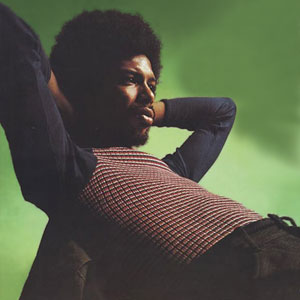
AN ‘AUTOBIOGRAPHY’ OF GIL SCOTT-HERON
I want to make this a special tribute
since I am a primary tributary and a
contributory, as it were,
to a family that contradicts the concepts,
heard the rules but wouldn’t accept
and womenfolk raised me and I was full grown
before I knew I came from a broken home
Oh, yeah!
sent to live with my Grandma down south
[wonder why they call it down if the world is round]
where my uncle was leavin’
and my grandfather had just left for heaven, they said,
and as every ologist would certainly note
I had no STRONG MALE FIGURE! RIGHT?
But Lily Scott was absolutely not
your mail order, room service, typecast Black grandmother,
On tiptoe she might have been five foot two
an in an overcoat 110 pounds, light
and light skin ‘cause she was half white
from Alabama and Georgia and Florida
and Africa.
Lily Scott claimed to have gone as far as the third grade
in school herself,
put four Scotts through college
with her husband going blind.
[God rest his soul. A good man, Bob Scott]
And I’m talkin’ ‘bout work!
Lily worked through them teens
and them twenties
and them thirties and forties
and put four, all four of hers,
through college
and pulled and pushed and coaxed
folks all around her through and over other things.
I was moved in with her.
Temporarily.
Just until things was patched.
til this was patched
and til that was patched.
until I became at
3, 4, 5, 6, 7, 8, 9 and 10
the patch
that held Lily Scott
who held me
and like them four
I became one more
And I loved her from the absolute marrow of my bones
and we was holding on
I come from a broken home…..
I come from WHAT THEY CALLED A BROKEN HOME,
but if they had ever really called at our house
they would have known how wrong they were.
We were working on our lives
And our homes and dealing with what we had,
not what we didn’t have.
My life has been guided by women
and because of them I am a man.
God bless you, Mama and thank you.
*******
Man, [Latin musicians] Ray Barretto, Joe Bataan, Johnny Colon—they were like mayors in my [New York City] neighborhood [when I was growing up. After moving to New York from the South,] I was raised in what we called Little San Juan in Downtown Manhattan. It was 85 percent Puerto Rican, 15 percent white, and me. This is the music I come from. You can hear the Latin influence in [my song] “New York City”; Joe did an instrumental remake of [my signature song] “The Bottle” which was baaaadd.
Me and [basketball player] Tiny Archibald were in the same class together at [DeWitt] Clinton High School; neither of us played on the basketball team our first year; Kareem [Abdul-Jabbar] introduced me to my wife; he used to come and jam with us on the congas.
********
I suppose I really am a piano player. Because I started trying to play piano when my grandmother got this old upright that the folks next door were about to take to the city moved into our house instead. From that day when I managed to plunk out “Duke of Earl” with one finger, I was playing. But from that day in the fifth grade when our homework was to write a story and I created a three-page, three-character (wasn’t really no) mystery story, I told everybody that I wanted to be a writer. And I dropped out of Lincoln University for a year to complete the novel [my first, titled “The Vulture”], not to play the piano.
I am a Black man dedicated to expression; expression of the joy and pride of Blackness. I consider myself neither poet, composer nor musician. These are merely tools used by sensitive men to carve out a piece of beauty or truth that they hope will lead to peace and salvation.”
— From the liner notes from Gil Scott-Heron’s first album, “Small Talk at 125th and Lenox.” The song “The Revolution Will Not Be Televised” was a single from the 1970 album
I don’t do protest songs. I do love songs. I do the kind of songs that I do because I really care about people. I get discouraged when people think what I do is radical, especially when I talk about saving the children while folks who are considered men of peace are negotiating whether to invade Grenada or Panama or Afghanistan. What I’m talking about making this country all the things we say we are already—the land of the free, the home of the brave, the place where everybody has a chance. It’s what everybody is talking about. They just don’t have the time to make it rhyme, they don’t set it to music, but it’s the same thing.
I play [my song] “Pieces of a Man” every morning just to get my head together…..[The song is based on] this cat in my neighborhood got laid off from the one job he ever appreciated and snapped. He didn’t hurt nobody, but he was put into Bellevue [Hospital Center’s mental ward]. Everywhere I’ve traveled people [outside the U.S.] are concerned about Black Americans, ‘cause we’re still not welcome in the U.S. and we’re still here—standing. So if a man survives and comes back the next morning, then God bless, brother, and good morning to you.
Nowadays, you either hear some words thrown on top of music or some music thrown under some words, but they are not songs—they don’t go together. What Brian [Jackson] and I managed to do was make music and words that went together. Brian had a classical background and his compositions were unique. The songs said something to me, and all I had to do was to say it in words.
People ask me, “What do you call your music?,” and I say, “I call it mine.”
“Bluesology” [how I have described my music] is the science of how things feel. I come from Tennessee. The blues, that’s what time it was. That’s what color it was. There were light blues and dark blues, and you played them and they came out this way or that way, or the other way, but they were all shades of the blues.
We did something [in the middle 1970s] about [Nelson] Mandela [the song “Johannesburg”] when he was in jail. When he got out, people said, “Gil, you did ‘Johannesburg’ too soon.” I said, “Well, the brother had been in jail for 12 years [then]…..I bet he didn’t think it was too soon.”
The fact that we dared to deal with politics[–]put that up in front of the music. That was a shame. I don’t think Brian was ever appreciated as the arranger and performer he was. The flute harmonies that he created for [our songs] “Very Precious Time” and “Winter in America” and for “Back Home” were fantastic.
The music business and the record business will be your life if you get into it. You start talking in terms of “product” and “gigs.” You become disconnected altogether from human beings. You begin to think that you’re somewhere else, as though your world doesn’t have contact with the other one. I didn’t want it to feel that way. I wanted to get to know my kids. I had been divorced and didn’t know it for a couple of months. Me and my wife had been separated for about four years. The divorce papers showed up, and I was already divorced. It just showed how disconnected I had been.
*******
There are strange voices in people’s houses nowadays. People keep saying, “Oh, I get my information from the TV,” like there’s a person in there….Well, you better try to find out who’s in there.
********
Probably the original rapper was God.
In the beginning, people would ask me if I was one of the last of the poets, and I would say I guess I’m the next to the last. There is a difference between rap and what I’ve been trying to do. I do poetry, and I think there is a difference between rap and poetry.
About this “Godfather of Rap” [title the media keeps giving me] thing; I hope there’s a Godmother, ‘cos I want to talk to her about these kids.
We got respect for young rappers and the way they’re free-wayin’/
But if you’re gonna be teaching folks things, be sure you know what you’re sayin’
I have a Master’s degree from a writing seminar at Johns Hopkins University, and I spend as much time finding the right sound and the right word as I do finding the right melody and the right rhythm. I think rap sometimes has a tendency to sacrifice perspective for the beat. I try to do all I can to make sure both are correct.
I like everything the kids like, because I used to be one. I have kids myself who like it a lot, and who wonder who I am as opposed to who [rap group Public Enemy’s leader] Chuck D is. You have to give everybody some time and some experience in order for them to find their own voice. I didn’t want anyone to sum up my career when I was 20.
I like to see young people [hip-hoppers] enjoying themselves. I would rather they focus on life than death. Let them have their time. They’re just playing music like and Brian was when we started. I see some real promise there.
********
I’ve seen a lot of improvements over the years. At the time I started out, Jesse Jackson couldn’t run for his life, much less run for president. And there was no such thing as a holiday for Dr. King, there was a bounty on him. We have a tendency to overlook the good that is done to concentrate on what hasn’t been done yet. To not validate what has been done is to disrespect all the folks who did a great deal to get to this point.
Some of the people who were not open-minded in the 1960s are still not open-minded, but I think society has changed a great deal for the positive. There is more understanding between everybody. Those who learned to communicate in the 1960s are having a positive effect on young people.
As far as old people, who never wanted the communication in the first place, they’re still the folks who run things. But a lot of young folks have come to see the positive side of communications.
********
I do feel very blessed. I think The Spirits are the way to trace it. I think everyone has spirits of previous generations that help them, whether it comes from instinct or conscience or things beyond that. I think that there are certain things that have happened in my life that have allowed me to get to the point where I am.
I’ve been directly put in places, and without certain spirits moving to assist me I would not have ever had those chances. Each time I just about bottomed out , something came along to encourage me. I’ve been very fortunate. The harder I have worked, the more fortunate things that have happened to me.
I wasn’t the standard room-service artist. But this is what the spirits gave me to work with. They gave me the outrage and the manner, so to make up for it they gave me a sense of humor.
I’ve done far more with art and with stretching myself than my grandma thought I would. I have had the opportunity to perform in Europe, and to record and play all over the world. It’s almost something that brings on cardiac arrest sometimes. I got to Germany, to Switzerland, even Boston, and folks know the songs and are glad to see me, like I’m someone they’ve known for a long time. It’s a great feeling.
*********
[To be poetic] is to have a little part of the [the poem] no one understands.
(Sources: The book “So Far So Good” by Gil Scott-Heron, Third World Press, 1990; the album “Spirits” by Gil Scott-Heron and the Amnesia Express, 1994, TVT Records; 1996 comments made at the Schomburg Center for Research in Black Culture, New York City; “Gil Scott-Heron Pushes His Revolution” by Farhan Haq, IPS; “Full Revolution,” by Tom Terrell, XXL magazine; “Sound Check” by Bobbitto Garcia, VIBE magazine; Promotional Packet, “S.O.B.”’s nightclub, 1990; “Gil Scott-Heron is no protest singer,” by Karla Peterson, The San Diego Union, 1990; Gil Scott-Heron leaps 11 years,” by Dirk Sutro, The Los Angeles Times, 1990; “Gil Scott-Heron,” by Hank Bordowitz, American Visions magazine, 1998; “Gil Scott-Heron, Back From Being Here All Along,” by Phyllis Croom, The Washington Post, 1994; “Smoking Revolution,” by rick Glanvill, The [London] Guardian, and “Mellow Rap Fellow,” by Paul Sexton, Times Newspapers Limited.)
Compilation copyright 1999, 2011 by Todd Steven Burroughs, Ph.D.
……I was very sorry to hear of your illness on WPFW, where I first discovered you thanks to your “Wednesday Morning Jazz: Freedom Sounds with Brother Hodari.” I had rarely heard such combination of spiritual consciousness (music) and talk on the radio. And now I mourn as you have now joined The Realm of the Ancestors.
From the International Concerned Family and Friends of Mumia Abu-Jamal email group:
Pyramid Bookstore Founder Hodari Ali has died.
Pyramid Books was the name of his first bookstore on Georgia Ave., near the campus of Howard University. It was opened after the San Diego native had a Great College Career at Howard University. A Communications major, he was instrumental in the publishing of The Hilltop, a Daily Newspaper College Newspaper.
He went on to start a company called LIBERATION INFORMATION, where i first heard about and finally got to meet him. He was our counterpart in the Washington D.C. area to us in Harlem, N.Y.C (United Brothers Communications Systems) in the distribution of an historic publication (s) called Africa and Africa Woman magazines.
In Harlem United Brothers opened more than 500 that sold, citywide, retail establishments that, reluctantly in the beginning since most were not Black owned, the magazines. In Washington D.C. Liberation Information not only opened retail establishments to sell the magazines, he opened the accounts to sell other black literature (Books especially) and established collection routes that ranged as far south as Richmond, Virginia. We followed his lead in NYC: selling Black Books in unorthodox places (grocery stores, candy store & etc).
This was a great time for Black America; a time that set the groundwork that helped Black Booksellers to build an “Independent Marketplace” that was ready to distribute it, when Sister Sharazad Ali published her monumental Bestselling book “The Blackman’s Guide to Understanding the Blackwoman” in 1989.
Sister Sharazad Ali restricted the selling of her book exclusively to Black Booksellers for most of the first year; so as United Brothers was saturating NYC with The Blackman’s Guide in NYC, Hodari Ali was doing the same in the DC area, opening first one bookstore, then in rapid secession he opened 4 (four more). He purchased the unheard of amount of more than $10,000 cash worth of books from United Brothers, with a like amount of other products – Message to the Blackman, Stolen Legacy, Mis-Education of the Negro, Supreme Wisdom, Fall of America & Our Savior Has Arrived; and the book that is a virtual “bible” for the pending Reparations Movement, Dr. Imari Obadele’s edited book with contributors Attorney’s Chokwe Lumumba and Nkechi Taifa: REPARATIONS, YES!
Hodari Ali was in the forefront of a never before time when Black people actually took control over a vital aspect of the Black Liberation Struggle. This was development of a Liberation Literary Marketplace. Never before had Black people had ready availability to our Vital information: an entire generation of Independent Black Business men and women was established on something as vital to the Liberation necessities of a Freedom bound people.
Of course the businesses included our, essential, Black Vendors, but Hodari Ali who’d been there from the beginning had now opened the largest chain of Black owned bookstores in the history of black people in America…..we have lost a Giant Servant among us…
We will soon hear much more about the life and times of Hodari Ali, and his work in other aspects of life, including his leadership in the Sudan, but as a Bookseller, today i focused, in brief, on his work to ensure that the vital information needs of black people or not only known, but are easily obtained……………
This one rocks me to my soul. I knew I had “arrived” as a Black press columnist in the 1990s when I was on the same Op-Ed page as Manning Marable. Damn.
It is hard to express how sad I am that we, not he, will reap the rewards of his 35 years of work, tomorrow and beyond. These remembrances say it much better than I could.
Perhaps now we can get to the core: that it’s not his advisers, it’s HIM.
The New Invasion Of Africa
Amiri Baraka 3/21/2011
So it wd be this way
That they wd get a negro
To bomb his own home
To join with the actual colonial
Powers, Britain, France, add Poison Hillary
With Israeli and Saudi to make certain
That revolution in Africa must have a stopper
So call in the white people who long tasted our blood
They would be the copper, overthrow Libya
With some bullshit humanitarian scam
With the negro yapping to make it seem right (far right)
But that’s how Africa got enslaved by the white
A negro selling his own folk, delivering us to slavery
In the middle of the night. When will you learn poet
And remember it so you know it
Imperialism can look like anything
Can be quiet and intelligent and even have
A pretty wife. But in the end, it is insatiable
And if it needs to, it will take your life.
Enjoyed this discussion.
March 23, 2011
Hollywood legend Elizabeth Taylor has died at the age of 79. The screen icon became a 12-year-old sensation in the movie, “National Velvet”. She went on to star in 53 films, winning two Oscars for her work. In Tell Me More’s occasional “Beautyshop” conversation, guest host Farai Chideya looks back on the Taylor’s life and discusses a new survey on changing notions of beauty in America. Weighing in are Latoya Peterson, editor of Racialicious.com; Galina Espinoza, editorial director of Latina magazine, and Marcia Dawkins, visiting scholar at Brown University.
Copyright © 2011 National Public Radio®. For personal, noncommercial use only. See Terms of Use. For other uses, prior permission required.
FARAI CHIDEYA, host:
I’m Farai Chideya, and this is TELL ME MORE, from NPR News. Michel Martin is away.
Coming up, April is National Poetry Month, and we want to hear from your inner poet. We’ll tell you how you can share your original poetry with us via Twitter in a few moments.
But first, we go into our Beauty Shop. That’s where we get a woman’s perspective on news and happenings in pop culture. Today, we’re looking at beauty, and we start with a look back on the life of a woman who defined beauty and elegance for generations of Americans: Hollywood legend Elizabeth Taylor.
She died this morning at the age of 79. The screen icon became a national sensation as a 12-year-old with her performance in “National Velvet.” Taylor went on to star in 53 films and won two Oscars for her performances in “Butterfield 8” and “Who’s Afraid of Virginia Woolf?”
Liz Taylor was celebrated as a screen siren with her signature dark hair and icy blue eyes, which helped win movie roles and husbands – seven husbands, eight marriages. Two of those marriages were to fellow star Richard Burton, with whom she starred in a number of films, including this one, in which Taylor played another fabled beauty: Cleopatra.
(Soundbite of movie, “Cleopatra”)
Ms. ELIZABETH TAYLOR (Actor): (As Cleopatra) Careful with Octavian.
Mr. RICHARD BURTON (Actor): (As Mark Antony) Well, let him be careful with me.
Ms. TAYLOR: (As Cleopatra) The Romans want no war between the two of you.
Mr. BURTON: (As Mark Antony) Wars. The world is filled with love. There will be no more wars.
Ms. TAYLOR: (As Cleopatra) There can be no question of your complete authority in the east. Antony, how will I live?
CHIDEYA: To talk more about her life, I’m joined now by Latoya Peterson, editor of Racialicious.com. She’s with us in our Washington, D.C. studio.
Also with us is Galina Espinoza, editorial director of Latina magazine. She’s in our New York bureau.
And joining us from Nashville, Tennessee is Marcia Dawkins, visiting scholar at Brown University.
Welcome to you all.
Ms. LATOYA PETERSON (Editor, Racialicious.com): Thank you for having me.
Ms. GALINA ESPINOZA (Editorial Director, Latina Magazine): Hello.
Professor MARCIA DAWKINS (Visiting Scholar, Brown University): Hi.
CHIDEYA: So, Latoya, let me start with you. What do you see as Elizabeth Taylor’s legacy in Hollywood?
Ms. PETERSON: You know, Farai, what’s interesting is that I don’t know much about Elizabeth Taylor. I’m working my way through a Netflix queue that has “Giant” in it and other things like that. But the only thing I know her for is “Cleopatra,” and it’s only because of the racial implications of her actually playing Cleopatra that I took such a long view at that movie.
CHIDEYA: Well, you know, what’s interesting now is that there was a recent biography that says that Cleopatra was of Grecian descent and may have looked more like Elizabeth Taylor than, let’s say, modern, you know, Egyptians. But tell me more about your views on the race issue.
Ms. PETERSON: I mean, I just think it’s fascinating that, one, Elizabeth Taylor has become the enduring symbol of Cleopatra because of this really epic role that she starred in with Richard Burton.
And at the same time, this idea of Cleopatra being a great beauty – one, which is why Liz Taylor was tapped to play her – suddenly comes into question when we’re talking about someone with more Semitic features, when we are talking about someone from a darker continent, when we’re talking about Cleopatra’s heritage and how she appeared and how she looked.
Most scholars tend to point to coins that were minted in the time of Cleopatra that showed her with corn rows, right, and what they describe as a hook nose, which automatically means she’s less beautiful than what people thought. And I’m, like, wait a minute, was that – was she less beautiful according to our norms now, or according to the norms in ancient Egypt? Or even the norms in Greece or Rome? I think it’s really interesting to see how we are shaping ideas of beauty even now, as we’re looking back.
CHIDEYA: Well, you know, Marcia, what do you think that she meant to women, and how do you think her particular type of beauty played into that?
Prof. DAWKINS: Well, I think the thing that she meant to women and to all people is really to symbolize how race and beauty – to kind of go with what Latoya was saying – are these social constructions. And I think she made it OK to be beautiful. I think she made it OK to be smart and beautiful. And I think she helped to usher in some of the new changes that we’re seeing now.
I was reading not only about Elizabeth Taylor in preparation for today, but to see how the new Cleopatra’s going to be cast, they’re saying, by Angelina Jolie. And so I was struck by some of the similarities between, not only their looks, but what they mean for society and for women today.
CHIDEYA: Galina, in her later years, Elizabeth Taylor made news for her bouts in rehab, substance abuse, prescription drugs and other personal drama. She also, though, took a very lead role in being someone who talked about AIDS and someone who had a role in helping America evolve and accept that people with AIDS were not to be stigmatized and shut aside. How do you parse out the rest of her life aside from just what she had on screen?
Ms. ESPINOZA: Well, I think what’s really amazing about Elizabeth Taylor’s legacy is that she was a groundbreaker in so many ways. We’ve been talking about “Cleopatra.” For that movie she was paid $1 million making her the first actor, male or female, to break the million dollar barrier and that, of course, has ushered in a whole new level of Hollywood salaries, but that was really a milestone at the time.
Similarly, she was one of the first celebrities to become a licensor. She had a very successful fragrance collection and she was, you know, as I said one of the first celebrities to see that opportunity and today, of course, it seems as if every other star has a perfume out there, I mean from Halle Berry to Jennifer Lopez to Jennifer Aniston, you know, it’s become the standard. But when she did that that was really new.
And, of course, you mentioned her commitment to AIDS activism. One of the hallmarks of Elizabeth Taylor’s career is that she had these incredible friendships with many of Hollywood’s leading men, such as Montgomery Clift and Rock Hudson, who died of AIDS in 1985. And it was his death that spurred her to become involved in the AIDS awareness movement at a time when very few people were talking about it, when there was so much stigma around the disease. When Rock Hudson died he was not even listed as having died of AIDS because there was so much shame and secrecy surrounding that diagnosis. And she was the one who said I’m going to take this out of the closet.
And by associating herself with this disease she encouraged and empowered so many others to kind of take that veil of secrecy around it. And to me those are her most enduring legacies, the way that she transformed Hollywood and celebrity.
CHIDEYA: That is Galina Espinoza, editorial director of Latina magazine. And if you’re just joining us, I’m Farai Chideya. This is TELL ME MORE, from NPR News. We are in the Beauty Shop.
In addition to Galina, I’ve been talking with the Latoya Peterson, editor of Racialicious.com, and Marcia Dawkins, a visiting scholar at Brown University.
And I will say before we move on that “Butterfield 8,” which was one of her Oscar-winning roles, is a movie I love just for it’s visuals as well as performances.
But, you know, let’s stay on this topic of the looks and notions of beauty and celebrity. A new survey conducted by Allure magazine found that the perceptions of beauty in America are changing. It found 64 percent of the readers they polled regarded mixed race women as the epitome of beauty. Compare that to 1991, Americans chose model Christie Brinkley as the woman who represented that ideal. Now they’ve chosen Angelina Jolie. So there’s a few different things going on.
Galena, I’m going to go back to you. Do you think that perceptions of beauty are opening up to be more inclusive or not so much?
Ms. ESPINOZA: I actually do. And I find the results of this survey to be incredibly heartening. I mean there’s an undeniable shift going on in the American population and, of course, Latinas are a huge driving force behind that. We now comprise more than 50 million Americans and, of course, what we are seeing as a result is not only in a changing look to American society but also a growing acceptance.
I think especially among young people today, growing up with mixed-race neighbors is, you know, pretty standard. It’s not the shocking thing that it was when I was growing up or when my dad immigrated here and he was the only Latino in an Irish-American neighborhood in Queens. You know, you don’t kind of have those bastions of neighborhoods of just one culture or race anymore the way that you did, you know, in the ’60s. And I think that that’s a huge shift and I think that the survey reflects what we’re seeing going on.
CHIDEYA: And just quickly, Marcia. You are of mixed heritage and you have a forthcoming book about mixed-race identity. What do you think of this?
Ms. DAWKINS: I think it is heartening in many ways but I still think it leaves a lot of questions unanswered, one of the least or one of the most of which is that I think we need to be careful about associating greater visibility or greater mixing of races and ethnicities with progress. I think it’s wonderful to see things opening up in terms of appearances, but I think it’s also equally wonderful and important to take a deeper look beyond those appearances and see really what’s happening in terms of public policy and how groups are interacting and being discriminated against.
CHIDEYA: And Latoya, one of the interesting tidbits in this survey said that basically 70 percent of the respondents wanted their skin color to be darker. Now I’m not sure if that’s “Jersey Shore” tan darker or…
(Soundbite of laughter)
CHIDEYA: …you know, what. I mean what do you think of that?
Ms. PETERSON: I think it’s kind of fascinating and it rolls right into a great concept that we talk about on Racialicious all the time, which was pioneered by Minh-Ha T. Pham of Threadbard which is called “The Violence of Revulsion,” right.
So suddenly it’s cool to have fuller features. It’s cool to have thicker lips. It’s cool to have a little bit darker skin but as long as it’s not on an actual person of color. These traits are more admired when they are coming from someone that they feel is closer to white.
And we look at this because, you know, it shows up in the fashion world, particularly with these black face editorials they’ll put out. It seems that white women are kind of the base that they use to describe everything that is beautiful. And for the rest of us, you know, it’s one thing to call us all attractive, it’s another thing to say oh, you are now equal or that you are seen as equal in pop culture.
You know, one of the things that surprised me the most about this survey was that the most attractive man was a South Asian male, right. The most attractive model chosen by women was a guy who was of Indian descent, right. Where do you see Asian men in pop culture? They’re generally the sidekick; they’re generally the joke, right?
There’s this show, “Rules of Engagement” with David Spade, right? And David Spade is this little evil troll of a man and yet next to him is this completely hot, you know, British, South Asian guy. I think his name is Adhir Milan(ph) or something like that, and yet he is the butt of every joke. He doesn’t get the girl. He’s this goofy, goofy sidekick. And so the question becomes OK, you can see us as attractive now but when does society change?
CHIDEYA: I want to move on, Latoya, to a topic – this gentleman has been in and out of the news: R&B singer Chris Brown. It’s been widely reported that he had an outburst yesterday morning after being quizzed about his relationship with pop star Rihanna. Of course, he was, you know, I mean there was the domestic violence incident that had people roiled for quite a long time and the issue came up again on “Good Morning America” yesterday. He pled guilty to assaulting Rihanna and “GMA” host Robin Roberts asked around about the assault twice. Here’s what happened on air.
Ms. ROBIN ROBERTS (Host, “Good Morning America”): It was very serious what you went through…
Mr. CHRIS BROWN (Singer): Yeah.
Ms. ROBERTS: …and what happened and even the judge though afterwards said that you had served your time…
Mr. BROWN: Mm-hmm.
Ms. ROBERTS: …as far as the community service and that and moving on.
Mr. BROWN: Yeah.
Ms. ROBERTS: But have been able to? How have you been able to do that?
Mr. BROWN: I’ve been focusing on this album, you know? I think this album is what, you know, I want people to hear and want people to really get into, so definitely this album is what I want them to talk about and not the stuff that happened two years ago.
(Soundbite of laughter)
CHIDEYA: Yeah, well, they’re not talking about what happened two years ago. They’re talking about what happened yesterday, which is apparently that he broke a window and took his shirt off and ran out.
(Soundbite of laughter)
CHIDEYA: This is the report. What are we to make of this?
Ms. PETERSON: I mean Chris Brown, we’re just going to have to nickname him can’t get right because he has been trying to sit there and rehab his image and yet he keeps doing things that are against, that are just against principle, right. Anger management. Don’t punch out windows. Talk about things calmly. If you’re really repentant, talk about why you are repentant.
But I find really interesting about this whole Chris Brown thing is the way that he’s been cast in the media versus Charlie Sheen’s winning, wife-abusing persona himself, right? So Charlie Sheen hasn’t really borne the brunt of punishment for domestic violence in the same way it appears that particularly mainstream media and mainstream gossip sites have been demanding of Chris Brown.
So it’s become a really engaging thing to watch even while Chris Brown is on his own little self-destructive cycle, so is Charlie Sheen and yet their treatment is completely different.
CHIDEYA: Marcia, do you think that people actually, I won’t say enjoy, but in some ways, you know, expect problematic black men in the media? I’m thinking of also of how Kanye West was, you know, constantly talked about. And I’m not saying that he shouldn’t have been. I’m just saying, you know, in regards to the whole question of how Charlie Sheen was treated etcetera. I mean is there a double standard?
Ms. DAWKINS: I think there is in many ways a double standard. I think we are so used to being entertained by and hearing about that old stereotype of the angry black man, that it’s really hard for us to get ourselves into a different frame of reference for thinking about Chris Brown with regard to this.
A lot of people have called him a thug, which is a word we haven’t used or we haven’t heard being used to describe Charlie Sheen or Mel Gibson, who has struggled with this issue earlier this year. And I think so in that way, yes, I do think that there is a double standard.
On the other hand, I think we’re noticing an interesting shift in our society in terms of a double standard for women and men generally. So we have this idea that I’m calling 2011 the year of the mad man, right, because this idea of mad masculinity is being turned into a commodity that can be consumed repeatedly across a range of media outlets. So you’ve got Charlie Sheen. You’ve got Chris Brown. You’ve got Mel Gibson.
And then, you know, even in terms of political news you’ve got Jared Loughner, right, you’ve got David Prosser who just called, you know, one of his colleagues the B-word to her face and this is a judge in Wisconsin. So I think there is something really going on here that needs to be addressed in terms of society. And I think a focus on it as an issue gossip, right, it reflects an inability or unwillingness to address these issues of misogyny and domestic violence in a serious and political manner.
CHIDEYA: Galina, just briefly. He is someone who gets number one hits, Chris Brown, and he’s got a very young demographic following him. Do you think that they’re forgiving of him?
Ms. ESPINOZA: I think the attitude towards him remains pretty mixed, you know, and I do think that the double standard pertaining to men and women is the one that I’m most concerned about. You know, that this is an issue of domestic violence and the same thing applies to Charlie Sheen’s case. I mean this is a man who put a knife to the throat of his wife.
And I think that those kinds of horrifying scenarios are getting lost in kind of the sport we’re turning all of this into and we are missing an opportunity to really address domestic violence in a more serious, constructive, thoughtful way. And I fear that that’s getting lost in all of this other sort of gossipy approach.
CHIDEYA: Well, Galina Espinoza is the editorial director of Latina magazine. She joined us from our New York bureau. Marcia Dawkins is a visiting scholar at Brown University and joined us from Nashville. Latoya Peterson is editor of Racialicious.com. She was with us in our Washington, D.C. studio.
Ladies, thank you.
Ms. PETERSON: Thanks, Farai.
Ms. ESPINOZA: Thank you.
Ms. DAWKINS: Thank you.
(Soundbite of music)
CHIDEYA: At TELL ME MORE, we’ll be celebrating National Poetry Month in April, and an occasional series called Muses and Metaphor will combine two passions of this program: social media and poetry. We would like you to go on Twitter and tweet us your original poetry using fewer than 140 characters, of course. We’ll air our favorites. Tweet us using the hashtag TMMPoetry.
You can learn more at the TELL ME MORE website. Go to npr.org and click on the Programs menu to find TELL ME MORE. Again, the hashtag is TMMPoetry.
(Soundbite of music)
CHIDEYA: And that’s our program for today. I’m Farai Chideya and you’ve been listening to TELL ME MORE, from NPR News. Let’s talk more tomorrow.
Copyright © 2011 National Public Radio®. All rights reserved. No quotes from the materials contained herein may be used in any media without attribution to National Public Radio. This transcript is provided for personal, noncommercial use only, pursuant to our Terms of Use. Any other use requires NPR’s prior permission. Visit our permissions page for further information.NPR transcripts are created on a rush deadline by a contractor for NPR, and accuracy and availability may vary. This text may not be in its final form and may be updated or revised in the future. Please be aware that the authoritative record of NPR’s programming is the audio.