Michael Brown’s family is beyond outraged at the devious way the police chief has chosen to disseminate piece mil information in a manner intended to assassinate the character of their son, following such a brutal assassination of his person in broad daylight.
There is nothing based on the facts that have been placed before us that can justify the execution style murder of their child by this police officer as he held his hands up, which is the universal sign of surrender.The prolonged release of the officer’s name and then the subsequent alleged information regarding a robbery is the reason why the family and the local community have such distrust for the local law enforcement agencies.
It is no way transparent to release the still photographs alleged to be Michael Brown and refuse to release the photographs of the officer that executed him.
The police strategy of attempting to blame the victim will not divert our attention, from being focused on the autopsy, ballistics report and the trajectory of the bullets that caused Michael’s death and will demonstrate to the world this brutal execution of an unarmed teenager.
Benjamin L Crump, Esq.
Anthony D. Gray, Esq.
Daryl D. Parks, Esq.
Category Archives: newspaper
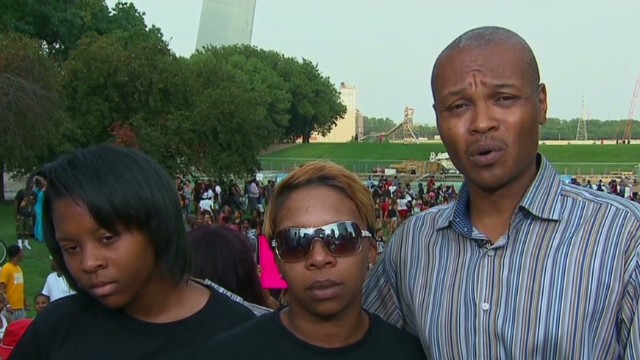
Obama On Michael Brown This Year (Today), Obama On Trayvon Martin Last Year And The Year Before That
Some Justice, Finally!
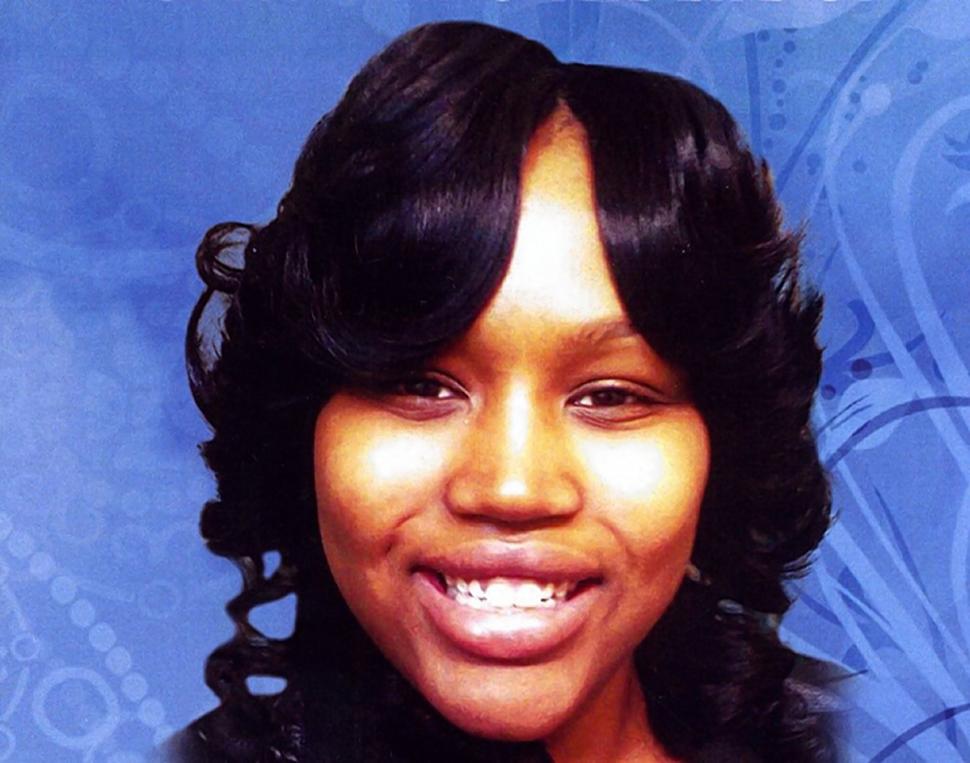
Mumia Abu-Jamal Addresses 2014 NABJ Convention

WOW! It’s been a loooong journey from 1995! LOL! 😉
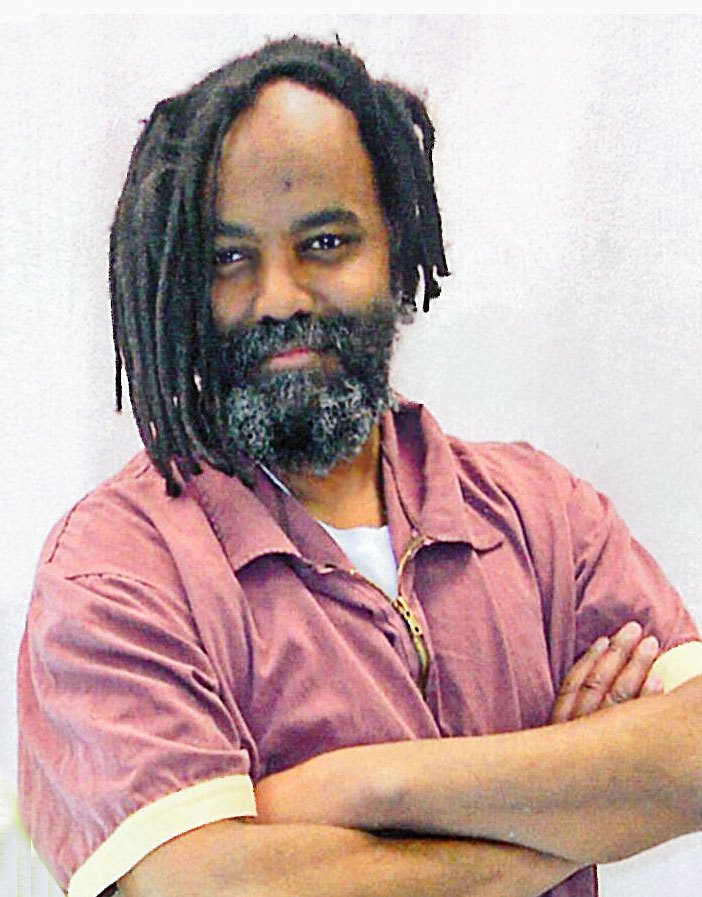
Journalism: Activism or Profession? (AUDIO LINK)
[Speech writ. 7/29/14] © ’14 Mumia Abu-Jamal
When we consider the historic role of journalist among Black people, we are left with the deep conviction that, for Black people, the necessities of the time demand that activism must play a role in the performance of the profession.
It must be so, I argue, then – in our not-too-distant past – and now, in our troubled present, for to fail to do so leaves our people at the not-too-tender mercies of a system that has demonstrated a kind of vehemence and animosity that few populations in America have suffered from.
For ultimately, a profession is just that – a claim to act a certain way in the world, according to certain stated norms and codes that a certain area of employment must abide by.
Except in the long history of Black America, we know better.
We must know, as did the esteemed Black journalist, Frederick Douglass, that a constitution written on parchment would differ greatly from government and legal practice, when it came to Black people. They were promises: promises broken and unfulfilled for over a century, after the Supreme Court decided in the Plessy decision that ‘separate but equal’ was good enough. Black journalist Ida B. Wells-Barnett worked long and hard to bring light to the lies used to justify lynching’s against Black people. So much so that, according to recent scholarship, she was shunned and avoided by leading lights of the early civil rights movement, who regarded her as too militant’ too outspoken.
Meanwhile, under the Hayes-Tilden gentlemen’s agreement, white terrorism, expressed by lynching was the peculiar American custom that wasn’t spoken of in polite society. So, quietly (except for Wells) Black bodies hung and burned by the thousands — across America, the courts and law deeming it mere local custom, beyond their control.
When we enter the modern era, we see a panorama of Black pain that is as unprecedented as it is silent. I speak of mass incarceration, the targeting, imprisonment and criminalization of dark people in ways (and in numbers) the world has never seen. For decades.
And, until recent days, the silence -even among Black journalists – has been deafening. Recently the New York Times has editorialized against it. How many Black newspapers have done so?
Why not? Professionalism? A false objectivity?
The late historian, Howard Zinn, for years decried the notion of professionalism. In a speech in Colorado in 2006, Zinn said:
‘We all go into professions where you’re supposed to be professional. And to be professional means that you don’t step outside of your profession. If you’re an artist, you don’t take a stand on political issues. If you’re a professor, you don’t give your opinions in the classroom. If you’re a newspaperman, you pretend to be objective in presenting the news. But, of course, it’s all false. You cannot be neutral.’
In Zinn’s words, “You can’t be neutral on a moving train.”
As journalists, the choices before you are actually quite clear. Follow the dictates of your bosses; or serve the interests of your people.
Black America, in the main, lives a life of hell – daily. For them, freedom is a word, but prison is inevitability. For them, civil rights are a mirage, and daily humiliations are a certainty.
For all the powers of the State are arrayed against them.
They know this – as do we, but such lived realities rarely flow from our pens, our mouths or our fingers.
So, we write dross on the life-styles of the rich and famous. Or some blathering from a politician.
While our people suffer.
The choice, for any journalist, should be clear.
Thank you, NABJ.
–© ‘14maj
T-Shirt Power!

James Baldwin On Being An American Writer

I’m in McKeldin Library right now, thumbing through its bound set of Freedomways magazine. I find where Augusta Strong wrote the article, “Notes on James Baldwin,” for the Spring 1962 issue. (Augusta Strong was listed in the contributor’s page as “a former English teacher and newspaper reporter who is a frequent contributor to Freedomways.”) She cites a Baldwin New York Times essay or interview:
“……to be an American writer today means mounting an underdog attack on all that Americans believe themselves to hold sacred…..it means fighting an astute and agile guerilla warfare with that American complacency which so inadequately masks American panic.” Furthermore, he says, the writer must “dismiss any hopes of winning a popularity contest,” and he adds, “….one must take it upon one’s self the right to be entirely wrong ….and accept penalties, for penalties there will certainly be.”
*Whew!* That Was Close! LOL!
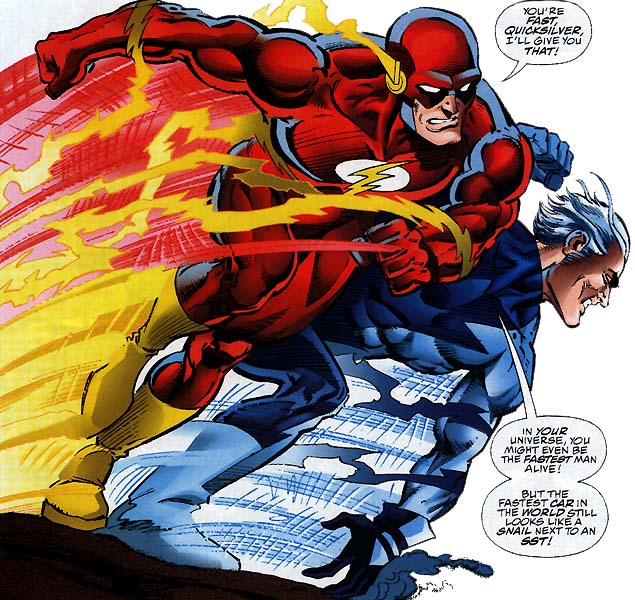
That aborted Time Warner-News Corp. merger would not only have created a ridiculously large world media conglomerate, it would have ALMOST merged Marvel and DC movies! *Gulp* NOT IN FAVOR OF THAT! 😡
New “Doctor Who!” New “Doctor Who!” Woo-woo!

“The Diary Of Malcolm X,” Out At Last!

My piece on this, and the OAAU reunion, is here at The Root.

 Drums in the Global Village