This post shouldn’t make me feel good about being a nerd/dork, but it does anyway! LOL! 🙂
This post shouldn’t make me feel good about being a nerd/dork, but it does anyway! LOL! 🙂

…..The Legion of Superheroes to show up on “Smallville” early next year… Exactly one month from today, in fact. 🙂

DECEMBER 22ND UPDATE: Loved this new trailer! 🙂
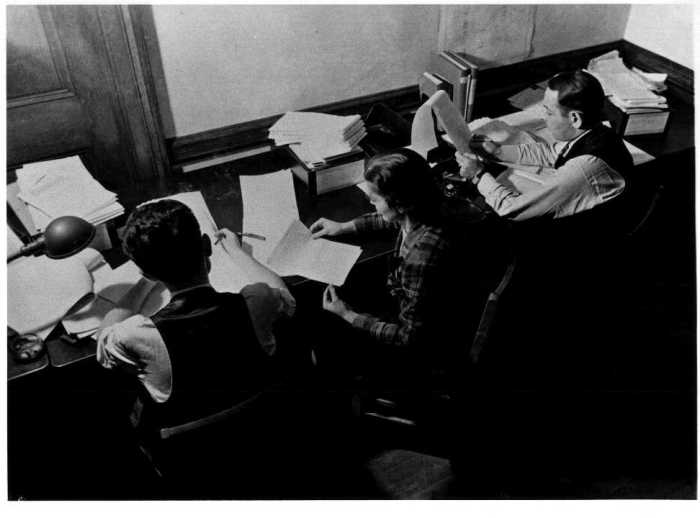
……the return of the Federal Writers Project. It’s a great idea. There is SO MUCH documentation of the 20th century left to do professionally, and thousands of unemployed journalists, so there ya go.
Let’s call it the (Studs) Terkel–(Zora Neale) Hurston Writers Project, and get busy right away! C’mon, Obama! Hook up America’s literary class! 🙂
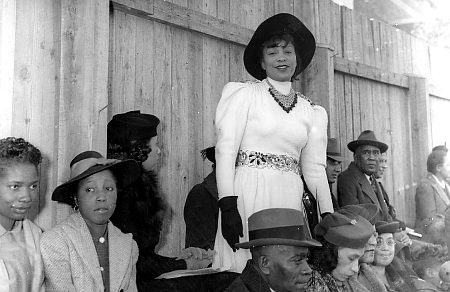
Asante Sana to the biographer who did some serious work here on a serious activist-writer. I’m very glad this story is now out.
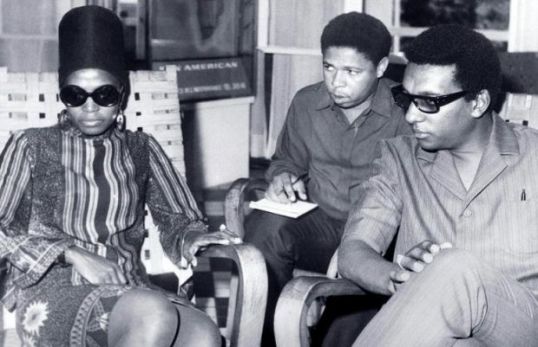

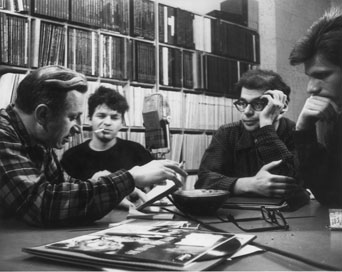
Studs Terkel. The man, the work. (Ah, the days of my youth, when I actually thought being an “oral historian” was a JOB! LOL!) 🙂

I’m stealing this article from April Silver’s Akila Worksongs. As many of you know, Baraka’s been clear on this election.
From Amiri Baraka, October 27, 2008
American Junkies
What should be understood in the current presidential campaign is that there are millions of junkies in this country. Addicted to White Supremacy. It is an addiction much stronger and much harder to kick than Heroin, also known as “Horse” or “Scag” or to the real down street people, “Boy” (So we can see that male chauvinism must be one of its components). What is also amusing, to a point, is that another addictive substance, Cocaine is called “Girl”. Americans hooked on Boy since the slave trade. Girl is more recent but they are old time junkies.
The scariness of these addictions can be realized by anyone following the campaign for president with any amount of objectivity. For instance, no matter that it should be clearly understood that McCain (say what?) has been little more than a very mild underarm deodorant for the Republicans. Having voted with Bush 90% of the time. And to his crack to Obama that he wasn’t W., that’s not a very good excuse. Most people would admit that, except when checking his voting record.
And let’s face it the Republicans, with their “Southern (white racist) Strategy” have acted like a thing with no legs in the years since Reagan. The Willie Horton race baiting stunt in the Dukakis’ election or the “SwiftBoat” character assassination has been typical. Not unlike McCain’s use of the William Ayers terrorist association gimmick or the why- we- must-find-a-cure-for-melanoma-by-election-time cheer leader Sarah Palin.
Palin herself seems, despite the typical thoughtlessness of McCain’s choice, part of my logical analogy of Boy & Girl drugs for Americans, though perhaps inaccurately named, if McCain is Scag, “Boy”, a downer, Palin is “Girl” some head rattling “Blow” for Americans the GOP thinks are “that dumb”. One hopes that there are an overwhelming number of women who will be deeply insulted by McCain’s attempt to use Palin as the “beard” to masquerade the dead-end dullness of his campaign.
But if we can make light of McCain’s shallowness and often desperate and dangerous stumbling, we should also be aware that we are surrounded by millions of white supremacy junkies, who no matter the obvious disparities between the candidates, are ready to “shoot up” another time with whiteness and get that pathological “high”. The theme of the McCain campaign is yet another indication of who McCain & Palin are, “Country First” is nothing but “Deutschland Uber Alles” (Hitler’s theme song) in redneck. McCain knows and his handlers know even more clearly that they are playing the race card, as the Republican Party has known it has been playing the race card, since Kennedy’s murder. There’s some evidence that the crew in the white house as we speak have been put there by his murderers. McCain has been dealing in redneck racist code throughout the campaign. His referring to Obama as “that one” has been cited by many as muffled n- word calling. But it has been the total contexting of Obama as “other”, “not one of us”, “un-American”,”unpatriotic”, even by some fools earlier, as “not black enough”.
Obama, on the other hand, has been usually quite skilled at deflating, disarming and redirecting most of McCain’s most brazen attempts to not so subtlely character assassinate or brand him. McCain’s relentless use of lies and half truths, teeth set hatching a frozen fake smile trying to appear magnanimous (as in the last debate) while his eyes spin around like pinned down billiard balls imagining a retort better than he will come up with.
What is frankly scary is that, for instance, after the last debate where Obama stated and restated defense, healthcare, economic choices to McCain’s continuously over generalized calls for “working together” in the most false sounding altruistic television host tone, sounding more desperate than convincing, when you heard the comments of some of the commentators after the debate you wondered were you watching the same program. The debate was so one-sided that even discounting different reactions by people holding different ideologies and philosophical and political expectation, you got the feeling that you were watching some junkies who’d just “shot up” analogy between the how the failure and fall of Germany’s Weimar Republic, the last democratic republic prior to Nazi Germany’ occurred in a time much like our own. In that Germany the chaos and confusion and economic weakness and social debilitation caused first the World War 1 led to the creation of the German Socialist Workers Party, led to the rise of Hitler and the destruction of that democracy by a Fascism that engulfed the world in World War 2.
The moral and political poison of the Iraq war has hollowed this nation out on the inside and made it seem like Count Dracula to the rest of the world, even to the other imperialist Draculas. Economically, at 12 billion dollars a month it has even cost this nation its titular distinction as “Head Dracula”. These wars, which at base are supposedly aimed at destroying Osama bin Laden, Qaeda, and Terrorism worldwide , since 911 has been focused on an “Axis of Evil” (Afghanistan, Iraq, Palestine, Lebanon, Iran, North Korea, China) which are all colored people. Just as the majority of the people in the world are colored.
But the Bush years, actually going back to Reagan’s toppling of what was left of the legacy of the “New Deal”, the would be benevolent monopoly capitalism of the “welfare state” and the beginning of the “supply side” sharper “trickle down” philosophy and policies of the glutton hyper imperialist state, marked by relentless deregulation in order that Dracula might feed without limitations and all the internal draculas within it, its corporate parasites might also feed without limitation without regulation has suddenly crashed, just as Hoover’s blood filled monstrosity fell in 1929 . Just as the present unregulated monstrosity of overeating and defecating on everything throughout the world has been stunned by its own madness and crashed. It is not an “economic crisis” it is a crash!
This is the other aspect of national American addiction , and the creation of a population loaded with junkies, an addiction to monopoly capitalism, imperialism, as its world face. American imperialism has now not only reached the limits of its bloated terror on the world (and it is significant that now one of the most ubiquitous health problems in the country is obesity. As if nature itself were screaming, Oh Beast! Stop yrself! But in the frenzy of deregulation in all directions topped by the maniacal Bush-Cheney unilateral monstrosity, defaulting on treaties from global warming, anti missile, nuclear, world court, geneva convention, eating up, blowing up, murdering, marauding around the globe just like Bush walks, the strut of an empty fool.
The major problem with the crazed deregulation of Monopoly Capitalism for big capital itself is that in the end it is so insatiable that it will eat itself up. The willful permissiveness of the Bush regime allowed the corporations to run wild in its search for profit at any cost. One aspect of this bloated feeding is it allowed many of the financial institutions to turn themselves into little more than snake oil salesmen, con artists, until they started conning each other, not just the 6000 homeowners that are being foreclosed each day.
Yet when the markets crashed after all the bullshit about “Free Enterprise” and the “Market System” which is all they mean by “Freedom” and “Liberty” when they lose their shirts gaming us and each other, they are allowed to come crawling back to us for our money, for our tax money. Remember when they talked about “Government Bailout” they are talking about political and financial criminals saving their grand life styles with our money. Not a dime to bail out the foreclosed homeowners, but more of our money to bail out the criminals, so they can go on being criminals. It is not a bailout, it is a crime. Million and Billionaires using working people’s money so they can stay rich.
So they can live in their nice, clean, quiet, well policed, well employed, educationally secure, culturally nourished communities while you live in neighborhoods where to go to the store is a risk. “Bailout”? I know if I spend 800 Billion dollars I don’t want “oversight, I want to own it!” But that’s socialism they scream, well if they don’t like it, if monopoly capitalism and the free market are so superior why do they run to public funds to save themselves? We don’t need a bailout to restore monopoly capitalism’s gangster institutions control of our lives. We need to buy those institutions and turn them into publicly owned institutions.
Those foreclosed homeowners should be paying their restored mortgages at lower rationalized rates with no hidden trick increases to public institutions and those resources returned equitably to the community rather than bloating already obese fat cats and their legal criminal enterprises.
Notice, also, how now McCain (is he related to the biblical Cain who slew the Able) they are accusing Obama of socialism. I wish some of these pseudo and infantile leftists would understand that if Obama is talking about universal healthcare as opposed to McCain giving everyone $5000 bucks to give to one of the criminal health care providers which would be taxed, that he is playing the “market” game in the end, i.e. merely giving your money back to the culprits of this financial crash. And leaving most of us without health care. Why? Because as long as the ruling class corporations are making your money its “free enterprise” but to put such things as health care and housing under democratic public control is “bad” because its “socialism”. Not quite. But it is a step toward what would be State Capitalism, which would be infinitely superior to Big Dog eat Little Person system that exists under monopoly capitalism. This should be easier to see now. One reason it is not is because the media is owned by the same corporate criminals.
That’s another reason why the media are the most racist of racist influences in the campaign and why they muffle the real meaning of the fall of almighty capital. In Europe where I’m heading now to work reading poetry, the dollar, once like mighty whitey is now worth about 60 cents. Since 911 when sympathy for the US poured in, the political and moral macabre “boss of the world” unilateralism of the Bush-Cheney craziness has turned the US image into a demoniacal laughing stock.
But US citizens must be forced to kick the twin addictions of Monopoly Capitalism and Racism, but we should also understand Male Chauvinism and Homophobia are sustained by monopoly capitalism. In these last two weeks of the campaign we can expect to see incredible examples of these sick and obsessive pathologies. Already there is an ignorant asshole riding through downtown Miami with a t shirt the back of which reads!” Nigger, Please! It’s the White House” or the west coast Republican women who have produced a fake food stamp with Obama’s likeness on it surrounded by, say what? A watermelon, some barbecue ribs, a bucket of fried chicken and some Kool Aid. These dimwitted debutants claim they didn’t think it was racist. But no one thought they could think anything anyway. They’re just addicts, so is my man with the shirt. In a poem of mine I called the white house “the Caucasian Crib” but if some of these dope addicts can kick maybe even go cold turkey maybe we can begin to change that. Not necessarily those I mentioned, but some of the hundreds of thousands with less funky “joneses” than those!
It’s at least obvious to me that if the left is to have any authentic legitimacy in this country, at least with more than just themselves, as Obama is elected we must be about the business of putting together a huge “Left Bloc” of small ones in each state to fight for the leftward tilt of this cross roads, this confluence of fascism and socialism amidst the economic chaos and war these times are carriers of. It is Weimar to the bone. And McCain is just the kind of spineless monopoly capitalist –blockhead imperialism shapes who could lead this country directly into fascism. Obama offers an FDR like image, in the sense that he will have to borrow from socialist leaning policies, just as Roosevelt borrowed heavily from the old CP for Social Security and Unemployment Insurance.
If somehow these American junkies permit the biggest dope dealers of US monopoly capitalism to prevent Obama from being elected, this same kind of Left bloc must opt for a more disruptive course of action. One that would help derail what would then be a cattle car to the end of Weimar 2 and into the most bitter and destructive advent of a World War 3.
Make no mistake, the recent swiping of 700 billion dollars to bail out investment banks and another 250 billion to bail out commercial banks is to save monopoly capitalism at the American people’s expense! They’re talking about “oversight” echoing Obama’s citing the Republicans obsession with “deregulation” as the main reason for the present economic crash (not a crisis but a Crash) but if we pay almost a trillion dollars for the banks we don’t need “oversight”, we need to own them. Yes, and that would be state capitalism, a distinct step forward. If the market is so hip why don’t they just continue to play in that traffic, why come to us to bail out private enterprise?
But more and more they will have to borrow aspects of social democracy to save Monopoly capitalism. (See the latest Guardian (UK) newspaper, pleading with the big bourgeoisie to ease into social democracy.) But nothing can save this certainly all but defunct oppressive economic system, from the doom of its own internal defects. Will we manage to avoid the madness and fascist violence of the collapse of the Weimar republic (pre Hitlerian Germany) by taking the step this election proposes with an Obama presidency or will we plunge headlong into an oblivion of national collapse, with McCain piloting us all into the kind of crash he wants to be known as a hero for.
Remember, the US lost that war, just as it’s losing in Afghanistan & Iraq and its image as a beacon of democracy all over the world!
Amiri Baraka
10/27/08
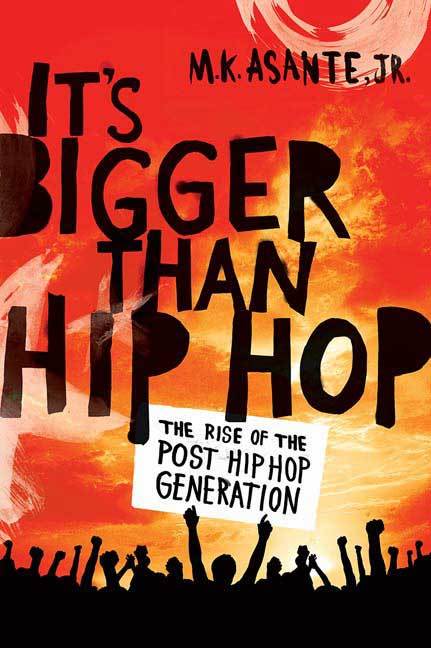
This brand-new book occupies the intellectual space between Kevin Powell’s essay collections and Bakari Kitwana’s seminal work.
M.K. Asante, Jr., a filmmaker, poet and college professor, adds his name to the list of young (under 45 🙂 ) Blacks who’ve written works that seek to combine journalism, personal essays and contemporary history, using hiphop of the point of departure. He is an optimistic self-described “artivist,” a 26-year-old writing to inspire younger people who will pick up this book because of its title. It’ll be their text for Black Contemporary Socio-Political Development 101, and believe me, they need it.
Get this book for the teenager (or college-aged young adult) in your life and make him or her read it. Then make him or her look up all of the authors he mentions.

Although I will never be a fan of Reginald Hudlin’s first arc (see my comments at the bottom of this link), I admit this trailer (check the interview below it)—a word-for-word, scene-for-scene adaptation of that story’s first few pages—had me quite excited.
He’s greatly improved (I really liked BP 38), but to be honest, I’ve always thought that Hudlin’s Panther work would make better movies and television than comics. But I think it’s more about me being too old to read modern Marvel Comics. Judging by the first issue, the writer who replaced Hudlin for the current arc made the BET exec seem literary in comparison. 🙂

….the excellent Harlem Book Fair panel on James Baldwin? The S. Pearl Sharp discussion of Baldwin’s Hollywood adventures—trying to produce a film on El-Hajj Malik El-Shabazz—was worth the time alone. And Herb Boyd’s masterful work of moderator-as-narrator. And Baraka. Damn. That’s all they wrote.