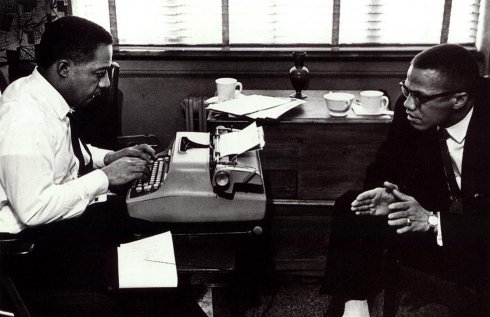
John Hope Franklin aided Thurgood Marshall in the Brown case and wrote a definitive history of African-Americans. If that was all he did, it would be enough. But he was a very productive scholar who was serious squared about (African-)American history.
Category Archives: books
Did You Read………..
….this interview with Manning Marable about his upcoming biography of El-Hajj Malik El-Shabazz (Malcolm X)?
I Watched The Watchmen :)
…..and my quick verdict is this: it’s a great adaptation of the famous graphic novel. Now, as a movie….. dunno. I’ve seen it twice now, and I’d put in the Top 5 of the Best Superhero Movies ever just for effort. But it would probably be No. 5.
So, to sum:
APDAPTATION=A
MOVIE=B
Speaks For Itself, Don'tcha Think?
Book Review: A Real-Life (Dan And Huey) Freeman

Incognegro: A Memoir of Exile & Apartheid.
Frank B. Wilderson, III.
South End Press.
498 pp. $18.
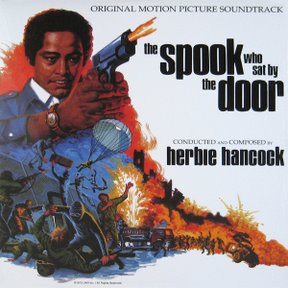
This chronicle of the adventures of Frank Wilderson, III reminds Black Americans that the classic novel and film “The Spook Who Sat By The Door”—where social worker Dan Freeman, the first Black CIA agent, uses his training to turn a street gang into a revolutionary army—wasn’t always metaphor. The author proudly portrays himself as a modern-day Br’er Rabbit-David Walker combo, a trickster character who loves truth so much he’s willing to literally fight for it, regardless of the costs. This beautifully written book documents those struggles for truth, both in South Africa (where he was a member of the armed wing of the African National Congress between the period of Nelson Mandela’s 1990 release from prison and his first years as president) and in America, as a teen in the heyday of late 1960s Berkeley and as a middle-aged Baby Boomer in early 00s-era California academe.
Wilderson is anything but a good Black liberal. A laughable notion, that, since he’d clearly eat one for lunch and spit out the bones. The wickedly great twist of this American Book Award-winning memoir—which went through two book publishers unsuccessfully before landing at South End Press—is that Wilderson was/is a hard-core Leftist revolutionary during an era in which that was/is insanely unpopular on both sides of the Atlantic.
In South Africa, Mandela once called the author, one of the few African-Americans to help lead the ANC, “a threat to national security”—in short, a terrorist. Wilderson was named such because he and his colleagues continued to clandestinely push for socialism by any means necessary while Mandela had embraced the military-corporate establishment and the idea of peace and reconciliation—the latter the author dismisses as “anger management for Blacks.” The hope of a socialist South Africa led by Leftist Chris Hani, Wilderson’s leader (seen with Mandela above), is eventually shot full of holes as Hani‘s blood leaks out. “It was a blind faith I never threatened with scrutiny,“ he said of his time as a South African revolutionary. “I simply incorporated my dream to no longer be the slave of my appearance (the slave of thick lips and guilty eyes; my dream to free my mirror of all contemporary gestures—you’re Black but you’re intelligent, Black but fairly handsome, Black but you come from good….good Black stock?), incorporated it into the dream of a proletarian dictatorship. For five years I kept the faith. But now the world was rushing in again.”
He doesn’t fare much better later, in the land of the free, hope of the slave. The stifling nature of white elite “liberal” universities—and his romantic relationship with a white woman, a fellow professor—brings out his inner Huey Freeman in ways that would make the character’s creator Aaron McGruder chuckle and Michael Eric Dyson and Cornel West quietly step away before their speaking tours get canceled. In one of many serious-but-hilarious episodes, Wilderson laughs at the tension he created in his department after he told his white students he went to South Africa because he wanted to kill a white person, but wanted it to matter politically. At one point, the author asks himself “if Black hatred isn’t a deep well. I drop a stone into it and listen, waiting for the sound when it hits the water. It’s a sound I never hear.”

Simultaneously an honorary Black South African and an honorary American, Wilderson is under the illusion that he is free wherever he goes, which brings all kinds of trouble down on his hard head, and he wouldn’t have it any other way. (As he admits, terms such as delicate and balance “are words I can hardly spell.”) The repeated collision between freedom and voluntary slavery makes a spectacular creative tension that is sustained throughout, deftly sailing the near-500-page tome onto intellectual, personal and socio-political shores occupied by 20th-century writing legends James Baldwin and Eldridge Cleaver and Black Panther living legend Assata Shakur. “I find myself wanting to go home,” he muses at one point, “with no idea where that might be.” His home is with those writers.
Wilderson combines poetry, political travelogue/adventure, diary, radical theory, autobiography, essay, domestic comedy and folklore into organized, relentless time-shifting fragments that explode, shooting up to cut through pre-conceived notions and perceptions carried by those who dare to follow radical autobiography and memoir. “Incognegro” is a clinic for aspiring writers and thinkers. Wilderson’s need to find the larger meanings contained in the glory of (his own) narrative serves him well; he is doing what his former ultra-Leftist ANC comrades, in a lost struggle against Mandela and the ANC’s compromised hegemony, had to eventually do when the music died: “[to] speak his name and mark his moment in history before history came to an end.”
By willing to leap, bloody sword in hand, into contradictions most Black people happily choose to ignore, the author shows a dangerous level of self-awareness and honesty that has led many of his scribe-tribe to madness or deep cynicism. He is saved by his righteous and romantic rage, sarcastic humor and incredible command of the mysterious alchemy of turning word to lyric, past to present and back again, thoughts into actions, and actions into written memories. It’s that latter magic, superbly done here, that is truly revolutionary.
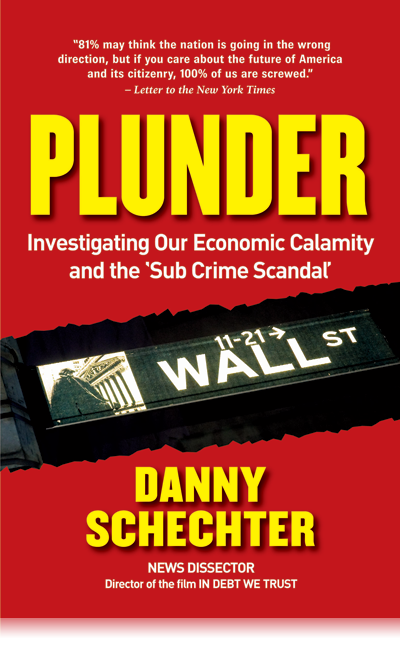
200-Word (More Or Less) Book Review: "Plunder" by Danny Schechter
Plunder: Investigating Our Economic Calamity And The Subprime Scandal.
By Danny Schechter.
New York: Cosimo.
240 pp. $14.95.
Danny Schechter is one of my heroes, and I wasn’t afraid to tell him so when I met him. Ever since “South Africa Now” (showing my age here 🙂 ), he’s been a straight-up truth-teller. I used one of his books, “The More You Watch, The Less You Know,” when I was writing my doctoral dissertation.
He continues the tradition here, putting himself in the company of a few journalists who tried to inform America that a serious recession was coming. But, as usual, Schechter is ahead of the mainstream, warning of “a vast CREDIT AND LOAN COMPLEX every bit as insidious as the Military-Industrial Complex. Most Americans have no idea that this even exists.” And you can bet which government it funds.
Schechter blends charts, articles, books, interviews, journalistic observations and even poetry together, walking the reader month by month (almost day by day) through 2007 and 2008 to show it how capitalism unraveled in front of America’s eyes. He explains boldly how it’s actually American democracy that’s threatened by the economic disaster. The journalist-filmmaker-activist-blogger stays in the street and On The Street, and does a very good job of balancing both. Schechter once again earns the reputation he has gained, joining those who proudly stand in the shadow of muckraker legend I.F. Stone.
Book Review: How'd We Get Here Again?
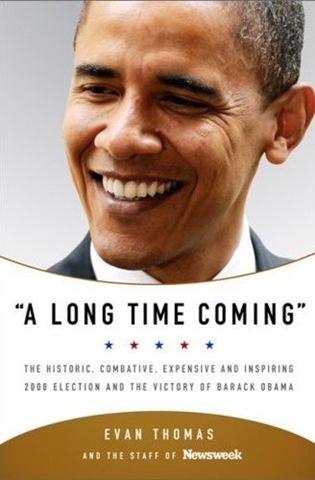
“A Long Time Coming”: The Inspiring, Combative 2008 Election and the Historic Election of Barack Obama.
By Evan Thomas and the staff of Newsweek magazine.
New York: Public Affairs.
256 pp. $22.95.
Rem Rieder, editor and senior vice president of American Journalism Review magazine, was clearly tired of hearing and/or reading for the zillionth time the now-accepted narrative about political journalists and Decision ’08: that Barack Obama’s presidential campaign got a free ride from The Boys (and Girls) On The Bus. “The truth is, the Obama campaign was well-organized, disciplined, virtually error-free. Obama was an inspiring candidate to many, a dazzling public speaker with an inspiring storyline,” Rieder wrote in AJR’s December 2008/January 2009 issue. “The McCain campaign, in contrast, was a train wreck, lurching from message to message. And McCain, who can be an immensely appealing figure, seemed angry and unfocused.”
That’s as good a summary of this book as any. Evan Thomas has crushed Newsweek’s coverage of the two-year rollercoaster into this clear, concise book that allows the reader inside the campaigns’ inner sanctums, due to the magazine’s agreement to not publish the fly-on-the-wall happenings until after Election Day. “Coming,” then, is a very slight outgrowth of the meat of Newsweek’s special post-election issue (which, coincidentally enough, was online until this book’s release).
The newsmagazine has had this arrangement with presidential campaigns since 1984, and the trust shows. The publicly displayed hubris and cluelessness of the Hillary Clinton’s would-be nomination crew pales compared with the tone and tenor of its inside fights, and it turns out the McCain-Palin campaign really didn’t know what it was doing from one day to the next. Meanwhile, as the entire world remembers, Barack Obama’s train ran smoothly down America’s track into the White House, The Big Engine That Would. “Coming” answers the how, step by step, day by day.
If you watched the evening news every night last year, this book is just detail. But it’s rich, absorbing and well-written detail, a finely crafted rough draft of history. It rightly belongs on the Obama bookshelf next to Obama’s own “Dreams From My Father” and “The Audacity of Hope” and David Mendell’s very good biography, “Obama: From Promise To Power,” all four now awaiting the scores of tomes to come.
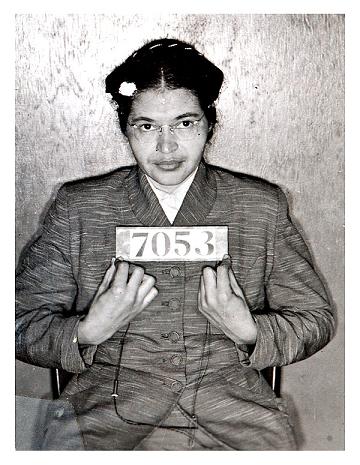
The Rosa Parks Myth
It’s clear this truth can’t be told enough. 🙂
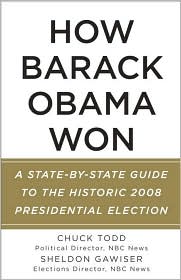
300-Word (More Or Less) Book Review: "How Barack Obama Won" By Chuck Todd and Sheldon Gawiser
How Barack Obama Won: A State-By-State Guide To The Historic Presidential Election.
By Chuck Todd and Sheldon Gawiser.
Vintage. 272 pp. $12.95.
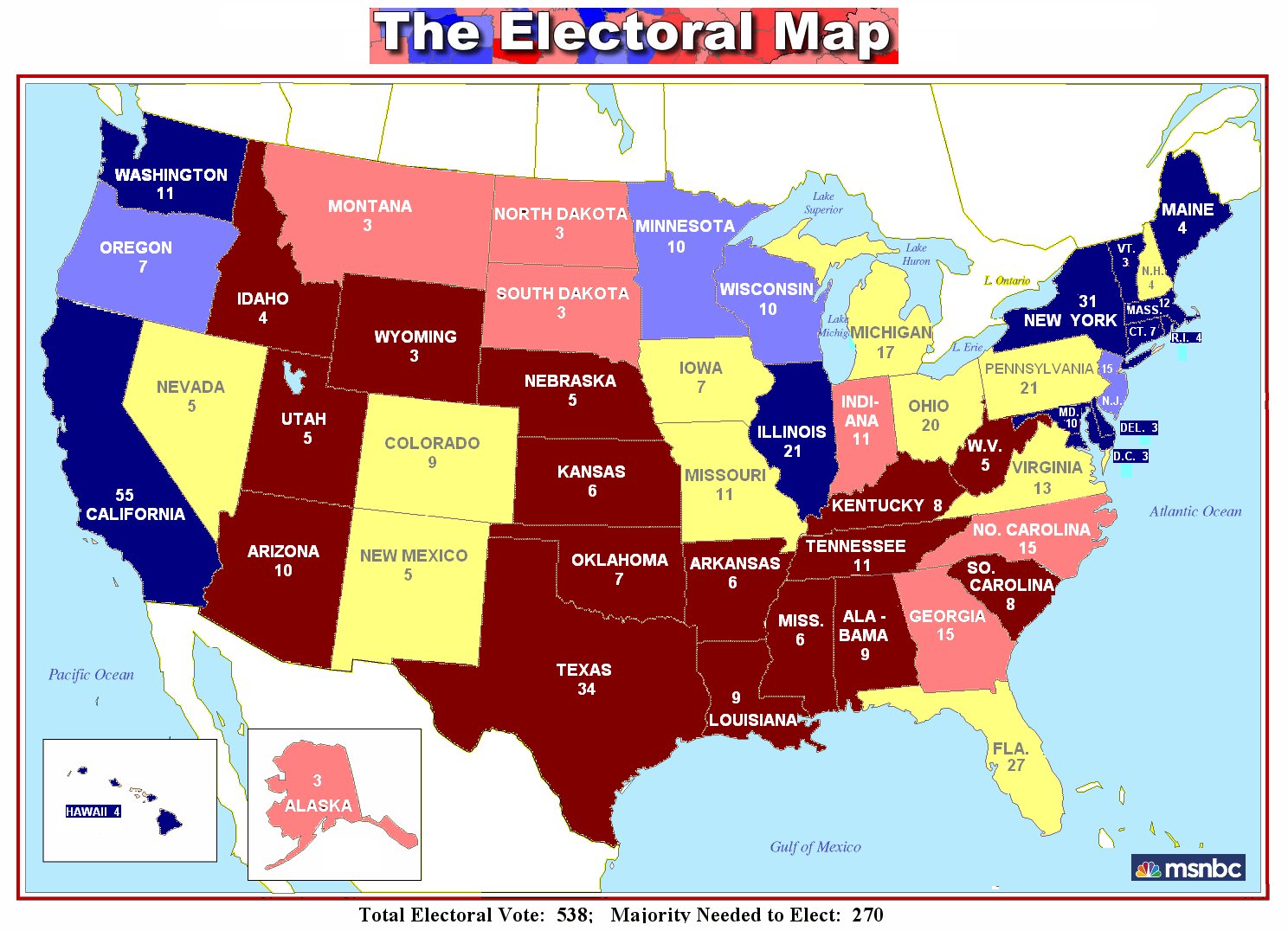
In this Google-Wiki-youtube Age, it’s easy to dismiss this quickie. What a dumb idea! Everybody knows how Obama won! Didn’t he just win the other day? And didn’t Chuck Todd explain to me in detail on television every damn night for almost a whole year why Obama was going to win?!? Regardless, this book is still important because of the state-by-state breakdown and the overview. The instant history of this election is on display here, tone-wise, and it not only brings back the excitement of the horse-race, including all the major the spills, false-starts, and hurtles, but crunches all available numbers, showing us the present and future of Donkey and Elephant America, bit by bit.
The things Todd, NBC News’ political director and newly named chief White House correspondent, and Sheldon Gawiser, the network news division’s elections director, want you to know are common knowledge to hard-core political junkies: Obama’s 50-state strategy (thanks to Hillary Clinton’s stubbornness), John McCain not having a message, Sarah Palin, well, being Palin. 🙂 But the numbers in states red, blue and purple are interesting to have all in one handy place. For example, “Obama did better among North Carolina white voters than either Kerry or Gore did. Four years ago Kerry got just 27% of the white vote in North Carolina while Bush got 73%. Obama did a good deal better as more than one in three white voters, 35%, voted for him. However, the white proportion of the state dropped from 83% in 1992 to 72% in 2008.” Mmm….good. 🙂
This book is snappy, peppy and bursting with numbers and charts—in a good way. It’s highly readable for those who hate numbers, which is a great compliment. This book is required reading—for the Republican Party. 🙂 If Michael Steele ever gets his hands on it, the nation may stay in exciting times.
Put this on your children’s bookshelf so they can use it one day to chart how the America of today became their America.
IN A NOT-COMPLETELY-UNRELATED-NOTE: Enjoyed hearing this on both “Democracy Now!”‘s inauguration coverage and on 88.5 WAMU, my local NPR affiliate.
Score One For Taking It Too Seriously :)
Wow! Glad for him that worked. 🙂