Category Archives: books
"Avengers" Cast Interviewed Together

Check the videos out here.
More "Avengers" Clips With Black Widow
The Best Tribute All Of Us Can Give Gil Noble……..
…..(other than to contribute to the digitization of his show’s archive) is to continue to tape and share events like this wake! (This is what *I* call church! :)) THANKS, STILL HERE HARLEM PRODUCTIONS!
Gil Noble Archives, P.O. Box 43138, Upper Montclair, NJ 07043.
(APRIL 26TH UPDATE: Here’s what WABC-TV’s “Here and Now” did:
)
Glad to post this on Mumia’s 58th birthday!
"Avengers:" Rotten Tomatoes Total Thus Far
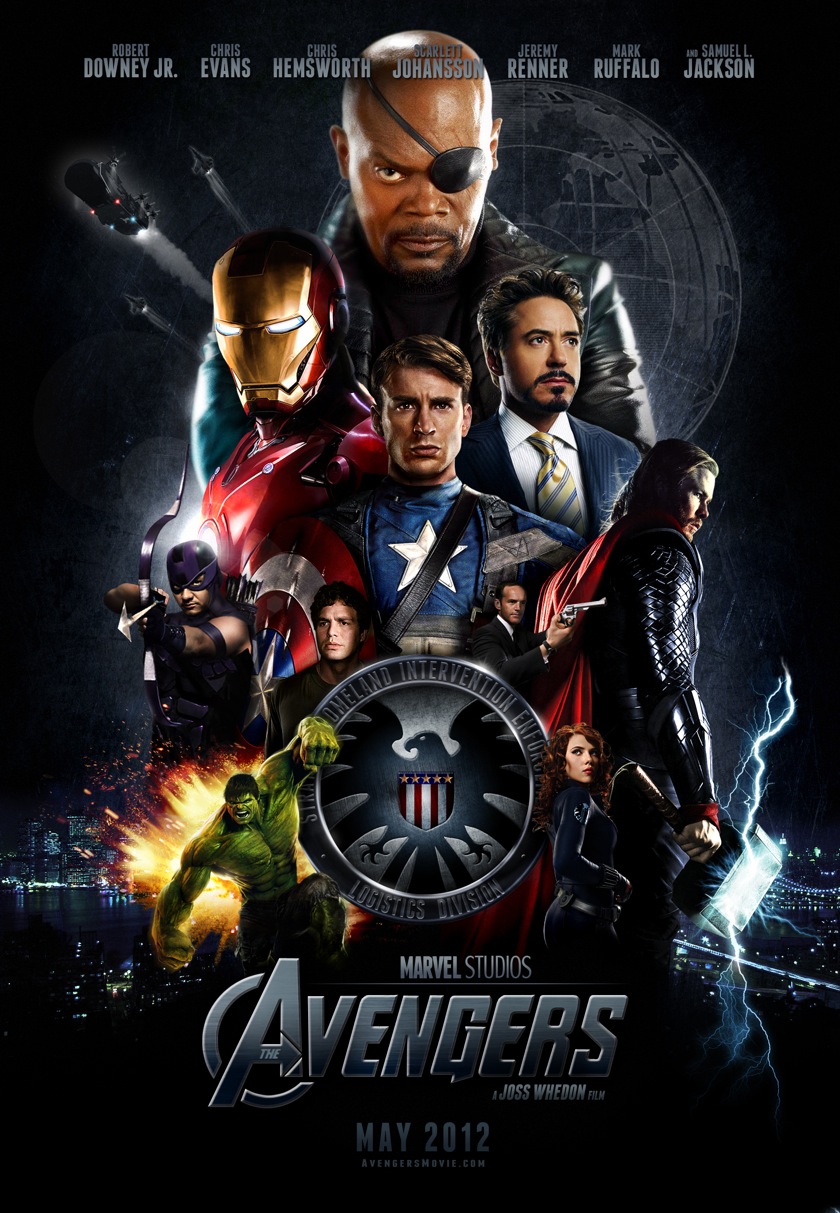
Ninety-six percent (but with only 25 reviews), as of 5:39 p.m. EST, Saturday, April 21st.
Ninety-five percent (with 40 reviews), as of 8:08 a.m. EST Thursday, April 26th.
Ninety-four percent (with 85 reviews) as of 12:57 p.m. EST Tuesday, May 1.
Ninety-four percent (with 124 reviews) as of 5:41 a.m. EST Thursday, May 3.


Watch Actor-writer-director Clark Gregg on PBS. See more from Tavis Smiley.
Some "Avengers" TV Spots
"Avengers" on ABC's "Nightline"

Smiley and West On Eliminating Poverty
APRIL 24TH UPDATE:
I’m glad they did this. But short of The Fire This Time, I don’t know how they can get people to pay attention.
"More Avengers Clips" (One After The Other)
Marable (Posthumously) Wins Pulitzer For "Reinvention"
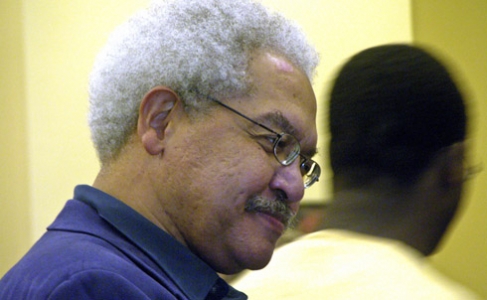
If it was any other major Black biography, I’d be overjoyed. But nope. I’ll stand by what I’ve said on this, and what I will say.
Columbia professor, 3 alums, including former Spectator editor, win Pulitzers
In addition to the four Columbia affiliates, the Associated Press team that uncovered the NYPD surveillance of Muslim communities received a Pulitzer.
By Naomi Cohen
Spectator Staff WriterPublished April 16, 2012
Updated, 4 a.m.The late Columbia professor Manning Marable, Eli Sanders, CC ’99, David Kocieniewski, Journalism ’86, and Tracy K. Smith, SoA ’97, were among those awarded Pulitzer Prizes on Monday.
The winners were announced in the newly renamed Pulitzer Hall, formerly Journalism Hall, on Columbia’s campus.
Sanders received the award in feature writing for “The Bravest Woman in Seattle,” his narrative of a woman who was raped and whose partner was raped and murdered. Sanders, the editor-in-chief of Spectator’s 122nd managing board in 1998, now writes for The Stranger, an alternative Seattle weekly.
The announcement of Marable’s award for “Malcolm X: A Life of Reinvention” made waves in the Institute for Research in African-American Studies and the Center for Contemporary Black History, which Marable founded.
“In many ways, it was a surprise,” said the institute’s director, Fredrick Harris, who worked closely with Marable. He said the institute exchanged enthusiastic emails regarding the news, which coincides with the planning for a memorial conference for Marable next week, at which leading African-American scholars will speak.
“Here we have an opportunity to reflect on Professor Marable’s scholarship as well as his activism. It highlights the important contributions that Manning Marable made … to Columbia and to the world of scholarship,” Harris said.
The book, which was originally a finalist in the biography category but was awarded the history prize, “separates fact from fiction and casts Malcolm X into a human figure,” Harris said. “It talks about how Malcolm X reinvented himself, and his reinvention of self really reflects on how Black America in the 21st century has to in many ways reinvent himself to address some challenges when it comes to racial inequality.”
Marable died in April 2011 after a double lung transplant and complications from pneumonia. Posthumous Pulitzer awards are rare—the last was awarded in 1996 to the late Jonathan Larson for the musical “Rent.”
One of the two investigative journalism awards was given to Matt Apuzzo, Adam Goldman, Eileen Sullivan, and Chris Hawley at the AP. The national attention resulting from their series inspired a vocal response from students on campus and fireside chats with University President Lee Bollinger and University Chaplain Jewelnel Davis.
“It’s important that they’re [the AP reporters] being recognized for their work,” said Abdul Rafay Hanif, CC ’14 and president of the MSA. “They showed a lot of initiative in reporting the issue and shedding light on the issue that’s not only important to Columbia, or to New York City, but to the entire United States.”
Kocieniewski, a writer for the New York Times, was awarded the prize in explanatory reporting for what the jury called his “lucid series that penetrated a legal thicket” in the tax loopholes often exploited by the affluent.
Smith, a creative writing professor at Princeton, was recognized for her collection of “bold, skillful poems” called “Life on Mars,” which the jury said was capable of “taking readers into the universe and moving them to an authentic mix of joy and pain.”
“It was clear from the very start that Tracy K. Smith’s voice would be a beautiful force to be reckoned with in contemporary American poetry,” said School of the Arts Poetry Director Lucie Brock-Broido, who taught Smith at both Harvard and Columbia. “It is deeply gratifying for us in the School of the Arts to see the body of work that she’s gone on to create and even more gratifying to see that work receive the recognition she so truly deserves.”
Pulitzer Prize Administrator Sig Gissler said, “The watchdog still barks, the watchdog still bites,” referring to the strength of American journalism even “when resources are stretched and newsrooms are thin.”

