Category Archives: television
Rape And Abuse of African Women? Not In Michelle Obama's "Brand"

From Eve Ensler’s piece in The Guardian:
…….despite the ongoing horrific atrocities that have taken the lives of more than 6 million people and left more than 500,000 women and girls raped and tortured, the international power elite appear to be doing nothing. They have essentially written off the DRC [Democratic Republic of the Congo] and its people, even after continued visits and promises.The day is late. It is almost 13 years into this war. The Obama administration, as in most situations these days, refuses to take a real stand. Several months ago I visited the White House to meet a high official to engage the first lady in our efforts to end sexual violence in Congo, believing that her solidarity would galvanise attention and action. I was told, essentially, that femicide was not her “brand”. Mrs Obama, I was told, was focusing on childhood obesity.
It surprised me that a woman with her capabilities lacked ambidextrous skills (or was it simply interest and will that was absent?). Then we have Secretary Clinton, who at least after much pressure visited the DRC almost a year ago, and made promises that actually meant a huge deal to the people. They were excited that the US government might finally prioritise building the political will in the Great Lakes region to end the war there. But, of course, they are still waiting. And then there is the UN. The anaemic and glacial pace and the death-like bureaucracy continue to allow and, in the case of Monuc and the security council, even help facilitate a deathly regional war.
From Amy Goodman’s interview:
AMY GOODMAN: Who did you speak to at the White House?
EVE ENSLER: I don’t want—well, I spoke to Valerie Jarrett, actually. And I was hoping that she would really enlist Michelle Obama in our struggle. And I was hoping that this administration would be enlisted in this struggle. It just seems to me, where women are being raped, where these kind of atrocities are occurring, it is the worst violence in the world towards women right now. And when you allow that kind of violence to proliferate, when you, in the collective unconscious of the world, say it’s OK to rape 500,000 women—8,000 women have already been raped this year. That’s reported rapes. Most women live in the bush, and they can’t report those rapes. When you as a government, when you as a world, when you as an international body, license those kind of rapes, you will see the spread of that everywhere in the world. We saw it in the Kenyan riots. We saw it in the stadium in—was it—no Ghana, in Guinea, where—we’re just seeing this proliferation now as rape as a tool.
Sad. Disgraceful.
Asante Sana, Abbey Lincoln
Ah, Finally………
Ten years is a long time. Tights and Flights, already! LOL! 🙂 There’s gotta have to be some sort of spin-off; DC needs to keep its characters on live-action, prime-time network televison. Meanwhile, while I type this, I’m on Hulu watching the Season One finale of a BBC One show that is, chapter and verse, copied-and-pasted from “Smallville.”

RE: MSM and Africa: Finally, A Discussion On “Soft” White Media Supremacy
Well! I’ll give Nicholas Kristof credit for his honesty. These folks only admit that whites matter more than Blacks in stories about Africa in academic books and J-seminars and such. (I first noted the problem when I was 25 or so, when Amy Biehl died and ABC’s “Primetime Live” pulled out the stops.) So it’s good to finally see this mostly intra-racial discussion (as in, among whites 🙂 ) in the mainstream media.
Of course, what’s always missing is a harder—and Blacker—perspective. So here it is, and some comment about it.
2010 COMIC-CON On Youtube: And The Next DC Cartoon Is……..
Finally Found The "Black Panther" Cartoon!
Watch Black Panther Animated Series S01 E02 in Animation | View More Free Videos Online at Veoh.com
Watch Black Panther Animated Series S01 E03 in Animation | View More Free Videos Online at Veoh.com
Watch Black Panther Animated Series S01 E04 in Animation | View More Free Videos Online at Veoh.com
Watch Black Panther Animated Series S01 E05 in Animation | View More Free Videos Online at Veoh.com
An achievement for people of African descent. Hated the print version, but the improved story works GREAT as a cartoon.
When A Black Woman Loves A Black Man…
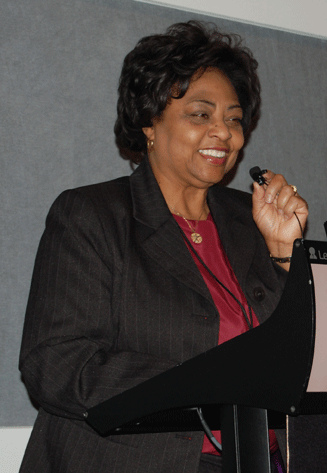
….she can forgive him of his trespasses. Yet another crime committed against The Black Woman, and another example of The Black Woman standing behind the embattled Black Man, no matter the cost. If only it wasn’t The Black Man who threw her under the bus in the first place!
And although it spends WAY too much time talking about who’s going to Ivy League schools 🙂 , here’s info displaying some of the larger economic and cultural context of the racism that dominates summer 2010. And here’s some media navel-gaving context.
JULY 22ND UPDATE: From NBC’s “Today” Show:
The federal employee who was fired Monday after a video of her appearing to make racist remarks was posted on a conservative web site said she deserves a phone call — but not an apology — from President Obama.
“I think I do,” Shirley Sherrod told TODAY’s Meredith Vieira early Monday [TSB NOTE: I’m sure the writer meant “Thursday”] in New York.
Vieira asked if the president should also apologize to her.
“He’s the president of the United States of America,” Sherrod said. “I’ve received the apologies that are important. I really would not want the president to apologize to me, but I’d love to have a conversation with him.”
Asked what she’d talk to the president about, the Georgia woman said, “I’d like to talk to him about the experiences of people like me. People at the grassroots level. People who live in the South. He really doesn’t have that experience.”
That’s the LEAST he could (and should!) do. (I mean, if he can call a white policeman…… ;)) And sis KNOWS what’s she talking about: her father was killed by a white farmer and she was active in the Movement. She even married a SNCC veteran! Obama, who writes so movingly in his memoir, Dreams From My Father, about how he yearned to be part of the Movement, should be ASHAMED. Boy, I hope Michelle is taking him to the woodshed on this one! LOL! 🙂
2:40 UPDATE: From CNN:
(CNN) — President Barack Obama spoke Thursday with Shirley Sherrod, the former Agriculture Department employee who was forced to resign from her job based on incomplete and misleading reports about a speech she gave in March.
Sherrod received a text message telling her Obama had been trying to reach her since Wednesday night, said Julie O’Neill, a CNN Special Investigations Unit producer who was with her at the time. Sherrod called the White House and was asked to call back in 10 minutes, at which time she spoke to the president.
Sherrod was “very, very pleased with the conversation,” O’Neill said, and told her Obama had said Agriculture Secretary Tom Vilsack was “very apologetic and very sincere.” Vilsack apologized to Sherrod on Wednesday and offered her a different position within the department.
Obama compared some of the events this week surrounding Sherrod to things he has written about in his books, O’Neill said. Sherrod “invited him to South Georgia,” she added.
During the seven-minute conversation, “The president told Ms. Sherrod that this misfortune can present an opportunity for her to continue her hard work on behalf of those in need, and he hopes that she will do so,” the White House said in a statement about the phone conversation.
Obama “expressed to Ms. Sherrod his regret about the events of the last several days,” the statement said.
“She’s feeling pretty good after talking to him,” O’Neill said.
Earlier Thursday, Sherrod said she was “not so sure” about the new job offer.
“I’m not so sure that going back to the department is the thing to do,” she told CNN’s “American Morning.”
Sherrod said she was offered some type of civil rights position in the department’s Office of Outreach, and that she was expecting to receive something official in an e-mail from the department. She said Thursday morning she had not had a chance to see that yet.
But “I would not want to be the one person at USDA that’s responsible for issues of discrimination within the agency,” she said. “You know, there’s a lawsuit by black farmers, there’s a lawsuit by Hispanic and Native American and women farmers. … There are changes that would need to happen in order to once and for all really deal with discrimination.”
She said she has heard from farmers and others in Georgia telling her to come back to rural development. She previously was the USDA’s director for rural development in that state. “But that’s not what the offer is,” she said.
Sherrod, an African-American, stepped down Monday under pressure after a video clip surfaced of her discussing a white farmer.
“I was satisfied with it,” Sherrod said of Vilsack’s apology. “In fact, I told him I appreciated the apology and I know that we need to move forward from here.”
Vilsack told reporters that he alone made the decision regarding Sherrod, with no White House involvement — a statement Sherrod questioned.
“If not the president, someone there at the White House was involved in that,” she said. According to Sherrod, she received direct pressure from White House officials to resign, and no one gave her an opportunity to explain.
Sherrod told O’Neill the matter did not come up in her conversation with Obama. Earlier, Sherrod said, “It would be great to talk to the president, but … I would not insist on an apology from him.”
Vilsack said Sherrod is “a good woman — she’s been put through hell.” He admitted to acting too hastily in the case, acknowledging that he was focused on reversing a history of racial discrimination at the department.
The flap began after conservative website blogger Andrew Breitbart posted a portion of a speech she gave in which she spoke of not offering her full help to a white farmer. The original post by Breitbart indicated the incident that Sherrod mentioned in her speech occurred when she worked for the Agriculture Department, and news outlets quickly picked up on the story.
However, the incident took place decades before she joined the department, and her speech in its unedited form made the point that people should move beyond race. In addition, the white farmer who Sherrod mentioned has told reporters that Sherrod helped him save his farm.
Breitbart’s website included corrections Wednesday on two blog entries that included the video footage from Sherrod’s speech.
“Correction: While Ms. Sherrod made the remarks captured in the first video featured in this post while she held a federally appointed position, the story she tells refers to actions she took before she held that federal position,” said a notice added to one of the postings on Breitbart’s biggovernment.com website.
A shorter version appeared on another posting of the Sherrod video footage. The corrections did not mention the edited nature of the video he posted Monday or the full context.
Asked Thursday if she would consider a defamation lawsuit against Breitbart, Sherrod said, “I really think I should. You know, I don’t know a lot about the legal profession, but that’s one person I’d like to get back at. Because he came at me. You know, he didn’t go after the NAACP. He came at me.”
She acknowledged she didn’t know what she could get from Breitbart — “an apology, at this point, and he hasn’t made that. It’s just not enough for me.”
Breitbart said on CNN’s “John King USA” Tuesday that releasing the video was “not about Shirley Sherrod.”
“This was about the NAACP attacking the Tea Party, and this is showing racism at an NAACP event,” he said. “I did not ask for Shirley Sherrod to be fired.”
“I don’t buy that,” Sherrod said Thursday. “… I mean, he had to know that he was taking a portion of my speech, and it wouldn’t be the NAACP that would go down, it would be me. Those words were coming out of my mouth. And so for him to take them out of context — is he going to take the NAACP down with my words? No.”
The audience at the March event, she said, was “not laughing. … I literally had people on the edge of their seats because I wanted their attention so that I could then get to the real message.”
She said if Breitbart’s site were shut down, “That would be a great thing, because I don’t see how that advances us in this country. … At a time when we should be trying to look at how we can make space for all of us in this country, so that we can all live and work together, he’s doing more to divide us.”
Reached by CNN on Thursday, Breitbart referred calls to his office, which did not immediately respond to requests for comment.
Sherrod said that while she was receiving phone calls asking her to resign, she also was receiving hate e-mail on her government-issued mobile device.
Earlier Wednesday, White House Press Secretary Robert Gibbs apologized on behalf of Obama’s administration.
“A disservice was done. An apology was owed. That’s what we’ve done. Decisions were made based on an incomplete set of facts,” Gibbs told the White House news briefing.
Gibbs agreed with a questioner who asked if the matter had been “bungled.”
Sherrod, who was watching the Gibbs news briefing Wednesday afternoon from CNN’s headquarters in Atlanta, Georgia, clapped and smiled when he discussed the apology.
In the video that led to her resignation, Sherrod can be heard telling an audience at a March 27, 2010, appearance before a local chapter of the NAACP that she had not given a white farmer “the full force of what I could do” to help him save the family farm.
But later in the tape, in the portion not originally posted, Sherrod says, “working with [the farmer] made me see that it’s really about those who have versus those who have not. They could be black. They could be white. They could be Hispanic.”
The video initially brought condemnation from the NAACP, which later retracted its statement and apologized to Sherrod after the context of the clip became clear.
Also, the farmer and his wife Sherrod was discussing, Roger and Eloise Spooner, came forward Tuesday, saying that they credited Sherrod with helping them save their farm and that she did not discriminate against them.
The NAACP, which initially called Sherrod’s statements “shameful,” said in a statement Tuesday that it was “snookered by FOX News” and Breitbart. Breitbart originally posted the video, which was later picked up by the FOX News website.
FOX News anchor Bret Baier said Wednesday that “FOX News didn’t even do this story. We didn’t do it on Special Report. We posted it online.”
Conservative media outlets tied the video to the NAACP’s recent resolution calling on the Tea Party movement to repudiate racist elements within it that have displayed such items as images of Obama with a bone through his nose and the White House with a lawn full of watermelons. The controversy has led one Tea Party umbrella group to oust another because of a blog posting by the second group’s leader.
Tea Party Express leader Mark Williams posted on his blog a faux letter from Jealous to President Abraham Lincoln in which Williams ridicules the organization’s use of “colored” in its historic name and uses multiple stereotypes to bolster his point. The National Tea Party Foundation expelled Williams’ organization from its coalition as a result.
Asked her thoughts on Obama before she spoke to him Thursday, Sherrod said, “He’s my president. I support him fully. I’d like to help him to see some of the things he should do in the future that could be more helpful than what’s happening right now to advance the issues of togetherness in this country.”
Obama, she said, “hasn’t lived the kind of life I’ve lived. I know that he’s African-American, or part African-American … many of us are not totally black in our genes. I’m one of them. But he really, you know, when you get down to where the rubber meets the road, I think you need to understand a little bit more of what life is like at that level.”
As she was asked for her resignation, Sherrod said, she pleaded with USDA officials to look at the whole speech, but got nowhere.
And “the last thing I said with that last call … I said, ‘You know, the fight hadn’t been in me before, but it’s definitely here now, and you have not heard the last from me,'” she said. “I really didn’t know exactly what that meant when I said it. But I knew — I know I’m a fighter, and I knew at that point I would not take this lying down.”
CNN’s Suzanne Malveaux and Tristan Smith contributed to this report.
Haiti, Six Months Later
I *Heart* Broadcasting While Black!
Ah, what an appropriate post for Number 600!
Man, I am LOVING the “Broadcasting While Black” site. (Roxie Roker from “The Jeffersons” was a host of one of the shows! LOL!) New material is up, but it takes a LONG time to load. So while waiting, I found the above on Google Video. The show is called “For The People.” Its host is Listervelt Middleton.
A related comment: I have also been LOVING the idea of “Like It Is” being online. I have been slightly disappointed, though, with the reality of the small time window WABC-TV has created on the “Like It Is” page to see the shows. Well, I can now report that many of the episodes that WABC-TV has put online (but moved off of its main page) are available if you search “Like It Is” within Google Video! I knew WABC-TV was not erasing them! YES!!!!!
SEPTEMBER 19th UPDATE: I clearly spoke too soon. The old, “archived” links listed on Google Video don’t work, and “Like It Is” only keeps the current show (or two) on its page. *SIGH*.