One Step Forward, Two Steps Back

History was indeed made yesterday. It was the kind of history that Obama likes to make. The President had chosen someone in his own (personal and ideological) image.

If I wasn’t paying attention, I’d think that Obama was the most progressive president I’ve ever seen. And maybe he is. But maybe that’s just not good enough.

The more I turn on the radio, the more disturbed I get. Isn’t anyone going to challenge him on any of this? I think we can both enjoy the history and ask critical questions.

The Last Word On………

zoe_saldana_3

“Star Trek” ? WOW!  GOT-D*&N!!!!! And the movie’s great, too!  LOL!  🙂

wolvie1

“X-Men Origins: Wolverine” ? Wait for the DVD. The filmmakers just didn’t care enough here, which in the post-“Dark Knight” era, is a sin.

doomsday

“Doomsday,” “Smallville”‘s Season 8 finale? Powerful—from the little I saw of it. The Big Reveal near the very end was both a tremendous cheat and a great idea! I never thought he would die.  🙂

stand

“Stand,” Tavis Smiley’s first (*snicker*) documentary? I heard him describe this on 89.3 WPFW-FM, and I curled up in a fetal position. If this millionaire’s idea of a documentary is giving him, West, Dyson, et. al. even more airtime, then we’re sunk.  Thank God for the white folks at NPR and PBS, who fund real (softish) Black documentaries every once in a while. *SIGH* 😦

Book Review: Mumia The Institution

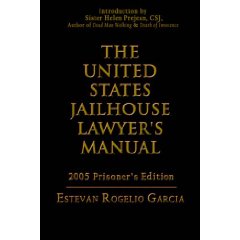
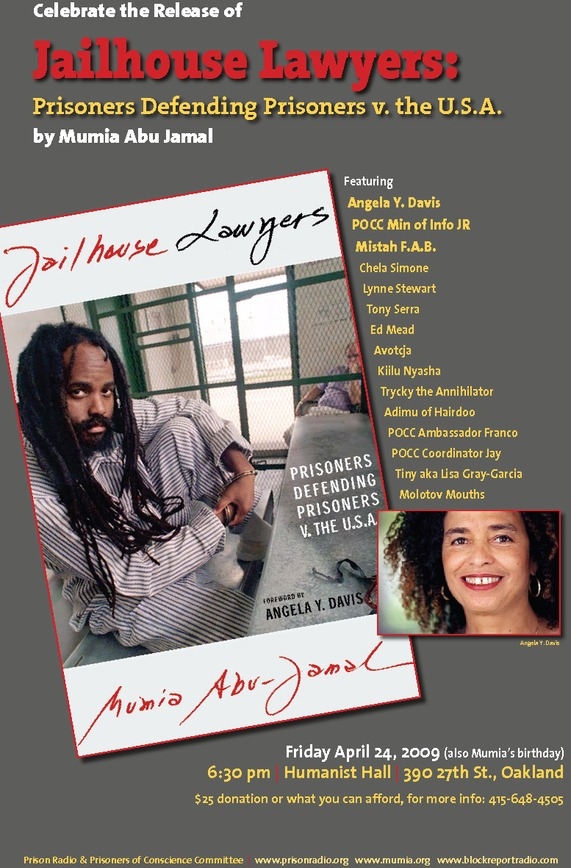
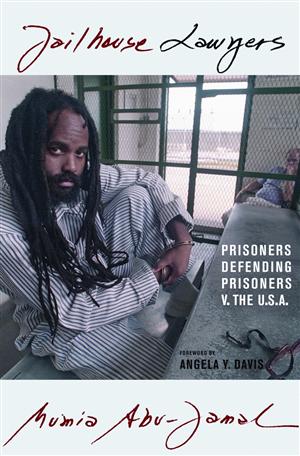
Jailhouse Lawyers: Prisoners Defending Prisoners v. The USA.
Mumia Abu-Jamal.
Foreword by Angela Davis.
City Lights Books.
251 pp. $16.95.

Mumia Abu-Jamal points out in his latest book, his sixth from Death Row in Pennsylvania, that unfortunately jailhouse lawyers—prisoners who learn the law in the joint and help other prisoners with appeals and legal problems—have a reputation of freeing others while they squat. “It’s the bane of jailhouse lawyers. They seem to be able to help everybody but themselves.” That truth hit home earlier this month when the U.S. Supreme Court refused, without comment, to hear the former Black Panther’s appeal for a new trial based on the prosecution’s consistent exclusion of blacks from his 1982 jury pool. He turns 55 Friday, which means he has officially spent more than half his life in jail. Unless further appeals work, a new Philadelphia jury will eventually be composed, and it will give him life imprisonment or re-institute his death sentence for the 1981 murder of Daniel Faulkner, a white Philadelphia police officer. Then the state of Pennsylvania will try to kill him again.

Abu-Jamal, a journalist and activist who has been a jailhouse lawyer, does not define his existence as one of a prisoner, even though his daily world is a small cell that he has said is the size of a bathroom. That dual actuality makes his return “home” of sorts with this work even more interesting. “Jailhouse Lawyers” boomerangs back to themes Abu-Jamal established in his first book, a collection of journalistic essays called “Live From Death Row”: that America works hard to create, then to forget, the prison industrial complex; that struggle breeds both repression, and more struggle, and that laws were made to be broken, bent and ignored when the oppressed are concerned. As usual, Abu-Jamal blends history with current perspectives effortlessly; his decades of reading, writing and analyzing from behind bars has transformed him into his own John Henrik Clarke or Lerone Bennett Jr. History in rhythm, commentary with bite.

This “act of underground reportage,” filled with interviews of those considered jailhouse lawyers from Texas, Pennsylvania, California, New Jersey, Florida and other states, is a well-documented exploration of the sub-title. In several short profiles of courage, he collides the rights of prisoners and the nation’s political reality of law. To the prisoner, writes the prisoner, the law is as “real as steel and hard as brick.” And jailhouse lawyers, he writes, practice law “written with stubs of pencils or with four-inch long, rubberized flex pens, in the hidden, dank dungeons of America—the Prisonhouse of Nations.” Therefore, explains the author, “[f]or both jailhouse lawyer and client, the state is the entity that stole their freedom and with which they must contend, and they are thus highly motivated to fight for those who enlist their help.”

A highlight is a powerful account of how members of the MOVE Organization successfully represented themselves in the bowels of Babylon. The chapter gives new insight as to why a radicalized 28-year-old Abu-Jamal, a supporter of MOVE, kept demanding two things during his 1982 murder trial: to represent himself, and to have MOVE founder John Africa be his co-counsel. (The judge, Albert Sabo, only granted the former, and that only for a little while, while, ironically, John Africa never showed up.) In writing about another MOVE supporter who represented himself, Abu-Jamal relates that the man “had to reiterate his words repeatedly, incessantly, in order to be heard, finally.”

Not even an embryo in the Reagan years, the “Free Mumia” movement is showing its age in the dawn of the Obama era. The photo portrait on the cover is fourteen years old. Emerge magazine, a Black monthly newsmagazine, used it for its 1995 cover story. Abu-Jamal is probably a little grayer, now, at 55, but he’s still living, while Emerge is just a memory on faded glossy paper, a quaint mass media-era memento marking the last moment before the Internet took over. Meanwhile, that same man in 2009, who, in all probability, will not be released from prison alive—and who allegedly has never been online, one who uses a typewriter and hand-written notes to write his books and essays—continues to use his words to illustrate a hidden chapter of a struggle he now knows he is probably not going to personally win.

As with his other five books, “Jailhouse Lawyers” is another example of Abu-Jamal’s resistance—against state oppression, against collective political amnesia, against America’s constant denial of what is left in its shadows. With this first writing cycle complete and his power strengthened and renewed from it, the author confronts the idea that he has successfully written himself into (his own) history.

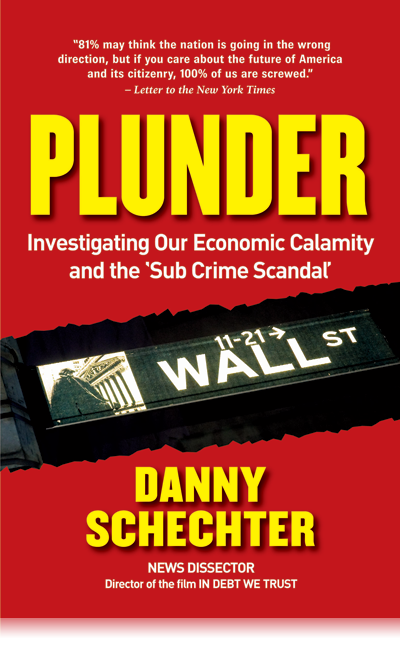
200-Word (More Or Less) Book Review: "Plunder" by Danny Schechter

Plunder: Investigating Our Economic Calamity And The Subprime Scandal.
By Danny Schechter.
New York: Cosimo.
240 pp. $14.95.

Danny Schechter is one of my heroes, and I wasn’t afraid to tell him so when I met him. Ever since “South Africa Now” (showing my age here 🙂 ), he’s been a straight-up truth-teller. I used one of his books, “The More You Watch, The Less You Know,” when I was writing my doctoral dissertation.

He continues the tradition here, putting himself in the company of a few journalists who tried to inform America that a serious recession was coming. But, as usual, Schechter is ahead of the mainstream, warning of “a vast CREDIT AND LOAN COMPLEX every bit as insidious as the Military-Industrial Complex. Most Americans have no idea that this even exists.” And you can bet which government it funds.

Schechter blends charts, articles, books, interviews, journalistic observations and even poetry together, walking the reader month by month (almost day by day) through 2007 and 2008 to show it how capitalism unraveled in front of America’s eyes. He explains boldly how it’s actually American democracy that’s threatened by the economic disaster. The journalist-filmmaker-activist-blogger stays in the street and On The Street, and does a very good job of balancing both. Schechter once again earns the reputation he has gained, joining those who proudly stand in the shadow of muckraker legend I.F. Stone.

Book Review: How'd We Get Here Again?

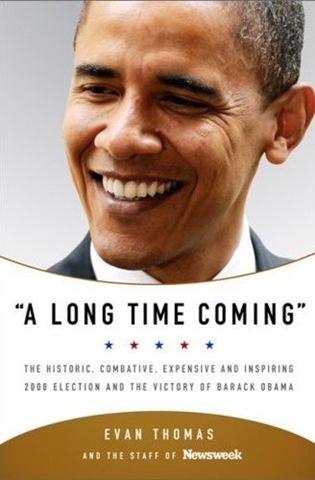
“A Long Time Coming”: The Inspiring, Combative 2008 Election and the Historic Election of Barack Obama.
By Evan Thomas and the staff of
Newsweek magazine.
New York: Public Affairs.
256 pp. $22.95.

 
Rem Rieder, editor and senior vice president of American Journalism Review magazine, was clearly tired of hearing and/or reading for the zillionth time the now-accepted narrative about political journalists and Decision ’08: that Barack Obama’s presidential campaign got a free ride from The Boys (and Girls) On The Bus. “The truth is, the Obama campaign was well-organized, disciplined, virtually error-free. Obama was an inspiring candidate to many, a dazzling public speaker with an inspiring storyline,” Rieder wrote in AJR’s December 2008/January 2009 issue. “The McCain campaign, in contrast, was a train wreck, lurching from message to message. And McCain, who can be an immensely appealing figure, seemed angry and unfocused.”

That’s as good a summary of this book as any. Evan Thomas has crushed Newsweek’s coverage of the two-year rollercoaster into this clear, concise book that allows the reader inside the campaigns’ inner sanctums, due to the magazine’s agreement to not publish the fly-on-the-wall happenings until after Election Day. “Coming,” then, is a very slight outgrowth of the meat of Newsweek’s special post-election issue (which, coincidentally enough, was online until this book’s release).


The newsmagazine has had this arrangement with presidential campaigns since 1984, and the trust shows. The publicly displayed hubris and cluelessness of the Hillary Clinton’s would-be nomination crew pales compared with the tone and tenor of its inside fights, and it turns out the McCain-Palin campaign really didn’t know what it was doing from one day to the next. Meanwhile, as the entire world remembers, Barack Obama’s train ran smoothly down America’s track into the White House, The Big Engine That Would. “Coming” answers the how, step by step, day by day.

If you watched the evening news every night last year, this book is just detail. But it’s rich, absorbing and well-written detail, a finely crafted rough draft of history. It rightly belongs on the Obama bookshelf next to Obama’s own “Dreams From My Father” and “The Audacity of Hope” and David Mendell’s very good biography, “Obama: From Promise To Power,” all four now awaiting the scores of tomes to come.