 Â
Â
…………..the HBCU New Media project from the National Black Programming Consortium and the Griot Project from StoryCorps?
So much for Black history being “lost, stolen or strayed.” Now, if only we can OWN our history…….. Â 🙂
Â
…………..the HBCU New Media project from the National Black Programming Consortium and the Griot Project from StoryCorps?
So much for Black history being “lost, stolen or strayed.” Now, if only we can OWN our history…….. Â 🙂

“WORD ON JOURNALISM–Friday, Feb. 16, 2007
On journalistic activism:
I’m an activist, and I’ll tell you why. If every citizen had to go through what we went through as reporters, going out and covering poor people, black people, murders, strikes, all that Dickensian underside of American life, they would become biased toward activism.”
   –John Chancellor, TV newsman, 1996 (1927-1996)* * * * *
TODAY’S WORD ON JOURNALISM is a free “service” sent to the 1,500 or so misguided subscribers around the planet. If you have recovered, send “unsubscribe.” Or if you want to afflict someone else, send me the email address and watch the fun begin. (Disclaimer: I just quote ’em; I don’t necessarily endorse ’em. In theory, all contain at least a kernel of insight.) Responses and rebuttals welcome.* * * * *
Ted Pease, Professor of Interesting Stuff
Utah State University“Words are sacred. They deserve respect. If you get the right ones in the right order, you can nudge the world a little.” –Tom Stoppard, playwright
Â
 
Plenty going on in the world of VOXUNION MEDIA.
—————————————-
Jazz & Justice
Mondays 1-3p EST
WPFW 89.3 FM / wpfw.org
February 5, 2007
February 6, 2007 marks the 62nd birthday of Robert Nesta Marley. We dedicated this show to his memory and legacy by welcoming Suzette Gardner and Dr. Michelle Stephens. Both women shared their knowledge and perspective as scholars, journalists and Jamaicans expanding the commonly-held views of Marley. We dispelled some myths, conjured others and, of course, played his music. Download parts 1 and 2 below and visit voxunion.com for stream/download options and much more.
————
VOXUNION MEDIA
January 29. 2007
Jazz & JusticeThis week we welcomed Glen Ford and Bruce Dixon of BlackAgendaReport.com for a discussion of race, politics and Black “Leadership.” Is Barak Obama the most “dangerous” man in the nation? Where are Russell Simmons and Oprah Winfrey leading us? These topics, including a portion of an interview done last year with Elaine Brown on mass incarceration and political prisoners, and much more were covered as were some questions and comments about race-based talk being “divisive.” We also welcomed Chrystal Williams of the University of Maryland to talk with us about her upcoming Black Music Week events. To this we added the music of Curtis Mayfield, Hasan Salaam, Freestyle Fellowship, James Brown, Ken Boothe, Syl Johnson and Ghostface.
————-
VOXUNION MEDIA
National Conference on Media Reform
January 12-14, 2007
While in Memphis, TN for the National Conference on Media Reform convened by Free Press, we thought it important to get a mic in front of many of those not included as keynote speakers representing ideas not included as central to the gathering. So here are what some of that sounded like.Some of the voices heard include representatives from the following organizations: The Freedom Archives; Pro-ject Pro:Project; CounterSpin; Youth Media Council; Center for Community Change; Block Report Radio/Prisoner of Conscience Committee; See Jane; R.E.A.C.Hip-Hop; Martha’s Table Teen Project; LinkTV, Third World Majority and the Main Street Project.
Click here to download the interviews and/or visit voxunion.com for the stream/download options and much more.
———–
VOXUNION MEDIA
Jazz & Justice
WPFW 89.3 FM (wpfw.org)
Mondays 1-3p
February 12, 2007
This week we were joined by the mayor of DC hip-hop Head-Roc and Suncere Ali Shakur for a discussion of our visit to New Orleans. Suncere has been in New Orleans since the breaking of the levees and talked about his experience as a member of Common Ground, the politics of organizing and concerns over white paternalism and Black inactivity. The show featured music from Jay-Z, Head-Roc, Nina Simone, Lil’ Wayne, Mos Def and the Rebirth Jazz Band. Download parts 1 and 2Â and visit voxunion.com for streaming options and much more.VOXUNION MEDIA
Jazz & Justice
Mondays (1-3p EST)
WPFW 89.3 FM Washington, DC
February 19, 2007Malcolm X was assassinated on February 21, 1965. This week was the first of our two-week long tribute to the man whose life continues to impact the world. Listen to clips of his speeches and interviews, plus music from Miriam Makeba, John Coltrane, Gil Scott-Heron, Amina & Amiri Baraka, Sonny Fortune, DJ Spinna, Head-Roc, Immortal Technique, Juel Ortiz and more. Part two of this tribute takes place next week during our pledge drive. Please consider pledging during the show (Monday 1-3p EST) to help support community radio and Jazz & Justice. To download the show, click here to stream/download Parts One and here for Part Two. For much more audio/video/print, visit voxunion.com.
Just in case you’re by the Tee Vee.
———–
Â
PBS CELEBRATES BLACK HISTORY MONTH WITH A SLATE OF SPECIAL PROGRAMMING
February 1-28, 2007Â
Arlington, VA — January 8, 2007 — PBS broadcasts programming created by and about African Americans year-round, from drama to public affairs to history to independent film. In celebration of Black History Month, February 2007, PBS will broadcast a lineup of new and encore presentations honoring and exploring African-American history.AMERICAN EXPERIENCE “New Orleans†(New)
Monday, February 12, 2007, 9:00-11:00 p.m. ET
From director Stephen Ives and writer Michelle Ferrari comes a fascinating portrait of one of America’s most distinctive and beloved cities: a small French settlement surrounded by water that ultimately would become the home of America’s biggest party, Mardi Gras, and its most original art form, jazz; the site of explosive struggles with both integration and segregation, and a proving ground for national ideas about race, class and equality; a mirror that reflects both the best and the worst in America. Jeffrey Wright narrates. http://www.pbs.org/amex/neworleansINDPENDENT LENS “Hip Hop: Beyond Beats and Rhymesâ€(New)
Tuesday, February 20, 2007, 10:00-11:00 p.m. ET
This film takes an in-depth look at machismo in rap music and hip-hop culture — where creative genius, poetic beauty and mad beats collide with misogyny, violence and homophobia. By Byron Hurt. http://www.pbs.org/independentlensTHE 9TH ANNUAL SPHINX COMPETITION (New)
February 2007 (check local listings)
THE 9TH ANNUAL SPHINX COMPETITION is a classical music competition featuring finals performances from the 9th Annual Sphinx Competition Concert. The competitors, all Hispanic and African-American, are accompanied by an orchestra composed entirely of Hispanic and black musicians. This program features performances from the three junior division finalists and the senior division laureate.SISTERS OF SELMA: BEARING WITNESS FOR CHANGE (New)
February 2007 (check local listings)
This program is an unabashedly spiritual take on the Selma, Alabama, voting rights marches of 1965 from some of its unsung foot soldiers – Catholic nuns. Following the violence of “Bloody Sunday,†sisters from around the country answered Dr. Martin Luther King’s call to join the protests in Selma. Never before in American history had avowed Catholic women made so public a political statement. Risking personal safety to bring change, the sisters found themselves being changed in turn – and they tell viewers how. Selma blacks testify about the importance of Catholic clergy in their lives, and explain why it took until the year 2000 for them to become fully enfranchised. Newfound dramatic archival footage carries much of the story. In 2003, director Jayasri Hart reunited the nuns to let them view themselves and the protests on tape for the first time. Their recorded reactions help narrate the film. Other Selmians, Catholic and Protestant, white and black, give their views on the nuns’ contributions to history.THE STORY OF OSCAR BROWN JR. (New)
February 2007 (check local listings)
This documentary focuses on Chicago native Oscar Brown Jr.’s work as a writer and performer for over a half a century. Starting at the tender age of 15 he was a radio performer with the network series “Secret City.†He also was a key player in Richard Durham’s “Destination Freedom: Black Radio Days†series from 1948-1950. Brown’s musical explorations included sharing the bill with such greats as Miles Davis, Dizzy Gillespie, John Coltrane, Nancy Wilson and Cannonball Adderly. His one-man show Oscar Brown Jr. Entertains led one critic to hail him as “a musical genius.†In 1967, he produced the musical Opportunity Please Knock in conjunction with a huge youth gang known as the Blackstone Rangers and gained national recognition when gang members appeared on the Smothers Brothers CBS television show. He also hosted the popular PBS television show FROM JUMP STREET – THE STORY OF BLACK MUSIC.
I thought this transcript spoke for itself. 🙂
—————-Â
Â
THE MCLAUGHLIN GROUP Â
HOST: JOHN MCLAUGHLIN PANEL: PATRICK BUCHANAN, MSNBC; ELEANOR CLIFT, NEWSWEEK; TONY BLANKLEY, THE WASHINGTON TIMES; CLARENCE PAGE, THE CHICAGO TRIBUNE
TAPED: FRIDAY, FEBRUARY 2, 2007
BROADCAST: WEEKEND OF FEBRUARY 3-4, 2007—————————————————————–
Copyright (c) 2007 by Federal News Service, Inc., Ste. 500 1000 Vermont Avenue, NW, Washington, DC 20005, USA. Federal News Service is a private firm not affiliated with the federal government. No portion of this transcript may be copied, sold or retransmitted without the written authority of Federal News Service, Inc. Copyright is not claimed as to any part of the original work prepared by a United States government officer or employee as a part of that person’s official duties. For information on subscribing to the FNS Internet Service, please visit http://www.fednews.com/ or call(202)347-1400
—————————————————————–
MR. MCLAUGHLIN: Issue One: Black Power.
National African-American History Month starts this weekend. Currently the Congressional Black Caucus consists of 42 members of the House of Representatives and one senator, Barack Obama. The 43 are all Democrats.
Besides numbers, blacks also have status. In the House, African- Americans hold two of the top majority leadership jobs — majority whip, James Clyburn; deputy whip, John Lewis. And blacks chair five House committees: Charlie Rangel, Ways & Means; John Conyers, Judiciary; Bennie Thompson, Homeland Security; Stephanie Tubbs Jones, Ethics; Juanita Millender-McDonald, Administration. Question: For the first time since Reconstruction — that’s the 1870s — African-Americans have been in a position of such political impact as they are today. This is a new epoch of black power. True or false?
MR. BUCHANAN: Well, clearly it is, John. It is the maximum amount of power in the House of Representatives, no doubt about it. But this isn’t real power, in my judgment. What they have is gavels on a number of committees. Pelosi’s going to run the House. Any legislation they bring up has got to get through a divided House, a divided Senate, and then go down to a president of the United States who will veto something he doesn’t like. So it’s not real power.
If you want to know ethnicity and power in the United States Senate, 13 members of the Senate are Jewish folks who are from 2 percent of the population. That is where real power is at, John, the U.S. Senate.
MR. MCLAUGHLIN: Eleanor, what do you think about black power?
MS. CLIFT: If you define power as the ability to get something past the Senate and signed by the president, then practically nobody in Washington has any power in the current climate.
I think the black members of Congress, the black caucus — there were 13 of them in 1969 when they formed the caucus, and now — Charlie Rangel and John Conyers were there at the beginning. When you’re the chairman of the Ways & Means Committee, you have a lot of power. When you chair the Judiciary Committee, you have a lot of power in terms of the hearings you’re going to hold. And Charlie Rangel, of course, is going to have a big say over tax legislation. That in Washington is the currency of power.
MR. MCLAUGHLIN: The premier liberal rating system is called Americans for Democratic Action, ADA. Charlie Rangel has a rating, on a basis of 100, of 90. And the American Conservative Union rates him as a 4. Conyers, who’s the head of the Judiciary Committee, has an ADA rating, a liberal rating, of 95. He has a conservative rating of zero. So as we go down the list, there are comparable numbers for these other chairs.
Now, do you take Pat’s view that this is not all that big in terms of what their power is?
MR. BLANKLEY: I have a different — no, I think the chair of the Ways & Means Committee, chair of the Judiciary Committee —
MR. MCLAUGHLIN: Is the Ways & Means Committee big?
MR. BLANKLEY: Of course it is.
MR. MCLAUGHLIN: Is it the biggest of the House committees?
MR. BLANKLEY: It’s the taxing, plus it takes in all the entitlements. It’s huge power. Rostenkowski was called the most powerful Pole in the world after the pope because he was chairman of Ways & Means. So there’s no question that these men, particularly the men — the women have lesser committees — but Ways & Means and Judiciary —
MR. MCLAUGHLIN: Does the Judiciary Committee have weight?
MR. BLANKLEY: Of course it does. And it’s going to have weight particularly over the next couple of years with the White House. But, look, my point is, these are extremely powerful men. I don’t think they’re there because they’re black. I think they’re there because they have the seniority. And so they happen to be black and they’re in very powerful positions.
But I think the issues they’re going to be fighting are not going to be specifically black issues or black-Hispanic or black-white. I think it’s going to be liberal-conservative where the strength is.
MR. MCLAUGHLIN: Are they there because the attempt to —
MR. BLANKLEY: Well, they’re there for a simple —
MR. MCLAUGHLIN: — the attempt to gerrymander the districts backfired on Republicans? You remember the form that took.
MR. BLANKLEY: No. It backfired on the Democrats. It backfired on moderately liberal white Democrats. But the reason they’re there is because they’re able to — their communities vote them into office year after year, so they have more longevity than others. And as a result, the seniority system has paid off in dividends for them, as it should.
MR. MCLAUGHLIN: You don’t think that the gerrymandering attempted by Republicans did backfire on Republicans because now they have automatic escalators that the blacks have been able to create, by reason of their being ghettoized into their own districts by the Republicans.
MR. PAGE: Or, as Tony says, because they’re Democrats. I mean, it’s legislatures where they draw the maps, John. Democrats and Republicans get together and decide how they can maximize their power and crate more safe seats.
So Tony’s right; it’s the moderates who lose out, whether Democratic or Republican. Look at Congress right now. It’s more polarized than it’s been in memory, and that’s the reason. But I’m disappointed in your headline, John. I thought you were going to say, “Ungawa Black Power.” I mean, for those of us who remember the ’60s, we can appreciate that. (Laughs.) But I think your real question, though — you know, the thing people have really been asking is, will John Conyers have impeachment hearings? No, that’s not going to happen.
MR. MCLAUGHLIN: Not now.
MR. PAGE: John Conyers —
MR. MCLAUGHLIN: Not now.
MR. PAGE: John Conyers isn’t —
MR. MCLAUGHLIN: If the war continues in the direction it’s going — and we’ll get to this in another discussion at another issue later in the program — if there is an embarrassment, a serious embarrassment by reason of deviation of funds, it could also perhaps move in —
MR. PAGE: Well, my point is, I don’t think you’re going to see any deviation by the Congressional Black Caucus from the norm of the Democratic Party.
MR. BUCHANAN: John, exactly. These are liberal Democrats, strong liberal Democrats. And the reason they’re in there is exactly what Tony says. They’ve got solid districts, just like the old southerners used to where they won every year, almost without opposition. They’ve got tremendous seniority. And if you take over the House, you get all the chairs.
MR. MCLAUGHLIN: It’s a pretty good reflection of blacks in America too, isn’t it?
MR. PAGE: Well, yeah, because they aren’t all of one mind in the caucus. They’ve even got Blue Dogs in there.
MR. MCLAUGHLIN: Exit —
MS. CLIFT: Well, the Republicans tried to scare the voters, saying that Charlie Rangel was going to pass all these liberal programs. (Laughter.) The Republicans made sure there’s no money left to do anything with.
MR. BUCHANAN: Charlie ain’t going to pass nothing. (Laughs.)
MS. CLIFT: He’s constrained.
MR. MCLAUGHLIN: He’s already declared himself on Social Security and Medicare.
MR. BUCHANAN: Charlie can’t pass anything because he’s —
MR. MCLAUGHLIN: He’s not going to go along with Bush at all.
MS. CLIFT: Of course not. But the Republicans killed Social Security privatization. Charlie Rangel just put the last shovel full of dirt on that one.
MR. MCLAUGHLIN: Exit question: In some U.S. locations, we’ve seen some fighting between blacks and Latinos. How worrisome is this? Pat Buchanan.
MR. BUCHANAN: Oh, listen, this is a hellish problem. You take LA. The underclass is at war. The black-brown gangs — when they say Crips and Bloods together, it’s got new meaning, John. It is a terrible war, frankly, in South Central and the areas of Los Angeles.
MR. MCLAUGHLIN: Will the Latinos take over from the blacks the largest caucus in the Congress? MR. BUCHANAN: John, the Latinos in California outnumber African- Americans something like six to one in California. The African- Americans, like white Americans, are coming back over the mountains.
MR. MCLAUGHLIN: You see that as a sweep of the country in how many years?
MR. BUCHANAN: Well, here’s the thing. The trouble with the Hispanics is many of them are illegal. The ones who are legal don’t register, and the ones who register don’t vote.
MS. CLIFT: The Latinos are under —
MR. MCLAUGHLIN: Yeah, you’re worried about the situation, aren’t you?
MR. BUCHANAN: Well, I mean, in terms of the social situation in the American Southwest, the country is going to look — all of our cities are going to look like Los Angeles of the movie “Crash.”
MR. MCLAUGHLIN: Eleanor.
MS. CLIFT: Excuse me. The Latins are way underrepresented in Congress. And the —
MR. BUCHANAN: Yes, they are.
MS. CLIFT: — the demographics are changing. But it is nothing to be afraid of, Pat, unless you want to scare people. (Laughter.)
MR. MCLAUGHLIN: Are you nervous?
MR. PAGE: I’m shocked —
MR. MCLAUGHLIN: Are you nervous too?
MR. BLANKLEY: Look, it’s not a question of scaring. The Hispanic mayor of Los Angeles, just in the last few days, denied the fact that there was a race war going on in his city, even though the police chief, formerly from New York —
MR. MCLAUGHLIN: What’s the point?
MR. BLANKLEY: The point is that at the mayoral level, the state and local level, there’s real concern about the violence that’s going on, particularly in LA, between Hispanics and black gangs.
MR. PAGE: He is aware of the situation. It’s not a race war. But there is a gang war going on. It’s like “West Side Story.” It’s along–
MR. BLANKLEY: It’s a gang war polarized by race, and there’s no way around that.
MR. PAGE: What’s new about that “West Side Story,” right? You know, ethnic gangs have been fighting as long as we’ve had cities. It is a crisis there. It’s a neighborhood problem that can spread out and become even more dangerous. I hope the mayor has got his hands on it. But it’s not just simply as a consequence of some takeover by Hispanics.
MR. BLANKLEY: Well, the mayor’s called for a Marshall Plan of social spending to solve the problem. What he needs is to be a tough mayor like Giuliani was in New York and fight crime wherever he finds it.
MR. PAGE: We’ll see if he is.
MR. MCLAUGHLIN: Clarence, you’re so reassuring. By the way, there are 30 Latinos in both the House and the Senate combined.
Issue Two: Hard on the Street.
PRESIDENT GEORGE W. BUSH: (From videotape.) America’s corporate boardrooms must step up to their responsibilities. You need to pay attention to the executive compensation packages that you approve. You need to show the world that America’s businesses are a model of transparency and good corporate governance.
MR. MCLAUGHLIN: Who would believe it? A Republican president admonishing corporations on their home turf, where they trade their stock.
Democrats have made the issue of CEO salaries a priority, and notably Barney Frank, who chairs the House Financial Services Committee. Last month Frank said he plans to pass a bill by the summer that would, quote, “legislate greater shareholder involvement in setting CEO salaries,” unquote.
On Wall Street this week, President Bush appears to have co-opted the issue with this extraordinary lecture.
PRESIDENT BUSH: (From videotape.) Government should not decide the compensation for America’s corporate executives. But the salaries and bonuses of CEOs should be based on their success at improving their companies and bringing value to their shareholders.
MR. MCLAUGHLIN: Question: ExxonMobil declared this week its earnings for the calendar year 2006: $40 — 4-0 — billion, an all- time worldwide record for profits.
In light of these earnings, how much should the ExxonMobil CEO be entitled to be paid this year? Eleanor.
MS. CLIFT: I think he should give his salary back to the treasury. And I want to point out that one of the things the Democrats did in their first 100 hours was to strip the tax breaks that President Bush and the Republicans had given to the big oil companies.
I do not give President Bush a smidgen of credit — (laughter) — for recognizing the inequality in salaries that his administration has contributed to. His whole tax policy has been to shift money to the rich and the super-rich.
MR. BUCHANAN: The guy at Home Depot made over $200 million in salary in about six years. Its stock went down 8 percent and he got a $250 million departure bonus, pension, all these other goodies.
MR. BLANKLEY: Let me make a point. This is very sad. At least liberals have their loony thoughts that somehow it’s somebody’s business what a corporation pays its employees. But President Bush —
MR. PAGE: John brought it up.
MR. BLANKLEY: — obviously doesn’t — this is an insincere, pathetic effort to throw a bone to the liberals. He’s not going to get any credit for it. He should stand by his convictions.
MR. PAGE: It’s not even a bone. It’s the smell of a bone. It’s just rhetoric. I mean, Bush isn’t changing any of his policies that are going to close up that gap. He’s only going to encourage it.
MR. MCLAUGHLIN: We raised the minimum wage to $7.25 an hour. Do you think that this will diminish the separation between the upper crust and the lower classes? (Laughter.)
MR. PAGE: No, because it’s the federal minimum wage. The real minimum wage in various states, in a lot of states, is actually higher than that because we’ve taken so long to raise the federal minimum wage; it’s actually some of the — well, predominantly —
MR. BUCHANAN: You know who started this, John? Jim Webb started this with his State of the Union where he said the average CEO makes 400 times as much as his worker. That means he makes more in one day than his worker does in one year. Now, that’s been challenged, but it’s a very powerful statistic.
MR. MCLAUGHLIN: How much do you think that the ExxonMobil CEO ought to be paid in the light of these $40 billion in earnings for one year?
MR. BUCHANAN: I’d say 5 percent of the $40 billion, John. That’d be about $2 (billion) — (laughs) — $2 billion. (Laughs.)
MS. CLIFT: That’s so obscene.
MR. PAGE: But Tony’s right. It’s up to the stockholders. They’re putting up with this.
MR. BUCHANAN: No, I know. Look, he ought to get a set salary and they ought to get — if they really do well, then you ought to get a share of things. But what’s going on is outrageous.
MR. BLANKLEY: Whose business is it of any of us to tell a corporation what they should pay their employees?
MR. BUCHANAN: It’s not our business. But let me tell you, they are killing capitalism. They’re killing capitalism with this nonsense.
MR. MCLAUGHLIN: Eleanor.
MS. CLIFT: We’re a country that supposedly prides ourselves on our middle class, and we have fewer people being able to get into that. And John Edwards has tapped into that populist message, and it helped elect a lot of Democrats in November. It is a strong message, and Jim Webb articulated it well.
MR. BUCHANAN: Edwards has got a home with 28,000 square feet. That’s how much of a populist he is.
MR. MCLAUGHLIN: I think he may have been a little —
MS. CLIFT: You can believe in populism and still be rich. We live in America. We can do both.
MR. MCLAUGHLIN: Eleanor, you may have been a little tough on the president. He also said this.
PRESIDENT BUSH: (From videotape.) The fact is that income inequality is real. It’s been rising for more than 25 years. We have an obligation to help ensure that every citizen shares in this country’s future.
MR. MCLAUGHLIN: There you go — income inequality.
MS. CLIFT: I think he must have read this in one of the 80 books he claims he read last year. Does anybody really believe he read 80 books?
MR. MCLAUGHLIN: Are you edified by the president’s thoughts about income inequality?
MR. BLANKLEY: Let me make a political point about the president’s position right now. He understands he’s weak politically. He makes the biggest mistake of his career if he thinks that trying to sell out the convictions of his base supporters is going to gain him anything with the liberal media or anyone else. He ought to stick with his convictions and stick with his base.
MR. BUCHANAN: Tony, you are —
MR. MCLAUGHLIN: Stay away from income inequality. Is that what you’re saying?
MR. BUCHANAN: Let me tell you where Tony is wrong here. Look, the president of the United States is presiding over a trade policy which has given away the manufacturing jobs of these workers. We’re losing all the Reagan Democrats. That’s why we lost Ohio and Michigan. And it’s his policies. And the inequality, Tony, is a serious matter.
MR. BLANKLEY: But this — he’s not changing trade policy. Trade policy reflects the United States government, Congress, for the last 50 years.
MR. MCLAUGHLIN: Exit question —
MR. BLANKLEY: This is just cheap rhetoric.
MR. MCLAUGHLIN: Exit question —
MS. CLIFT: That’s right.
MR. MCLAUGHLIN: Is George W. Bush credible as a populist? Rate him on a zero-to-10 scale —
MR. PAGE: Keep a straight face, John.
MR. MCLAUGHLIN: — zero being William Howard Taft, who had not a shred of populism, as opposed to 10 being Hugo Chavez, the hyperpopulist macho man of Venezuela. Where would you rate Bush?
MR. BUCHANAN: About with the queen of England, John. (Laughter.) No, he does have — I would give him — he does have some populist — he’s got some West Texas, Midland, Odessa. I’d give him a two or three.
MR. MCLAUGHLIN: Would you? What would you —
MS. CLIFT: No, I’d give him a one. He knows how to talk the talk, but he doesn’t do anything else. He’s about as convincing as his father, who chewed pork rinds to show he was one of the guys.
MR. MCLAUGHLIN: Look, populism being the demagogic exploitation of classes, I give Bush an honorable zero. (Laughter.)
MR. PAGE: You know, history shows that when you have continuing income inequality, that’s an invitation to class conflict, class warfare. Teddy Roosevelt spoke to that. We’re moving into that same kind of a period now. We need to talk substance, not just rhetoric.
MR. MCLAUGHLIN: Do you think George W. Bush is late to the party?
MR. PAGE: I think he’s late to the party in terms of trying to make some noise makers.
MR. MCLAUGHLIN: Issue Three: First Bomb, Then Build.
Â
REP. HENRY WAXMAN (D-CA): (From videotape.) What we’ve seen so far in Iraq, according to the government’s own auditors, is billions of dollars that have gone to waste and corruption and graft. We’re going to look into that more carefully. What we’ve seen is very, very frightening.
MR. MCLAUGHLIN: Henry Waxman is the new Democratic chairman of the House Oversight Committee. Next week he will hold hearings on Iraq, quote-unquote, “waste and corruption and graft.”
The star witness will be Stuart Bowen, the U.S. inspector general of Iraq’s reconstruction. Bowen has given testimony several times earlier. Next week he will point to the $21 billion the U.S. has so far invested in rebuilding Iraq. That’s $21 billion. He will also point to the $9 billion of that $21 billion that has been spent improperly, if not stolen outright. In fact, one former Iraqi defense minister embezzled at least $1 billion himself. Bowen says that 2006 was a, quote-unquote, “especially bad year.” Corruption in the Iraqi government, he says, is, quote-unquote, “endemic.”
Question: What must Waxman do to convert his hearings into political napalm? I ask you, Pat. What does he have to do? He can’t just talk about waste. People don’t — they expect that.
MR. BUCHANAN: Well, what you’ve got to do is get the graphic examples like he’s got with that police station, where all the waste is going through the pipes.
MR. MCLAUGHLIN: No, that doesn’t do it either.
MR. BUCHANAN: But look — but the point is, look, John, all wars are wasteful, and this is particularly wasteful. And it’s another weight on the president’s policy.
MS. CLIFT: He ties it to Halliburton and the president and the vice president’s friends, and you find out the trail of the contracts. And then it takes on —
MR. MCLAUGHLIN: Oh, now we’re back to Conyers.
MS. CLIFT: — political coloration.
MR. MCLAUGHLIN: We’re back to Conyers then?
MS. CLIFT: No, I think Henry Waxman can do that.
MR. MCLAUGHLIN: Huh?
MS. CLIFT: Henry Waxman can do that because the corporations were in there with their contracts.
MR. MCLAUGHLIN: Okay, so you’re saying that he has to find a villain. If he finds a villain, that he does with Saul Olinsky — you remember him, I’m sure, what he said — you first of all isolate the villain and then you freeze him.
MR. BUCHANAN: Demonize him.
MR. MCLAUGHLIN: Then you personalize him.
MR. BUCHANAN: Then you lynch him.
MR. PAGE: I thought Karl Rove said that. (Laughs.)
MR. BLANKLEY: Look, there’s no doubt — Eleanor is right that where Waxman wants to go is corruption in Washington, not corruption in Baghdad. No one cares about — everyone assumes the rest of the world is corrupt. But it’s politically dynamite if they can find corruption here. That’s what he wants to do. And then they’ll pass it over to Conyers and the impeachment process. That’s their plan.
MR. PAGE: Got to personalize it, put some familiar names out there so people can connect the dots.
MR. MCLAUGHLIN: Right, right.
MR. PAGE: That’s the way to do it.
MR. MCLAUGHLIN: Get a villain.
Issue Four: “Biden” His Tongue. Senator Joseph Biden of Delaware announced this week that he is now running for the Democratic presidential nomination, and he gave an interview in which he characterized his fellow contenders, notably Barack Obama.
SEN. JOSEPH BIDEN (D-DE): (From videotape.) I mean, you’ve got the first sort of mainstream African-American who is articulate and bright and clean and a nice-looking guy. I mean, that’s a storybook, man.
MR. MCLAUGHLIN: These words have resulted in a great hue and cry.
Question: Did the pundits overplay this, or was it a serious fumble, do you think, Pat?
MR. BUCHANAN: I think Biden’s gone. I mean, he says the last two candidates were blow-dry candidates. This is an insult to Jesse Jackson and Al Sharpton by saying this is the guy that’s clean. He hit Hillary.
MR. PAGE: (Inaudible.)
MR. BUCHANAN: He hit Hillary. He hit Edwards. He hit them all, John.
MS. CLIFT: He —
MR. BUCHANAN: He hit for the circuit.
MS. CLIFT: His presidential chances were never very high, but he’s also now blown his opportunity to potentially be a secretary of State in one of these Democratic administrations because he hammered all the people who might potentially win.
MR. MCLAUGHLIN: What’s the —
MS. CLIFT: He has no control over his mouth.
MR. MCLAUGHLIN: Nobody thinks that Joe Biden is a racist — nobody.
MR. BUCHANAN: No. He’s a nice guy.
MR. MCLAUGHLIN: He’s a good guy. So what is the conclusion one draws from this?
MR. BLANKLEY: Look, John —
MS. CLIFT: The fact that he will say anything that flits across his frontal lobe and that he is totally insensitive.
MR. MCLAUGHLIN: So therefore Joe Biden — MS. CLIFT: And that makes you really rather unfit to hold a high public position if you’re going to be embarrassing yourself —
MR. MCLAUGHLIN: Would you say — would you not agree —
MS. CLIFT: — and the people around you all the time.
MR. MCLAUGHLIN: — that the overall negative impression is that he’s undisciplined —
MR. BLANKLEY: Look, there’s another —
MR. MCLAUGHLIN: — in his speech?
MR. BLANKLEY: I’ve done two editorials in the Washington Times this week. This is an important issue. The real issue was that Biden was seriously engaging the Democratic primary process on the issue of Iraq when he criticized, on a policy basis, Hillary’s and Edwards’ and Obama’s Iraq policy. And instead the media has gone on and put him under the racial sensitivity microscope. And, yes, we all know that Biden’s not going anywhere, but he was trying to actually advance the most important debate about the important issue today, and the media ignored that.
MS. CLIFT: Yeah, but you can do that without ad hominem insulting the other candidates who might likely be the nominee of your party.
MR. BLANKLEY: Nobody wants to seriously debate —
MS. CLIFT: There’s loyalty. There should be loyalty here.
MR. BLANKLEY: Biden was trying to seriously engage the Democrats on what their Iraq policy is, and they ignore it.
MR. MCLAUGHLIN: I have to remind you —
MR. PAGE: Well, that’s —
MR. MCLAUGHLIN: Kindly relinquish when you hear my voice, okay? Relinquish.
MR. PAGE: Sorry. (Laughs.)
MR. MCLAUGHLIN: Okay. Obama’s Biden articulation.
On the same day, this statement was released by Senator Obama: “I didn’t take Senator Biden’s comments personally, but obviously they were historically inaccurate. African-American presidential candidates, like Jesse Jackson, Shirley Chisholm, Carol Moseley Braun and Al Sharpton, gave a voice to many important issues through their campaigns, and no one would call them inarticulate.” That statement was a stroke of political genius. Why?
MR. BUCHANAN: Well, because it puts him on the right side of Sharpton and Jackson and all these other folks.
MR. MCLAUGHLIN: Right. And does he need that?
MR. BUCHANAN: Well, it helps.
MR. MCLAUGHLIN: Is he soft among blacks?
MR. BUCHANAN: Well, he’s got a certain softness. And Hillary and Bill are strong, and it’s a smart statement.
MR. MCLAUGHLIN: Is that Obama’s problem? He’s a little too white?
MR. PAGE: Well, black people who I know say — (laughter) — no, the fact is —
MR. MCLAUGHLIN: You sound like Joe Biden. (Laughs.)
MR. PAGE: — he came back with that second statement because he responded at first like he was still Barack Obama, citizen. He is now on the track to be a presidential candidate, and so he had to come to the defense of the image of his fellow black candidates.
MR. BUCHANAN: Exactly.
MR. MCLAUGHLIN: Well, not only that, but he could be stronger with the black community. And that was a stroke of genius that he picked that out; he articulated —
MR. PAGE: But I’ll tell you, John, as soon as he —
MR. MCLAUGHLIN: — (inaudible) — and that fed back into the blacks.
Issue Five: Comic Hillary.
SEN. HILLARY RODHAM CLINTON (D-NY): (From videotape.) And in the gentleman’s words, we face a lot of evil men. You know, people like Osama bin Laden comes to mind. And what in my background equips me to deal with evil and bad men? (Laughter.)
MR. MCLAUGHLIN: “So, who are the evil and bad men, Senator?” reporters asked. “Was one William, your husband?”
SEN. CLINTON: (From videotape.) Oh, come on. I don’t think anybody in there thought that. I’m sorry.
MR. MCLAUGHLIN: Hillary says she was just trying to make a joke.
SEN. CLINTON: (From videotape.) I thought I was funny. You know, you guys keep telling me, “Lighten up. Be funny.” Now I get a little funny and now I’m being psychoanalyzed.
MR. MCLAUGHLIN: Question: Was Hillary’s “evil and bad men” reference smart, dumb or neither, Eleanor Clift?
MS. CLIFT: Look, I think she is trying to be more spontaneous on the campaign trail. When you see that in its entirety, it looked fine. And I think the press is going to analyze everything she says, so she might as well get used to it. This will get washed away with the next news cycle.
MR. BLANKLEY: Look, Gore Vidal, in his book “The Best Man,” had a character warn a presidential aspirant, “Don’t be funny. The American people don’t like funny presidents. Just have a nice smile like Ike.” And I think — while I thought this was a perfectly good piece of humor, I think it’s dangerous for a politician to use humor because you run the risk of all the problems that come up when anyone tries to be funny, even a professional comedian — offend some; other people don’t get the joke.
MR. MCLAUGHLIN: Well, that wasn’t true with Churchill. He was a master of wit and humor.
MR. BLANKLEY: The great man himself.
(Cross-talk.)
MR. MCLAUGHLIN: The Clintons purchased a lot in Orange County in California. Does that mean that they’re planning on bringing the White House, as Nixon did, call it the Western White House? Is that what’s going on, or do you know anything about that?
MR. PAGE: Are we off Hillary’s humor already, John? (Laughs.)
MR. MCLAUGHLIN: I want to know about the —
MR. PAGE: I want to wax profound about the value of humor.
MR. MCLAUGHLIN: What’s behind the purchase? What’s behind the purchase?
MR. BUCHANAN: It’s another joke by Hillary. No, John, look, I thought she was very, very funny, and I think the press is overdoing it. Ronald Reagan used humor in those debates. That’s what won him his debates when he made fun of Walter Mondale’s youth and inexperience.
MR. PAGE: Absolutely. And Barack Obama certainly has a sense of humor. He’s going to need one in this race here. I think the only thing is, Hillary made a good point. People aren’t accustomed to her being funny. If she can grow a sense of humor now, it could actually benefit her. (Laughs.)
MR. MCLAUGHLIN: The groundhog did not see its shadow — another victory for McLaughlin.
Bye-bye.
Tavis Smiley is in danger of becoming the next Oprah Winfrey, and that’s not a compliment.
For what seemed like the zillionth time, I sat around all day Saturday watching his annual “Tavis Smiley Presents: State of the Black Union,” live on (where else?) C-SPAN. I forgot who first thought of calling it “The Negro Bowl,” but the moniker seems appropriate.
I’m concerned because Smiley—somebody I admire for creating his own national Black-oriented forums—is getting a little too much power to frame the national debate of people of color.

At this year’s Negro Bowl, held at Hampton University, one of his many announcements of future projects was that he was going to moderate presidential debates on issues pertaining to Black America. The forums, held at Howard and Morgan State, for the Democrats and Republicans, respectively, will be aired primetime on PBS later this year. Now, when you have a PBS hookup, you use it, right? But what gives the non-journalist Smiley the right to decide how the next president of these United States will address the concerns of Black America?
I guess some would answer, “The Covenant With Black America” and the new companion, “The Covenant in Action,” gives him that right. Okay, perhaps. Maybe Smiley’s tactic—to be Larry King and Martin Luther King simultaneously—has its perks.

But it almost seems that, with these books and televised forums, Smiley seems to have (earned) a little bit too much power to frame the range of national (televised) debate within Black America.
What’s wrong with that?
Well, to start with, Smiley’s brand of pragmatic, televised liberalism leaves out many, many people who are committed to struggle but who are not “establishment” figures. Where were the political activists strongly to the left of Jesse Jackson this year, like Harry Belafonte or someone from the Nation of Islam? Would their talk of revolution not be camera-ready, or was there room for only one Black agenda the year the corporate sponsors were a visible part of the program?
Second, and perhaps more importantly, Smiley’s activism keeps pointing to the individual. That’s a cop-out on a grand scale. Individual Blacks don’t have the access to political, social and economic resources to fight the power; activist organizations and foundations do. Smiley, a millionaire, has never called for the forming of an activist organization. Why? Would that upset Wal-Mart, the corporate sponsor of his television show?
Remember the Student Nonviolent Coordinating Committee? Its members went throughout the Deep South, alone, often with no cameras or microphones following them. They absorbed most of the racist terror of Jim Crow, telling the people: “We’ll help you organize, but don’t worry; we’ll also be your buffer between you and the white folks oppressing you.” SNCC leaders Diane Nash and John Lewis, for example, didn’t tell the people, “Here’s a book; it’s up to you.” They took full responsibility for the struggle. But then again, they weren’t marketers; they weren’t trying to create and maintain their brand names. They were willing to sacrifice everything, including their lives, to defeat white supremacy. Yeah, yeah, I know: that was a looong time ago.


I’m not hating—much. Again, I have great regard for Smiley and what he’s done for our people. Heck, my doctoral dissertation proudly documents his great accomplishments in media. And the Negro Bowl is the closest thing we have to a televised Black think-tank.
But the closer I watch, the more it seems like he’s created some sort of Black intellectual church that he’s pastoring—one without a deacon board to either keep him in line or to push him to the heights to which he keeps referring. It’s almost as if he’s a progressive version of Oprah—someone who’s drawing the lines of debate in order to “keep everyone feeling energized and “empowered.” Meanwhile, those with real power in America, comfortable with the idea that we won’t do anything even remotely radical to upturn their apple carts, continue using their resources to attack us every chance they get.
In the afternoon session, psychologist Dr. Julia Hare warned the thousands in the audience to not be confused by those who would try to turn “leading Blacks” into “Black leaders.” Smiley has proven that he is a committed Black leader. But if all he’s doing is leading us to the bookstore so that Black America can do some deeply pragmatic, individual, feel-good projects, it might be time to change the channel.
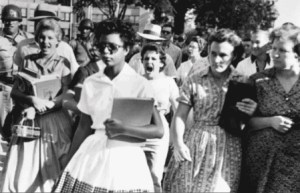
National Public Radio’s “The Diane Rehm Show” had an interesting hour today. I’m glad guest host Susan Page (easily the best Rehm substitute host) brought up the Black press. The discussion would have been much fuller if Page and/or the authors had pointed out the virtually all-white newsrooms that professionally housed these admittedly brave 1960s reporters.
 Â
Â
I guess all of us pundits have one same column we keep writing over and over. :) Enter Minister Paul Scott. I’ve been reading his columns online for at least a couple of years now.
I believe the story of what happened to hiphop is more complex than what he has laid out below. For example, what about the many external and internal factors of Black political and social development between the 1970s and the present that, in many ways, had Black people reject the goals and objectives of the Black Power movement? Regardless of my questions, he has made some good points in this one. And his memory of certain events match mine (which, means, of course, he’s RIGHT :)).
Note: I’m guilty of some editing and fact-correcting here.
————-
The Hip Hop Conspiracy
By TRUTH Minista Paul Scott
With her legacy of slavery and oppression, to say that this country has done some bad things to Black folks is an understatement. We all know about the African Holocaust/Maafa (the slave trade) and the Tuskegee
Experiment as well as other examples of the
mistreatment of Afrikan people by the European. But in a society that has corrupted everything Black to serve its own evil purposes, how could we think that HipHop would be exempt from its evil schemes?We all know the well told story of how when Hip Hop first started in the mid-to-late 1970s, it was about partying. By the late 1980s, the HipHop nation under the leadership of President Chuck D and Secretary of Defense Professor Griff, young Black America was exposed to the teachings of Malcolm X and Huey P. Newton.
We are very familiar with the story of rap’s golden era, as it is known among the cool, HipHop insiders who remember when breaking meant more than someone’s arm being broken in response to a “diss.” And when graffiti on a wall was an easily overlooked misdemeanor, not a felony. And when the color of a  bandana wrapped around somebody’s head wasn’t perceived as a glorified death warrant.
So the million-dollar question becomes: how did the sound of sweet soul music become sour? Or better yet, as Public Enemy asked in the early 90’s: “Who Stole the Soul?”
Let us begin in 1988, when so-called “gangsta” rap began to emerge out of California and how a few young Brothas out of Compton staged a hostile takeover of HipHop.
For a time “Conscious rap” and “Gangsta rap” coexisted in almost perfect harmony, a musical ying and yang, so to speak. When the elders would criticize the lyrics of some to the songs, the conscious rappers would serve as ambassadors of goodwill for the “G’s” and
quickly point out that the rappers were just being attacked because they were young Black men saying something that white society did not want to hear.After all, they were just calling it as they saw it—or, in the vernacular, they were just “keeping it real.” How many times was heard their worn-out Arnold Schwarzenegger excuse, “Well, he can kill 100 people in a movie and nobody says a word, but when we..” Well, they were very right and very wrong. The young rappers underestimated the depths that this society would go to to prevent the “rising of a Black Messiah” or to destroy anything that would serve as a catalyst for social change. As Neely Fuller once said, “If you do not understand white supremacy, everything else will just confuse you.”
In the early-to-mid 90s, the anti-gangsta rap forces in the Black community formed a dangerous alliance with white conservatives that had no love for Black youth from the giddy up. They took the lead on the “gangsta rap
issue” under the guise of “family values.” So the
battle against negative lyrics became an attack on Black youth. Instead of rap that talked about drugs and violence being attacked, all rappers that rapped about anything stronger then “Parents Just Don’t Understand” (remember the debut of Will “Fresh Prince” Smith?) were seen as the
enemy.Since the Black Nationalist community—who could have “attacked” the negative rap but not the rapper, or “love the sinner but hate the sin”—were still banned from the media, the only people that our youth saw preaching against negative lyrics were old preachers
and civil rights crusaders. The media loved promoting the C. Delores Tuckers as poster children of music morality. For over two years the battle raged between the the Hip Hop Nation and The Family Values Nation.
See, the year 1992 changed the game. The LA Rebellion (called by the white media the LA Riots or the Rodney King Verdict Aftermath). Until then, the effect of rap music on the minds of Black youth was still a matter of debate. Could the rebellious words of the rappers actually be manifested in the actions of
Afrikan youth?White America wondered: if we really ticked Black people off, would they really Fight the Power, as rap group Public Enemy urged? In May of 1992, white America’s worst nightmare was realized when thousands of Black people took to the streets, with rap music
supplying the soundtrack. White reporters were shocked when, interviewing “gang members” that they saw that the grassroots could easily articulate the oppression of Afrikan people, both nationally and globally. Rap with a message had to be stopped by any means necessary.When the dust settled the gangsta rappers emerged stronger than ever, the Family Values people emerged with more political clout and the only casualties of war were the “conscious rappers.” Was it a coincidence that the majority of rappers that did not make it through this politically created “Rap Armageddon” unscarred were the “conscious rappers” Sister Souljah, X Clan, Public Enemy, Paris) And the ones that did make it took a 180-degree turn and got smart, finding out that the “gangsta” style was the safer and more lucrative wave of the future (see Ice Cube post-NWA career). So in the end, it was not gangsta rap that destroyed positive rap; it was the anti-rap forces that put the nail in the coffin of pro-Black rap.
So what was left was symbol without substance—or, as The Temptations sang, “a ball of confusion.” All of the energy that was created by X-Clan and Paris had no oulet. Our children knew that they were being attacked but without the guidance of the Black Nationalist community, had no idea who the enemy was.
They became modern day rebels without a cause.The enemy was no longer The Man or his racist, oppressive system; instead, the media promoted the idea that the Black man was the enemy who must be destroyed. We were no longer “Brothers” or “Strong Black men”; we were Niggas—“real” Niggas doing “real” things, like busting a cap in another nigga. Passe was the idea that we were Nubian Kings, protecting our Nubian Queens; naw, Sun, we was now they pimps and they was our Hos.
It seems that the music that we created has become just another tool for the oppression of the Afrikan mind. So that is why today all of the music sounds the same. The music of 2007 sounds the same as the music of 1995. Our youth seem to be all talking, acting and
dressing the same. Why? Because it is easier to control a monolithic people. As Carter G. Woodson once broke down, “When you control a man ‘s thinking you do not have to worry about his actions.” Hip Hop has become White Supremacy’s multi-billion dollar marketing scheme.But all is not lost. A group of some of the strongest Afrikan minds on the planet have gathered to form The Hip Hop Intelligence Project. Our goal: once and for all solve the Hip Hop Conspiracy.
Most people would not place the solving of the Hip Hop Conspiracy in the same category with the questions surrounding the disappearance of Jimmy Hoffa or the assassination of Martin Luther King. But does it matter for those of us Afrikans still in the struggle?
You bet your Timberland boots it does….
For more information on the Hip Hop Intelligence Project, contact Scott at hiphopintel@yahoo.com .
…….the “Ugly Betty” folks and the Dream Team!

From EUR……..
Â
EURextra NewsbitsÂ
‘DREAMGIRLS’ IS GOLDEN: Hudson, Murphy and picture itself win ‘Globes’; Whitaker wins too.
If you’ve already seen it, you can’t be surprised at the wins for “Dreamgirls” at last night’s Golden Globes Awards. The acting honors (and congrats) for the flick went out to Eddie Murphy and big screen newcomer Jennifer Hudson.
Â
Murphy took the Golden Globe for Best Supporting Actor and Hudson snagged the statuette for Best Supporting Actress at the 64th annual Golden Globes. The two star in the musical “Dreamgirls.”
Of course we’d be on the late freight if we didn’t acknowledge that “Dreamgirls” itself won the Golden Globe’s Musical or Comedy motion picture category.
Additionally, Forest Whitaker took best actor as Ugandan dictator Idi Amin in “The Last King of Scotland.”
With this win, Murphy has finally received a major film honor after 25 years in the business. The actor had been nominated for a Globe honor three times before. On the other hand, “Dreamgirls” marks Hudson’s film debut.
“I had always dreamed, but I never ever dreamed this big,” former “American Idol” finalist Hudson said. “This goes far beyond anything I could have ever imagined,” said supporting-actress winner Hudson, who dedicated her award to Florence Ballard, one of the singers from the Supremes on which “Dreamgirls” is based.
“Wow. I’ll be damned,” said Murphy, upon accepting his award.
With the Golden Globes considered the runner-up to the Academy Awards, the Oscar buzz is only getting louder for the young starlet.
As Hollywood’s second-biggest film honors, the Globes are something of a dress rehearsal for the Oscars, whose nominations come out Jan. 23. The Oscar ceremony will be on Feb. 25. Nominations for the Oscars closed Saturday, so the outcome of the Globes cannot affect who gets nominated.
The diss of the evening came from Justin Timberlake, who, in accepting the Best Original Song award on behalf of Prince for His Royal Baddness’ “Song of the Heart” from “Happy Feet” (even though Prince himself can be seen sitting in the audience later in the show), bent his knees to speak UP into the microphone, as if to feign being the height of the Minneapolis superstar.Â
For a full list of winners, go here.


 Â


 Drums in the Global Village

