……….. that “News And Notes” segment earlier this month—you know, the one on that recent study of Black youth.
Category Archives: radio
The Negro Bowl And The March To The Bookstore

Tavis Smiley is in danger of becoming the next Oprah Winfrey, and that’s not a compliment.
For what seemed like the zillionth time, I sat around all day Saturday watching his annual “Tavis Smiley Presents: State of the Black Union,” live on (where else?) C-SPAN. I forgot who first thought of calling it “The Negro Bowl,” but the moniker seems appropriate.
I’m concerned because Smiley—somebody I admire for creating his own national Black-oriented forums—is getting a little too much power to frame the national debate of people of color.

At this year’s Negro Bowl, held at Hampton University, one of his many announcements of future projects was that he was going to moderate presidential debates on issues pertaining to Black America. The forums, held at Howard and Morgan State, for the Democrats and Republicans, respectively, will be aired primetime on PBS later this year. Now, when you have a PBS hookup, you use it, right? But what gives the non-journalist Smiley the right to decide how the next president of these United States will address the concerns of Black America?
I guess some would answer, “The Covenant With Black America” and the new companion, “The Covenant in Action,” gives him that right. Okay, perhaps. Maybe Smiley’s tactic—to be Larry King and Martin Luther King simultaneously—has its perks.

But it almost seems that, with these books and televised forums, Smiley seems to have (earned) a little bit too much power to frame the range of national (televised) debate within Black America.
What’s wrong with that?
Well, to start with, Smiley’s brand of pragmatic, televised liberalism leaves out many, many people who are committed to struggle but who are not “establishment” figures. Where were the political activists strongly to the left of Jesse Jackson this year, like Harry Belafonte or someone from the Nation of Islam? Would their talk of revolution not be camera-ready, or was there room for only one Black agenda the year the corporate sponsors were a visible part of the program?
Second, and perhaps more importantly, Smiley’s activism keeps pointing to the individual. That’s a cop-out on a grand scale. Individual Blacks don’t have the access to political, social and economic resources to fight the power; activist organizations and foundations do. Smiley, a millionaire, has never called for the forming of an activist organization. Why? Would that upset Wal-Mart, the corporate sponsor of his television show?
Remember the Student Nonviolent Coordinating Committee? Its members went throughout the Deep South, alone, often with no cameras or microphones following them. They absorbed most of the racist terror of Jim Crow, telling the people: “We’ll help you organize, but don’t worry; we’ll also be your buffer between you and the white folks oppressing you.” SNCC leaders Diane Nash and John Lewis, for example, didn’t tell the people, “Here’s a book; it’s up to you.” They took full responsibility for the struggle. But then again, they weren’t marketers; they weren’t trying to create and maintain their brand names. They were willing to sacrifice everything, including their lives, to defeat white supremacy. Yeah, yeah, I know: that was a looong time ago.


I’m not hating—much. Again, I have great regard for Smiley and what he’s done for our people. Heck, my doctoral dissertation proudly documents his great accomplishments in media. And the Negro Bowl is the closest thing we have to a televised Black think-tank.
But the closer I watch, the more it seems like he’s created some sort of Black intellectual church that he’s pastoring—one without a deacon board to either keep him in line or to push him to the heights to which he keeps referring. It’s almost as if he’s a progressive version of Oprah—someone who’s drawing the lines of debate in order to “keep everyone feeling energized and “empowered.” Meanwhile, those with real power in America, comfortable with the idea that we won’t do anything even remotely radical to upturn their apple carts, continue using their resources to attack us every chance they get.
In the afternoon session, psychologist Dr. Julia Hare warned the thousands in the audience to not be confused by those who would try to turn “leading Blacks” into “Black leaders.” Smiley has proven that he is a committed Black leader. But if all he’s doing is leading us to the bookstore so that Black America can do some deeply pragmatic, individual, feel-good projects, it might be time to change the channel.
How Many White Reporters Who Didn't Go To Vietnam Got To Be Famous Names Today :)
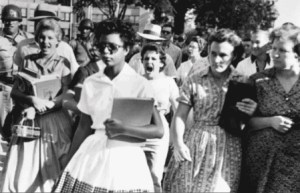
National Public Radio’s “The Diane Rehm Show” had an interesting hour today. I’m glad guest host Susan Page (easily the best Rehm substitute host) brought up the Black press. The discussion would have been much fuller if Page and/or the authors had pointed out the virtually all-white newsrooms that professionally housed these admittedly brave 1960s reporters.
Black People Don't Control Their Culture, Chapter 103
 Â
Â
I guess all of us pundits have one same column we keep writing over and over. :) Enter Minister Paul Scott. I’ve been reading his columns online for at least a couple of years now.
I believe the story of what happened to hiphop is more complex than what he has laid out below. For example, what about the many external and internal factors of Black political and social development between the 1970s and the present that, in many ways, had Black people reject the goals and objectives of the Black Power movement? Regardless of my questions, he has made some good points in this one. And his memory of certain events match mine (which, means, of course, he’s RIGHT :)).
Note: I’m guilty of some editing and fact-correcting here.
————-
The Hip Hop Conspiracy
By TRUTH Minista Paul Scott
With her legacy of slavery and oppression, to say that this country has done some bad things to Black folks is an understatement. We all know about the African Holocaust/Maafa (the slave trade) and the Tuskegee
Experiment as well as other examples of the
mistreatment of Afrikan people by the European. But in a society that has corrupted everything Black to serve its own evil purposes, how could we think that HipHop would be exempt from its evil schemes?We all know the well told story of how when Hip Hop first started in the mid-to-late 1970s, it was about partying. By the late 1980s, the HipHop nation under the leadership of President Chuck D and Secretary of Defense Professor Griff, young Black America was exposed to the teachings of Malcolm X and Huey P. Newton.
We are very familiar with the story of rap’s golden era, as it is known among the cool, HipHop insiders who remember when breaking meant more than someone’s arm being broken in response to a “diss.” And when graffiti on a wall was an easily overlooked misdemeanor, not a felony. And when the color of a  bandana wrapped around somebody’s head wasn’t perceived as a glorified death warrant.
So the million-dollar question becomes: how did the sound of sweet soul music become sour? Or better yet, as Public Enemy asked in the early 90’s: “Who Stole the Soul?”
Let us begin in 1988, when so-called “gangsta” rap began to emerge out of California and how a few young Brothas out of Compton staged a hostile takeover of HipHop.
For a time “Conscious rap” and “Gangsta rap” coexisted in almost perfect harmony, a musical ying and yang, so to speak. When the elders would criticize the lyrics of some to the songs, the conscious rappers would serve as ambassadors of goodwill for the “G’s” and
quickly point out that the rappers were just being attacked because they were young Black men saying something that white society did not want to hear.After all, they were just calling it as they saw it—or, in the vernacular, they were just “keeping it real.” How many times was heard their worn-out Arnold Schwarzenegger excuse, “Well, he can kill 100 people in a movie and nobody says a word, but when we..” Well, they were very right and very wrong. The young rappers underestimated the depths that this society would go to to prevent the “rising of a Black Messiah” or to destroy anything that would serve as a catalyst for social change. As Neely Fuller once said, “If you do not understand white supremacy, everything else will just confuse you.”
In the early-to-mid 90s, the anti-gangsta rap forces in the Black community formed a dangerous alliance with white conservatives that had no love for Black youth from the giddy up. They took the lead on the “gangsta rap
issue” under the guise of “family values.” So the
battle against negative lyrics became an attack on Black youth. Instead of rap that talked about drugs and violence being attacked, all rappers that rapped about anything stronger then “Parents Just Don’t Understand” (remember the debut of Will “Fresh Prince” Smith?) were seen as the
enemy.Since the Black Nationalist community—who could have “attacked” the negative rap but not the rapper, or “love the sinner but hate the sin”—were still banned from the media, the only people that our youth saw preaching against negative lyrics were old preachers
and civil rights crusaders. The media loved promoting the C. Delores Tuckers as poster children of music morality. For over two years the battle raged between the the Hip Hop Nation and The Family Values Nation.
See, the year 1992 changed the game. The LA Rebellion (called by the white media the LA Riots or the Rodney King Verdict Aftermath). Until then, the effect of rap music on the minds of Black youth was still a matter of debate. Could the rebellious words of the rappers actually be manifested in the actions of
Afrikan youth?White America wondered: if we really ticked Black people off, would they really Fight the Power, as rap group Public Enemy urged? In May of 1992, white America’s worst nightmare was realized when thousands of Black people took to the streets, with rap music
supplying the soundtrack. White reporters were shocked when, interviewing “gang members” that they saw that the grassroots could easily articulate the oppression of Afrikan people, both nationally and globally. Rap with a message had to be stopped by any means necessary.When the dust settled the gangsta rappers emerged stronger than ever, the Family Values people emerged with more political clout and the only casualties of war were the “conscious rappers.” Was it a coincidence that the majority of rappers that did not make it through this politically created “Rap Armageddon” unscarred were the “conscious rappers” Sister Souljah, X Clan, Public Enemy, Paris) And the ones that did make it took a 180-degree turn and got smart, finding out that the “gangsta” style was the safer and more lucrative wave of the future (see Ice Cube post-NWA career). So in the end, it was not gangsta rap that destroyed positive rap; it was the anti-rap forces that put the nail in the coffin of pro-Black rap.
So what was left was symbol without substance—or, as The Temptations sang, “a ball of confusion.” All of the energy that was created by X-Clan and Paris had no oulet. Our children knew that they were being attacked but without the guidance of the Black Nationalist community, had no idea who the enemy was.
They became modern day rebels without a cause.The enemy was no longer The Man or his racist, oppressive system; instead, the media promoted the idea that the Black man was the enemy who must be destroyed. We were no longer “Brothers” or “Strong Black men”; we were Niggas—“real” Niggas doing “real” things, like busting a cap in another nigga. Passe was the idea that we were Nubian Kings, protecting our Nubian Queens; naw, Sun, we was now they pimps and they was our Hos.
It seems that the music that we created has become just another tool for the oppression of the Afrikan mind. So that is why today all of the music sounds the same. The music of 2007 sounds the same as the music of 1995. Our youth seem to be all talking, acting and
dressing the same. Why? Because it is easier to control a monolithic people. As Carter G. Woodson once broke down, “When you control a man ‘s thinking you do not have to worry about his actions.” Hip Hop has become White Supremacy’s multi-billion dollar marketing scheme.But all is not lost. A group of some of the strongest Afrikan minds on the planet have gathered to form The Hip Hop Intelligence Project. Our goal: once and for all solve the Hip Hop Conspiracy.
Most people would not place the solving of the Hip Hop Conspiracy in the same category with the questions surrounding the disappearance of Jimmy Hoffa or the assassination of Martin Luther King. But does it matter for those of us Afrikans still in the struggle?
You bet your Timberland boots it does….
For more information on the Hip Hop Intelligence Project, contact Scott at hiphopintel@yahoo.com .


Independent Audio/Video You Should Check Out (Ninth In A Long-Running Series)
 Â
Â
Â
January 15, 2007
VOXUNION MEDIA
Jazz & Justice
WPFW 89.3 FM wpfw.org (live stream)
Mondays 1-3p ESTÂToday’s show is a special tribute to Dr. King.
Part 1 features King himself and music from Dead Prez, Head-Roc, Archie Shepp, Jack DeJohnette, Wise Intelligent plus a special DocuMix from Melki.
Part 2 features music from Blitz, Immortal Technique and commentary from Mumia Abu-Jamal, a breakdown of US mainstream media’s image assassination prior to the physical one—including a look at the FBI’s Counter Intelligence Program (COINTELPRO)—and Bill Fletcher bringing us from then to now through a look at King and the labor movement.
Click the links to download each part and visit VOXUNION.COM for streaming options, plus much more.
Â
———–

In addition, here’s something else in which you might be interested.
White Leftist/Liberal Radio Guilt On MLK Day? :)
 Â
Â
Wow……
First, Pacifica Radio’s “Democracy Now!” goes all out. Then National Public Radio’s “Fresh Air” decides to get in on the act.
Meanwhile, on Syndication One, the Rev. Al Sharpton aired one of his NYC town hall meetings. The straight-up Harlem anaylsis of local and national politics given by the crowd brought back fond memories of New York City’s now-defunct Black news-talk radio.
And check this out. It may expose you to some things you didn’t know about.
National Conference for Media Reform Honors King's Legacy, Looks to the Future
 Â
Â
Jan. 14, 2007 Â
FOR IMMEDIATE RELEASE
Contact: Craig Aaron, (202) 441-9983 (in Memphis); Jen Howard, (703) 517-6273 (in Memphis)
Speeches Evoke The Civil Rights Movement While Urging A New Generation Of Activists To Mobilize For Better Media
MEMPHIS—On the weekend before Dr. Martin Luther King Jr.’s birthday, headliners at the National Conference for Media Reform evoked the legacy of the civil rights movement while rallying more than 3,500 attendees for media reform.
“The nettlesome task about which Dr. King spoke is still being carried out by people who embody character, courage and the fortitude to make decisions in support of truth not spin, people who critically embrace diversity and reject monopoly,” actor and activist Danny Glover told the crowd Friday.
The Rev. Jesse Jackson pushed for more access to media and independent news.
“[King] brings us to this point today, 40 years later, to define the great issues of our time—the broken promises, the new schemes of denials, the impact of a media that freezes out democracy, the media that looks at the world through a key hole and not the door,†he said. “We must fight to open up airwaves for all the people.â€
“The absence of women in the media is glaring,†Jane Fonda said in a speech at the conference’s closing session. “The media environment that is overwhelmingly white is also overwhelmingly male. Today, I hope to show you that media that leaves women out is fundamentally, crucially flawed.”
Jane Fonda delivers one of the main addresses
“Martin Luther King Jr. didn’t get famous giving a speech called, ‘I have a complaint,’ ” said Van Jones, founder for the Ella Baker Center for Human Rights. “The brother had a dream. We need to be able to have a movement that stands for that.â€
“The wave of the future is a wave of technological empowerment and innovation,” said Rep. Ed Markey (D-Mass.). “It is a wave of grassroots activism that can make a difference in Washington, D.C., down to every single community in our country. It’s a wave of digital democracy the likes of which we have never seen in the history of our country.â€
“The depth of this conference reflects the maturing power of this grassroots movement into a real force in American politics,†said Federal Communications Commissioner Jonathan Adelstein. “No longer on the defense, media reform has a positive agenda to reclaim citizen, especially minority, ownership of the public airwaves and equal access to the Internet. Nobody in government can afford to ignore the organization and sophistication of this national movement for media democracy.”
Video of major speeches and audio of all sessions at the National Conference for Media Reform are available at www.freepress.net/conference .
###
Free Press (www.freepress.net ) is a national, nonpartisan organization working to reform the media. Through education, organizing and advocacy, we promote diverse and independent media ownership, strong public media, and universal access to communications.

Analytical Fragments
Bits and pieces here.Â
Charlie The Moderator is the author of the emails I get from playhata.com. His Bush musings this morning were, like Michael Moore’s letter, too good to resist:
Â
How many of you listened to Dubya as he hijacked all of the tv channels last night? Well he said 21,500 more troops are needed to fix his mistakes.
Â
Ok, so President Bush admitted mistakes have caused failures in Iraq, but defied war-weary and politically lazy Americans to do something about it last night by announcing he is sending 21,500 more U.S. troops into the cauldron. That’s just more targets, the way I see it, but Bush insisted his new plan “will change America’s course in Iraq.” In truth, Bush’s surge forward is really a step back.
Â
Meanwhile, longtime poet and activist Marvin X has written a review of the new Will Smith film, “The Pursuit of Happyness.” I’ve seen it. My one-sentence review: It’s a heartwarming film that somehow is both about Black self-determination and Right-wing values.
 Â
Â
Contradictory? Welcome to the (African-)American experience. 🙂 But I have to yield to Marvin X on this one. Please read:
Â
The Pursuit of Happyness
Â
Starring Will Smith
Â
Review By Marvin X
mrvnx@yahoo.com ÂWill Smith has processed himself into a great actor—from rapper to “Fresh Prince,” to “Ali” and other characters. But “The Pursuit of Happyness” lacked the full drama of being down and out in the most beautiful city in the world, San Francisco.
The film was a Miller Lite version of homelessness, and the narrow focus on the main character excluded the high drama of homelessness in San Francisco’s Tenderloin—that poverty area two blocks from the famous Cable Car line at Market and Powell, and a few blocks from the Shopping area for the rich, Union Square.Â
The contrast is so overwhelming we wonder how could the filmmaker fail to show us this. It is totally shocking to tourists who often make the wrong turn coming out of their hotel room and find themselves in the Tenderloin, the multiracial ghetto inhabited by Blacks, Latinos, Asians and poor whites, with a great amount of the population addicted to drugs. All we see of the homeless are them standing in line at Glide Church, administered by Rev. Cecil Williams, the angel of San Francisco’s homeless, addicted and afflicted, the male version of Mother Theresa. Cecil appears in the film as himself; after all, no one can perform his role except him.
The most dramatic moment is this scene outside Glide when Rev. Williams allows the main character and his son to get in line for a room. But it is powerful because we see the army of the homeless and the hungry in America. This moment is communal and we see the individual as part of a nation of homeless.
France has called homelessness a matter of national security. France is calling for its citizens guaranteed housing. America can do likewise. There is absolutely no excuse for homelessness and hunger in America, the richest nation in the world.
Â
I lived the life of a homeless drug addict in San Francisco’s Tenderloin. On one level, it was good to see the main character was not drug addicted. But it would have added so much more drama.(Maybe his little, frustrated wife should have been on drugs, because she has no real motivation to depart for New York, leaving her son behind for a two-dollar job. Her character was weak and should have been explored, or at least included a violent departing scene. Since Will Smith used his son, why not have [his real wife] Jada as his wife? Surely they could have created more drama, including a love scene that was absent in the film.)
Â
After I spent a decade in the Tenderloin (and God only knows how I made it out alive—thank you God Allah) as a Crack addict, I knew many mothers and fathers who abandoned their children for the drug life.Yesterday, a young lady at my outdoor classroom, downtown Oakland, told me she became homeless in San Francisco because her mother was doing Crack and she had to escape, so she lived in the street. The young lady, now 19, said she grew up in foster care.
Â
A few weeks ago, a young brother recently released from prison, asked me about his mother whom he hasn’t seen since he was a baby. She has been lost in the Tenderloin for years, and I have seen her from time to time, so I told the young man—also a product of foster care, now the California Department of Corrections—to go stand at 6th and Market and eventually he will see his mother, passing by on a mission impossible. I had told my nephew to do the same to find his father, lost and turned out in the TL. This is some of the pain the film lacked.
Â
It showed the grand beauty of San Francisco, but again, it should not have neglected the contrasting ugliness. There was a scene with Chris and his son at the East bay bus terminal, where they spent the night along with other homeless, although we don’t see the others in the film. I spent many nights on those benches at the East bay terminal; it was difficult to find bench space in those days, around the same time as the film, early 1980s.
Â
Ok, this is one man’s story, the struggle of an individual to get ovah in America, a slave narrative. Slavery was communal, not individual, so we need to know about all those others who are still there, who didn’t make it out. Can they get out? I got out. Chris got out, so it takes discipline as he demonstrated. You got to be ’bout it ’bout it. For Chris it was one step forward two back, but he fought all the way, trying to be husband, father, and worker in a racist society. Apparently he was successful.
Â
Marvin X’s latest collection of essays is “Beyond Religion, Toward Spirituality” (Black Bird Press, 2006. ISBN: 0-9649672-9-4). His book is available in Oakland at De Lauer’s books, 14th and Broadway, and Your Black Muslim Bakery, San Pablo at Stanford. Otherwise, send $19.95 to Black Bird Press, P.O. Box 1317, Paradise Calif. 95967.
Visit marvinxspeaks@blogspot.com and http://www.nathanielturner.com .Â


Also, I noticed that longtime commentator Earl Ofari Hutchinson is on The Huffington Post. Here’s his commentary on Black-Latino tensions.
And, this makes me chuckle every time I hear it.
"Orwellian" A GOOD Thing?!?

If the goal of progressives is to enlist the moderate heartland, then perhaps this hour of “Fresh Air” is required listening.
National Conference for Media Reform Hosts All-Star Lineup
 Â
Â
Got this from playahata.com. I’ve tacked on the group’s press release at the end. Also, here’s some required reading from the Black perspective.
———
Historic event draws Hollywood actors, famed journalists, legendary civil rights leaders, renowned musicians, acclaimed scholars, grassroots activists to Memphis MEMPHIS — Riding a wave of unprecedented activism and interest around media issues, the 2007 National Conference for Media Reform— hosted by Free Press—will kick off this week in Memphis.
WHAT: 2007 National Conference for Media Reform
WHERE: Memphis Cook Convention Center, Memphis
WHEN: Jan. 12-14, 2007
WHO: Nearly 3,000 activists, media makers, journalists, policymakers, scholars and concerned citizens from across the country.Online registration for conference participants is now closed.
However, those wishing to attend the conference can still register and pay at the conference site. Tuesday, Jan. 9 is the last day for members of the media covering the event to register for press credentials — please send all requests by noon to credentials@freepress.net.
Conference speakers and presenters and Free Press staff are available for interviews or comment before and during the event. The full conference schedule is now available here.
Â
The event is packed with nearly 100 hands-on workshops, film screenings and interactive panels. See below for a list of some of the daily highlights of this momentous weekend:
THURSDAY, JAN. 11
9 p.m. — Join Free Press and MoveOn.org Civic Action for
SavetheInternet.com’s Party for the Future at the Gibson Guitar Factory near historic Beale Street (145 Lt. George Lee Ave.).FRIDAY, JAN. 12
(All events at the Memphis Cook Convention Center)
9:30 a.m. — Welcome from Dr. Willie Herenton, Mayor of Memphis.10 a.m. — Opening plenary with legendary journalist Bill Moyers.
11:30 a.m. — Press conference releasing new media ownership studies.
12:15 p.m. — Rev. Jesse Jackson headlines the afternoon plenary.
1:15 p.m. — Phil Donahue moderates “Inside Corporate Media: Can It Tell the Truth?” panel. Plus sessions on “The Fight over Media Ownership”; “Media and Elections”; “State Battlegrounds in Media Reform”; and more.
3:15 p.m. — “Saving the Internet” explores what’s next for the grassroots movement that made Net Neutrality a major issue last year; industry critic Paul Porter looks at “Payola: Radio, Records and the FCC”; former FCC Commissioner Gloria Tristani moderates a discussion on “Children & Media Policy”; and more.
8 p.m. — “The Memphis Music Showcase & Rally” features appearances by Rev. Al Green’s Gospel Choir, North Mississippi Allstars, Burnside Exploration, Jimbo & Olga, FCC Commissioners Michael Copps & Jonathan Adelstein, actor and activist Danny Glover, Amy Goodman of Democracy Now!, hip-hop activist Davey D and more.
SATURDAY, JAN. 12
(All events at the Memphis Cook Convention Center)
8 a.m. — Sen. Bernie Sanders (I-Vt.) addresses the conference.9 a.m. — FCC Commissioners take questions on what’s happening in Washington; leaders discuss “Why Media Policy Is a Civil Rights Issue”; Dan Gillmor and Jay Rosen join a panel on “Citizen Journalism”; and more.
11 a.m. — Reps. Maurice Hinchey (D-N.Y.), Steve Cohen (D-Tenn.) and Sanders offer a “Capitol Hill Update”; Memphis musicians Sid Selvidge and James Alexander join a panel on “Music & Media Reform”; grassroots activists on “The Battle to Control America’s Media”; and more.
1 p.m. — Andy Bichlbaum of The Yes Men shows clips from his upcoming film.
2: 30 p.m. — Laura Flanders, Amy Goodman, Robert Greenwald and blogger Atrios highlight “Winning Alternatives”; D.C. policy experts look ahead at “Washington 2007”; “Hip-Hop Activism for Media Justice”; and more.
4:30 p.m. — Veteran White House correspondent Helen Thomas debates “The Press at War & the War on the Press”; Media watchdogs David Brock, Janine Jackson and Norman Solomon; PBS’s David Brancaccio leads a panel on “The Future of Public Broadcasting”; plus a discussion about Dr. Martin Luther King Jr. and the media with Judge D’Army Bailey and other civil rights experts; and more.
8 p.m. — A Keynote Event features Geena Davis, Rep. Ed Markey (D-Mass.), Media Monopoly author Ben Bagdikian, former NAACP director Ben Hooks, Rev. Lennox Yearwood of the Hip-Hop Caucus, radio host Deepa Fernandes, Free Press founder Robert W. McChesney and other special guests — plus a performance by The Bar-Kays.
SUNDAY, JAN. 14
(All events at the Memphis Cook Convention Center)
9 a.m. – Jeff Chester of the Center for Digital Democracy, Ms. Magazine executive editor Katherine Spillar, journalist Roberto Lovato and community media innovator Wally Bowen on “Envisioning the Future of Independent Media”; plus hands-on workshops and a presentation by leading media scholars.11 a.m. – The 2007 National Conference for Media Reform concludes with stirring closing remarks from Academy award-winner and activist Jane Fonda and Van Jones of the Ella Baker Center for Human Rights.
More information about the National Conference for Media Reform is available here.
***
Jan. 10, 2007
FOR IMMEDIATE RELEASE
Contact:
Craig Aaron, (202) 441-9983 (in Memphis)
Jen Howard, (703) 517-6273 (in Memphis)
Â
Memphis Conference Spotlights Media Issues
National Conference for Media Reform kicks off Friday, with nearly 3,000 activists, journalists, policymakers and concerned citizens in attendance
MEMPHIS—The 2007 National Conference for Media Reform—a landmark event filled with rousing speeches, musical performances, provocative panels and instructive workshops—promises to put reforming America’s media system in the national spotlight.
“More than 3,000 activists from across the country will gather in Memphis to declare that media reform is now on the national agenda,†said Robert W. McChesney, president and co-founder of Free Press, the national, nonpartisan group hosting the conference. “After years of fighting to prevent further consolidation of media ownership and the dumbing down of our airwaves, the movement is ready to pursue reforms that will transform American media.â€
Headliners at the event—taking place at the Memphis Cook Convention Center—include legendary broadcaster Bill Moyers, Rev. Jesse Jackson, actors and activists Jane Fonda, Geena Davis and Danny Glover, Vermont Sen. Bernie Sanders, Massachusetts Rep. Ed Markey, New York Rep. Maurice Hinchey, FCC Commissioners Michael J. Copps and Jonathan S. Adelstein, and civil rights activist Van Jones plus musical performances by The Bar-Kays, Rev. Al Green’s Gospel Choir and the North Mississippi Allstars.
“Media reform in this country is a story of activism that has made a huge difference,†said Commissioner Michael J. Copps. “The bipartisan, nationwide cry of outrage over our media has coalesced into a genuine and superbly organized grassroots movement. This year’s Free Press conference promises to be a first-rate forum for the latest thinking on how citizens can get involved in the fight for a better, fairer and more democratic media system in this country.†The beginning of a new Congress in January means that legislators will have a fresh start in crafting a new media and telecommunications legislation, with new leadership in place on key committees in both the House and Senate.
“The National Conference for Media Reform in Memphis will provide a venue where those of us who care about ensuring that this country has a free, diverse and independent media will come together to exchange ideas, work to create even better ones, and help to continue setting this country on the right path with media reform,” said Congressman Maurice Hinchey (D-N.Y.), chairman of the Future of American Media Caucus.
From Jan. 12-14, more than 3,000 media activists, educators, journalists, policymakers and concerned citizens from nearly every state in the union will attend the National Conference for Media Reform, an event that aims to move media issues to the forefront of public discourse in the United States.
“We cannot achieve equality for women without full and fair representation in the media,†said Kim Gandy, president of the National Organization of Women. “This conference provides the opportunity to network with activists from around the country and ensure that women’s rights issues are an integral part of the burgeoning media reform movement.â€
On the weekend before Dr. Martin Luther King Jr.’s birthday, media reformers will honor Dr. King’s legacy and vision by exploring and deepening the significant connections between the civil rights movement and the movement for media reform. “Memphis and the Mid-South are fortunate to have a conference here of this magnitude,†said Judge D’Army Bailey, founder of the National Civil Rights Museum. “For an area that has experienced so much social activism and civil rights history to have people of this caliber and commitment to social justice raising important issues of media and communications is a windfall. Hopefully this conference will leave behind strategies for local community leaders and activists that will make difference long after the event has left town.â€
This is the third National Conference for Media Reform and builds on the success of the 2005 conference in St. Louis and 2003 conference in Madison, Wis.
“The activists who gather in Memphis recognize that they are no longer shouting from the sidelines; they are beginning to shape communications policy in the United States,†said journalist and Free Press co-founder John Nichols.
Online registration for conference participants is now closed. However, those wishing to attend the conference can still register and pay at the conference site.Full coverage of the 2007 National Conference for Media Reform—including streaming video, audio downloads of key sessions, and daily editions of the Media Minutes radio show—will be available at throughout the weekend at http://www.freepress.net/conference .
###
Free Press is a national, nonpartisan organization working to reform the media. Through education, organizing and advocacy, we promote diverse and independent media ownership, strong public media, and universal access to communications.


 Drums in the Global Village

