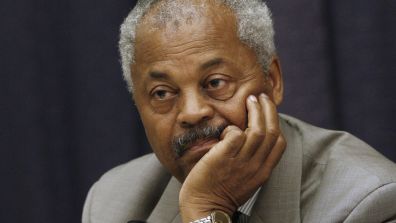
I enjoyed covering you a long, long time ago. I was always a bit confused while doing it, because you weren’t charismatic, didn’t have a huge ego and did a lot of work on African issues. Unusual.
March 15th UPDATE:
I enjoyed covering you a long, long time ago. I was always a bit confused while doing it, because you weren’t charismatic, didn’t have a huge ego and did a lot of work on African issues. Unusual.
March 15th UPDATE:
….this trailer.
I can’t say that this has made me forget Tobey McGuire, but WOW!
All I can say is THANKS.
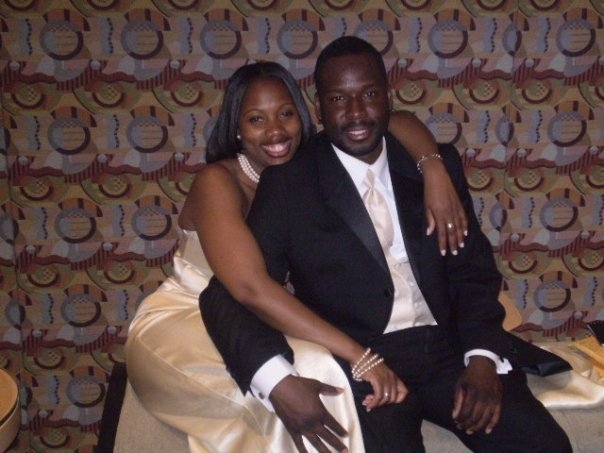
……….my friends from Morgan State University, Denise Doldron and LaFontaine Oliver, who recently announced their engagement! I saw them on their second date, and it was clear for all to see! LOL! 🙂 And she told me that he got his radio station to declare his love! Cue Minnie Riperton or…..
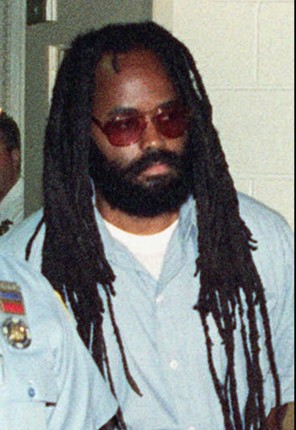
Abu-Jamal moved into general prison
population for first time
by Frank Kummer
Philly.com StaffMumia Abu-Jamal has been moved into the general prison population for the first time since going on death row for the killing of Officer Daniel Faulkner.
Susan McNaughton, a spokeswoman for the Pennsylvania Department of Corrections, said Abu-Jamal was moved yesterday from the restricted housing unit at the SCI Mahanoy facility in Frackville, Schuylkill County.
In the restricted housing unit, Abu-Jamal had largely been in solitary confinement for up to 23 hours a day.
Abu-Jamal was convicted of the 1981 shooting death of Faulkner. His transfer into the general prison population comes after his original death sentence was overturned on appeal to the federal courts last year.
The federal appeals court ruled that the trial judge’s instructions to the jury were unfairly weighted toward execution.
That ruling in Philadelphia was affirmed by the U.S. Supreme Court in October.
As a result, Philadelphia District Attorney Seth Williams said in December that he would not re-seek a new death penalty hearing, and instead agreed to a life term.
Abu-Jamal had been on death row at SCI Greene, in Waynesburg until he was transferred to SCI Mahony, a medium-security institution, shortly after Williams’ decision.
Judith L. Ritter, a law professor and director of the Criminal Defense Clinic at Widener University, and who represented Abu-Jamal in recent appeals, said yesterday in a statement:
“This is a very important moment for him, his family and all of his supporters. We are all grateful for the roles played by so many in getting him off death row after so very long.”
Abu-Jamal supporters, through various websites and social networks, applauded his move into the general population, but still maintain he is innocent.
However, Faulkner’s widow, Maureen, and many others, steadfastly maintain that Abu-Jamal was her husband’s killer. She has denounced Abu-Jamal for “operating a cottage industry in prison.”
Posted: Sat, Jan. 28, 2012, 12:45 PM
UPDATE:
To: Litestar01@aol.com , nattyreb@gmail.com , pamafrica@gmail.com Date: Sun, 29 Jan 2012 09:11:39 -0500
Subject: [Spam:8] Mumia’s Message to supporters Status: Normal
CC: From: Litestar01@aol.com
Reply-to: Litestar01@aol.com
Saturday, July 28, 7:30 PM
Message from Wadiya A Jamal, wife of Mumia Abu-Jamal [:]
I just received a call from my beloved husband who is now out of Administrative Custody and in general population at SCI Mahanoy. He is relieved after being in these solitary torture chambers for over 30 years. He can’t wait to face and embrace me, his wife, and his children and grandchildren. The next moment is for him to be released from the belly of the beast. He is surprised at how many men are in these prison cells–black, white, hispanic. He said he’s been shown a lot of love, from the others in population. We need to bring Mumia, and all the other men, home!
Mumia said he wanted to see me as soon as possible, to come up tomorrow, Sunday, a visiting day. But the prison won’t let me visit until Monday.
Wadiya A Jamal, with BIG pride.
****************
Mumia’s Message to Supporters in call from General Population, SCI Mahanoy to his wife, Wadiya Jamal:
My dear friends, brothers and sisters — I want to thank you for your real hard work and support. I am no longer on death row, no longer in the hole, I’m in population. This is only part one and I thank you all for the work you’ve done. But the struggle is for freedom!
From Mumia and Wadiya, Ona Move. Long Live John Africa! =
*****************
JANUARY 31st UPDATE:
To: Litestar01@aol.com , nattyreb@gmail.com , pamafrica@gmail.com
Date: Tue, 31 Jan 2012 14:41:43 -0500
Subject: [Spam:6]!! Mumia Has First Contact Visit With His Wife!!
Status: Normal
CC:
From: Litestar01@aol.com
Reply-to: Litestar01@aol.comONA MOVE, LONG LIVE JOHN AFRICA!!! Mumia had his first contact visit in general population, yesterday Monday 1/30, with his wife, Wadiya. The next step is to bring him home but we should celebrate the victories and use these victories to motivate us to keep working, keep pushing and NEVER GIVE IN. We have done a great job—-LONG LIVE REVOLUTION—–Ramona
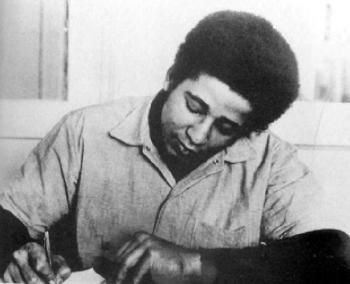
Dumping below some stuff I turned in to BAR as possible sidebars to this article.
George Jackson
( © Copyright 1971 Bob Dylan)
I woke up this morning
There were tears in my bed
They killed a man I really loved
Shot him through the headLord, Lord, they cut George Jackson down
Lord, Lord, they laid him in the groundSent him off to prison
For a seventy dollar robbery
Closed the door behind him
And they threw away the keyLord, Lord, they cut George Jackson down
Lord, Lord, they laid him in the ground
[ Lyrics from: http://www.lyricsfreak.com/b/bob+dylan/george+jackson_20207841.html ]
He wouldn’t take shit from no one
He wouldn’t bow down or kneel
Authorities, they hated him
Because he was just too realLord, Lord, they cut George Jackson down
Lord, Lord, they laid him in the groundPrison guards, they cursed him
As they watched him from above
But they were frightened of his power
They were scared of his loveLord, Lord, so they cut George Jackson down
Lord, Lord, they laid him in the groundSometimes I think this whole world
Is one big prison yard
Some of us are prisoners
The rest of us are guardsLord, Lord, they cut George Jackson down
Lord, Lord, they laid him in the ground
*******************************************
Mumia Abu-Jamal’s NEW Address:
Mumia Abu-Jamal
AM 8335
SCI Mahanoy
301 Morea Road
Frackville, PA 17932
LOL! I’m sure at least one million indifferent Black people are going to get up and vote for him again just on this! LOL! And of course, here’s the original.
Thoroughly enjoyed! As usual, thanks to Jared Ball for telling me about this. Maybe this will end the conspiracy talk. Do we really need another year of that? LOL! 🙂

Victory! (I think.)
As a so-called “professional content producer” and/or “artist,” I do understand how complex this could get.)
And here’s an important related story.


 Drums in the Global Village